Lumen Vietnam Fund

Blog

Vietnam's International Financial Center must have 'real deals' by November: official

Vietnam's International Financial Center must have 'real deals' by November: official

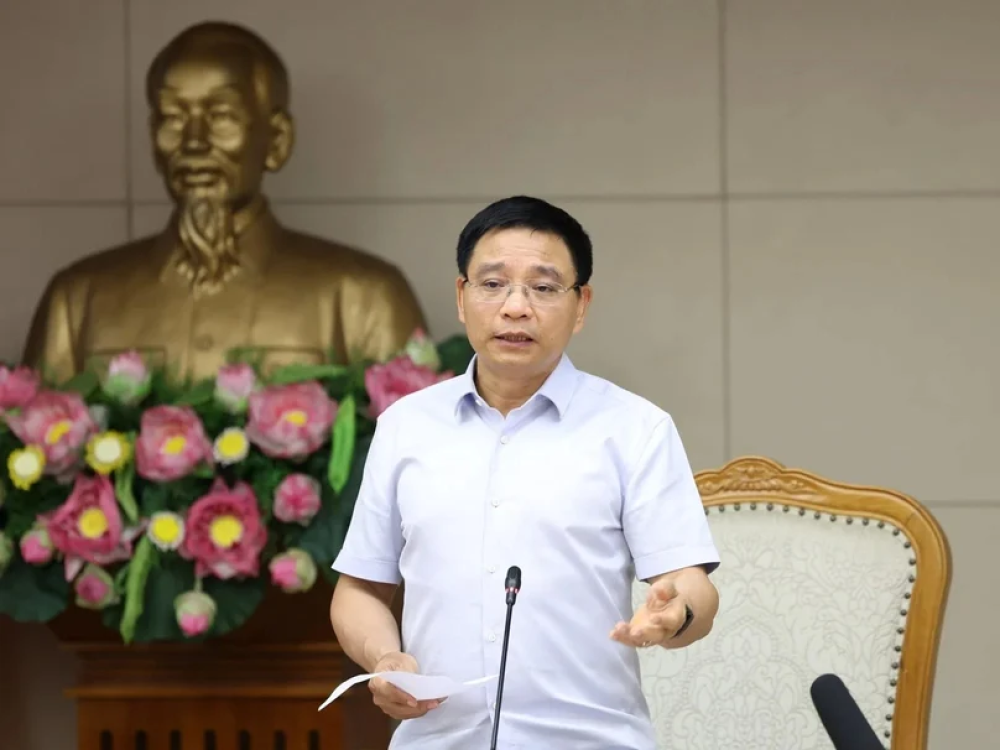
Deputy Prime Minister Nguyen Van Thang has ordered Ho Chi Minh City and Danang to "shift from building to substantive operations" of Vietnam's International Financial Center, setting a November deadline for concrete products and deals.

Thang on Monday chaired the third meeting of the Executive Council of Vietnam's International Financial Center (IFC) at the government headquarters.

Nguyen Bich Ngoc, Deputy Finance Minister, said the institutional framework and organizational structure of the centre, which is being established in both Ho Chi Minh City and Danang, were largely in place.

The two local executive agencies issued procedures for registering and recognizing members on August 17, 2026, and have begun accepting applications from banks, securities firms and investment funds etc.

After completing the organizational structure and operating framework, the focus is now shifting towards selecting products, members and projects capable of generating actual transactions.

The IFC will initially target medium- and long-term capital needs for infrastructure, energy and the green transition, while developing asset management and financial technology.

Six potential groups of products and services have been proposed, including investment funds and asset management; asset-backed tokenized assets; international carbon credits; commodity and derivatives trading infrastructure linked to supply-chain financing; financial technology; and bonds.

The Ministry of Finance has proposed rolling out the products in phases, initially focusing on three programs: energy, infrastructure and green-transition projects linked to strategic investors; an international asset-management ecosystem; and a commodities market linked to trade finance.

A key principle is that the IFC in HCMC and Danang should operate as a single entity rather than developing into two separate markets.

Ho Chi Minh City selects 5-7 viable projects

A representative of the International Financial Center-Ho Chi Minh City's executive agency said the city was focusing on four pillars: institutions, members, products, and infrastructure.

In the initial phase, the city plans to select around seven to 12 members, prioritizing organizations linked to concrete projects and transactions. It has also reviewed a list of more than 21 projects to select five to seven with high feasibility, including preparations for international and municipal bond issuance.

The narrowing of the initial project and membership lists signals a move towards more concrete components of the center, rather than expanding its scale from the outset.

In Danang, the executive agency is finalizing criteria for selecting members and the legal framework, while preparing projects suited to the city's strengths.

'Run while building the track', no waiting for all conditions

Concluding the meeting, Deputy Prime Minister Nguyen Van Thang said authorities should not wait until all conditions were fully in place before launching the IFC.

He said institutional development must proceed in parallel with direct engagement and negotiations with investors for products where both supply and demand already exist.

“The spirit is to run while building the track, and not wait any longer,” the deputy prime minister said.

The two cities were asked to proactively work with investment funds and businesses to bring deals into reality, while developing feasible and effective supervisory mechanisms and avoiding additional procedures.

Notably, the government has set a deadline of November for the two executive agencies of the IFC to have concrete products and substantive deals in place.

For information technology infrastructure, HCMC was tasked with studying the hiring of a consultancy to design an overall IT architecture for the entire system.

Source: Duc Trong, Thai Ha

Photo: Photo courtesy of Lao dong (Labor) newspaper.

Latest Posts

Vietnam's capital market enters a quality upgrade cycle

Vietnam's capital market enters a quality upgrade cycle

Vietnam's stock market status upgrade could mark the starting point of a medium- to long-term process to improve the quality of the country's capital market, according to Mirae Asset Securities.

The country's stock market is just two weeks away from officially being upgraded from frontier to secondary emerging market status by FTSE Russell.

The market reacted positively in August, with the VN-Index rising more than 5% to close at 1,832 points. However, gains remained highly differentiated and were not accompanied by a sustained reversal in foreign capital flows.

Foreign investors continued to be net sellers in August, bringing their net selling on the Ho Chi Minh Stock Exchange (HoSE) in the first eight months of the year to more than VND90 trillion ($3.47 billion).

Vietnam will also not receive its full weighting in FTSE's indexes immediately in September. The process will take place in four stages from September 2026 to September 2027, with cumulative weightings of about 10%, 30%, 65% and 100%, respectively.

As a result, the impact of the upgrade on capital flows is likely to unfold gradually rather than provide a single one-off boost.

Speaking on the Financial Street talk show, Dinh Minh Tri, director of analysis for retail clients at Mirae Asset Securities (MAS), said some expectations surrounding the upgrade had already been priced into the market, but the story would not end on September 21.

After that date, the factors driving the market's direction would gradually shift from upgrade expectations to the actual size of capital flows, corporate earnings growth, valuations and the quality of market reforms, he said.
International experience shows that market reactions before and after an upgrade are not necessarily the same.

Active funds tend to move ahead of such events to anticipate expectations, while passive funds typically rebalance their portfolios around the time the index officially takes effect.

Kuwait is a typical example. In the period before it was officially included in the emerging-market category, Kuwait's market rose sharply and attracted significant international capital inflows.

Saudi Arabia, meanwhile, offers a longer-term example. Its inclusion in FTSE and MSCI indexes was implemented in several stages, allowing foreign capital flows to build gradually alongside market opening and reforms. Foreign investors' holdings in the Saudi market rose sharply in the year of its upgrade.

For Vietnam, a “buy the expectation, sell the news” pattern around September 21 is entirely possible, particularly for stocks that have risen sharply on expectations of being included in international indexes.

That does not mean, however, that the impact of the upgrade will end immediately after the effective date.

As FTSE is implementing the upgrade in four stages over a year, Tri said the impact on capital flows would also be cumulative.

Instead of focusing solely on whether the VN-Index rises or falls in the sessions around September 21, it will be more important to watch whether foreign capital flows gradually improve, whether liquidity expands on a sustainable basis, and whether institutional investors increase their participation in the following months.

MSCI is the next milestone

Tri noted that Vietnam had reached an important milestone with FTSE, but in its June 2026 Market Classification Review, MSCI had not yet included Vietnam among markets under consideration for reclassification.

The MSCI goal should therefore be viewed as the next stage of reform rather than something that can be completed in the near term, he said.

On the positive side, MSCI has recognized several steps taken by Vietnam, including the development of a global broker model, a roadmap to establish a central counterparty clearing house (CCP), expanded disclosure in English, and several changes related to foreign investors' market access.

On settlement, the current non-prefunding mechanism has significantly improved market access.

However, several bottlenecks remain. Foreign ownership limits continue to affect investment capacity in some large companies, while the foreign exchange market does not yet have a fully developed offshore mechanism. Some corporate information and market regulations are also not yet available comprehensively in English.

Over the longer term, however, Vietnam still needs a fully fledged CCP system to bring post-trade arrangements closer to international standards. This will be one of the key tasks for 2026-2027.

Tri said Vietnam should focus on several priorities, including completing the CCP and settlement mechanism, continuing to address foreign ownership limits and increase free float, expanding English-language disclosures, and improving access to foreign exchange trading and risk-management instruments for foreign investors.

More importantly, reforms need not only to be introduced but also to operate effectively in practice. This would not only serve the goal of an MSCI upgrade but also improve the transparency, liquidity and long-term attractiveness of Vietnam's capital market.

Foreign capital flows unlikely to reverse immediately

According to the Mirae Asset expert, developments in 2026 have shown clearly that an upgrade is necessary but not sufficient to bring foreign capital flows back.

Foreign investors remained net sellers of more than VND90 trillion ($3.47 billion) on the HoSE in the first eight months of the year. Although selling pressure eased significantly in August, foreign capital flows have yet to establish a sustained net-buying trend.

Funds tracking FTSE standards will have to adjust their portfolios when Vietnam is added to the index. However, active funds in international markets account for a much larger pool of capital and are not required to buy Vietnam. They will continue to assess the country based on valuations, earnings growth, exchange rates, interest rates, and economic prospects.

The impact of FTSE will also not be fully felt in September, as the initial stage involves only about 10% of the eventual weighting, with the remainder phased in through September 2027.

Capital directly related to the upgrade is therefore likely to be deployed gradually.

Another important issue is investability. International funds may be positive about Vietnam's prospects but could still find it difficult to deploy large amounts of capital if leading stocks are close to their foreign ownership limits, free float is low, liquidity is limited or hedging instruments are lacking.

Vietnam also needs to expand the supply of quality stocks through IPOs, equitisation, state divestments, and listings of large companies. An attractive emerging market needs not only more capital flows but also enough quality companies to absorb that capital.

Ultimately, macroeconomic fundamentals and corporate earnings growth remain the most important factors. FTSE will help Vietnam widen access to international capital, but whether capital flows into the market, remain there and increase their allocations will depend on the country's ability to sustain high growth, control inflation and exchange rates, and improve the quality of listed companies.

Tri remains positive on Vietnam's medium- and long-term outlook but is more cautious in the short term.

The VN-Index rose more than 5% in August to close at 1,832 points, suggesting that some expectations for the upgrade, economic growth, and corporate earnings have already been reflected in share prices.

Sharp volatility in the first week of September also shows that market differentiation is increasing, with declining stocks outnumbering gainers.

This suggests that after a relatively rapid rise, the market could see bouts of volatility and consolidation as investors balance upgrade expectations against profit-taking needs.

For domestic capital flows, retail investors will continue to play an important supporting role.

Mirae Asset Securities' analysts expect capital to remain concentrated in sectors with clear earnings-growth prospects, including banking and financial services; public investment, construction and infrastructure; technology; energy; and industrial property.

However, differences in performance between companies within the same sector are likely to become increasingly pronounced.

In the short term, the market is unlikely to move in a straight line and could alternate between periods of gains, corrections and consolidation.

After the September 21 milestone, investors' attention will gradually shift towards third-quarter earnings, the outlook for 2027 profits, and the actual size of capital flows from international funds.

Over the medium term, Tri said the three most important factors would be actual capital flows following the upgrade, corporate earnings growth, and progress in market reforms towards MSCI standards.

If all three continue to develop favourably, the FTSE upgrade could become the starting point for a new cycle of quality improvements in Vietnam's capital market, rather than merely a short-term capital-flow story.


Vietnamese Robusta: shifting from quantity to quality to unlock value

Vietnamese Robusta: shifting from quantity to quality to unlock value

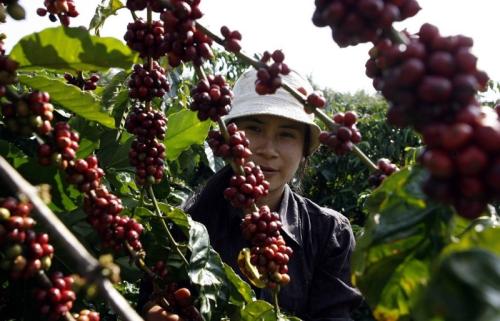
According to the Vietnam Coffee-Cocoa Association (VICOFA), the country's total coffee area reached over 720,000 hectares in 2023, with Robusta making up about 95%.

In the first eight months of 2026, Vietnam exported approximately 1.3 million tons of coffee, valued at $6 billion, increasing by 13.1% in volume, but decreasing by 9.1% in value, compared to the same period in 2025, according to reports from the Ministry of Agriculture and Environment

Germany, Italy, and Japan remain Vietnam's three largest coffee markets, with market shares of 13.2%, 8.2%, and 7.1%, respectively. However, the export value to all three markets has declined compared to the previous year. Conversely, among the top 15 largest markets, China recorded the strongest growth in export value (up 72.7%), while Malaysia saw the sharpest decline (down 26.7%).

Vietnamese coffee exports are currently facing a challenge from increasing value rather than merely boosting output. Given the sector's significant advantage in Robusta, experts believe that controlling quality from raw material areas, diversifying products, and innovating procurement methods are key requirements to elevate the value of the Vietnamese coffee bean.

For years, Vietnam has been among the world’s top producers of Robusta coffee, accounting for approximately 40% of the global supply. Coffee is also the primary livelihood for hundreds of thousands of farming households, particularly in the Central Highlands region.

However, large-scale production has not yet translated into optimized value. Issues regarding seedlings, nutrition, irrigation, harvesting, grading, and procurement methods are necessitating a total reorganization of the value chain.

According to the Vietnam Coffee-Cocoa Association (VICOFA), the country's total coffee area reached over 720,000 hectares in 2023, with Robusta making up about 95%. In the 2024–2025 crop year, Vietnam exported over 1.5 million tons of coffee, earning a turnover of more than $8.4 billion.

Despite this scale, Vietnam has yet to build a sufficiently strong global brand. Vietnamese Robusta faces four main bottlenecks: inconsistent quality between different farms and batches; the practice of purchasing various quality grades together, which prevents high-quality beans from being identified and priced appropriately; a production mindset focused on yield that ignores input costs, recovery rates, and the long-term health of the trees; and the lack of a unified grading and quality standard system for growers, cooperatives, traders, factories, and buyers to follow.

Consequently, the core issue is not a lack of high-quality beans, but the failure to organize quality differences into distinct, stable, and commercially valuable material lines.

At the recent seminar "Enhancing Vietnamese Robusta from the Roots" held in Lam Dong Province, Vice Chairman of VICOFA, Mr. Thai Nhu Hiep, emphasized that the bottleneck for Vietnamese Robusta lies in the inability to categorize quality distinctions into clear, stable material streams that command corresponding commercial value.

To enhance the value of Robusta, VICOFA suggests the industry focus on four restructuring requirements:

First, organize raw material areas according to specific usage goals and quality levels.

Second, build a green bean grading system based on measurable indicators that can be used consistently across the entire supply chain.

Third, shift to quality-based procurement. This requires a transparent process: announcing requirements before the season starts, providing production guidance, implementing separate receiving and proper sampling, and paying based on specific quality grades.

Fourth, transform agricultural extension services from merely providing input guidance to managing the profitability of farming households.


Dollar dips to 7-month low against dong

Dollar dips to 7-month low against dong

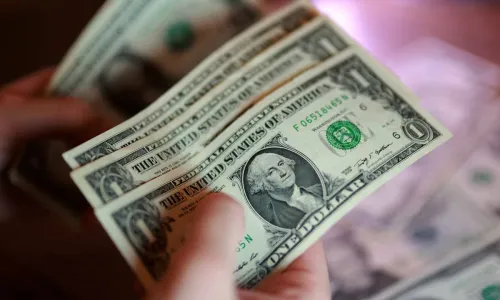
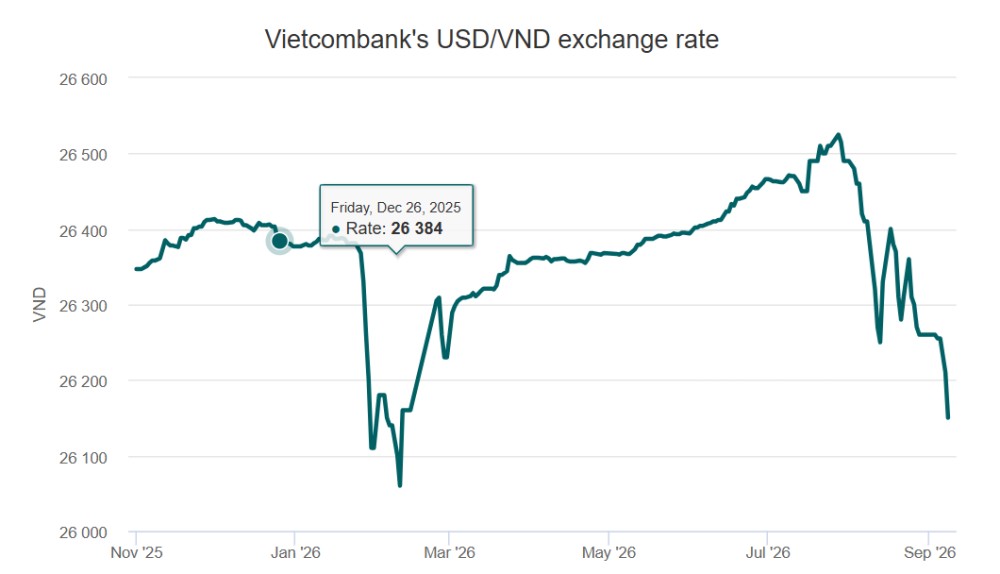
The U.S. dollar fell against the Vietnamese dong Tuesday morning, hitting the lowest since Feb. 9.

Vietcombank sold the dollar 0.22% lower at VND26,150.

On the black market the greenback declined 0.12% to VND25,780.

Globally the Japanese yen climbed to a seven-month high against the U.S. dollar on ‌Tuesday, as traders continued to unwind short positions amid growing bets of a Bank of Japan interest-rate hike while the dollar was subdued ahead of CPI data this week, Reuters reported.

The yen strengthened to as much as 152.89 per dollar in morning trading, surpassing levels reached during Japan's July intervention and hitting its strongest since February. It later pared some gains and was last at 153.32.

The dollar index, which measures the greenback against a basket of currencies, was a touch weaker at 98.83 amid yen strength. It has risen 0.60% so far this year.

That left the euro and sterling both largely flat, last at $1.1625 and $1.3535, respectively.

See all blog