Lumen Vietnam Fund

Blog

Vietnam's international air passenger traffic rises 15.4% in 6M

Vietnam's international air passenger traffic rises 15.4% in 6M

International air passenger traffic reaching 26.2 million in the first six months of 2026.

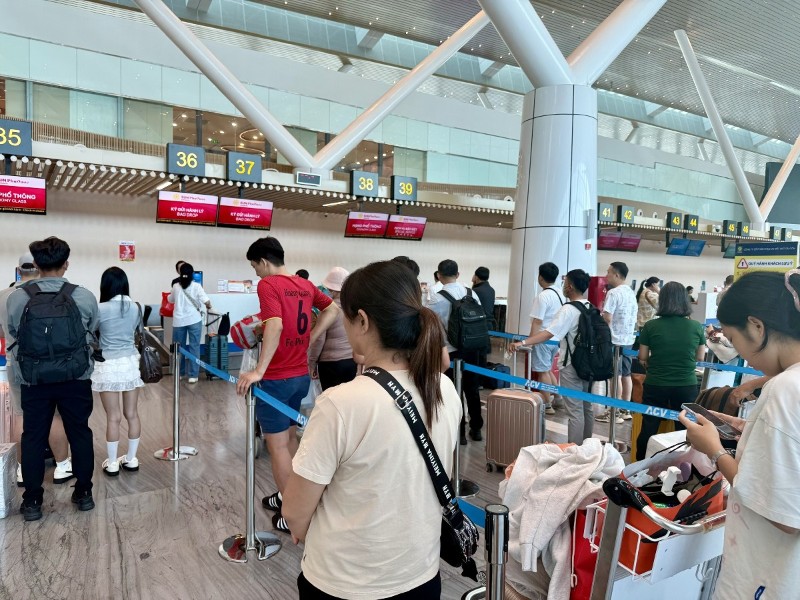
Vietnam's international air passenger traffic reached 26.2 million in the first six months of 2026, as of June 15, up 15.4% from the same period last year, according to statistics from the Civil Aviation Authority of Vietnam.

Vietnamese airlines carried 9.6 million international passengers during the period, a modest 0.2% increase year-on-year, accounting for 36.6% of the total international passenger traffic.

On the domestic market, passenger traffic reached 18.7 million, up 0.3% from the same period in 2025.

International air cargo traffic also recorded strong growth, reaching 706,700 tons, an increase of 21.3% year-on-year. Vietnamese airlines transported 119,000 tons, up 8.6%, accounting for 16.8% of the total international air cargo volume.

Meanwhile, domestic air cargo traffic stood at 216,400 tons, down 7% compared with the same period last year.

Vietnamese airlines currently operate 109 international routes connecting the country with 22 countries and territories. Meanwhile, foreign carriers from 41 countries and territories are operating 235 scheduled international routes to Vietnam.

The strong increase in international passenger traffic reflects the continued recovery and expansion of Vietnam's international aviation market, supported by growing travel demand and the expansion of international flight networks.

Source: Thanh Thủy

Latest Posts

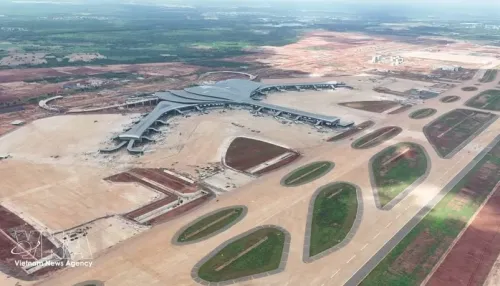
Major works at Long Thanh International Airport gather pace towards completion

Major works at Long Thanh International Airport gather pace towards completion

Construction of several key components of Long Thanh International Airport is entering its final stages as contractors accelerate progress to meet the project's completion schedule, according to the Airports Corporation of Vietnam (ACV).

​The ACV said on July 20 that contractors are deploying additional workers and equipment to speed up construction under Component Project 3, which covers the airport's essential aviation infrastructure. Major facilities, including the first and second runways, taxiways, aircraft aprons, the passenger terminal apron and the aircraft fuel supply system, are approaching completion.

The first runway, together with its associated taxiways and aircraft parking apron, has reached nearly 91% of the contracted workload. Construction of the runway and airside taxiway system has been largely completed, while technical test flights were successfully carried out in December 2025. The package is expected to be finished by the end of July.

Construction of the passenger terminal aircraft apron has also made significant progress, with nearly 90% of the contract completed. The underground service tunnel for ground support equipment and the drainage system have already been finished, while foundation works and concrete paving have reached around 99%. Contractors are now completing concrete joint sealing, service roads, mechanically stabilised earth retaining walls, retention ponds and other supporting infrastructure. The package is scheduled for completion by the end of August.

The airport's aircraft fuel supply system has reached about 88% completion. Meanwhile, construction of the second runway and its taxiways is progressing rapidly. The runway pavement structure has been completed, and contractors are finishing the remaining concrete works. This package is expected to be completed by the end of September.

The passenger terminal, the airport's largest and most important structure, has now reached more than 67% of its contract value.

The building's structural construction is scheduled for completion in September, after which contractors will begin testing major systems and equipment, including baggage handling, baggage screening, aircraft docking guidance systems, escalators, moving walkways and elevators.

Other key facilities, including internal airport roads, technical infrastructure, airport management systems, the multi-storey car park and cargo terminal No. 1, are also being built on schedule and are expected to begin operation simultaneously by the end of the year.

According to the ACV, Component Project 3 has completed nearly 78% of the total value of signed contracts. The project's main construction packages alone have achieved nearly VND58 trillion (about US$2.2 billion) in completed work, equivalent to around 70% of their total contract value.

Nearly 7,200 workers are currently working on the site, and the ACV has instructed contractors to recruit an additional 2,000 personnel to ensure the airport is ready for commercial operations by the end of the year.

The ACV acknowledged that the rainy season poses significant challenges, particularly for earthworks, cement concrete paving and asphalt construction carried out outdoors.

To minimise weather-related disruptions, contractors have been instructed to implement detailed rainy-season construction plans, prioritise indoor work during periods of heavy rainfall, strengthen on-site drainage systems, install backup pumps in construction areas and adjust work schedules flexibly in response to changing weather conditions.

Vietnam and India eye $25 bln bilateral trade by 2030

Vietnam and India eye $25 bln bilateral trade by 2030

According to data from the Vietnam Customs (Ministry of Finance), bilateral trade turnover between Vietnam and India reached nearly $8.37 billion in the first five months of 2026, a 28.4% increase over the same period in 2025.

Despite mounting pressure from stringent technical barriers and rising trade protectionism, import-export turnover between Vietnam and India recorded impressive growth in early 2026. This positive momentum reinforces the roadmap toward a $25 billion bilateral trade goal by 2030.

According to data from the Vietnam Customs (Ministry of Finance), bilateral trade turnover between Vietnam and India reached nearly $8.37 billion in the first five months of 2026, a 28.4% increase over the same period in 2025.

Specifically, Vietnam’s exports to India hit $4.94 billion (up 19%), while imports from India reached $3.4 billion (up 44%). As a result, Vietnam continues to maintain a significant trade surplus of $1.5 billion.

The primary drivers of Vietnam’s export growth remain processing, manufacturing, machinery, and electronics.

Leading the export categories were telephones and components, reaching $113 million and accounting for 20% of the total export turnover. This was followed by computers, electronic products, and components at $767 million (up 27%, accounting for 15.5%), and machinery, equipment, and spare parts at $536 million (up 36%, accounting for 10.8%).

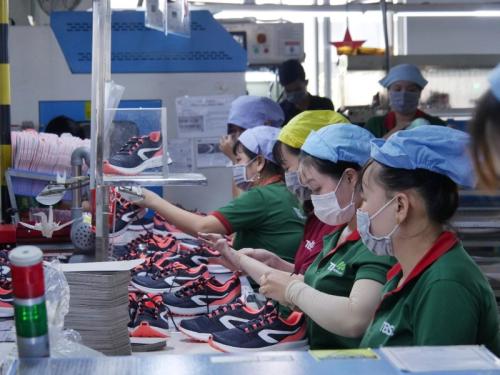
Beyond these staples, several other export groups recorded record-breaking growth rates, including footwear (up 417.7%), coffee (up 412.2%), plastic raw materials (up 104.3%), and textiles and garments (up 34.3%), among others.

To effectively implement the Vietnam-India Comprehensive Strategic Partnership, support Vietnam's double-digit economic growth goal in 2026, and achieve the $25 billion trade target by 2030, the Vietnam Trade Office in India has proposed several key solutions:

First, the Ministry of Industry and Trade should lead the development of an Action Program for the 2026–2030 period. This includes strengthening bilateral trade dialogue mechanisms to remove BIS (Bureau of Indian Standards) barriers and trade remedies, promoting the upgrade of the ASEAN-India Trade in Goods Agreement (AITIGA), and prioritizing trade promotion in electronics, mechanics, construction materials, pharmaceuticals, and energy.

Second, the Ministry of Agriculture and Environment should accelerate negotiations for market access for agricultural and aquatic products while resolving quarantine bottlenecks. Specifically, the Department of Animal Health is urged to review records related to facility approval code 747 and consider updating the business name from M/s Penver Foods to Fair Exports (India) Private Limited, as submitted by the Indian side, to ensure a stable supply of processing materials.

Third, the ministries of Science and Technology, and Finance are encouraged to implement cooperation in high-tech, semiconductors, and AI, while supporting businesses in meeting quality standards. Additionally, they should promote payment facilitation solutions to reduce transaction costs, shorten customs clearance times, and optimize logistics.

Fourth, the Ministry of Construction should proactively attract Indian investment into infrastructure and seaport projects.

Finally, the Ministry of Culture, Sports, and Tourism should leverage Air India’s direct New Delhi – Hanoi flight route to boost MICE (Meetings, Incentives, Conferences, and Exhibitions) tourism, wedding tourism, and cultural exchanges. Concurrently, local provinces are encouraged to actively build portfolios to call for Indian investment.


Standard Chartered raises 2026 GDP growth forecast for Vietnam to 9.5%

Standard Chartered raises 2026 GDP growth forecast for Vietnam to 9.5%

VOV.VN - Standard Chartered has lifted its 2026 GDP growth forecast for Vietnam to 9.5%, citing strong economic momentum and a supportive policy environment, according to its latest assessment report.

The bank expects the positive momentum to continue into 2027, with GDP growth projected at 11.0%.

Meanwhile, Standard Chartered has also lowered its inflation forecasts to 4.4% for 2026 and 3.3% for 2027, reflecting an improved inflation outlook. The bank expects the policy rate to remain unchanged as authorities continue to balance growth objectives with inflation management.

Tim Leelahaphan, Senior Economist for Vietnam and Thailand at Standard Chartered Bank, said "Vietnam's economy has demonstrated remarkable resilience in the first half of 2026, supported by stronger-than-expected growth across manufacturing, services and investment activity, alongside continued policy support."

“While global uncertainties and inflationary pressures remain factors to monitor, Vietnam enters the second half of the year from a position of strength. Strong domestic demand, continued investment in infrastructure and productive capacity, and ongoing economic transformation are helping to create a more balanced and resilient growth model that can support Vietnam’s long-term development ambitions,” Leelahaphan added.


See all blog