Vietnam’s industry ministry backs Hai Phong LNG power project over renewable alternative
Vietnam’s Ministry of Industry and Trade (MoIT) has recommended the LNG Hai Phong power plant project in Hai Phong city be proceeded while awaiting the Prime Minister’s decision on a proposal to replace it with a complex combining renewable energy and battery energy storage.
director of the Electricity Authority of Vietnam, said the LNG power project was included in the eighth National Power Development Plan (PDP VIII) and its revised version, approved under the Prime Minister's Decision 768/QD-TTg.
As one of 12 LNG-fired power projects incorporated in the national plan, it received in-principle investment approval, completed investor selection, and broke ground in September 2025, Hung said.
The project, with Vingroup as the investor, also reached several key milestones, including an agreement with US-based GE for gas turbines.
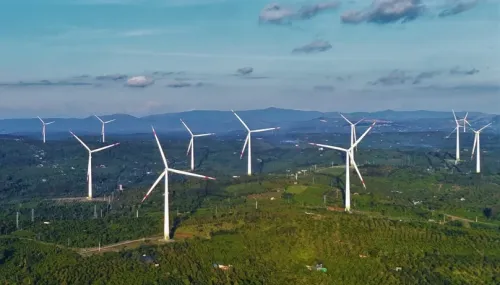
Earlier, the ministry received a proposal to develop a renewable energy complex combined with a battery energy storage system (BESS) as an alternative to the LNG power plant.
After reviewing the proposal, the ministry reported to the Prime Minister and recommended proceeding with the LNG Hai Phong project in line with the approved power development plan.
The ministry has also sought the Prime Minister’s direction on the proposed battery storage and renewable energy complex. "Further details will be provided once the competent authorities make a decision," Hung said.
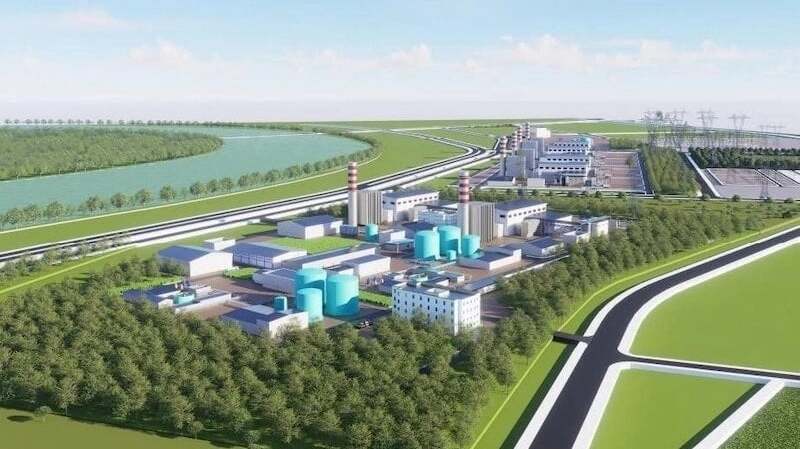
Vingroup and its energy subsidiary VinEnergo officially broke ground on the Hai Phong LNG power project in September 2025. Located in Tan Trao Industrial Park in Hai Phong city, the project covers nearly 100 hectares and has a total investment of more than VND178 trillion ($6.88 billion). Construction is expected to take five years, with the plant scheduled to begin operations by the end of 2030.
The facility will have a planned capacity of 4,800 megawatts, developed in two phases. The first phase will provide 1,600 MW, while the second will add 3,200 MW.
The plant is expected to generate 9.6 billion kilowatt-hours of electricity annually in the first phase, rising to 19.2 billion kWh when the second phase is operational.
The electricity will supply industrial production at Tan Trao Industrial Park and feed additional large-scale capacity into Vietnam’s national grid.
Source: Hai Yen