Lumen Vietnam Fund

Blog

Vietnam unveils first domestically designed security chip

Vietnam unveils first domestically designed security chip

Testing showed that the chip can encrypt and decrypt data approximately 15 times faster than a purely software-based solution performing the same tasks.

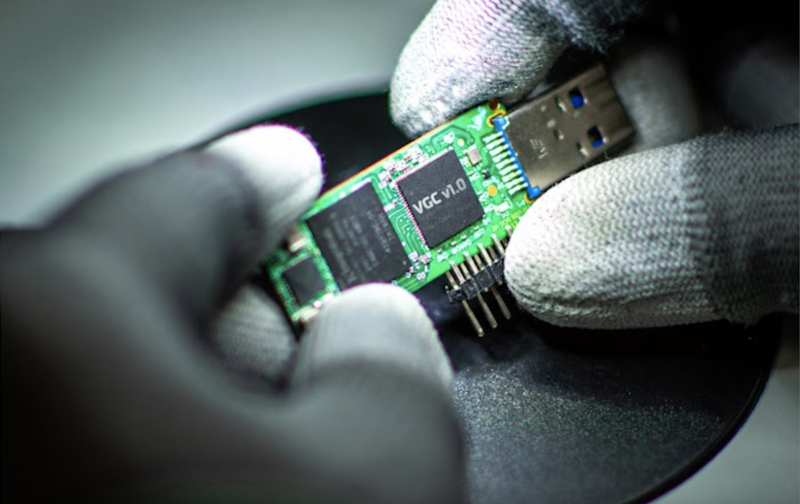
Vietnam’s Government Cipher Committee and military-run telecom group Viettel on November 3 unveiled the VGC v1.0 security chip, alongside the country’s first domestically designed secure semiconductor platform.

The launch marks a milestone for Vietnam’s semiconductor and national cryptographic security industries, bringing Vietnamese cryptographic algorithms directly onto silicon and laying the groundwork for protecting digital sovereignty through core technologies.

Presenting the results of the VGC v1.0 design and manufacturing project and the development of the secure semiconductor platform, Lieutenant General Vu Ngoc Thiem, head of the Government Cipher Committee, said that in today’s digital environment, information protection must begin at the hardware level where cryptographic operations are performed. He stressed that national sovereignty is increasingly linked to the ability to protect data, secure information systems and master essential technologies.

To meet these requirements, the committee and Viettel jointly developed the secure semiconductor platform, with VGC v1.0 as its first product.

The chip measures 10 × 10 mm in package size, contains 300 million transistors and is manufactured using a 28-nanometre CMOS process.

Testing showed that the chip can encrypt and decrypt data approximately 15 times faster than a purely software-based solution performing the same tasks. Engineers also implemented technical measures to protect the chip’s design before it was sent to the manufacturing plant, helping reduce the risk of information leakage or reverse engineering.

Internationally, manufacturers have integrated dedicated security chips or hardware into digital devices to support cryptographic processing and data protection. Examples include Google’s Titan M chip in selected Pixel devices and Apple’s Secure Enclave technology. VGC v1.0 follows a similar development approach.

In the first quarter of 2026, the initial batch of VGC v1.0 chips passed technical testing and received certification for use in socio-economic activities.


Source: Thuy Dieu

Latest Posts

Vietnam's trade surplus accelerates in October

Vietnam's trade surplus accelerates in October

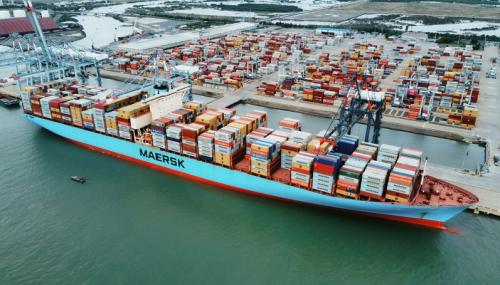
Vietnam's trade surplus widened sharply to $7.31 billion in October, significantly higher than the previous month's level. Two consecutive months of trade surpluses helped narrow the cumulative trade deficit in the first 10 months to $12.07 billion, bolstering expectations that the full-year 2026 deficit could fall below $10 billion.

A turning point for the trade balance

According to the National Statistics Office's report on the socioeconomic situation in October and the first 10 months of 2026, Vietnam's total merchandise trade was preliminarily estimated at $122.03 billion in October, up 3.7% from the previous month and 47.4% year-on-year.

Exports reached $64.67 billion, up 8.7% month-on-month and 51.4% year-on-year, while imports stood at $57.36 billion, down 1.4% from September but still up 43.1% from a year earlier.

The gap between exports and imports resulted in a merchandise trade surplus of $7.31 billion in October, significantly higher than the $1.3 billion recorded in September. This marked Vietnam's second consecutive month of trade surplus, indicating an improvement in the trade balance after several months of deficit.

In the first 10 months, total merchandise trade reached $1,010.55 billion, up 32.3% year-on-year. This was the first time Vietnam's trade turnover had exceeded the $1 trillion mark.

Exports totalled $499.24 billion, up 27.5%, while imports reached $511.31 billion, up 37.4%. As imports grew faster than exports, Vietnam still recorded a merchandise trade deficit of $12.07 billion, compared with a surplus of $19.49 billion in the same period last year.

The surpluses in September and, particularly, the sharp increase in October have therefore helped narrow the cumulative trade deficit considerably. However, this cannot yet be taken as evidence of a sustained reversal in the trade deficit trend, as import growth in the first 10 months remained nearly 10 percentage points higher than export growth.

Trade turnover exceeding $1 trillion reflects a strong expansion in international trade, but also highlights continued high demand for imports serving production, business activities and investment. As a result, the trade balance in the final two months of the year will depend not only on whether export momentum can be sustained but also on the composition and pace of import growth.

A test for the final two months of the year

At the Ministry of Industry and Trade's regular press briefing for the third quarter of 2026, Trinh Thu Hien, deputy director of the Import-Export Department, said the year-end peak export season provided grounds to expect the trade deficit in the final months and for the whole of 2026 to fall below $10 billion.

The forecast was made when the trade deficit in the first nine months remained close to $20 billion. The subsequent surpluses in two consecutive months, particularly October's $7.31 billion surplus, have strengthened the basis for that expectation.

However, for the full-year trade deficit to fall below $10 billion, Vietnam would need to record a net trade surplus of more than $2.07 billion in the final two months, based on the cumulative deficit of $12.07 billion after 10 months.

One favorable factor is the continued strong growth in exports. In October alone, export turnover rose 51.4% year-on-year, while the 10-month figure increased 27.5%. If orders and deliveries remain strong during the year-end peak season, exports will continue to play an important role in narrowing the trade deficit.

On the other hand, import pressures warrant continued monitoring. Import turnover rose 37.4% in the first 10 months, considerably faster than export growth. Although imports fell 1.4% month-on-month in October, they were still up 43.1% year-on-year. This indicates that pressure on the trade balance has not yet fully eased.

However, the trade deficit should not be assessed solely in terms of the size of the surplus or deficit, Nguyen Tuan Viet, CEO of Vietgo, a trade consulting company, told The Investor. He said a trade deficit over a given period could reflect the accumulation of domestic capacity if imports were used for investment, production-line upgrades and technological development.

According to Viet, it is important to distinguish between imports serving production, investment and technology upgrades and those that fail to generate commensurate added value.

"If we want to move fast, we need to import technology and gain access to and apply the world's most advanced technologies," he said.

When translated into new production capabilities, imported resources can lay the foundation for improving product quality and the competitiveness of domestic businesses.

This perspective suggests that improving the trade balance is not simply a matter of reducing imports to achieve a surplus. More important is improving the efficiency of imports, developing domestic production capacity and enabling Vietnamese businesses to participate more deeply in supply chains. These are also prerequisites for export growth to generate greater added value for the economy.

October's sharp increase in the trade surplus has brought Vietnam closer to its goal of keeping the full-year trade deficit below $10 billion, but the final two months will remain a crucial test. Alongside sustaining export momentum, the challenge will be to ensure that imports serving production and technological innovation translate into genuine competitiveness rather than simply expanding trade turnover.


Vietnam’s FDI attraction hits $54.85 billion in 10M

Vietnam’s FDI attraction hits $54.85 billion in 10M

This marking the highest level recorded since 2009.

Vietnam attracted $54.85 billion in registered foreign direct investment (FDI) this year, as of October 31, 2026, up 74 per cent from the same period last year and the highest level recorded since 2009, according to a report released by the National Statistics Office on November 3.

The strong growth was largely driven by a surge in newly registered investment. During the 10-month period of 2026, Vietnam licensed 3,478 new projects, up 4.7 per cent year-on-year, with registered capital reaching $30.73 billion, 2.2 times the figure recorded in the same period of 2025. This indicates a growing concentration of investment in large-scale, high-technology projects.

Investor confidence was also reflected in additional capital commitments by existing investors. A total of 1,079 previously licensed projects registered capital increases worth $16.13 billion, up 33.2 per cent year-on-year.

Foreign investors also made 2,616 capital contribution and share purchase transactions worth $7.99 billion, an increase of 49.6 per cent. Of these, 828 transactions added $3.28 billion to companies’ charter capital, while 1,788 share purchases worth $4.71 billion did not increase charter capital.

Manufacturing and processing continued to attract the largest share of FDI. The sector secured $14.61 billion in newly registered capital, accounting for 47.5 per cent of the total. Including adjusted capital, its combined registered investment reached $24.19 billion, or 51.6 per cent of the $46.86 billion in new and adjusted project capital.

Among 80 countries and territories with newly licensed projects, Singapore ranked first with $9.52 billion, representing 31 per cent of newly registered capital. South Korea followed with $5.81 billion (18.9 per cent), ahead of Luxembourg with $4.99 billion (16.2 per cent). Other major investors included Hong Kong (China), with $3.57 billion; China with $2.77 billion; Japan with $1.58 billion; and the Netherlands with $438.5 million.

Disbursed FDI in the first 10 months was estimated at $24.08 billion, up 13.1 per cent year-on-year and the highest disbursement recorded for the same 10-month period in the past five years.


CPI rises 4.57% in first 10M of 2026

CPI rises 4.57% in first 10M of 2026

Transport sector making the biggest contribution to the overall CPI increase, driven by petrol price hike.

Vietnam’s consumer price index (CPI) increased by 0.20 per cent in October compared with the previous month, while average CPI for the first 10 months of 2026 rose 4.57 per cent year-on-year, according to a report released by the National Statistics Office on November 3.

Of the 11 major groups of consumer goods and services, seven recorded price increases in October, while four saw declines.

Among the groups posting increases, transport recorded the largest rise, at 2.66 per cent, making the biggest contribution to the overall CPI increase, adding 0.27 percentage points. This was mainly driven by a 6.86 per cent increase in petrol prices and a 0.75 per cent rise in diesel prices, following adjustments in line with international fuel market trends.

Meanwhile, lower prices in four consumer groups helped moderate overall inflation.

Culture, entertainment and tourism recorded the sharpest decline, at 0.87 per cent. October marked the low season for both domestic and international tourism, with domestic travel service prices falling 1.27 per cent, outbound tourism services dropping 1.03 per cent, and hotel and guesthouse accommodation prices decreasing 1.72 per cent.

Notably, prices in the food and catering services group fell 0.24 per cent, directly reducing overall CPI by 0.09 percentage points.

Core inflation declined 0.05 per cent month-on-month in October but rose 4.04 per cent year-on-year. On average, core inflation increased 4.24 per cent in the first 10 months of 2026, below the corresponding 4.57 per cent rise in headline CPI.


See all blog