Lumen Vietnam Fund

Blog

Vietnam sets sights on 100,000 digital tech firms by 2030

Vietnam sets sights on 100,000 digital tech firms by 2030

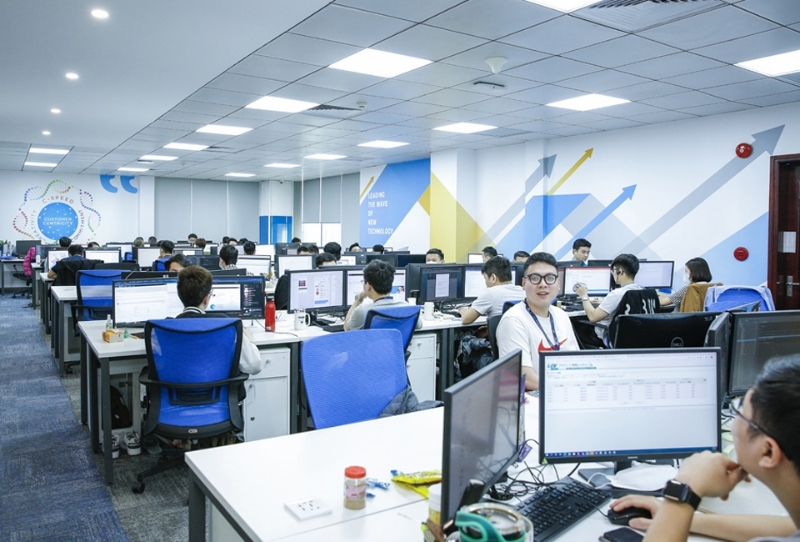
Growing the number of firms will scale up the digital ecosystem, while increasing revenue will facilitate market expansion and deeper integration into global value chains.

Through initiatives ranging from R&D support and regulatory sandboxes to initial market creation, Vietnam’s digital technology development program aims to build a comprehensive ecosystem where domestic enterprises can grow and master core technologies.

Under the Prime Minister's recently-issued Decision No. 840/QD-TTg, which approves the "Digital Technology Industry Development Program through 2030, with a Vision to 2045," the government has set a target for the digital technology sector to reach a minimum revenue of $300 billion by 2030. Export turnover for digital products and services is projected to hit at least $55 billion annually, supported by a workforce of 100,000 digital technology enterprises.

Speaking at a press conference of the Ministry of Science and Technology on June 1, Mr. Tran Anh Tu, Deputy Director of the Information Technology Industry Department (under the ministry), emphasized that the program is built on the "Make in Vietnam" spirit. This philosophy extends beyond mere local assembly to prioritize domestic creation, design, and technological mastery.

The ultimate objective is to enable Vietnamese companies to gradually take control of technology and develop branded products and services capable of competing in both regional and international markets.

According to Mr. Tu, the program’s three pillars—expanding the number of enterprises, increasing industry revenue, and fostering technology-mastering firms—are deeply interconnected.

Growing the number of firms will scale up the digital ecosystem, while increasing revenue will facilitate market expansion and deeper integration into global value chains. Meanwhile, mastering technology will enhance R&D capabilities for key products, allowing firms to utilize shared infrastructure effectively and meet the rigorous standards of major international markets.

To realize these ambitious goals, the program outlines several core missions.

First, the program establishes support mechanisms for key digital products and services. It encourages research and "regulatory sandboxes"—controlled testing environments for new products and business models—allowing enterprises the space to innovate and perfect technologies within a safe legal framework.

Second, creating initial markets and solving practical problems. Mr. Tu noted that for businesses to invest long-term in core technology, they require a sufficiently large market to validate their products. This involves identifying real-world challenges that digital solutions can address.

The third group of solutions focuses on strengthening the internal capabilities of digital firms to ensure sustainable growth.

Additionally, the program emphasizes the development of shared infrastructure to serve research and testing, including concentrated digital technology zones, laboratories, and centers for quality assessment of digital products and services.


Source: Bạch Dương

Photo: Illustrative photo
Latest Posts

Twenty-five banks granted extra credit room for social housing, industrial property loans

Twenty-five banks granted extra credit room for social housing, industrial property loans

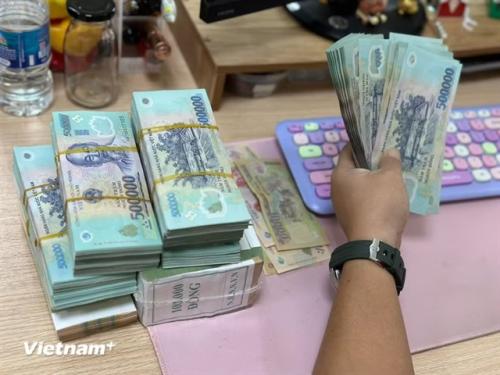
The State Bank of Việt Nam (SBV) has allowed 25 commercial banks to exclude additional lending for social housing, industrial parks and export processing zones from their 2026 real estate credit growth limits, in a move aimed at directing more capital into priority sectors.

HCM CITY — The State Bank of Việt Nam (SBV) has allowed 25 commercial banks to exclude additional lending for social housing, industrial parks and export processing zones from their 2026 real estate credit growth limits, in a move aimed at directing more capital into priority sectors.

Under new guidance issued by the central bank on Saturday, outstanding loans extended to these segments between January 1 and December 31, 2026, that exceed their levels at the end of 2025 will not be counted toward banks’ real estate credit growth ceilings for the year.

The policy aims to create greater room for lenders to expand financing for social housing projects and industrial infrastructure, in line with the Government’s strategy to support affordable housing development, industrial production and socio-economic growth.

The mechanism applies to 25 commercial banks, including major lenders such as VietinBank, Agribank, BIDV, MSB, Sacombank, Eximbank, Nam A Bank, ACB, Saigonbank and Techcombank.

By excluding additional lending to these categories from overall real estate credit controls, the SBV aims to encourage banks to channel more funding into productive and socially beneficial property segments while maintaining oversight of speculative lending.

The central bank said credit growth had accelerated steadily since the start of the year to meet rising capital demand in the economy, with total outstanding loans reaching more than VNĐ19.4 quadrillion (US$737 billion) as of April 28, up 4.42 per cent from the end of 2025 and 18.26 per cent year-on-year.

Outstanding loans to the agriculture and rural development sector stood at VNĐ4.3 quadrillion, accounting for around 22.2 per cent of total credit, while lending to small and medium-sized enterprises reached nearly VNĐ3.8 quadrillion, or about 20 per cent.

Credit growth to export-oriented enterprises and high-tech firms also expanded strongly, up 11.2 per cent and 18.81 per cent respectively in the first quarter.

Meanwhile, outstanding green credit exceeded VNĐ780 trillion, while loans subject to environmental and social risk assessments totalled more than VNĐ5.1 quadrillion.

As of mid-March 2026, total outstanding loans under social housing programmes had reached approximately VNĐ41 trillion.

Of the total, the Vietnam Bank for Social Policies had disbursed more than VNĐ25 trillion, while commercial banks had extended over VNĐ16 trillion.

Experts said the preferential treatment could help accelerate the rollout of social housing projects and improve credit access for industrial park developers, both of which are key to sustaining Việt Nam’s manufacturing expansion and meeting rising demand for affordable urban housing.


Taiwanese FDI into Vietnam: The shift of the value chain

Taiwanese FDI into Vietnam: The shift of the value chain

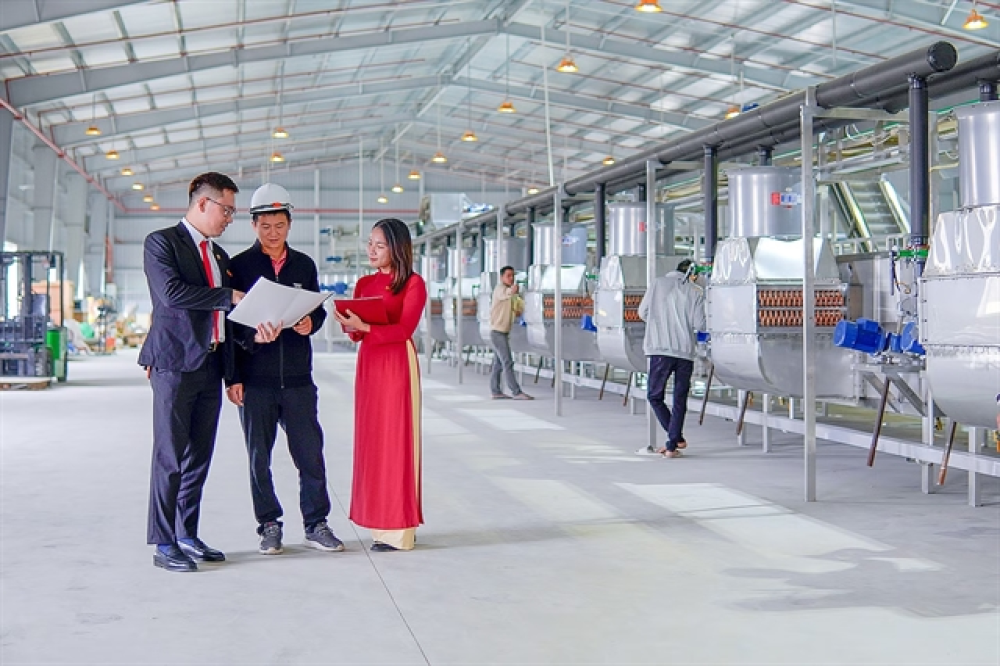
Taiwanese investment in Vietnam is shifting from low-cost assembly toward higher-value sectors such as semiconductors, AI servers, networking equipment, and industrial robotics, positioning the country as a deeper link in the global technology supply chain.

For many years, Taiwanese capital flows into Vietnam were seen mainly as a relocation of manufacturing away from China, but that narrative now appears outdated as firms move beyond simple assembly lines to relocate more advanced segments of the electronics value chain.

A “Taiwanese electronics belt” taking shape in northern Vietnam

Looking at Vietnam’s industrial map, a “Taiwanese electronics belt” is emerging quite clearly. Bac Ninh province serves as the large-scale electronics core; Ninh Binh and Phu Tho provinces are becoming new satellite destinations; while Hai Phong city and Quang Ninh province act as logistics gateways and hosts for new projects.

Electronics major Lite-On recently announced a total investment increase of $149 million in Quang Ninh and Hai Phong, while Accton, a parter of Intel, injected an additional $80 million into its subsidiary in Phu Tho. Ninh Binh has been selected by Quanta for a new production base and by Wistron for expansion projects.

Pegatron has already established operations in Hai Phong and previously announced a multi-phase expansion roadmap in Vietnam, with investment scaling from $19 million in the initial phase to $481 million and $500 million in subsequent stages. Earlier disclosures also indicated the company was considering relocating additional R&D activities to Vietnam.

The most notable is that the technological content of incoming capital is changing. In the past, “electronics” often referred to the assembly of finished consumer products. Today, however, new investments indicate a move toward higher value-added segments.

Lite-On is associated with semiconductor and electronic components; Panjit focuses on power semiconductors; Compal emphasizes AI servers; Quanta is a supplier for Apple; while Pegatron has long considered bringing R&D operations to Vietnam.

Accton specializes in networking equipment and communication solutions and has been ranked at Intel’s “Prestige” partner level. According to Intel’s partner profile, Accton’s applications include AI, cloud computing, high-performance computing, and data storage.

This signals that Vietnam is increasingly attracting supply chain segments related to switches, Wi-Fi, servers, high-speed networking, and AI infrastructure, rather than only consumer electronics.

A similar example is Wistron and the group of suppliers connected to SpaceX. After SpaceX requested several Taiwanese suppliers to move part of their production outside Taiwan due to geopolitical risks, Wistron NeWeb expanded operations in Vietnam.

The company manufactures routers and other networking equipment for Starlink in Ninh Binh, while other suppliers such as Universal Microwave Technology have also invested in Vietnam.

Foxconn: The clearest sign of the shift

Within this landscape, Foxconn stands out as the clearest indicator of the scale of this wave.

In 2024 alone, the group received approval for an additional $551 million investment in two projects in Quang Ninh to manufacture smart entertainment products and intelligent system equipment. Earlier, it had launched a $383 million PCB (printed circuit board) project in Bac Ninh.

When a conglomerate like Foxconn expands from consumer electronics into smart devices, circuit boards, telecommunications components, and then into additional categories, it signals that Vietnam is being positioned as a multi-layered manufacturing platform focused on technological core competencies, not merely as a final assembly location.

Beyond phones and traditional electronics, Fushan Technology in Bac Ninh has expanded into Xbox products, electronic components, wearables, and drones. More recently, the company added humanoid industrial robots and automation equipment to its portfolio of new products.

Another Foxconn subsidiary, Shunsin, is also targeting an $80 million investment in Vietnam to manufacture integrated circuit boards. Clearly, Foxconn no longer views Vietnam as a simple assembly base but increasingly as a location for production tools and technology infrastructure.

At the inauguration ceremony of Foxconn Vietnam’s headquarters office in Hanoi in mid-April 2026, Bac Ninh People’s Committee Chairman Pham Hoang Son stated that Foxconn had implemented 20 projects in the new Bac Ninh, formed via the 2025 merger with Bac Giang province, with total investment reaching about $4 billion.

Why Taiwanese companies choose Vietnam

As of April 2026, Taiwan had accumulated 3,457 investment projects in Vietnam with total registered capital of $42.37 billion, ranking fourth among countries and territories investing in Vietnam, behind South Korea, Singapore, and Japan, according to the Foreign Investment Agency under the Ministry of Finance.

Vietnam possesses several characteristics that make it attractive to Taiwanese businesses.

First is supply chain restructuring. Quanta Computer, one of Apple’s largest contract manufacturers, officially signed agreements and planned construction of a $120 million factory in Nam Dinh province beginning in 2023. In early 2026, Compal stated that it was expanding capacity in the U.S., Taiwan, and Vietnam to meet customer demands for more resilient supply chains.

This shows that Vietnam is no longer merely benefiting from a simple “China+1” model, but from a deeper diversification trend aimed at reducing dependence on a single location, transport corridor, or geopolitical bottleneck.

The second reason is geography. Vietnam is close enough to China that Taiwanese companies do not need to sever ties with existing vendor networks, yet sufficiently distinct to reduce political and cost-related risks. It is also adjacent to Samsung and LG manufacturing complexes, as well as Apple’s supplier ecosystem in northern Vietnam.

For contract manufacturers, this is a major advantage: proximity to components, ports, customers, and suppliers affects supply chain efficiency just as much as labor costs. The rapid concentration of expansion announcements in northern Vietnam near seaports and airports is no coincidence.

The third reason is that northern Vietnam’s industrial infrastructure has become robust enough to support more sophisticated manufacturing segments. Industrial parks, with many developed by foreign-invested groups specifically to attract high-tech capital, alongside ports, logistics systems, and technical labor capabilities, are far more advanced than they were a decade ago.

The Annual FDI Report published by the Vietnam’s Association of Foreign Invested Enterprises in April 2026 emphasized that Vietnam is entering a phase of deeper and more selective FDI attraction, where competitive advantages no longer lie primarily in tax incentives but in stable electricity supply, logistics, digital infrastructure, and the ability to generate long-term spillover effects.

Earlier this year, the Vietnam Economic and Cultural Office in Taipei pointed out that under Taiwanese businesses’ “Go South” strategy, Vietnam is emerging as a strategic venue thanks to its stable political environment, solid macroeconomic conditions, and increasingly open FDI policies.

“For the electronics and semiconductor industries - sectors with extremely high requirements for infrastructure, logistics, and supply chain connectivity, the establishment of concentrated industrial zones is a key factor. That is precisely why the TVT Electronics Supply Chain Campus in Ninh Binh was created,” said Ngo Pham Tran, chairwoman of the Vietnam-Taiwan Business Association (VTBA).

The Taiwan Electrical and Electronic Manufacturers’ Association (TEEMA) considers Vietnam a bright spot in Taiwanese investment strategy, with more than 100 TEEMA member companies already investing in Vietnam. TEEMA affirmed that it would continue supporting Taiwanese firms already present in Vietnam in expanding their supply chains while also creating greater opportunities for Vietnamese businesses to integrate more deeply into regional production networks.

On the other hand, Vietnam still faces weaknesses that need to be addressed in order to attract more high-tech investment from Taiwan and the world.

In March 2026, then Deputy Prime Minister Nguyen Chi Dung acknowledged major shortcomings such as shortages of high-quality human resources, weak R&D capabilities, inadequate technical infrastructure, and limited participation by domestic enterprises.

Ultimately, the stories of Foxconn, Lite-On, Panjit, Quanta, Pegatron, Wistron NeWeb, and Accton are not simply about additional capital injections. They reflect the formation of a Taiwanese electronics manufacturing ecosystem in northern Vietnam.

The remaining question is how Vietnam will leverage this wave of Taiwanese FDI: merely as a location for factories, or as a genuine link in a new global value chain.

Hue expands development space and establishes dynamic economic corridors

Hue expands development space and establishes dynamic economic corridors

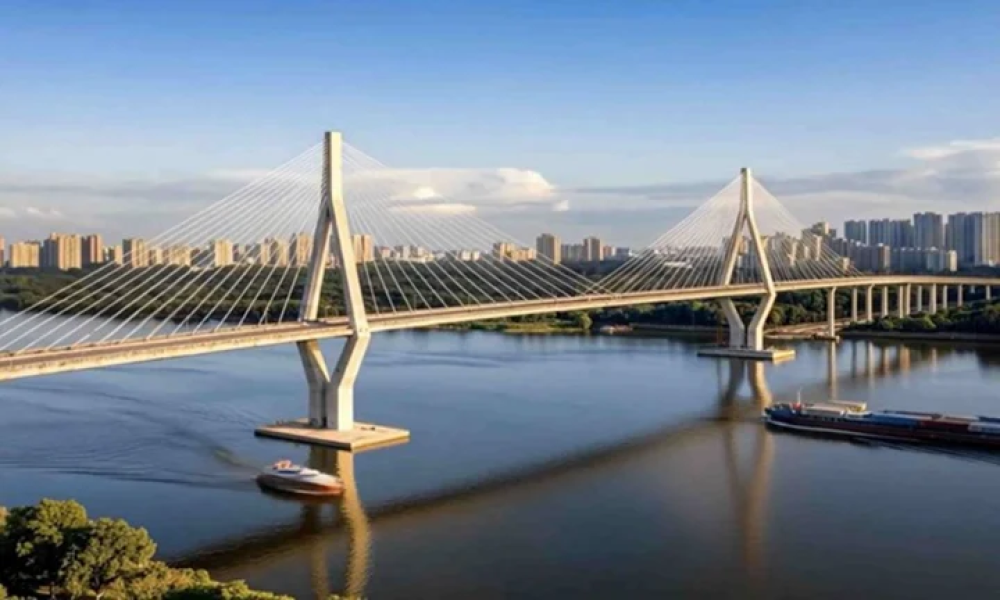
The new planning identifies several strategic growth drivers, including the development of an international logistics center and a Free Trade Zone linked to Chan May Port and Phu Bai International Airport.

The Hue City People’s Committee in central Vietnam has held a conference to announce the adjusted Master Plan for Hue City for the 2021-2030 period, with a vision toward 2050, alongside an investment promotion program for 2026.

According to the adjusted plan, by 2030, Hue strives to become Vietnam’s signature Festival City and a major, unique Southeast Asian hub for culture, tourism, and specialized healthcare. The city also aims to serve as a vital national center for science and technology, innovation, digital transformation, and high-quality education and training.

By 2050, the city is envisioned as a major metropolis with a high level of economic development and a quality of life ranking among the top in the country. It is set to become a premier center for culture, tourism, education, science, technology, and intensive healthcare for both Vietnam and Asia.

The new planning identifies several strategic growth drivers, including the development of an international logistics center and a Free Trade Zone linked to Chan May Port and Phu Bai International Airport. The city will also prioritize the digital technology industry, semiconductor manufacturing, clean energy, and new materials.

Notably, the marine and lagoon economy has been identified as a primary growth pillar, expected to contribute approximately 45-50% of the city’s Gross Regional Domestic Product (GRDP). Meanwhile, the cultural industry is projected to account for about 10% of the GRDP by 2030.

In terms of spatial organization, Hue will be divided into six development zones: the Heritage Zone, Central Zone, Northern Zone, Chan May - Lang Co Zone, Western Ecological Zone, and the West-South Ecological Zone. The city will also establish two dynamic economic corridors (North-South and East-West) and three key urban clusters: the Central City, Phong Dien Urban Area, and Chan May Urban Area.

During the conference, the People’s Committee officially granted Investment Registration Certificates and Decisions on Investor Approval for 12 key projects, with a total investment exceeding VND18.4 trillion (nearly $700 million).

These projects focus on essential sectors such as industrial park infrastructure, non-tariff zones, social housing, education, commerce, and tourism services.


See all blog