Lumen Vietnam Fund

Blog

Vietnam, Poland step up economic, investment, and tech ties under Strategic Partnership

Vietnam, Poland step up economic, investment, and tech ties under Strategic Partnership

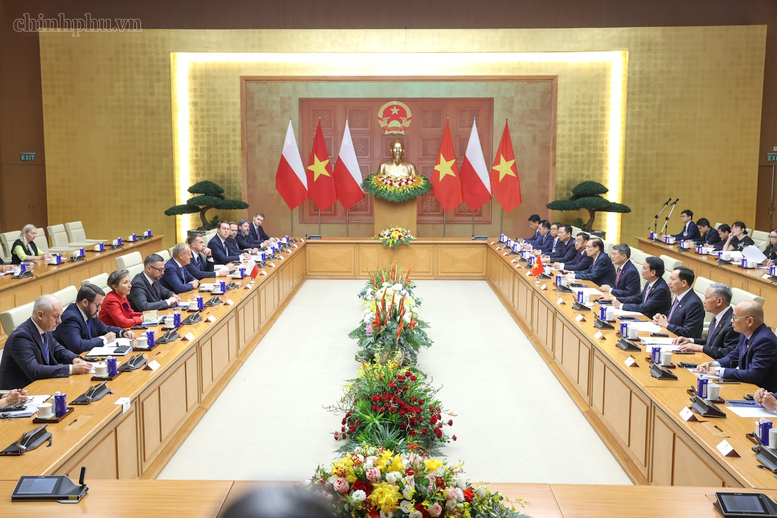
Prime Minister Le Minh Hung and his Polish counterpart Donald Tusk on October 26 agreed to upgrade bilateral relations between Vietnam and Poland to a Strategic Partnership, adopted the joint Action Plan for the 2026-30 period and set a target to raise bilateral trade turnover to $6 billion by 2030.

Vietnam and Poland have identified the economy, trade, and investment as key pillars of their newly established Strategic Partnership, while agreeing to bolster cooperation in science and technology, innovation, digital transformation, and the rollout of a Joint Action Plan for the 2026–2030 period.

During their talks in Hanoi on October 26, Prime Minister Le Minh Hung and his Polish counterpart Donald Tusk agreed to upgrade bilateral relations between Vietnam and Poland to a Strategic Partnership, adopted the joint Action Plan for the 2026-30 period and set a target to raise bilateral trade turnover to $6 billion by 2030 during the latter’s official visit to Vietnam from Ocotober 24-26.

Both sides affirmed their readiness to further deepen cooperation across these sectors, aiming toward a balanced, sustainable, and mutually beneficial trade structure.

Accordingly, the two sides will push for the reduction of non-tariff trade barriers, including sanitary and phytosanitary (SPS) measures, while stepping up coordination between their customs authorities to further facilitate market access for each other's goods.

In agriculture, the two Prime Ministers encouraged relevant agencies to convene the Vietnam – Poland Working Group on Agricultural Cooperation at least once every two years, with the next meeting scheduled no later than April 2027.

Both leaders also underscored the necessity of fully and effectively implementing the EU – Vietnam Free Trade Agreement (EVFTA) to better leverage the cooperation opportunities and potential brought by the pact.

Key sectors drawing significant mutual interest include advanced technology, industry, agriculture, consumer goods, and services.

Beyond trade and investment, Vietnam and Poland agreed to boost cooperation in science, technology, research, innovation, and digital transformation.

In education and training, the two countries will promote cooperation agreements and academic exchanges among universities, research institutes, experts, and students, while encouraging the teaching of the Vietnamese and Polish languages in their respective higher education institutions.

Healthcare and pharmaceutical cooperation were also prioritized, notably through enhanced coordination between the regulatory bodies of both nations to facilitate the prompt and effective execution of joint research and innovation projects.

The two Prime Ministers welcomed the launch of direct flights between Vietnam and Poland operated by LOT Polish Airlines, creating more favorable conditions for people-to-people exchanges.

Rolling out the 2026–2030 action plan

Alongside economic and developmental partnerships, Vietnam and Poland agreed to strengthen defense and security cooperation in line with each nation’s needs, capabilities, and domestic legislation.

In defense, both sides intend to step up experience sharing, defense industry cooperation, defense equipment procurement, and officer training, while enhancing coordination within multilateral frameworks, including United Nations peacekeeping operations.

On security, the two countries agreed to intensify joint efforts to prevent and combat transnational crime, cyber fraud, high-tech crime, drug trafficking, human trafficking, and money laundering, alongside collaboration on addressing illegal migration, safeguarding critical infrastructure, and exchanging information in accordance with each country's laws.

Addressing regional and international matters, both sides emphasized the central role of the United Nations and the importance of upholding an international order based on the UN Charter and international law.

The two Prime Ministers agreed to enhance dialogue and coordination at regional and multilateral forums, continuing to deepen cooperation within the framework of Vietnam – EU relations, especially following the upgrade of Vietnam – EU ties to a Comprehensive Strategic Partnership.

Vietnam and Poland also consented to promote cooperation within the Poland – ASEAN framework following Poland’s accession to the Treaty of Amity and Cooperation in Southeast Asia (TAC), as well as under ASEAN – EU cooperation frameworks. Vietnam welcomed and expressed strong support for Poland’s deeper engagement with ASEAN.

To substantiate cooperation directions under this new framework, Vietnam and Poland agreed to adopt the Joint Action Plan for the 2026–2030 period to implement their Strategic Partnership.


Source: Ly Ha
Latest Posts

Ho Chi Minh City seeks to attract high-quality investment

Ho Chi Minh City seeks to attract high-quality investment

To attract high-quality foreign investment, particularly in high-tech industries and data centres, Ho Chi Minh City needs to secure a stable electricity supply while developing renewable energy infrastructure.

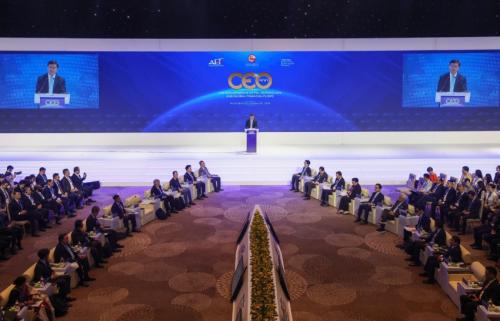
Speaking at the CEO 500 programme, part of the Autumn Economic Forum 2026 in Ho Chi Minh City on October 26, Jian Lu, vice president of Windey International Energy Holding, said the development of emerging technology industries is driving growing demand for green and flexible energy solutions.

"AI data centres have substantial electricity requirements, calling for efficient power supply solutions that can be deployed quickly," Lu said.

According to Lu, integrated systems combining wind, solar, and energy storage could meet a large proportion of an AI data centre's electricity needs, and can be brought into operation more quickly than conventional power plants.

Windey is also exploring the use of low-cost wind power to produce green methanol and green ammonia to meet clean energy demand in industry and transport.

Lu forecast that the cost of producing electricity from integrated wind, solar, and energy storage systems could fall by nearly half over the next five years, driven by advances in materials, manufacturing processes, and technology.

Alongside renewable energy development, the company is also focusing on establishing closed-loop recycling systems for solar panels, wind turbine blades, and energy storage batteries to reduce environmental impacts and promote sustainability throughout the energy value chain.

According to Pham Quoc Anh, executive chairman of Pacifico Energy Vietnam, energy infrastructure must be developed ahead of demand to attract high-quality foreign investment.

Anh said the city needs to focus on addressing two key issues in energy infrastructure development to enhance its competitiveness in attracting high-quality foreign investment.

First, the city needs to plan offshore areas and transmission infrastructure for offshore wind power. It should work closely with central ministries and agencies to study and designate offshore wind development zones at an early stage, ensuring compatibility with maritime transport, oil and gas, fisheries, tourism and other uses of marine space.

In particular, integrated planning is needed for offshore wind power collection substations, subsea cable corridors and landfall points, while exploring opportunities to share transmission infrastructure across multiple projects.

“Early planning will help avoid fragmented investment, minimise impacts on marine and coastal areas, and enable more efficient and sustainable offshore wind power development,” Anh said.

The second priority is to prepare electricity supplies to accommodate a new generation of foreign investors, particularly in high-tech manufacturing and data centres.

Anh pointed out that industrial park developers, high-tech manufacturers and data centre investors need to advance assurance of access to a stable, high-quality electricity supply before making investment decisions. Meanwhile, power developers, particularly those supplying electricity on-site or close to consumption centres, need to identify customers in advance and secure long-term power purchase agreements to raise financing.

To address this challenge, Pacifico Energy has proposed that Ho Chi Minh City study a pilot mechanism or platform to consolidate electricity demand from strategic ventures and connect them with energy solution providers.

On this basis, the city could help eligible parties prepare framework agreements in advance covering capacity, supply timelines and commercial terms. Once the projects formally proceed, these agreements could be finalised into direct power purchase agreements or other contractual arrangements permitted under the law.

“This approach could help both power generators and industrial investors shorten preparation times, reduce uncertainty and accelerate investment decisions,” Anh added.

Pacifico Energy is a US-headquartered energy group developing integrated energy infrastructure to support data centres and AI, including a 7.65 GW gas-fired power project in the United States, the largest of its kind to receive a permit in the country.

The group has been operating in Vietnam since 2017, bringing solar and wind power projects into operation while continuing to expand its investment in offshore wind power.

Pacifico Energy is developing a 500 MW offshore wind power project in the waters off Ho Chi Minh City, with an estimated total investment of approximately $2 billion. The project's survey campaign commenced on October 13.


Over $172 mln electromechanical contract awarded for Bac Ai hydropower project

Over $172 mln electromechanical contract awarded for Bac Ai hydropower project

The Bac Ai Pumped-Storage Hydropower Project in Khanh Hoa Province is Vietnam's first pumped-storage hydropower development, incorporated into the National Power Development Plan for the 2021–2030 period with a vision to 2050.

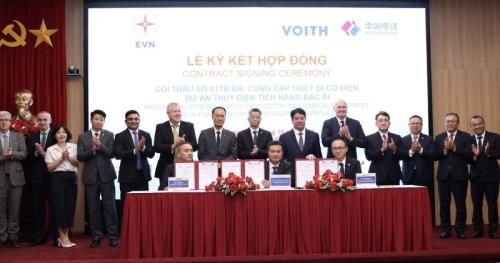
Vietnam Electricity (EVN) and the Voith Hydro Shanghai and Powerchina Zhongnan Consortium (comprising two members: Voith Hydro Shanghai Ltd. and Powerchina Zhongnan Engineering Corporation Limited) on October 26 held in Hanoi a signing ceremony for Package No. 01TB-BA: Provision of Electromechanical Equipment for the Bac Ai Pumped-Storage Hydropower Project in Vietnam's south central Khanh Hoa Province.

Package No. 01TB-BA is the main equipment and materials procurement package of the project, conducted through an open international competitive bidding process. The contractor selection was carried out in strict compliance with state bidding regulations and aligned with the requirements of international lending institutions. The qualified and experienced consortium awarded the contract is the Voith Hydro Shanghai and Powerchina Zhongnan Consortium, with a contract value of over VND4.462 trillion (nearly $173 million) and an execution period of 51 months, ensuring adherence to the project’s overall timeline.

The Bac Ai Pumped-Storage Hydropower Project in Khanh Hoa Province is Vietnam's first pumped-storage hydropower development, incorporated into the National Power Development Plan for the 2021–2030 period with a vision to 2050.

EVN's Board of Directors approved the investment project with a capacity of 1,200 MW across four generating units. Financing for the project is sourced from EVN’s equity and arranged loans from the German Reconstruction Credit Bank (KfW) and the European Investment Bank (EIB).

Once operational, the project will serve as a peaking power source on the national power system's load curve. It will help flatten peak-to-trough demand fluctuations by pumping water to store energy during off-peak hours, generating power during peak demand periods, and providing frequency regulation and reactive power compensation for the grid.


Belgium’s ASCO Industries plans $100 mln aircraft parts plant in central Vietnam

Belgium’s ASCO Industries plans $100 mln aircraft parts plant in central Vietnam

ASCO Industries plans to invest an initial $20 million in an aircraft components factory in Vietnam’s central city of Danang, with the investment potentially rising to $100 million for expansion.

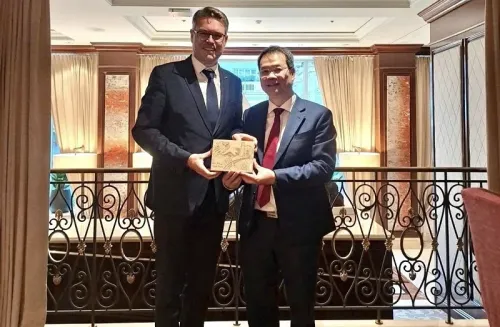
The plan was revealed by ASCO Industries CEO Jerome Morhet at a meeting with Danang People’s Committee Chairman Nguyen Manh Hung last Thursday in Brussels.

The talks took place on the sidelines of a high-level meeting between Vietnamese officials and leading European businesses to discuss investment cooperation and the development of the city’s aerospace industry.

ASCO Industries specializes in manufacturing high-precision structures and components for the aircraft manufacturing industry.

Under an agreement signed in July 2026 between ASCO Industries and the Danang-Tech Park and Industrial Zones Authority (DSEZA), the Belgium company plans to build a 6,000-square-meter aircraft components factory with an initial investment of $20 million. The investment could increase to $100 million in the future.

Morhet is scheduled to meet DSEZA officials in early December 2026 to advance the factory development plan. The facility is expected to begin operations in 2027.

City officials outlined Danang's advantages and strategy for developing high-tech industries, emphasizing the attraction of projects with advanced technology, high added value, and the potential to integrate into global supply chains.

Hung asked DSEZA to engage with ASCO to implement the discussions and cooperation agreement, and to report the results to the city mayor before November 15, 2026.

In the first nine months of 2026, Danang attracted $681.55 million in foreign investment, including $522.2 million in newly-registered capital across 100 projects, according to the municipal government.

By far, the coastal city has had 1,162 foreign-invested projects with total registered capital of $11.28 billion.


See all blog