Lumen Vietnam Fund

Blog

Vietnam PM orders resolution of bottlenecks at GS Energy-backed LNG projects

Vietnam PM orders resolution of bottlenecks at GS Energy-backed LNG projects

Prime Minister Pham Minh Chinh has directed authorities to resolve outstanding obstacles facing the Long An LNG I and II power projects, worth a total of $3.13 billion and backed by South Korea’s GS Energy, as the government seeks to accelerate large-scale energy investments nationwide.

In a conclusion dated December 22 by the Government Office following an early December working session, Chinh tasked Deputy Prime Minister Bui Thanh Son with chairing inter-agency meetings to settle all remaining issues in accordance with regulations, balanced risk-sharing, and fair competition.

Authorities have been instructed to complete the process by December 2025.

The Long An LNG I and II projects received in-principle approval and investment registration certificates in March 2021 from the then Long An province, which was merged into Tay Ninh province in July.

The projects will be developed by VinaCapital GS Energy Pte. Ltd., a joint venture between VinaCapital and South Korea’s GS Energy.

In June 2023, the investors signed an MoU with Export-Import Bank of Korea (KEXIM) on project financing. Local authorities approved the projects’ development plan in April 2024, targeting commercial operation of Long An LNG I by June 2028 and Long An LNG II by June 2031.

In March 2025, Deputy Minister of Industry and Trade Nguyen Hoang Long met GS Energy representatives, during which the investor said it had received feasibility study (F/S) appraisal results from the Electricity Authority of Vietnam and was completing final steps for F/S approval.

The developer is currently negotiating a power purchase agreement (PPA) with EVN Electricity Power Trading Company (EVNEPTC), a unit of state utility EVN, and is preparing to sign a preliminary grid connection agreement with National Power Transmission Corporation (NPT). It is also in talks with PV Gas on pipeline and gas supply arrangements.

In October 2025, a group of LNG power investors, including those behind the Long An projects, petitioned Vietnam’s National Assembly, the country's legislature, to consider special mechanisms for LNG developments, citing persistent bottlenecks in PPA negotiations, gas supply agreements, financing structures, and investment procedures.

Vietnam's first LNG power projects are Nhon Trach 3 and 4 in the southern province of Dong Nai, which were inaugurated on December 14 and are scheduled for commercial operations in early 2026.

Vietnam is planning LNG-fired power plants in some localities such as Quang Ninh, Hai Phong, Hung Yen, Nghi Sơn, Quang Trach, Hai Lang, Ca Na, Bac Lieu, and Long An.

Under the adjusted Power Development Plan VIII (PDP VIII), the country aims to add nearly 37,500 MW of new gas-fired power capacity, with LNG accounting for around 60%.

However, many projects are facing challenges in securing output offtake agreements to ensure stable cash flows, as well as in planning long-term fuel supply volumes and prices.

Source: Hai Yen

Photo: Photo courtesy of Business Korea
Latest Posts

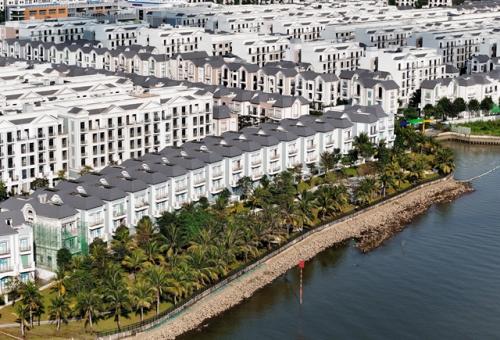
Southern housing market gains momentum on the back of growing infrastructure

Southern housing market gains momentum on the back of growing infrastructure

Experts forecast that in 2026 a stronger shift towards outlying areas, especially projects linked to public transport and green standards, will shape product trends and developers’ strategies.

HCM CITY — The southern housing market is showing clear signs of recovery as macroeconomic conditions stabilise and a series of major infrastructure projects progress rapidly.

New supply in HCM City and neighbouring provinces has increased strongly, led by high-end apartments and low-rise housing, with owner-occupier demand continuing to dominate.

Experts forecast that in 2026 a stronger shift towards outlying areas, especially projects linked to public transport and green standards, will shape product trends and developers’ strategies.

New infrastructure has emerged as a powerful growth driver.

At the “Connecting the Present, Shaping the Future” Housing Real Estate Forum, property consultancy CBRE Việt Nam reported that the outlook for the southern housing market in 2025 and beyond would be reinforced by a stable macroeconomic environment, the region’s GDP growth target of 8 per cent and spillover effects from strategic transport projects.

According to Dương Thùy Dung, managing director of CBRE Việt Nam, the stabilised lending interest rate environment has supported both end-user and investment demand, though the market still needs time to absorb new supply.

The most significant push comes from major transport infrastructure, including Ring Roads Nos.3 and 4, Long Thành International Airport, the Biên Hòa-Vũng Tàu Expressway, the Bến Lức-Long Thành Expressway, and the expanding metro network in the city.

These projects reduce travel times between localities and create strong momentum for rapidly developing satellite urban centres.

The city housing market is expected to see around 12,000 new products in 2025 – 7,600 apartments and 4,400 low-rise houses.

In the apartment segment, high-end and luxury supply is set to dominate, accounting for 90 per cent of new launches, with average selling prices in the last quarter projected to rise by 18 per cent year-on-year.

Among the former provinces – including Bình Dương Province, Long An Province and Bà Rịa–Vũng Tàu Province – Bình Dương alone is projected to add more than 15,800 units, mostly apartments. Long An is expected to supply around 1,300 units, while Bà Rịa-Vũng Tàu is forecast to contribute over 800 low-rise homes.

In addition, Đồng Nai Province is projected to deliver approximately 9,400 units, with low-rise houses making up about 75 per cent of its total.

Across the five key southern localities, total new supply may exceed 39,300 units, double the volume in 2023-24.

Experts say the emergence of new ring roads and expressways is reshaping the region’s urban landscape.

The city will increasingly concentrate on high-end and luxury developments, while surrounding provinces will expand low-rise housing, ecological townships and projects oriented towards public transport.

This fuels a continuing outward shift, as residents seek larger living spaces while commuting times fall to 30-45 minutes.

A representative of a developer in Đồng Nai said buyers were now more cautious, shifting away from speculative activity towards long-term value.

Areas near future metro stations, Ring Road No.3 interchanges or connectors leading to Long Thành were becoming investment hotspots.

Buyers now would prioritise amenity quality, green standards and occupancy rates instead of seeking the lowest prices.

Green living and transit-oriented development (TOD) are also shaping demand.

Võ Huỳnh Tuấn Kiệt, director of residential at CBRE Việt Nam, said two major trends, transit-oriented development and green real estate, were becoming defining pillars of the market.

TOD would form the backbone of urban development, he reckoned.

Projects positioned along metro lines, bus rapid transit corridors or ecological routes typically achieved higher absorption due to reduced commuting times and integrated services.

Meanwhile, green criteria had become essential for younger buyers.

CBRE data shows that new launches in the city have an average selling price of around VNĐ90 million (US$3,700) per square metre, yet absorption remains healthy, particularly in the high-end and luxury segments.

In neighbouring markets, prices are 30-50 per cent lower, aligning well with the budgets of young families purchasing for long-term residence.

Lê Thị Thùy Trang, who lives in Cầu Kiệu Ward and is seeking a home in Hiệp Bình Ward, said her family would prioritise projects near metro lines and with ample green amenities for children.

Although prices are higher, she said the improved living environment and convenience would justify the cost.

New townships in Đồng Nai and Bình Dương Province incorporate parks, running tracks, schools and commercial centres.

Low-rise houses remain popular due to their generous living spaces, which suit multigenerational households.

CBRE Việt Nam expects the southern market to add up to 50,000 new housing units in 2026.

Greater diversity of location, segment and product quality is promoting healthy competition, prompting developers to raise design standards, amenities and service quality.

Economists say this competition benefits buyers since developments become more transparent, better equipped and more efficiently operated.

CBRE representatives said the region’s abundant land availability, excellent connectivity and competitive pricing continued to attract developers from South Korea, Singapore and Japan.

What should investors reasonably expect from IPO stocks?

What should investors reasonably expect from IPO stocks?

Experience from both Vietnam and global markets shows that initial public offering (IPO) stocks rarely deliver immediate gains. However, investors who select companies with solid fundamentals and maintain a long-term holding strategy can be rewarded for their patience.

Across markets, IPO stocks often face short-term price pressure but can offer significant long-term upside, provided the underlying businesses have strong financial foundations and clear growth strategies.

Even global market leaders have experienced difficult beginnings. Meta Platforms, formerly Facebook, is a notable example.

Meta went public on May 18, 2012 at $38 per share, but within four months its stock had plunged more than 50% to a low of $17.5 amid concerns over its business model and ability to monetize mobile users.

As the company later demonstrated success in shifting to mobile advertising and expanding its ecosystem, the stock recovered. Around three years after the IPO, early investors had doubled their money, while those holding until today have seen returns of roughly 15 times, with the share price now near $660.

Robinhood Markets Inc., the U.S.-based online brokerage platform, also illustrates the contrast between short-term volatility and long-term value. Listed on Nasdaq in 2021, Robinhood shares came under heavy selling pressure as the Federal Reserve tightened monetary policy, sending the stock sharply lower after its debut.

As business performance stabilized and markets recovered, the shares gradually rebounded. Investors who held since the IPO have seen the stock rise about fourfold to around $122 per share.

Similar patterns have been observed in Vietnam. BIDV bank saw its shares decline after its 2014 IPO and listing amid weak market conditions and supply pressure from newly issued shares.

Following restructuring efforts, improved efficiency, and steady growth in the banking sector, BIDV was gradually re-rated by the market. Its share price has since risen about 4.5 times from post-IPO levels, delivering strong returns for long-term investors.

Another prominent case is Vietcombank (VCB), which listed on the Ho Chi Minh City Stock Exchange in 2009 when Vietnam’s stock market was in deep decline and the VN-Index had fallen from a peak above 1,100 points to a low of 246.

Despite weak initial performance, Vietcombank’s strong financial position, prudent risk management, and consistent operating results across economic cycles led to a gradual revaluation. Its share price has increased roughly fourfold since the IPO, making it one of the best long-term performers among Vietnamese banks.

A similar story applies to Techcombank (TCB), one of Vietnam’s leading private banks. In April 2018, Techcombank set a record in the domestic banking sector by selling 164.1 million shares to foreign investors at VND128,000 per share, raising about $922 million and valuing the bank at more than VND145 trillion at the time of the IPO ($5.51 billion at current exchange rate).

However, TCB shares fell the maximum 20% on their first trading day, closing at VND102,400. Supported by a well-defined growth strategy and effective governance, Techcombank’s market capitalization has since climbed to nearly VND250 trillion ($9.5 billion), up about 73% from its IPO valuation.

What should investors expect from IPOs?

These examples highlight a common reality in capital markets: an IPO that is successful in terms of capital raising does not necessarily translate into immediate gains in share price after listing.

In 2025, IPO activity and capital raisings regained momentum in Vietnam, with large companies such as Hoa Phat Agriculture, Gelex Infra, Techcombank Securities, VPBank Securities, and VPS Securities entering the market.

This wave has been supported by a more stable macroeconomic environment, relatively low interest rates, and expectations that Vietnam’s stock market is entering a new growth cycle, attracting strong investor interest.

In practice, short-term price performance of IPO stocks depends heavily on market timing and overall market sentiment. When macro conditions are favorable, industry cycles are in an expansion phase, and investor confidence is high, newly listed stocks can post solid gains.

Conversely, during periods of heightened volatility and risk aversion, post-IPO price corrections are common, both in Vietnam and globally. In defensive market phases, capital tends to favor stocks with long trading histories, high liquidity, and proven stability. IPO stocks, where supply-demand dynamics are still imbalanced and information has yet to be fully absorbed by the market, are more vulnerable to selling pressure.

Investor psychology also plays a key role in the post-IPO phase. Many investors enter with expectations of quick profits and are willing to take gains or cut losses if prices do not move as anticipated, adding to supply pressure and amplifying early price swings.

Short-term volatility, however, often fails to fully reflect a company’s intrinsic value. As earnings performance, governance capability, and growth strategies are tested over time and reflected in financial results, the market tends to reprice shares closer to their fundamental value.

As a result, a pattern of “short-term decline, medium- to long-term growth” is frequently observed among high-quality IPO stocks, particularly those with strong balance sheets, sustainable competitive advantages, and clear growth potential.

Overall, lessons from both Vietnam and international markets suggest that while IPO stocks often face short-term pressure driven by market conditions and sentiment, this does not diminish the long-term appeal of strong businesses.

For investors, a reasonable expectation when participating in IPOs is to focus on company quality, market context, and long-term holding potential, rather than immediate gains in the first trading sessions.

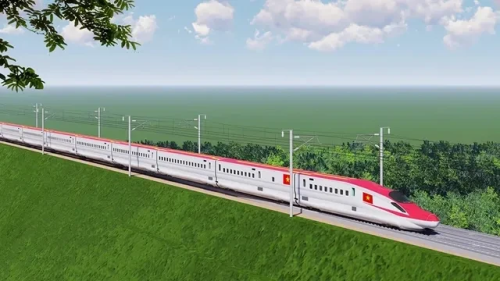
Vingroup withdraws bid for the North–South high-speed railway project

Vingroup withdraws bid for the North–South high-speed railway project

The decision was carefully considered to ensure maximum concentration of resources on strategic infrastructure projects that the group has recently been assigned to implement.

HÀ NỘI — Vingroup JSC has officially submitted a document to the Government requesting to withdraw its investment registration for the North–South high-speed railway project.

The decision was carefully considered to ensure maximum concentration of resources on strategic infrastructure projects that the group has recently been assigned to implement.

A notable example is the Olympic Sports Urban Area project in Hà Nội, covering more than 9,000 hectares.

This is a special, nationally significant project entrusted by the Government to Vingroup, with the aim of showcasing Việt Nam’s national identity to the world.

As such, Vingroup has determined that it must mobilise all available resources to ensure the project is completed on schedule and meets committed quality standards.

In additon, it has also been appointed as the investor for several important transport infrastructure projects, including the Bến Thành–Cần Giờ high-speed railway line and the Hà Nội–Quảng Ninh high-speed railway line.

In addition, Vingroup is concentrating efforts on a series of other major industrial, energy and infrastructure projects, such as the VinMetal steel manufacturing plant, two wind power plants in Kỳ Anh (Hà Tĩnh), the Hải Phòng LNG thermal power plant and the Cần Giờ coastal megacity.

These projects play a significant role in upgrading national infrastructure and production capacity and require substantial investment in capital, time and implementation capability.

Meanwhile, the North–South high-speed railway project has attracted strong interest and investment proposals from a number of capable and experienced enterprises, including THACO Trường Hải, Vietnam Railway Transport Joint Stock Company and Vietnam Investment and Development Group.

Therefore, Vingroup stressed its bid withdrawal for the North–South high-speed railway project will not affect the project’s implementation.

This movewas described as a proactive and responsible approach by the group toward the Government, ensuring the effective execution of assigned projects and contributing to the development of modern, sustainable transport infrastructure, renewable energ, and urban systems.

See all blog