Lumen Vietnam Fund

Blog

Vietnam-Netherlands trade tops $6.7bln in first five months

Vietnam-Netherlands trade tops $6.7bln in first five months

Vietnam’s exports to the Netherlands are projected to grow 18-22% in 2026.

Two-way trade between Vietnam and the Netherlands reached more than $6.7 billion in the first five months of 2026, up nearly 22% year-on-year, according to customs data.

Vietnam’s exports to the Netherlands totaled $6.4 billion, rising 23.2%. The Netherlands has remained Vietnam’s largest European trading partner for several years, marking its third consecutive year in the top position.

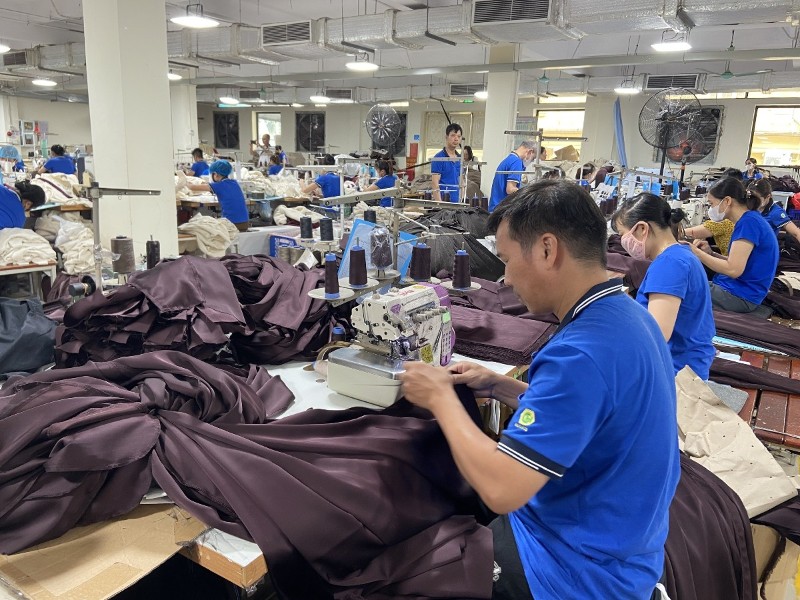
Several export categories recorded strong growth during the period. Shipments of toys, sporting goods and parts surged more than 412%, while wood and wooden products increased 114%. Fruit and vegetables rose nearly 48%, and textiles and garments grew 18.6%.

The Vietnam Trade Office in the Netherlands said the figures reflected a trend of European importers shifting orders to Vietnam as they diversify supply sources beyond traditional markets.

Despite continued economic uncertainties, the office expects Vietnam’s exports to the Netherlands to maintain positive momentum in the second half of the year. Dutch consumer confidence improved from -46% in May to -35% in July, the strongest improvement in more than 11 years. Meanwhile, inflation eased from 3.5% in May to 3.2% in July.

The launch of Vietnam Airlines’ direct Hanoi-Amsterdam service in mid-June is also expected to boost tourism, trade and investment ties.

Vietnam’s exports to the Netherlands are projected to grow 18-22% in 2026.


Source: Vũ Khuê

Latest Posts

Banks accelerate capital increases with billions of new shares

Banks accelerate capital increases with billions of new shares

Lenders employ different combinations of retained earnings, capital reserves and fresh shareholder contributions to expand their charter capital.


HÀ NỘI — Banks are accelerating plans to raise charter capital through bonus shares, stock dividends and rights offerings, with billions of new shares expected to be issued as lenders strengthen their capital base.

Among State-owned banks, BIDV is proceeding with a share issuance from owners' equity, with August 18 set as the record date.

The bank plans to issue nearly 498.2 million shares, equivalent to 6.84 per cent of outstanding shares. Under the 100:6.8433 entitlement ratio, shareholders will receive 6.8433 new shares for every 100 shares held.

The issuance will be funded from the supplementary charter capital reserve based on BIDV's audited 2025 financial statements.

Separately, BIDV will pay a 4.5 per cent cash dividend, equivalent to VNĐ450 per share. With more than 7.2 billion shares outstanding, the payout will total over VNĐ3.27 trillion (US$125 million), with payment scheduled for August 20.

Vietcombank and VietinBank are also preparing 4.5 per cent cash dividends. Vietcombank is expected to distribute around VNĐ3.76 trillion to shareholders, while VietinBank will pay approximately VNĐ3.5 trillion. Both payments are scheduled for August 27.

Private-sector lenders are pursuing larger share issuances.

MBBank has finalised its shareholder list for two simultaneous capital-raising plans: a 15 per cent stock dividend and a rights offering.

The bank plans to issue more than 1.2 billion shares for the dividend, funded from undistributed accumulated profits for 2025. It will also offer nearly 805.5 million shares to existing shareholders at VNĐ10,000 each at a ratio of one new share for every 10 shares held.

HDBank is seeking shareholder approval to distribute a 25 per cent stock dividend, involving up to 1.25 billion new shares. It also plans to issue more than 250 million shares, equivalent to 5 per cent, from its supplementary charter capital reserve. Combined, the two issuances represent 30 per cent of its existing share capital.

TPBank, meanwhile, plans to issue 416.1 million shares as a 15 per cent stock dividend. The shares will be funded from undistributed accumulated profits under its audited 2025 financial statements and will not be subject to transfer restrictions.

If completed, TPBank's charter capital will increase from VNĐ27.74 trillion to VNĐ31.9 trillion.

VIB is preparing to issue more than 323 million bonus shares, equivalent to 9.5 per cent of outstanding shares, with September 11 set as the record date.

Funding will come from its supplementary charter capital reserve and undistributed after-tax profits as of the end of 2025.

Maritime Bank will issue 624 million ordinary shares at a ratio of 20 shares for every 100 held. At a par value of VNĐ10,000 per share, the issuance represents VNĐ6.24 trillion and would lift the bank's charter capital from VNĐ31.2 trillion to VNĐ37.44 trillion.

VietABank is also proceeding with a bonus-share issuance, although it has reduced the ratio to 10.5 per cent from the originally planned 15 per cent. The bank expects to issue up to 85.7 million shares, increasing charter capital by around VNĐ857 billion at par value.

Vietbank, meanwhile, is turning to a rights offering. It plans to sell more than 296.1 million shares to existing shareholders at VNĐ10,000 apiece under a 100:25 entitlement ratio.

The offering is expected to raise nearly VNĐ2.96 trillion, with proceeds scheduled for deployment from the fourth quarter of 2026 through 2027.

If successful, Vietbank's charter capital would rise from nearly VNĐ11.85 trillion to more than VNĐ14.8 trillion.

The series of planned issuances will substantially increase the number of bank shares circulating in the market, while lenders employ different combinations of retained earnings, capital reserves and fresh shareholder contributions to expand their charter capital.


Foreign credit institutions allowed to conduct int’l payments via accounts in Vietnam

Foreign credit institutions allowed to conduct int’l payments via accounts in Vietnam

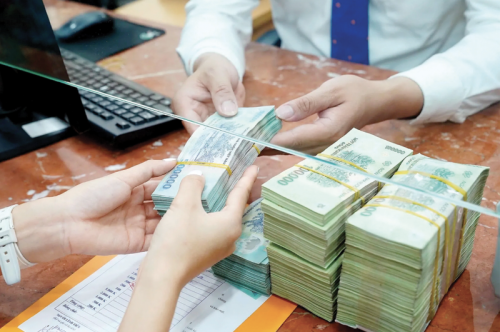
Under a new circular from the State Bank of Vietnam, such payments and money transfers can be conducted from September 19, 2026.

Under Circular No. 39/2026/TT-NHNN, issued recently by the State Bank of Vietnam, foreign credit institutions are allowed to conduct international payments and money transfers via accounts in Vietnam from September 19, 2026.

The Circular has supplemented regulations on the use of foreign currency and Vietnamese Dong accounts opened by non-resident foreign credit institutions at authorized banks in Vietnam, thereby completing the legal framework for correspondent account activities between domestic and foreign credit institutions.

The new policy is consistent with international practices and meets the practical requirements of cross-border payment activities amid increasingly deep international integration, thus facilitating the provision of international payment and money transfer services.

Additionally, foreign credit institutions may also conduct collection and payment transactions in accordance with Circular No. 16/2014/TT-NHNN, issued in 2014 by the central bank.

Other matters related to the use of accounts will be agreed upon in writing by two parties in compliance with Vietnamese law.

According to the new Circular, Vietnamese banks must provide guidance to customers, inspect and retain transaction documents, assume responsibility for the services they provide, and fully comply with regulations on foreign exchange management, cashless payments, as well as anti-money laundering and counter-terrorist financing.

Meanwhile, authorized banks where foreign credit institutions opened accounts must assume responsibility for providing payment and money transfer services through these accounts, while complying with regulations on cashless payments, foreign exchange management and other relevant legal provisions.


Việt Nam: Southeast Asia's second-largest aviation market

Việt Nam: Southeast Asia's second-largest aviation market

Việt Nam moved into second place with 7.3 million seats, up 10 per cent from a year earlier, the fastest growth rate among the Southeast Asian aviation markets analysed by OAG.

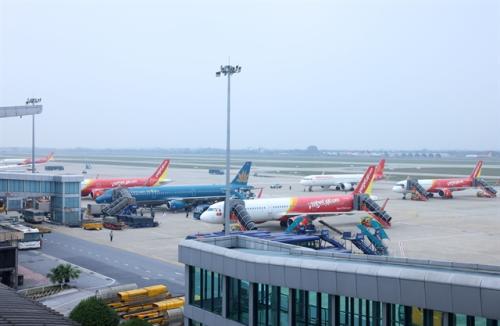
HÀ NỘI — Việt Nam has overtaken Thailand to become Southeast Asia's second-largest commercial aviation market by available seats in August, according to OAG, a global provider of aviation data and analytics.

Việt Nam moved into second place with 7.3 million seats, up 10 per cent from a year earlier, the fastest growth rate among the Southeast Asian aviation markets analysed by OAG.

The increase reflected rising travel demand in Việt Nam, as well as the advantage of a market with several major airports serving passengers across different parts of the country, OAG said.

Another factor highlighted by OAG was cooperation between Vietnamese tourism businesses and airlines. Tour operators often booked large blocks of seats and ran joint promotional and marketing campaigns, helping airlines fill flights more quickly.

The development of new destinations was also creating more room for Việt Nam's international air network to expand.

Thailand ranked third with 7.2 million seats, down 1.7 per cent year on year.

In its August Southeast Asia Aviation Market Briefing, OAG said Indonesia remained the region's largest aviation market, with 11 million seats, up 4.3 per cent year on year.

Capacity also declined in Malaysia and the Philippines, with 5.4 million and 4.8 million seats, down 6.4 per cent and 5.7 per cent, respectively.

Total airline capacity in Southeast Asia increased by 0.8 per cent year on year to 51 million seats in August, OAG said. Domestic capacity rose by 1.4 per cent and accounted for 45 per cent of the region's commercial aviation market, while international capacity was almost unchanged, increasing by 0.4 per cent to 28.2 million seats and accounting for 55 per cent of the market.

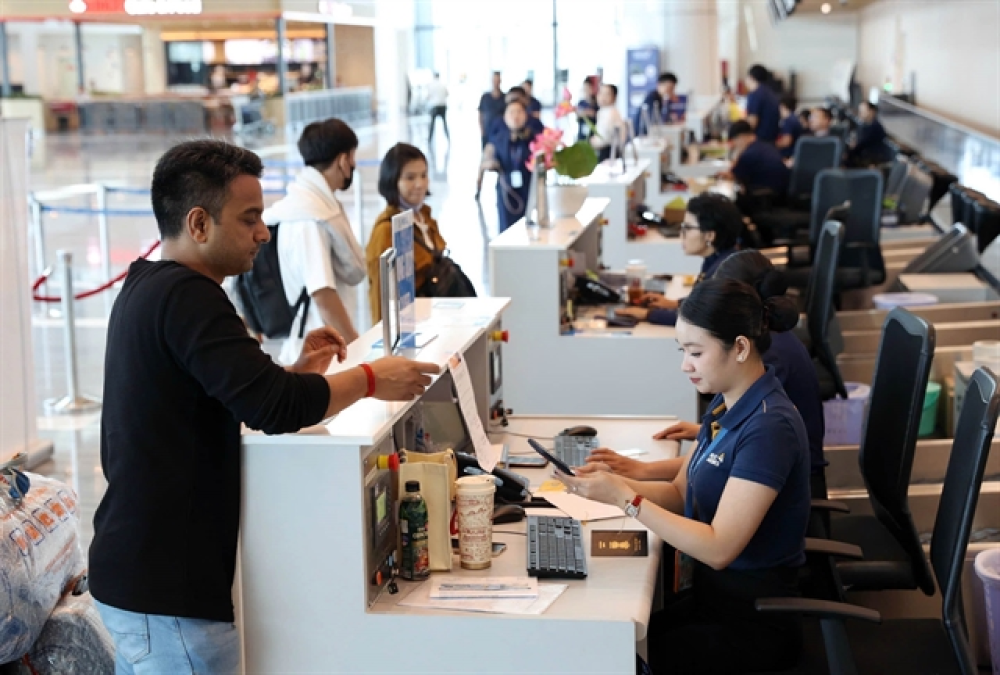
The growth in capacity comes as passenger traffic through Việt Nam's airports continues to rise. More than 76 million passengers passed through the country's airports between January and July, up 7 per cent from the same period last year, according to the Civil Aviation Authority of Vietnam (CAAV).

International travel was the strongest growth driver, with nearly 30 million passengers, an increase of more than 11 per cent year on year, almost three times the growth rate of domestic travel. Domestic passenger traffic exceeded 46 million, up more than 4 per cent.

Vietnamese airlines carried nearly 35 million passengers during the seven-month period, up more than 3 per cent year on year. International passengers accounted for more than 11 million, up 1 per cent, while domestic passengers exceeded 23 million, rising more than 4 per cent.

The CAAV expects Việt Nam's aviation sector to serve about 94 million passengers and handle 1.6 million tonnes of cargo in 2026, representing year-on-year increases of 13 per cent and 9.3 per cent, respectively.

To support these targets, aviation authorities plan to optimise runway scheduling, improve airport operational efficiency and strengthen oversight of airline operations to maintain aviation safety.

The regulator will also support airlines in expanding their fleets and increasing capacity, particularly during peak travel periods.

The CAAV will continue working with foreign aviation authorities to facilitate additional international routes while monitoring global economic conditions, geopolitical developments and fuel price fluctuations that could affect the aviation market.

Infrastructure development is another priority. Authorities are accelerating major airport planning and construction projects and preparing to reopen Liên Khương Airport and Cà Mau Airport following upgrades.

They are also advancing preparations for the future operation of Long Thành International Airport and Quảng Trị Airport, which are expected to expand Việt Nam's long-term aviation capacity and support continued market growth.

See all blog