Lumen Vietnam Fund

Blog

Vietnam named among global top 10 steel producers for first time

Vietnam named among global top 10 steel producers for first time

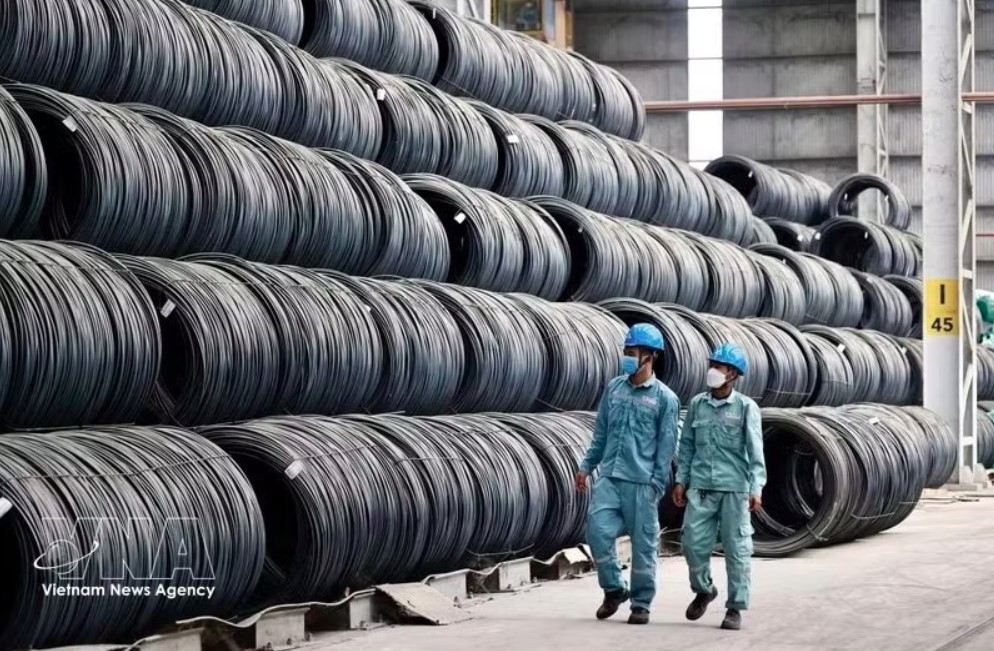
Vietnam has, for the first time, broken into the world’s top 10 crude steel producers, marking a major milestone for its fast-growing steel industry, according to the World Steel Association (Worldsteel).

In April, Vietnam’s crude steel output was estimated at 2.1 million tonnes, up 4% year on year. With this result, Vietnam surpassed Italy to secure a place among the top 10 global producers.
In the first four months, Vietnam produced 8.5 million tonnes of crude steel, representing an increase of 8.4% from the same period last year. According to Worldsteel, the country’s steel sector has expanded rapidly in both scale and product range. In the early 2000s, domestic producers largely depended on imported billets for producing construction steel. Since 2010, the industry has made significant strides toward self-sufficiency, now capable of producing a full spectrum of steel products serving mechanical engineering, shipbuilding, energy, and defence industry.
Large-scale and modern steel complexes have been put into operation, notably the Hoa Phat Dung Quat Iron and Steel Integrated Complex of Hoa Phat Group, which leads in manufacturing high-quality and specialised steel products, including engineering steel, tyre cord steel, welding wire, spring steel, crane steel, prestressed steel, and even rail steel for high-speed railways.
In 2023, Vietnam ranked 12th globally in crude steel production with 20 million tonnes. By 2025, output had risen to 24.6 million tonnes, making it the largest producer in Southeast Asia and 11th worldwide. Hoa Phat Group accounted for the largest share, producing 11 million tonnes, or 44.7% of the total.
In 2026, Hoa Phat Group’s crude steel output is projected to exceed 14 million tonnes, up 30% from 2025, further reinforcing Vietnam’s position among the globe’s leading steel-producing nations.

Source: VNA

Photo: VNA

Latest Posts

FDI attraction: Time to shift from “red carpet rollout” to long-term partnership

FDI attraction: Time to shift from “red carpet rollout” to long-term partnership

An expert said that Việt Nam needs to move towards a new-generation investment attraction model – one that seeks not only capital but also advanced technology, modern governance, innovation and stronger spillover effects on domestic enterprises.

HÀ NỘI — As Việt Nam enters a new phase of development driven by ambitions for fast and sustainable growth, the question of attracting foreign direct investment (FDI) is no longer simply about the scale of capital inflows. Increasingly, the focus is turning to the quality of investment, its spillover effects and its ability to strengthen the economy’s intrinsic capabilities.

From “FDI at any cost” to selective attraction of high-quality investment

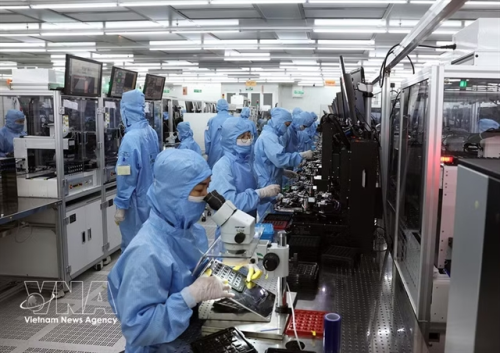
Việt Nam currently hosts more than 46,500 valid foreign-invested projects, with total registered capital exceeding US$543 billion and cumulative disbursed capital reaching around $357.6 billion. The FDI sector now contributes more than 20 per cent of GDP, accounts for roughly 70 per cent of export turnover and provides employment for millions of workers.

According to experts, Việt Nam will require enormous investment resources to achieve its high and sustainable growth targets for the 2026–30 period, with the FDI sector and the domestic private sector expected to account for around 80 per cent of the country’s total investment demand across society.

Associate Professor and Dr Hoàng Văn Cường, Vice Chairman of the Việt Nam Economic Science Association, said that Việt Nam’s earlier FDI strategy focused primarily on mobilising foreign capital to expand production and make use of low labour costs. However, that model is increasingly revealing its limitations.

“If Việt Nam continues with the old approach to investment attraction, domestic enterprises will remain peripheral to the foreign-invested sector, while Vietnamese workers will largely participate only in low value-added stages of production. That cannot deliver breakthroughs in labour productivity or growth quality,” he said.

Cường said that Việt Nam needs to move towards a new-generation investment attraction model – one that seeks not only capital but also advanced technology, modern governance, innovation and stronger spillover effects on domestic enterprises.

More importantly, FDI and domestic businesses must be viewed as partners developing side by side, rather than as two separate economic sectors operating within the same economy. Many economists have also argued that foreign-invested firms and Việt Nam’s private companies should become strategic partners capable of sharing benefits, creating new value and generating sustainable growth momentum together.

Weak linkages remain biggest bottleneck

Despite the strong expansion of the FDI sector over recent years, the linkages between foreign-invested and domestic firms remain limited.

Việt Nam is now home to more than one million active businesses, yet only around 5,000 are directly connected to global supply chains or multinational corporations. Notably, only about 100 Vietnamese firms have become tier-one suppliers to major global groups, a figure regarded as strikingly modest.

This highlights the fact that while FDI has grown rapidly, its spillover effects on domestic enterprises are still constrained.

Dr Lê Duy Bình, Director of Economica Việt Nam, noted that the country in the coming period needs not simply “more FDI”, but rather “next-generation FDI” focused on high technology, environmental sustainability, modern governance and deeper integration with local enterprises.

Cường said that achieving such a change will require a fundamental adjustment in investment incentive policies. Rather than relying mainly on investment scale, incentives should be linked to tangible outcomes delivered by FDI enterprises.

These could include the degree of technology transfer, localisation rates, the number of Vietnamese firms participating in supply chains, or the effectiveness of high-quality workforce training programmes.

Many experts believe this approach is better suited to today’s increasing competition in the investment environment, in which Việt Nam can no longer rely chiefly on low-cost advantages but must instead build competitiveness through institutional quality, skilled human resources and innovation capacity.

According to analysts, Việt Nam needs to redesign its investment incentive system centred on measurable outputs rather than simply tax breaks or registered capital. At the same time, the country should accelerate experimental policy mechanisms, improve the investment climate and build ecosystems for high technology, the green economy, artificial intelligence and innovation.

Agro-forestry-fisheries exports rise over 9% in five months

Agro-forestry-fisheries exports rise over 9% in five months

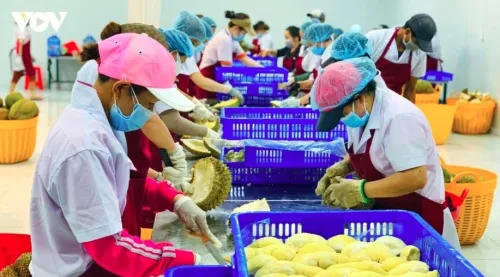
VOV.VN - Vietnam's exports of agricultural, forestry and fishery products maintained strong growth momentum in the first five months of 2026, with total export turnover estimated at US$30.69 billion, up 9.2% year on year.

According to the Ministry of Agriculture and Environment, five-month imports reached an estimated US$22.28 billion, up 12.6% from a year earlier, resulting in a trade surplus of US$8.41 billion, an increase of 1.1%.

By product category, agricultural exports totaled US$16.38 billion, up 6.1%; forestry products generated US$7.65 billion, up 4.5%; and fishery exports brought back US$4.65 billion, up 10.6%.

Notably, livestock product exports surged 43.2% to US$308 million, while exports of agricultural production inputs rose 83% to US$1.7 billion. Salt exports also posted strong growth, increasing 45.8% to US$6.7 million.

Exports to major markets continued to record positive growth. China remained Vietnam's largest market, accounting for 20.5% of total export turnover, with shipments rising 28.4% year on year. The United States ranked second with an 18.5% share, although export value to the market declined 3.6%.

Exports to the European Union accounted for 11.8% of total turnover and increased 4.2% from a year earlier, while exports to Japan represented 6.8% of the total and rose 3.5%.

Meanwhile, the ministry said agro-forestry-fishery output stayed stable and continued to deliver positive results during the first five months of the year, helping maintain supply-demand balance and meet domestic food consumption needs as well as export demand.

Favorable production conditions and positive market prospects across several sectors are expected to support the agriculture sector's efforts to achieve its growth targets for 2026.

The ministry said its agencies will continue to closely monitor developments in international trade, support businesses and farmers in capitalising on export opportunities, safeguard national food security, expand market access, develop markets for agricultural by-products, and effectively implement traceability systems for agro-forestry-fishery products to meet increasingly stringent requirements from importing countries.


Hai Phong meets most economic targets in first five months of 2026

Hai Phong meets most economic targets in first five months of 2026

The growth reflecting the northern port city’s strong economic momentum despite challenges in industrial growth and business formation.

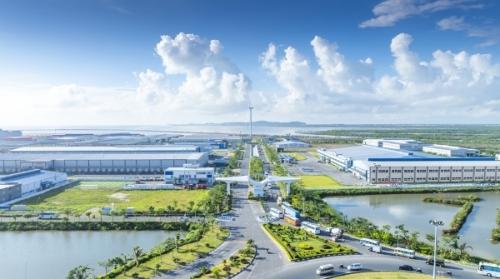
Northern Hai Phong port city achieved six out of its eight key socio-economic development targets in May 2026, reflecting the city’s strong economic momentum despite challenges in industrial growth and business formation.

According to the Hai Phong People’s Committee, key indicators including state budget revenue, export turnover, cargo throughput, tourist arrivals, foreign direct investment (FDI) attraction, and social insurance participation all met or exceeded targets set under the city’s growth scenario.

In May alone, export turnover reached $4.1 billion, while cargo throughput at the city’s ports totaled 18.9 million tons. The city welcomed 1.85 million visitors and attracted $692.6 million in FDI during the month.

For the first five months of 2026, FDI inflows reached $1.98 billion, while exports totaled $21.3 billion. Cargo volume handled through the port system reached 77.8 million tons, and tourist arrivals climbed to approximately 6 million.

However, two indicators fell short of expectations. The city’s Industrial Production Index (IIP) rose 13.8% in May, below the targeted 16.7%, while 680 new enterprises were established compared with a target of 910. Despite missing the monthly target, Hai Phong’s IIP growth remained significantly above the national average of about 9.2%. Local authorities remain optimistic about achieving the full-year IIP growth target of 16.3%, supported by strong performance in key manufacturing sectors.


See all blog