Lumen Vietnam Fund

Blog

Vietnam central bank eases long-term funding constraints, boosting stock market hopes

Vietnam central bank eases long-term funding constraints, boosting stock market hopes

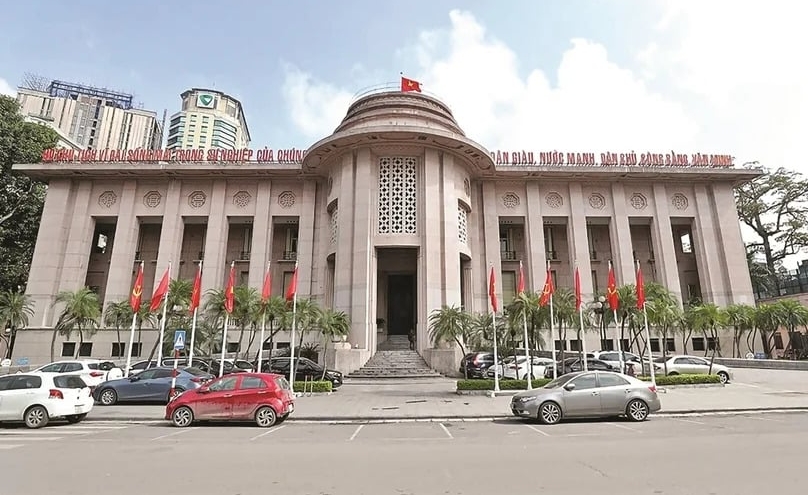
The State Bank of Vietnam's (SBV) planned liquidity injection of up to $2 billion through a six-month foreign exchange swap facility is expected to ease pressure on the banking system, improve investor sentiment and support the stock market.

The SBV on Wednesday announced plans to conduct a 182-day foreign exchange swap (FX Swap) operation on Friday, November 6, with a maximum size of $2 billion.

Under the arrangement, the central bank will buy U.S. dollars at a spot exchange rate of VND24,399 per dollar and sell them back at a forward rate of VND24,704 per dollar. The transaction value date is expected to be November 9, 2026, with maturity scheduled for May 10, 2027.

Eligible participants include credit institutions and foreign bank branches with outstanding medium- and long-term foreign loans or international bonds carrying a remaining maturity of at least 12 months. Each bank may register for up to 80% of the operation's total size, subject to the limit of its eligible outstanding foreign currency debt.

Through the operation, eligible banks can temporarily convert their U.S. dollar holdings into Vietnamese dong to supplement liquidity. The maximum amount of VND liquidity potentially injected into the system is estimated at VND48,798 billion ($1.9 billion).

Notably, the latest FX swap operation has a significantly longer maturity than previous interventions. According to brokerage VPS Securities JSC, the SBV has conducted several FX swap operations since the beginning of 2026, typically with maturities ranging from three to 21 days and maximum sizes of $1 billion to $2 billion.

In September alone, the central bank conducted two FX swap operations: a $2 billion facility with a seven-day maturity on September 21 and a $1 billion facility with a three-day maturity on September 28.

Extending the maturity to 182 days therefore marks a notable shift in the SBV's approach to liquidity management.

According to a flash report released on Wednesday, VPS said the SBV was proactively supporting VND liquidity amid rising funding demand across the banking system. With a maximum size of $2 billion, the FX swap operation could help ease liquidity pressures and cool interbank interest rates.

More importantly, the extension of the swap maturity to 182 days would allow banks to maintain more stable funding sources over a longer period, reducing the need to repeatedly roll over funding and limiting the risk of short-term liquidity shortages.

As pressure on the interbank funding market eases, banks may also have less need to compete aggressively for deposits from households and businesses, potentially curbing upward pressure on deposit rates in the domestic deposit market, known as Market 1.

However, VPS cautioned that the exchange rate spread of VND305 per dollar, equivalent to approximately 2.51% per year, does not fully reflect the operation's overall funding costs, as these also depend on the initial cost of raising U.S. dollar funding.

Consequently, the benefits for funding costs and net interest margins (NIM) are likely to vary among banks rather than translate into uniform improvements across the sector.

Additional tailwinds for the stock market

The SBV's move to strengthen liquidity support is also expected to have positive implications for the stock market. According to VPS, additional liquidity in the banking system and expectations of lower interbank interest rates could improve investor sentiment, ease concerns over rising borrowing costs, and support equity valuations.

Sectors particularly sensitive to interest rate movements, including securities, real estate and banking, could stand to benefit.

A stable interest rate environment helps ease companies' funding cost pressures while limiting the relative attractiveness of fixed-income investment products compared with equities.

For securities firms, improved market liquidity could support brokerage activities, margin lending and proprietary trading. Real estate companies, meanwhile, could benefit if interest rate pressures remain under control, helping reduce financing costs and improve homebuyers' access to credit.

For banks, the additional liquidity could ease funding balance pressures and reduce competition for deposits. However, the extent of the benefits will depend on each institution's funding structure, its ability to participate in the FX swap operation and its actual cost of capital.

Nevertheless, VPS noted that the impact of the FX swap operation on the stock market would be largely indirect. Its actual influence on overall interest rates will depend on the volume of transactions conducted, the cost of raising U.S. dollar funding and the SBV's liquidity management through other instruments.

The latest FX swap operation should also be viewed primarily as a targeted liquidity management measure rather than a signal that the central bank is shifting towards broad-based monetary easing.

As the SBV is obliged to sell the U.S. dollars back when the contracts mature in May 2027, the VND liquidity injected into the banking system will also be withdrawn unless the transactions are extended or replaced by other liquidity management instruments.

Overall, the central bank's stronger liquidity support could provide an additional tailwind for the stock market in the short term, particularly as investor sentiment shows signs of improvement.

However, for the VN-Index's recovery to become sustainable, the market will still need confirmation from the ability to maintain trading liquidity, the breadth of capital inflows and actual developments in interest rates in the coming period.

VN-Index rebounds nearly 2%, securities stocks lead gains

On the same day news emerged about the SBV's planned liquidity support, Vietnam's stock market staged a notable recovery on Wednesday. The VN-Index closed up 33.4 points, or 1.97%, at 1,733.02 points. The gain marked the benchmark's first advance after four consecutive losing sessions, allowing it to quickly reclaim the 1,700-point threshold breached in the previous session.

The recovery was broad-based and accompanied by a significant improvement in market liquidity. Trading volume on the Ho Chi Minh Stock Exchange (HoSE) reached approximately 908.59 million shares, with a total transaction value of VND17,955 billion ($699.11 million), up 45.5% and nearly 38.8%, respectively, from the previous session.

Securities stocks were particularly prominent, attracting strong investor inflows, with several major stocks posting sharp gains. VCK rose 6.43%, TCX gained 6.98%, VND advanced 6.90%, VCI climbed 6.86%, VIX added 6.78% and SSI increased 6.53%. On the Hanoi Stock Exchange (HNX), MBS and SHS also surged by more than 7%.

Gains also spread to banking and real estate stocks. VPB rose 4.48%, CTG gained 3.33% and VCB advanced 2.43%. In the real estate sector, VHM climbed 2.10%, DXG jumped 6.57% and TCH surged 6.69%.

The market performance pointed to a significant improvement in buying demand and investor sentiment following a series of correction sessions. Financial and real estate stocks, which are particularly sensitive to interest rate movements, were also among the best-performing sectors.


Source: Huu Bat, Nguyen Quang
Latest Posts

Vietnam's FDI inflows hit highest level since 2009

Vietnam's FDI inflows hit highest level since 2009

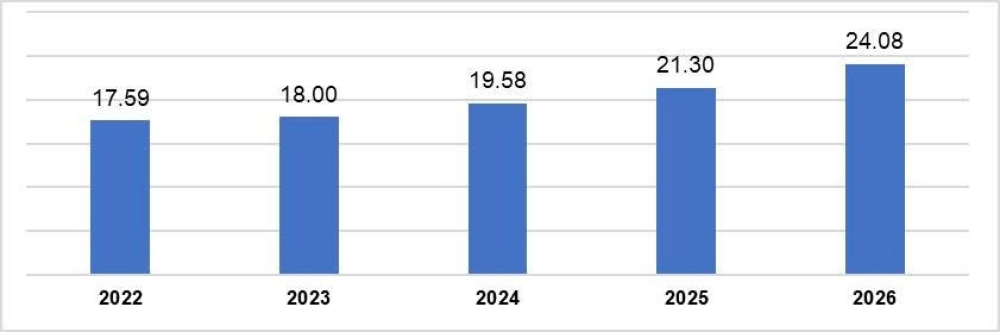
Alongside registered capital, disbursed foreign direct investment (FDI) also reached a record high of $24.08 billion, up 13.1 per cent on-year and the highest 10-month figure in the past five years.

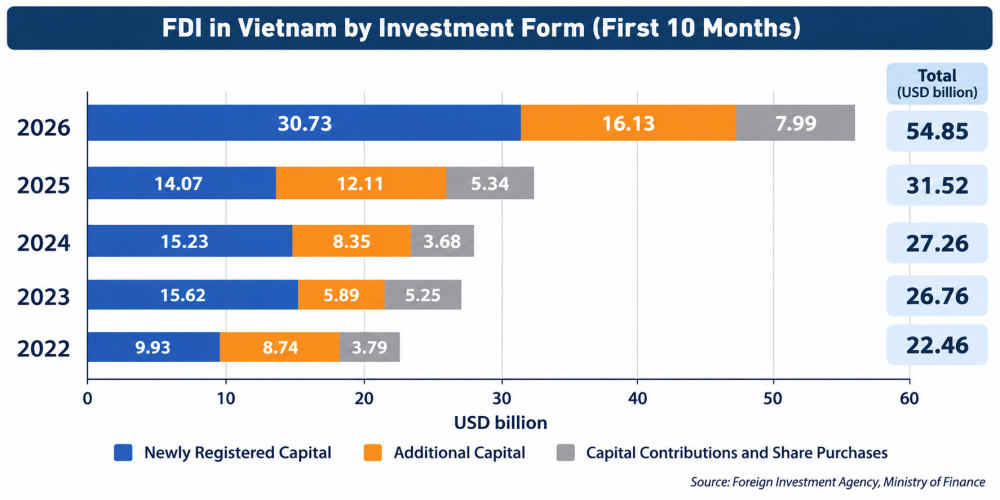
According to the Foreign Investment Agency under the Ministry of Finance, as of October 31, total registered FDI in Vietnam reached $54.85 billion, up 74 per cent on-year and the highest level since 2009.

Apart from the first 10 months of last year, when registered FDI was $31.52 billion, total registered capital during the same period in other years since 2017 had generally remained above $20 billion. The previous high was recorded in the first 10 months of 2019, at $29.11 billion. The corresponding figures were $28.24 billion in 2017, $26.76 billion in 2023, and $27.26 billion in 2024.

Between 2009 and 2016, Vietnam attracted considerably lower levels of FDI in some years. Registered capital stood at just $6.68 billion in the first 10 months of 2012 and $8.88 billion in the same period of 2011. The highest figure during this period was $19.29 billion, recorded in 2015.

Attracting more than $54.85 billion in registered FDI in the first 10 months of 2026 once again underscores Vietnam's appeal as an investment destination. Of the total, $30.73 billion came from newly registered projects, $16.13 billion from additional capital injected into existing projects, and $7.99 billion from foreign investors' capital contributions and share purchases.

Specifically, 3,478 new projects were licensed during the 10-month period, representing a 4.7 per cent increase in the number of projects on-year, while their combined registered capital more than doubled, rising 2.2-fold.

Manufacturing and processing remained the leading sector in attracting newly registered capital, with $14.61 billion, accounting for 47.5 per cent of the total. Transportation and warehousing ranked second with $5.15 billion, or 16.7 per cent, while other sectors attracted a combined $10.98 billion, equivalent to 35.8 per cent.

In terms of investment partners, Singapore was the largest source of newly registered FDI among the 80 countries and territories with new investment projects in Vietnam during the period. Its registered capital reached $9.52 billion, accounting for 31 per cent of the total.

South Korea ranked second with $5.81 billion, or 18.9 per cent, followed by Luxembourg with $4.99 billion (16.2 per cent), Hong Kong with $3.57 billion (11.6 per cent), China with $2.77 billion (9 per cent), Japan with $1.58 billion (5.1 per cent), and the Netherlands with $438.5 million (1.4 per cent).

Alongside the strong performance in registered capital, realised FDI in Vietnam continued its upward trajectory, reaching $24.08 billion in the first 10 months of 2026, up 13.1 per cent on-year. This was the highest disbursement figure recorded for the same period over the past five years.

Manufacturing and processing accounted for the largest share of realised FDI, at $19.96 billion, equivalent to 82.9 per cent of the total. Realised investment in real estate activities reached $1.76 billion, accounting for 7.3 per cent, while electricity, gas, hot water, steam, and air-conditioning supply attracted $785.2 million, or 3.3 per cent.

The continued increase in realised FDI is expected to make an important contribution to expanding production capacity and supporting economic growth.

Regarding additional investment, 1,079 existing projects registered capital adjustments during the first 10 months, with total additional capital reaching $16.13 billion, up 33.2 per cent on-year. As a result, the combined newly registered and additional capital of foreign-invested projects reached $46.86 billion.

Manufacturing and processing accounted for $24.19 billion, or 51.6 per cent of this total, followed by real estate activities with $7.08 billion (15.1 per cent). Other sectors attracted a combined $15.59 billion, equivalent to 33.3 per cent.

Regarding capital contributions and share purchases, foreign investors conducted 2,616 transactions during the 10-month period, with a combined value of $7.99 billion, up 49.6 per cent on-year.

Of these, 828 transactions involved capital contributions and share purchases that increased the charter capital of domestic enterprises, with a total value of $3.28 billion. The remaining 1,788 transactions involved foreign investors acquiring shares in domestic companies without increasing their charter capital, amounting to $4.71 billion.

In terms of sectors attracting investment through capital contributions and share purchases, professional, scientific, and technical activities received $2.78 billion, accounting for 34.8 per cent of the total. Wholesale and retail trade, and repair of motor vehicles and motorcycles attracted $2.17 billion, or 27.1 per cent, while other sectors received $3.05 billion, equivalent to 38.1 per cent.

Vietnam urges Airbus to consider aircraft maintenance hubs at Long Thanh, Gia Binh airports

Vietnam urges Airbus to consider aircraft maintenance hubs at Long Thanh, Gia Binh airports

Vietnamese Prime Minister Le Minh Hung has called on Airbus to consider setting up an aircraft maintenance, repair and overhaul (MRO) center in Vietnam, particularly near the under-construction Long Thanh and Gia Binh international airports, as the country seeks to expand its aviation industry.

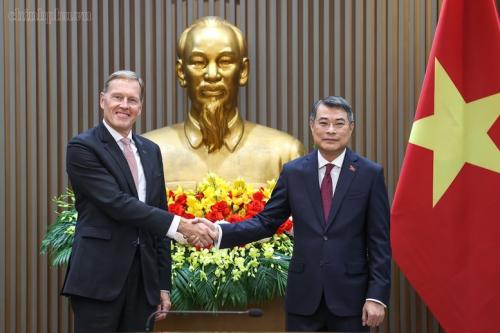
Hung made the call during a meeting with Airbus's president international Wouter van Wersch in Hanoi on Wednesday, marking 40 years since the European aircraft manufacturer began operating in Vietnam.

The PM praised Airbus's four decades of cooperation with Vietnam, noting that the company supplies a substantial portion of the fleets operated by Vietnamese airlines and has also partnered with the country in satellite observation.

Vietnam's population of more than 100 million, rising incomes and large-scale infrastructure investment are creating substantial demand for aviation development and fleet expansion, Hung said. Major projects include Long Thanh and Gia Binh international airports, alongside new economic zones and logistics infrastructure.

He urged Airbus to deepen its partnership with Vietnam through projects commensurate with the country's growing aviation ambitions and the company's capabilities. Cooperation should cover aerospace projects, technology development and transfer, research, high-skilled workforce training, manufacturing capacity, aviation safety oversight, and flight operations, Hung elaborated.

In addition to considering an MRO center in Vietnam, Hung called on Airbus to support Vietnamese airlines in implementing existing aircraft supply agreements as they expand their fleets and open new routes. He also urged the aircraft maker to work closely with Vietnamese authorities to advance cooperation in the space sector.

The prime minister noted he expected Airbus to help promote France to ratify the EU-Vietnam Investment Protection Agreement (EVIPA).

Hung reaffirmed the Vietnamese government's commitment to improving the business environment and facilitating foreign investment in accordance with Vietnamese law. He expressed confidence that the partnership with Airbus would enter a more substantive and productive phase after 40 years of cooperation.

Wouter van Wersch, for his part, said Vietnam plays an important role in Airbus's global success. Around 230 Airbus aircraft are currently in operation in Vietnam, with another 220 expected to enter service in the coming years, he revealed.

He said Vietnam's continued investment in aviation infrastructure, including Long Thanh and Gia Binh airports, and the development of a broader aviation ecosystem would create significant opportunities for Airbus.

The executive described Vietnam as a top priority for the group, affirming Airbus’s desire to strengthen its long-term partnership with the country beyond aircraft supply, including efforts to build local industry capabilities.

Marking the 40th anniversary of its presence in Vietnam, Airbus reaffirmed its long-term commitment to the country through cooperation in commercial aviation, space and industrial manufacturing, technology transfer, and manpower development. The group also expressed interest in expanding collaboration in digital transformation and artificial intelligence.

The under-construction Gia Binh International Airport project is located in Bac Ninh city, a neighbor of Hanoi. It has a total estimated investment of more than VND196 trillion ($7.51 billion), with phase one requiring approximately VND146.2 trillion ($5.6 billion).

The development will be carried out in two phases. In phase 1, from now to 2027, essential facilities will be completed to serve the APEC Summit in 2027. From 2026-2030, remaining phase 1 works will be finalized to ensure full operational capacity of 30 million passengers and 1.6 million tons of cargo per year.

For phase 2, from 2031-2050, construction will focus on expanding capacity to 50 million passengers and 2.5 million tons of cargo annually.

The Long Thanh International Airport project is located in Dong Nai province, a neighbor of Ho Chi Minh City.

The first passenger flights touched down at Long Thanh airport on December 19, 2025, marking the inaugural civil aviation operation at Vietnam’s largest airport.

Phase one will see the terminal have a capacity of 25 million passengers per year and also handle 1.2 million tons of cargo annually. Phase 2, scheduled by 2035, will expand capacity to 50 million passengers and 1.5 million tons of cargo by adding a second runway and terminal.

In the final phase, Long Thanh is expected to reach full operational capacity of 100 million passengers and five million tons of cargo per year by 2050.


Vietnam's trade surplus accelerates in October

Vietnam's trade surplus accelerates in October

Vietnam's trade surplus widened sharply to $7.31 billion in October, significantly higher than the previous month's level. Two consecutive months of trade surpluses helped narrow the cumulative trade deficit in the first 10 months to $12.07 billion, bolstering expectations that the full-year 2026 deficit could fall below $10 billion.

A turning point for the trade balance

According to the National Statistics Office's report on the socioeconomic situation in October and the first 10 months of 2026, Vietnam's total merchandise trade was preliminarily estimated at $122.03 billion in October, up 3.7% from the previous month and 47.4% year-on-year.

Exports reached $64.67 billion, up 8.7% month-on-month and 51.4% year-on-year, while imports stood at $57.36 billion, down 1.4% from September but still up 43.1% from a year earlier.

The gap between exports and imports resulted in a merchandise trade surplus of $7.31 billion in October, significantly higher than the $1.3 billion recorded in September. This marked Vietnam's second consecutive month of trade surplus, indicating an improvement in the trade balance after several months of deficit.

In the first 10 months, total merchandise trade reached $1,010.55 billion, up 32.3% year-on-year. This was the first time Vietnam's trade turnover had exceeded the $1 trillion mark.

Exports totalled $499.24 billion, up 27.5%, while imports reached $511.31 billion, up 37.4%. As imports grew faster than exports, Vietnam still recorded a merchandise trade deficit of $12.07 billion, compared with a surplus of $19.49 billion in the same period last year.

The surpluses in September and, particularly, the sharp increase in October have therefore helped narrow the cumulative trade deficit considerably. However, this cannot yet be taken as evidence of a sustained reversal in the trade deficit trend, as import growth in the first 10 months remained nearly 10 percentage points higher than export growth.

Trade turnover exceeding $1 trillion reflects a strong expansion in international trade, but also highlights continued high demand for imports serving production, business activities and investment. As a result, the trade balance in the final two months of the year will depend not only on whether export momentum can be sustained but also on the composition and pace of import growth.

A test for the final two months of the year

At the Ministry of Industry and Trade's regular press briefing for the third quarter of 2026, Trinh Thu Hien, deputy director of the Import-Export Department, said the year-end peak export season provided grounds to expect the trade deficit in the final months and for the whole of 2026 to fall below $10 billion.

The forecast was made when the trade deficit in the first nine months remained close to $20 billion. The subsequent surpluses in two consecutive months, particularly October's $7.31 billion surplus, have strengthened the basis for that expectation.

However, for the full-year trade deficit to fall below $10 billion, Vietnam would need to record a net trade surplus of more than $2.07 billion in the final two months, based on the cumulative deficit of $12.07 billion after 10 months.

One favorable factor is the continued strong growth in exports. In October alone, export turnover rose 51.4% year-on-year, while the 10-month figure increased 27.5%. If orders and deliveries remain strong during the year-end peak season, exports will continue to play an important role in narrowing the trade deficit.

On the other hand, import pressures warrant continued monitoring. Import turnover rose 37.4% in the first 10 months, considerably faster than export growth. Although imports fell 1.4% month-on-month in October, they were still up 43.1% year-on-year. This indicates that pressure on the trade balance has not yet fully eased.

However, the trade deficit should not be assessed solely in terms of the size of the surplus or deficit, Nguyen Tuan Viet, CEO of Vietgo, a trade consulting company, told The Investor. He said a trade deficit over a given period could reflect the accumulation of domestic capacity if imports were used for investment, production-line upgrades and technological development.

According to Viet, it is important to distinguish between imports serving production, investment and technology upgrades and those that fail to generate commensurate added value.

"If we want to move fast, we need to import technology and gain access to and apply the world's most advanced technologies," he said.

When translated into new production capabilities, imported resources can lay the foundation for improving product quality and the competitiveness of domestic businesses.

This perspective suggests that improving the trade balance is not simply a matter of reducing imports to achieve a surplus. More important is improving the efficiency of imports, developing domestic production capacity and enabling Vietnamese businesses to participate more deeply in supply chains. These are also prerequisites for export growth to generate greater added value for the economy.

October's sharp increase in the trade surplus has brought Vietnam closer to its goal of keeping the full-year trade deficit below $10 billion, but the final two months will remain a crucial test. Alongside sustaining export momentum, the challenge will be to ensure that imports serving production and technological innovation translate into genuine competitiveness rather than simply expanding trade turnover.


See all blog