Lumen Vietnam Fund

Blog

Vietnam, Canada eye doubling trade over next decade

Vietnam, Canada eye doubling trade over next decade

Vietnam seeks to further strengthen and deepen the Comprehensive Partnership with Canada in a more substantive and effective manner for mutual benefit.

THE HANOI TIMES— Vietnam and Canada aim to diversify and expand bilateral trade relations to double two-way trade over the next five to ten years.

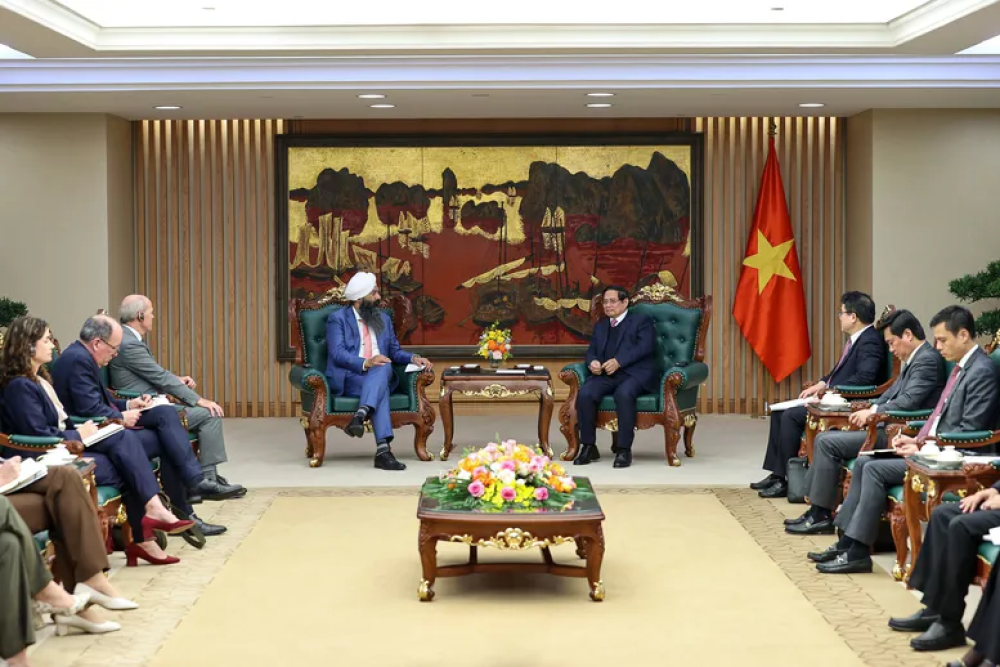
The view was shared during a meeting between Prime Minister Pham Minh Chinh and Canada’s Secretary of State for International Development Randeep Sarai on January 6, during the latter’s visit to Vietnam.

At the meeting, both sides welcomed the positive momentum of the Vietnam-Canada Comprehensive Partnership, noting steady progress across all fields underpinned by strong political trust.

Leaders of the two countries have maintained regular high-level engagement at multilateral forums. In 2025, Prime Minister Chinh and Canadian Prime Minister Mark Carney met twice on the sidelines of the ASEAN 47 Summit and the G20 Summit in South Africa.

Bilateral trade reached $6.35 billion as of September 2025, with Vietnam ranking among Canada’s leading trade partners within ASEAN and the CPTPP framework.

On this occasion, Chinh thanked the Canadian government for providing nearly $2 billion in official development assistance to Vietnam since 1990.

He noted that Vietnam’s GDP growth exceeded 8% in 2025, laying a solid foundation for double-digit growth in the coming years. This growth path is expected to be green, fast and sustainable, driven by science and technology, innovation and digital transformation.

"In this context, Vietnam seeks to further strengthen and deepen the Comprehensive Partnership with Canada in a substantive and effective manner for mutual benefit," said Chinh.

The prime minister called for stronger political and diplomatic ties and more frequent exchanges at all levels. He also suggested studying an upgrade of bilateral relations, strengthening the legal framework, and easing visa procedures to facilitate people-to-people and business exchanges.

Chinh also urged Sarai to continue promoting cooperation with Vietnam, particularly in economic, trade and investment ties, while fully leveraging CPTPP benefits. This includes further market opening, stronger supply chain linkages and cooperation in sectors where Vietnam has strengths, such as electronics and agriculture.

He encouraged closer business connections, support for Vietnam’s participation in global value chains and joint investment in concrete projects of shared interest, while also proposing expanded cooperation in high-quality human resource training and technology transfer.

Chinh called on Canada to increase scholarships for Vietnamese students in priority fields where Canada has strengths and Vietnam has demand, including high technology, digital transformation, peaceful nuclear energy, clean energy, artificial intelligence, semiconductors, environmental protection and climate change and green and high-tech agriculture.

"These areas are seen as critical to Vietnam’s next phase of development," said Chinh.
In addition, he urged stronger cultural and people-to-people exchanges, the organization of Vietnam cultural days in Canada and Canadian cultural days in Vietnam and consideration of direct or connecting flights between the two countries.

He asked Canada to continue supporting the Vietnamese community of about 300,000 people living, studying and working there and to consider recognizing Vietnamese people as a minority group with improved legal status, enabling them to contribute more to Canada and bilateral relations. He also proposed closer coordination at multilateral forums.

Minister Sarai congratulated Vietnam on the 80th anniversary of its first general election to the National Assembly and conveyed the Canadian Prime Minister’s satisfaction with the steady progress of bilateral ties, noting that two-way trade has multiplied since both countries joined the CPTPP.

The minister expressed agreement with Prime Minister Pham Minh Chinh’s proposals and said his visit aligns with Canada’s new Indo-Pacific Strategy, under which ASEAN and Vietnam remain top priorities.

He affirmed Canada’s commitment to strengthening cooperation with Vietnam on climate change response and supporting Vietnam’s commitments, while expressing Canada’s desire to diversify and expand trade ties with Vietnam and double bilateral trade over the next five to ten years.

He also underscored plans to deepen cooperation under the CPTPP in 2026, when Vietnam serves as the rotating chair of the CPTPP Commission.

He added that Canada will continue providing ODA to Vietnam and announced a $30 million ODA package during the visit, along with the launch of the book Sustainable Legacy - 30 Years of Development Cooperation Between Canada and Vietnam.

Source: Ngoc Mai

Photo: Nhat Bac/VGP
Latest Posts

Vietnam targets record $74 billion agriculture exports in 2026

Vietnam targets record $74 billion agriculture exports in 2026

Vietnam’s agriculture, forestry, and fisheries exports are expected to set a new record in 2026, as the sector accelerates market opening, deep processing and value-chain integration to strengthen competitiveness amid rising global uncertainty.

THE HANOI TIMES — Vietnam’s agriculture, forestry and fisheries exports are forecast to climb 5.7% year on year to a record US$74 billion in 2026, Deputy Minister of Agriculture and Environment Phung Duc Tien said on January 6.

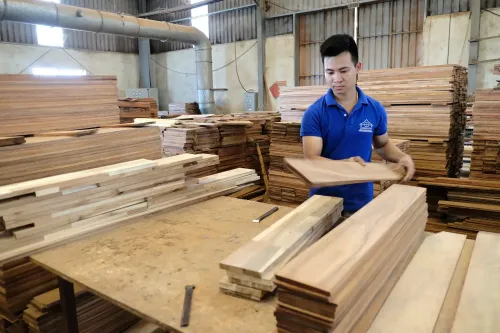
Agricultural exports are projected to advance 7.2% to around $40 billion while seafood international sales and forestry and wood-based shipments are expected to expand by 7.6% and 3.6%, reaching $12 billion and $18.8 billion, respectively, Tien told the ministry’s monthly press briefing.

The deputy minister said this year will be crucial for rolling out development goals for the 2026-2030 period.

Against this backdrop, the agriculture and environment sector will maintain an open-market orientation while pushing exports in a more efficient and sustainable direction.

To deliver on the 2026 target, the ministry will pursue a holistic value-chain approach that connects raw material zones with standards, processing, logistics and end markets.

Standardizing production areas in line with concrete market demand will stand out as a top priority.

Planned measures include widening the use of planting-area and aquaculture codes, tightening oversight of input quality and food safety and reinforcing traceability systems.

Production will increasingly align with recognized benchmarks such as GAP, organic and sustainability certifications, helping limit export alerts and reduce rejected consignments.

The ministry will also fast-track deep processing and product diversification by channeling investment into modern processing, preservation and packaging technologies.

Ministerial bodies and local authorities will steer producers toward refined, convenient and ready-to-eat goods, while agricultural by-products will be leveraged to build new value chains in animal feed, bio-based materials and extracts.

Lowering logistics costs remains central to boosting export competitiveness.

Efforts will focus on expanding cold storage capacity, strengthening cold-chain networks and developing regional logistics hubs, alongside streamlining transport routes and raising efficiency at ports and border gates.

Authorities will intensify digitalization of procedures to speed up customs clearance and ease compliance burdens for exporters.

The ministry will continue talks on market access and work to resolve technical barriers to trade as well as sanitary and phytosanitary requirements.

Brand building, geographical indications and market-specific marketing strategies will gain momentum to sharpen the global profile of Vietnamese agricultural products.

The sector will also scale up circular economy practices and low-emission production, which Tien described as a “passport” to premium markets and high-end retail channels.

Providing context for the outlook, Tran Gia Long, Deputy Director of the ministry’s Department of Planning and Finance, said combined exports of agriculture, forestry and fisheries reached $70 billion in 2025, marking a 12% rise from the previous year.

Agricultural products generated $37.3 billion, up 13.7%, while livestock exports climbed 17.4% to $627.8 million. Seafood earnings increased 12.7% to $11.3 billion and forestry products added $18.5 billion, reflecting growth of 6.6%.

Vietnam recorded 10 export categories valued at more than $1 billion, including three that surpassed the $8 billion mark. Wood and wood products topped the list with $17.3 billion, followed by fruits and vegetables at $8.6 billion and coffee at $8.5 billion.

China, the United States and Japan continued to anchor demand, while exports gathered pace across Asia, Europe and Oceania. Africa emerged as a standout market, with shipments jumping by more than 67%.

The sector also delivered a trade surplus of about $20.7 billion, up 16.6%. Officials, however, cautioned that climate change, disease threats, geopolitical tensions and fiercer global competition remain key risks to sustaining export momentum.

Vietnam shifts up semiconductor value chain as global chip makers seek “China+1” resilience

Vietnam shifts up semiconductor value chain as global chip makers seek “China+1” resilience

Vietnam is reshaping its semiconductor strategy, moving beyond low-cost assembly and testing toward higher-value chip design and advanced packaging, as global manufacturers seek to diversify supply chains away from China, according to a report.

The country’s semiconductor market is forecast to reach $10.16 billion in 2025, said the Vietnam Tech & Venture Capital Outlook 2025 report by VinVentures, the investment arm of Vingroup (HoSE: VIC). The shift reflects a broader effort by Southeast Asian economies to capture more value in the global chip industry amid rising geopolitical and supply-chain risks.

While Vietnam has historically functioned as a back-end hub, a structural “upstream pivot” is currently underway. Industrial giants and domestic champions are leading the charge. Nvidia and FPT launched an AI chip factory with an initial $200 million investment, while players such as Intel, Amkor, Hana Micron, and Samsung continue to scale substrate production and advanced packaging facilities.

Domestically, firms like Viettel and FPT Semiconductor are making inroads into 5G and power-management chip design. This evolution is supported by a 20-year training pipeline that has produced over 6,000 design engineers, giving Vietnam a scale advantage over regional peers.

Despite the momentum, industry experts warn of a critical shortage of “chip architects” – the high-level engineers who define system architecture and make pivotal intellectual property (IP) decisions.

“The number of Vietnamese engineers operating at this level remains exceptionally limited, effectively countable on one hand,” the report cited Dr. Trinh Thanh Lam, manager of Synopsys South Asia, as saying.

Vietnam should avoid competing head-to-head with incumbents like TSMC or Samsung on cutting-edge nodes like 3nm or 5nm. Instead, the nation’s “best chances” lie in focused niches, including security cameras, 5G/6G telecom, and ASICs/SoCs for electric vehicles (EVs) and industrial IoT. “If Vietnam hesitates, we lose the decade,” he warned.

Le Quang Dam, general director of Marvell Vietnam, also cautioned that while government policy intent is strong, fragmented decision-making across government, industry, and academia risks turning a capability opportunity into a “timing failure”.

The executive emphasized that outcomes will depend on how decisively the policy framework is implemented, noting that execution speed still lags behind established hubs like Singapore or Taiwan.

The report said that the Vietnamese government has elevated the semiconductor sector to a national priority through Strategy 1018, which mandates the training of 50,000 to 100,000 engineers by 2030. As of the 2025 admissions cycle, over 137,000 students were already enrolled in related fields.

In addition, policy tailwinds are further strengthening with the establishment of the Da Nang Free Trade Zone, designed as a “logistics-manufacturing hybrid” to support specialized warehousing and vibration-controlled storage for the chip industry. Looking ahead, the government has set a target to establish the country's first semiconductor manufacturing facility by 2026.

While venture capital (VC) activity in the sector remains early-stage, exemplified by VB Tech’s recent undisclosed seed round, the strategic upside is significant. Analysts suggest that if Vietnam can coordinate its fragmented decision-making across government and industry, it has a credible pathway to evolve from a manufacturing base into a trusted global technology partner.

PM asks to accelerate nuclear power plants

PM asks to accelerate nuclear power plants

The nuclear power plants are expected to meet the country’s development requirements in the new era.

Prime Minister Pham Minh Chinh has called for stronger efforts to accelerate Ninh Thuan nuclear power plants to serve the country’s development requirements in the new era.

Chairing the 4th meeting of the Steering Committee for Nuclear Power Plant Construction in Hanoi on January 7, PM Chinh asked relevant ministries and agencies to soon develop negotiation plans on unresolved issues to discuss with Russia partners for the construction of the Ninh Thuan 1 nuclear power plant. Any arising difficulties should be promptly reported to competent authorities in January.

For the Ninh Thuan 2 plant, the PM required the Vietnam National Industry - Energy Group (PetroVietnam), the Ministry of Industry and Trade, and the Ministry of Foreign Affairs to collaborate to research and propose plans for selecting a partner with suitable advanced source technology, and report to the competent authorities for consideration and decision.

The Ministry of Finance is tasked with urgently coordinating with relevant ministries and agencies to proactively organize negotiations with partners regarding credit agreement for the Ninh Thuan 1 and Ninh Thuan 2 power plants, ensuring synchronization with the investment cooperation agreement for the construction of the plants.

Other relevant ministries, agencies, and localities were instructed to concentrate on resettlement, site clearance, negotiate credit agreements for the Ninh Thuan 1 and 2 nuclear power plants, finalise the nuclear workforce training plan, and develop a strategy for selecting partners with advanced reactor technology.

See all blog