Lumen Vietnam Fund

Blog

Việt Nam sets new State ownership thresholds, accelerates SOE restructuring

Việt Nam sets new State ownership thresholds, accelerates SOE restructuring

The Prime Minister’s Decision 40/2026/QĐ-TTg, effective August 5, establishes three main State ownership thresholds: 100 per cent, at least 65 per cent and above 50 per cent to below 65 per cent. Applicable thresholds depend on the strategic importance of each industry and enterprise to the economy.

HÀ NỘI — Việt Nam is accelerating the restructuring of State capital in State-owned enterprises (SOEs), with a new framework setting different ownership thresholds by industry and requiring plans for the 2026-30 period to be completed this month.

The Prime Minister’s Decision 40/2026/QĐ-TTg, effective August 5, establishes three main State ownership thresholds: 100 per cent, at least 65 per cent and above 50 per cent to below 65 per cent, depending on the strategic importance of each industry and enterprise to the economy.

This framework is designed to concentrate State capital in essential sectors, while creating more room for restructuring or divestment and for private sector participation in areas where State ownership can be reduced or withdrawn.

Under the decision, the State will retain 100 per cent ownership in enterprises involved in essential public services, natural monopolies, high technology, science and technology, innovation and digital transformation, as well as major national infrastructure projects in transport, irrigation, energy and digital infrastructure.

The State can retain at least 65 per cent ownership in other key sectors, including airport management and operation, air transport, operation of special seaports, large-scale mineral extraction, finance and banking, mechanical engineering and clean water supply and drainage.

A lower threshold of more than 50 per cent but less than 65 per cent applies to enterprises in areas considered important to major economic balance such as national telecommunications infrastructure and mineral exploration and reserve assessment.

For enterprises outside the sectors listed above, the State may still retain stakes based on their importance, such as cement producers with a market share of at least 30 per cent that operate raw-material mines in areas considered crucial for national defence and security.

This also includes other providers of public utility products and services whose public service revenue accounts for at least 50 per cent of total revenue for three consecutive years, and enterprises with cultural, historical or architectural value, national brands or having an important role in national defence and security.

For multi-sector enterprises, the applicable ownership threshold will be determined by the sector accounting for the largest share of total output or revenue over the three consecutive years preceding approval of the five-year restructuring plan.

The new rules could affect a number of major SOEs.
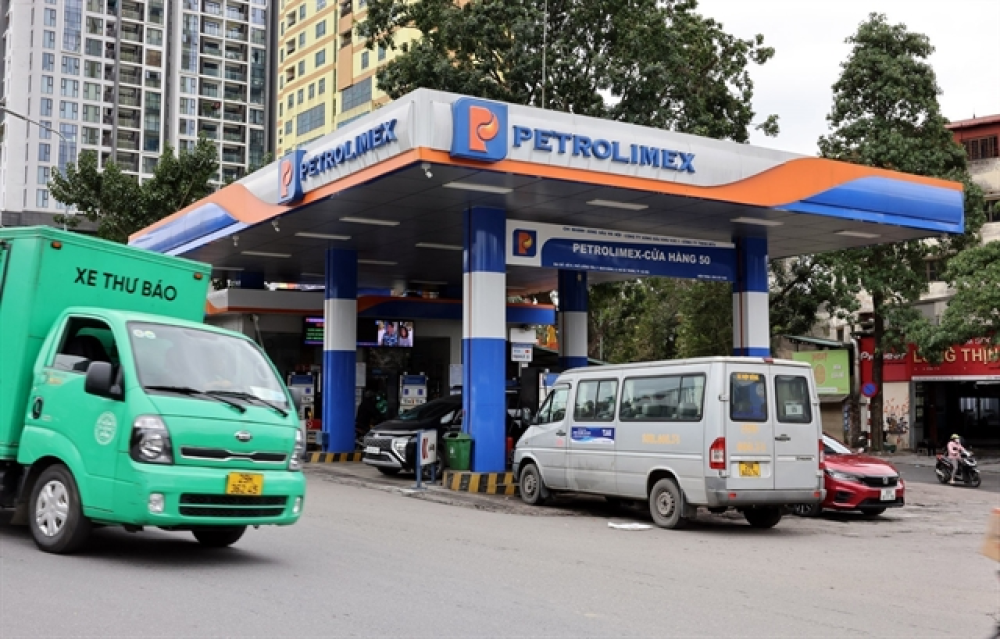
According to Mirae Asset Securities, Petrolimex could be among the companies most directly affected. Fuel importers with a market share of at least 30 per cent fall into the group where State ownership can range from above 50 per cent to below 65 per cent. The State currently holds about 75.8 per cent of Petrolimex, meaning it would have to relinquish a stake of around 11 per cent.

Mirae Asset also identified Petrovietnam Fertiliser and Chemicals Corporation and DAP-Vinachem as companies whose State ownership could be reviewed. Petrovietnam currently holds about 59.5 per cent of fertiliser company Đạm Phú Mỹ, while Vinachem owns about 64 per cent of DAP-Vinachem.

Airports Corporation of Vietnam (ACV), in which the Ministry of Finance holds 95.4 per cent, could also be under review for potential further divestment, as it only requires State ownership of at least 65 per cent.

BIDV Securities Research (BSC Research) said giving State ownership representatives more discretion will allow greater flexibility in restructuring, transferring or divesting in line with market conditions.

A new wave of State divestment is expected, similar to the 2016-18 period, which would potentially increase the supply of shares on the stock market, BSC said.

Under Decision 40, after excluding Viettel, Vietcombank, VietinBank and BIDV, State ownership representatives are required to propose State capital restructuring plans for 19 major groups and corporations.

These include Petrovietnam, Electricity of Vietnam, Petrolimex, Vietnam National Chemical Group, Vietnam Rubber Group, Vietnam National Coal and Mineral Industries Group, Vietnam Post and Telecommunications Group, Vietnam Airlines, Vietnam Maritime Corporation, Vietnam Railways, Airports Corporation of Vietnam, the State Capital Investment Corporation and Agribank.

The Government is moving quickly to implement the framework.

Under an official Government dispatch dated August 7, ministries, agencies and local authorities must approve five-year State capital restructuring plans by August 31.

SOEs, except Viettel, BIDV, VietinBank and Vietcombank, must submit proposals to the Ministry of Finance by August 12.

The Ministry of Finance is required to report on the restructuring of State capital in SOEs to the Prime Minister by August 25, with a nationwide progress report due in the fourth quarter.

The Government has also called for mergers, consolidation and transfers of enterprises where appropriate to improve economies of scale and strengthen the overall performance of economic sectors.

It has ordered the restructuring of the State Capital Investment Corporation to be accelerated, including the establishment of an independent monitoring mechanism for the transfer and management of its holdings.

Source: VNS

Photo: VNA/VNS Photo Công Phong
Latest Posts

Investment incentives no longer sole driver of FDI decisions: Nestlé Vietnam CEO

Investment incentives no longer sole driver of FDI decisions: Nestlé Vietnam CEO

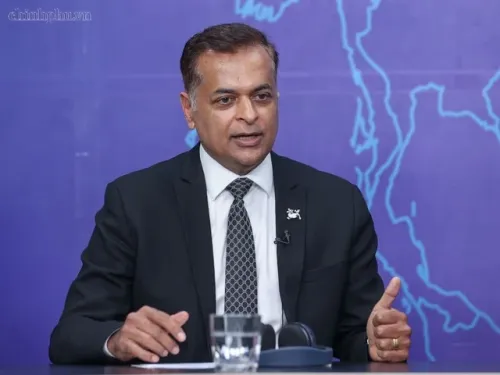
Investment incentives are no longer the decisive factor for foreign investors choosing Vietnam as an investment destination, with policy predictability, human capital, and the strength of the supporting ecosystem becoming increasingly important, said the CEO of Nestlé Vietnam.

Speaking at a government forum titled “Resolution 10: Developing a high-quality FDI ecosystem,” held by the Government Information and Communications Department on Friday, Binu Jacob, CEO of Nestlé Vietnam, said foreign investors had traditionally placed significant emphasis on investment incentives.

But the introduction of the global minimum tax has changed the equation, he said, with incentives increasingly serving as a supplementary factor rather than the core reason for multinational companies to invest or expand in Vietnam.

For global groups such as Nestlé, the first decisive factor is their confidence in the strategic direction set by the Vietnamese government, Jacob said.

A transparent and predictable policy framework is also critical, he noted, adding that while policy adjustments are inevitable as an economy develops, changes should follow a predictable roadmap.

What investors fear most is uncertainty and instability that cannot be anticipated, he stressed.

Jacob highlighted that the quality of Vietnam’s workforce is another key pillar supporting long-term investment decisions, alongside a strong supporting ecosystem that would allow multinational companies to implement long-term investment strategies.

Even if these conditions are not yet fully developed, clear government commitments to improving them could give investors greater confidence to expand, he stated.

The executive said Vietnam has recently made notable progress in governance and sent increasingly positive signals about its policy direction.

The country is among the few countries in the region to demonstrate what he described as a relatively consistent strategic vision, while its investment environment remains stable and its policy framework relatively predictable.

The country also has strong human capital, particularly among its younger generation, which Jacob described as having significant potential. The supporting ecosystem remains an area where Vietnam needs further development, he added.

While the current ecosystem does not yet fully meet investors’ expectations, links between foreign companies, domestic businesses, educational institutions, and research organizations are becoming increasingly established.

He said concrete policy measures and actions to strengthen those links would send a strong signal to investors.

Creating a more business-friendly environment would also allow domestic companies to strengthen their capabilities and become more reliable partners for multinational corporations, the executive remarked.

For foreign investors, long-term cooperation with suppliers ultimately rests on trust, he said. When strategic trust is established, foreign investors would certainly find effective solutions to challenges that arise.

According to the General Statistics Office, Vietnam lured $30.06 billion in registered foreign investment in the first seven months of this year, up 58% year-on-year, including $21.05 billion in newly-registered capital.


Vietnam, Australia boost investment in high-tech and high-value sectors

Vietnam, Australia boost investment in high-tech and high-value sectors

Vietnam's General Secretary and President To Lam proposed that bilateral cooperation shift toward long-term programs in innovation, science and technology, human resource development, green finance, high-quality infrastructure, strategic supply chains, education, and research.

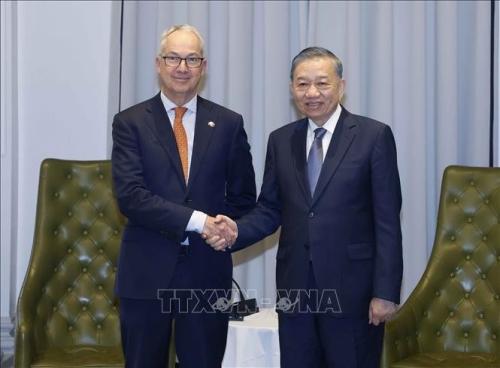
General Secretary of the Communist Party of Vietnam Central Committee and State President To Lam received Australia’s Special Envoy for Southeast Asia, Mr. Nicholas Moore, in Sydney on August 10, as part of his ongoing state visit to Australia..

During the meeting, Mr. Moore discussed opportunities to enhance cooperation with Vietnam in implementing Australia’s Southeast Asia Economic Strategy to 2040. This includes expanding two-way trade and investment, as well as strengthening connections between businesses and investors in Vietnam’s priority sectors.

Highlighting the positive results of bilateral trade, Mr. Moore emphasized the need to aim for even greater scale and trade value. He noted that recently signed cooperation agreements in aviation and other sectors will enhance connectivity and provide further momentum for trade and investment.

According to the Special Envoy, many investors are drawn to Vietnam by its dynamic market, clear development goals, and strong aspirations for growth. Furthermore, the Vietnamese community and student population in Australia serve as a vital resource for promoting innovation and startups.

General Secretary and President To Lam expressed his desire for Vietnam to remain a central partner for Australia in the implementation of the Southeast Asia Economic Strategy to 2040.

Affirming that Vietnam considers Australia one of its top priority partners in the Indo-Pacific region, the Vietnamese leader stated that bilateral relations are entering a period of new opportunities. He emphasized that the Comprehensive Strategic Partnership must be advanced substantively and effectively, with a focus not only on expanding trade and investment but also on co-creating new growth drivers.

He noted that Vietnam aims to become a high-income nation by 2045, with development driven by science and technology, innovation, digital transformation, green transition, and private sector growth.

With a stable investment environment, a young workforce, a strategic position in global supply chains, and a growing market, Vietnam is well-positioned to be a priority destination for Australian firms. The country prioritizes projects featuring advanced technology, modern management, and high value-added, which facilitate technology transfer, human resource training, and stronger integration with domestic enterprises.

He proposed that bilateral cooperation shift toward long-term programs in innovation, science and technology, human resource development, green finance, high-quality infrastructure, strategic supply chains, education, and research.


State-owned enterprises set to become a stronger driver of economic growth

State-owned enterprises set to become a stronger driver of economic growth

As Việt Nam strives to achieve double-digit economic growth, enhancing the operational efficiency of SOEs while reinforcing their pioneering and leading role has become an urgent priority.

HÀ NỘI — Although state-owned enterprises (SOEs) account for only a small proportion of the total number of businesses, they continue to control substantial resources across many strategic sectors and make significant contributions to the national economy.

As Việt Nam strives to achieve double-digit economic growth, enhancing the operational efficiency of SOEs while reinforcing their pioneering and leading role has become an urgent priority.

According to the Ministry of Finance, the number of SOEs had declined dramatically from more than 12,000 in the 1990s to just 695 by the end of last year.

Despite this sharp reduction, these enterprises still held total assets worth VNĐ4.5 quadrillion (approximately US$172.5 billion) and contributed VNĐ390 trillion to the state budget.

SOEs’ new role in economic development

Resolution No. 79-NQ/TW, issued by the Politburo on January 6 this year on the development of the state sector, affirms that the state economy, with state-owned enterprises (SOEs) at its core, is an especially important component of Việt Nam's socialist-oriented market economy.

However, the resolution also acknowledges that SOEs have yet to operate efficiently enough to match their position and the resources they control. Their international competitiveness remains limited, and their pioneering role in innovation and leadership in key and essential industries has not been sufficiently demonstrated.

Against the backdrop of Việt Nam's ambition to achieve double-digit economic growth, Resolution 79 dentifies the state economy as the pioneer in creating development, leading the way, promoting industrialisation and modernisation, restructuring the economy, and establishing a new growth model driven primarily by science and technology, innovation, and digital transformation.

Accordingly, restructuring SOEs must be accelerated to improve operational efficiency through the adoption of advanced technologies and modern corporate governance practices that meet international standards. At the same time, Việt Nam aims to build large state-owned economic groups, corporations, and enterprises capable of leading strategic and essential sectors of the economy.

Hoàng Văn Cường, former vice rector of the National Economics University, believes that the restructuring of SOEs has entered a new phase requiring changes not only in organisational models but also in governance mindset. In line with Resolution 79, the objective is no longer merely to reorganise, downsize or address historical shortcomings, but focus on developing a more efficient SOE sector with stronger international competitiveness and sufficient capacity to drive the national economy.

The new direction calls for the establishment of diversified ownership economic groups capable of mastering advanced technologies and integrating deeply into global value chains, rather than concentrating solely on equitisation or state capital divestment, said Cường.

To achieve this objective, Việt Nam must first reform its management model by clearly separating the state's regulatory function from its role as the owner of state capital.

Restructuring priorities for greater efficiency

Phan Đức Hiếu, a member of the 16th National Assembly and the National Assembly's Committee for Economic and Financial Affairs, emphasised that the most important task in the coming period is to establish a common understanding of SOE restructuring. Restructuring should not simply mean reducing the number of enterprises through mergers, dissolution, or capital divestment.

Its fundamental objective should be to enhance the efficiency and competitiveness of SOEs and the state sector as a whole, in line with Resolution 79's vision of SOEs serving as leaders, pathfinders, and drivers of innovation.

To achieve this objective, Hiếu proposed three key groups of solutions. First, long-standing financial, legal, and land-related issues must be comprehensively resolved, as these have become persistent bottlenecks hindering equitisation, ownership transfer, and enterprise restructuring.

Many SOEs still face situations where their charter capital exists only on paper but has not been fully contributed in practice. Land-use plans remain unclear, while numerous assets and projects cannot yet be accurately valued during ownership transfer.

The Ministry of Finance should conduct a comprehensive review of these obstacles, classify them according to the relevant authorities, and submit appropriate solutions to the National Assembly, the Government, or relevant ministries for final resolution, said Hiếu. If necessary, a special resolution could be introduced to address outstanding issues arising during the equitisation and restructuring of SOEs.

The second group of solutions focuses on improving corporate governance in accordance with international best practices. Việt Nam should not simply adopt the OECD Corporate Governance Principles wholesale. Instead, it should selectively apply provisions that are appropriate for different categories of enterprises and sectors.

These principles should then be institutionalised through the legal system, particularly regulations governing modern corporate governance, professional executive recruitment and the appointment of independent board members.

The third solution is to shift decisively from an administrative approach to restructuring and state capital divestment toward a market-oriented mechanism. The sale of state capital should not follow rigid plans but should instead be guided by market demand, as investors are more interested in a company's business prospects than in the value of its assets alone.

In practice, many state-owned economic groups have already begun implementing modern governance models.

Speaking at a recent online seminar on SOE governance, Nguyễn Thị Sơn Bình, deputy director of the SME Service Center under Viettel Telecom Corporation, stated that Viettel's mission extends beyond business development. The company aims to become a core force in building open economic ecosystems that connect state-owned enterprises, private businesses and household enterprises to generate synergies across the economy.

Viettel has adopted a lean management model, using digital transformation and innovation as key drivers of growth. The company has significantly reduced unnecessary management layers to shorten information flows and accelerate decision-making, viewing speed as a fundamental competitive advantage in today's rapidly evolving technological environment.

Sharing the view that institutional bottlenecks must be removed to accelerate restructuring, Doãn Thanh Tuấn, deputy director general of the Department of State-Owned Enterprise Development under the Ministry of Finance, observed that several factors have slowed SOE restructuring, with implementation capacity being among the most critical.

Besides objective constraints, there remains a widespread reluctance among officials to make decisions due to concerns about violating regulations or making mistakes, he said.

SOE restructuring has been slowed by a multi-layered management system, incomplete decentralisation, and lengthy approval procedures, said Tuấn.

He said key priorities ahead include protecting officials who act properly and transparently, streamlining the legal framework, and strengthening decentralisation with stronger post-implementation oversight.

He added that these directions have been reflected in recent policies and regulations. The Ministry of Public Security is drafting a resolution on special mechanisms to address legal issues related to economic development, while the Ministry of Finance is developing criteria for SOE classification and further guidance to support the restructuring process.

See all blog