Lumen Vietnam Fund

Blog

Việt Nam moves to facilitate corporate bond fundraising

Việt Nam moves to facilitate corporate bond fundraising

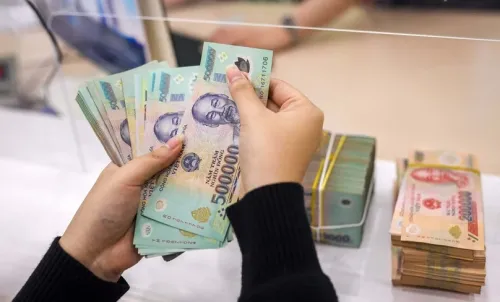
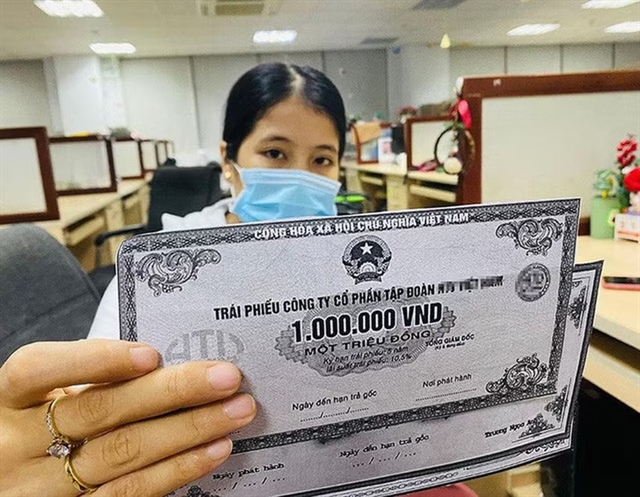
The direction was highlighted in Decree 200/2026/NĐ-CP, which was issued by the Government on June 5 to further improve the legal framework for private corporate bond issuance and trading.

HÀ NỘI — Regulators are accelerating efforts to strengthen the corporate bond market by refining the legal framework governing private bond issuance, aiming to facilitate capital raising while enhancing market transparency and investor protection.

The direction was highlighted in Decree 200/2026/NĐ-CP, which was issued by the Government on June 5 to further improve the legal framework for private corporate bond issuance and trading.

Nguyễn Hoàng Dương, vice chairman of the State Securities Commission (SSC), said the decree was designed to help enterprises meet issuance requirements and improve information transparency when raising funds through bond offerings, while introducing additional provisions to ensure the market develops in a safe, efficient and stable manner.

Following the decree's introduction, the SSC reviewed the existing regulatory framework and began drafting a new circular to ensure consistency with the updated legislation.

The draft inherits regulations that remain appropriate while revising and supplementing provisions to address practical difficulties encountered in the market. Once issued, the new circular will replace Circular 30/2023/TT-BTC and Circular 76/2024/TT-BTC issued by the Ministry of Finance.

Completing the legal framework for the corporate bond market plays an important role in balancing stronger market discipline and transparency with the need to facilitate legitimate and effective fundraising activities of businesses, according to Dương.

The draft circular has undergone extensive public consultation in accordance with regulations. The drafting committee has received feedback from 36 agencies and organisations, of which 26 agreed with the draft, while 10 provided comments on specific provisions.

Those opinions will serve as an important basis for refining the document before it is submitted to the Ministry of Finance for approval.

For bond trading, the draft provides guidance on registering privately placed corporate bonds for trading, adjusting registered trading volumes and delisting bonds from the stock exchange. It also specifies trading arrangements, as well as the responsibilities and reporting obligations of trading members.

The draft further clarifies settlement procedures by defining the organisations participating in the private corporate bond settlement system and providing guidance on trade settlement, post-trade error handling and temporary payment failures.

Under the draft, issuers will continue to follow the disclosure requirements under Circular 76/2024/TT-BTC, including pre-issuance, periodic and extraordinary disclosures. Several new reporting templates required under Decree 200/2026/NĐ-CP have also been introduced, while existing forms have been revised to make compliance more convenient for issuers.

It also sets out reporting obligations for organisations involved in private bond issuance and trading, including issuance advisers, bondholder representatives, auction organisers, underwriters, issuing agents, the Stock Exchange, the Vietnam Securities Depository and Clearing Corporation, and bond registration and depository institutions.

It introduces a reporting mechanism for provincial people's committees. Under the proposal, local authorities will submit annual reports to the Ministry of Finance on private bond issuance within their jurisdictions, as well as inspection results and enforcement actions involving issuers that are not public companies, securities firms or fund management companies.

In addition, the draft establishes a mechanism for sharing information and data from the stock exchange's corporate bond information portal with provincial authorities and the SSC to strengthen market supervision. At the same time, it will not introduce any new administrative procedures, helping minimise additional compliance costs for enterprises and other market participants.


Source: BIZHUB/VNS

Photo: vtv.vn

Latest Posts

Vietnam welcomes 13.9 million foreign visitors in 7M

Vietnam welcomes 13.9 million foreign visitors in 7M

The country targetting 25 million international visitors for 2026.

Vietnam welcomed 1.67 million international visitors in July 2026, up 6.6% from a year earlier, according to the National Statistics Office under the Ministry of Finance.

As a result, the total number of foreign tourists arrived in the first seven months of the year reached 13.9 million, accounting for approximately 56% of the country's target of 25 million international visitors for 2026.

China remained Vietnam's largest source market with around 3.1 million arrivals, accounting for 22.2% of the total. The Republic of Korea ranked second with 2.4 million, reaffirming its position as one of Vietnam's most important and stable tourism markets.

Russia continued to stand out as the fastest-growing market, with 864,000 arrivals during the period, up 174% from the same period in 2025 and more than double the pre-pandemic level recorded in 2019. The strong recovery enabled Russia to retain its position as Vietnam's third-largest source market and the country's largest visitor market from Europe.

Vietnam's tourism industry is expected to maintain its growth momentum as it enters the peak international travel season in late third quarter and the fourth quarter. Authorities expect continued support from the country's liberalized visa policies, expanded international air connectivity, more diversified tourism products and intensified promotional campaigns in key overseas markets, helping the sector work toward its goal of attracting 25 million international visitors in 2026.

Vietnamese coffee exporters to comply with EUDR

Vietnamese coffee exporters to comply with EUDR

Mr. Thai Nhu Hiep, Vice Chairman of the Vietnam Coffee and Cocoa Association and Chairman and General Director of the Vinh Hiep Co., Ltd., spoke with Chu Khoi about the preparations and readiness of Vietnamese coffee exporters to meet the requirements of the upcoming EU Deforestation Regulation (EUDR).

What is your vision for the green development and future of Vietnam’s coffee industry?

Our aspiration is for farmers to sell not only their labor or raw materials but also the value and brand of their land and of Vietnamese coffee.

The global trend is toward green exports, green growth, and sustainable development. Nearly all new standards are built around these requirements. To produce “green” products, the entire value chain and every part of a business, from leadership to frontline employees, must embrace green principles. Green is not simply about meeting environmental standards; it is about changing mindsets and business practices to achieve long-term sustainability.

Mr. Thai Nhu Hiep, Vice Chairman of the Vietnam Coffee and Cocoa Association and Chairman and General Director of the Vinh Hiep Co., Ltd..

In my view, companies that lack confidence in their own capabilities, fail to operate transparently, or do not build a genuine business culture will struggle to achieve sustainable growth. At Vinh Hiep, we pursue a model built on green factories, green people, green agriculture, and ultimately green exports. By remaining committed to this direction, we generated approximately $1 billion in export revenue in 2025 and became one of Vietnam’s leading coffee exporters.

What I hope to see is not only Vinh Hiep’s success but also the sustainable development of Vietnam’s entire coffee industry. We need a shared direction to build a coffee sector that is transparent, sustainable, and recognized internationally for its credibility.

How would you assess the readiness of Vietnamese businesses for EUDR compliance?

The EU remained Vietnam’s largest coffee export market in 2025, accounting for approximately 40.7 per cent of the industry’s total export value. Vietnam exported more than 666,000 tons of coffee to the bloc, generating $3.63 billion in export revenue; up 26 per cent in volume and 68.3 per cent in value compared with 2024. Exports to key markets including Germany, Italy, Spain, and the Netherlands all posted strong growth.

In the first half of 2026, Vietnam exported 1.1 million tons of coffee worth $4.78 billion in total, up 9.7 per cent in volume but down 14.4 per cent in value from the same period of 2025. The EU remained the largest destination, accounting for more than 40 per cent of total export value. Germany, Italy, and the US continued to be Vietnam’s three largest coffee markets, with market shares of 14.1 per cent, 7.9 per cent, and 6.9 per cent, respectively. This trend suggests that Vietnamese coffee is increasingly meeting Europe’s stringent requirements for quality, traceability, and sustainability.

The EU market is critically important to Vietnam’s coffee industry, yet fewer than six months remain before EUDR compliance becomes mandatory. Over the past few years, nearly every company has claimed it has prepared early and is ready to meet the regulation. However, many businesses are still relying solely on data provided by certification bodies without conducting their own verification. Even more concerning, some companies barely understand what EUDR requires yet still declare themselves compliant.

In my view, this is not simply about selling another shipment. It is about the reputation of Vietnamese businesses and the country’s international standing. One of the biggest concerns is that Vietnamese companies continue to operate largely on their own, with limited information sharing and collaboration, despite this being an industry-wide challenge.

Vinh Hiep has reportedly made a significant investment to rebuild its production-area database rather than relying on existing records. Could you share your experience in collecting field data?

To meet the EU’s traceability requirements, we invested approximately VND30-40 billion ($1.15-1.54 million) to review and standardize its entire production-area database instead of relying solely on existing records. This process enabled the company to identify overlapping data with other organizations and ensure the accuracy of each production area.

Using the 4C certification database as a starting point, the company re-verified information for every farming household, including the household head, citizen identification number, cultivated area, GPS coordinates, and other relevant details.

We also established an online coordination mechanism with local authorities. Any issues arising during the verification process were immediately shared through a joint working group involving provincial representatives, commune officials, the company, and farmers. This allowed verification requests to be resolved quickly, although cases involving multiple local jurisdictions still required additional time.

While the verification process has not yet been completed across the entire production area, coffee sourced from verified and compliant regions is already sufficient to supply approximately 40 per cent of Vinh Hiep’s exports to the EU.

In your view, what are the biggest obstacles preventing businesses from building EUDR databases, and what risks do overlapping production-area data currently pose?

Many companies have yet to proactively develop and verify their production-area databases because of concerns over cost and limited human resources. Most continue to rely on data provided by certification schemes such as FSC, Rainforest Alliance (RA), Fairtrade, and 4C, assuming those databases are fully reliable. However, the main concern is not the quality of the data itself but the overlap between different companies covering the same farmers or the same land plots.

For example, in Gia Lai province, a farmer with 3 ha of coffee may simultaneously hold three different certifications. Each company maintains its own database, meaning the same coffee output can appear in multiple company records. If EU authorities discover that several shipments are declared as originating from the same farm, with a combined volume far exceeding the farm’s actual production, all companies involved could face allegations of non-compliance and have their shipments rejected. There is currently no clear mechanism for assigning responsibility in such cases.

To reduce this risk, Vinh Hiep has adopted a more cautious approach. The company continues to use data from certification bodies, but only as an initial reference before conducting further verification and field inspections, rather than accepting it at face value. Though the EU has yet to issue detailed guidance on handling overlapping datasets, proactively reviewing and standardizing information will provide companies with stronger evidence of transparency and compliance should inspections occur in the future.

The preparation period for the introduction of the EUDR will end on December 30, 2026, with the regulation entering full force on January 1, 2027. One of the biggest challenges today is the absence of a central body responsible for managing and coordinating production-area databases across companies. Once the EUDR is fully implemented, local authorities should publish lists of companies operating production-area databases within their jurisdictions and review cases of overlapping records. Harmonizing these databases from the outset will help prevent regulatory violations and reduce export risks for businesses serving the EU market.

Vietnam's small banks outpace larger rivals in profit growth as balance sheets strengthen

Vietnam's small banks outpace larger rivals in profit growth as balance sheets strengthen

Vietnam's large banks continued to dominate the sector by earnings in the first half of 2026, but it was smaller lenders that delivered the fastest profit growth, reflecting stronger balance sheets, accelerating credit expansion, and the early benefits of restructuring efforts.

Among 27 listed and unlisted banks that have reported H1 results, 23 posted year-on-year profit growth.

Among the Big 4, Vietcombank (HoSE: VCB) remained Vietnam's most profitable bank, reporting VND29.22 trillion ($1.11 billion) in pre-tax profit, up 33.5% from a year earlier. VietinBank (HoSE: CTG) followed with VND25.87 trillion, an increase of 36.7%.

By contrast, smaller lenders posted significantly stronger growth rates despite their more modest earnings base.

BVBank (HoSE: BVB) reported a 486% year-on-year surge in H1 pre-tax profit to VND547 billion ($20.82 million), while ABBank (UPCoM: ABB) earned VND3.02 trillion ($114.93 million), up 80%. Vietbank posted VND923 billion, up 79.4%; and PGBank recorded VND439.7 billion, up 65.7%.

National Citizen Bank (NCB) reported VND726.7 billion ($27.65 million) in after-tax profit, a year-on-year increase of 57%.

Growth supported by core banking activities

Unlike previous periods when earnings growth was often driven by one-off gains, many of this year's strongest performers expanded profits alongside improvements in lending, deposits, capital, and recurring income.

BVBank provided one of the clearest examples. The lender generated VND332 billion ($12.63 million) in pre-tax profit in Q2 alone, roughly 25 times the level recorded a year earlier.

The improvement was supported by stronger net interest income rather than extraordinary gains. Outstanding loans increased 7.3% from the beginning of the year to more than VND83.3 trillion ($3.17 billion), while customer deposits climbed nearly 14% to VND81.3 trillion. Total assets reached VND142 trillion ($5.4 billion), up 6.7%, indicating broad-based balance-sheet expansion.

ABBank also combined robust earnings with improving financial fundamentals. Its H1 pre-tax profit reached VND3.02 trillion ($114.93 million), representing 67% of its full-year target.

The bank ended June with VND260.7 trillion ($9.92 billion) in total assets, VND138 trillion in outstanding loans and VND163 trillion in customer deposits. Its non-performing loan (NPL) ratio remained low at 0.55%, while its capital adequacy ratio (CAR) exceeded 12%, suggesting that profitability has been accompanied by solid capital and asset quality.

Restructuring begins to deliver results

Among the strongest stories this reporting season was National Citizen Bank (NCB), which has spent the past five years undergoing comprehensive restructuring.

The bank reported Q2 after-tax profit of VND510.7 billion ($19.43 million), up 64% year-on-year and nearly 136% higher than the previous quarter, the highest quarterly profit in its history.

For the first six months, the figure reached VND726.7 billion ($27.65 million)), up 57% from a year earlier.

The earnings recovery coincided with rapid business expansion. Total assets rose 21.5% from the end of 2025 to nearly VND199 trillion ($7.57 billion), already exceeding the bank's full-year target. Customer lending increased by almost VND36 trillion in just six months to VND133.5 trillion, while Q2 net interest income grew 36% year-on-year to VND1.03 trillion ($39.2 million).

The results suggest that NCB has moved beyond the balance-sheet repair phase and entered a new stage focused on business growth.

PGBank and Vietbank displayed similar trends.

PGBank reported H1 pre-tax profit of VND439.7 billion ($16.74 million), up 65.7% year-on-year, while increasing its charter capital by more than 33% from the end of 2025 to VND7.33 trillion ($278.99 million) in July. Service income more than doubled, helping diversify revenue beyond traditional lending, although its 1.87% NPL ratio remains an indicator to monitor.

Vietbank posted VND923 billion ($35.13 million) in H1 pre-tax profit, up 79.4%, alongside a 26% increase in net interest income. Outstanding loans rose 11%, customer deposits increased 5.6%, and the bank completed a capital increase to nearly VND11.85 trillion ($451.03 million) before listing its shares on the Ho Chi Minh Stock Exchange (HoSE) in July.

Taken together, these results indicate that Vietnam's smaller lenders are no longer improving earnings alone, they are strengthening funding, expanding lending, raising capital and diversifying income simultaneously.

Larger banks face margin and provisioning pressures

Not all banks shared the same momentum. SeABank (HoSE: SSB) reported H1 pre-tax profit of VND2.63 trillion ($100.1 million), down nearly 55% from a year earlier despite credit growth of almost 8%. The bank attributed the decline to a high comparison base, rising funding costs and lower lending rates offered to existing borrowers through preferential credit programs.

Sacombank (HoSE: STB) also estimated that H1 profit fell by around 50%, primarily because of a sharp increase in credit-loss provisions. Its leadership said Q2 provisioning expenses could exceed VND4.7 trillion ($178.89 million), while the bank's NPL ratio was estimated at 5.6%.

By comparison, SHB (HoSE: SHB) reported relatively stable earnings, with H1 pre-tax profit reaching VND9.09 trillion ($346.07 million). While headline profit growth was modest, service income surged 277%. By the end of June, total assets climbed 8% to VND962.7 trillion ($36.65 billion) as compared to 2025-end, while credit outstanding rose 7.2% and the NPL ratio remained at 1.76%.

The contrasting performances illustrate the different stages of the banking cycle. Some lenders are beginning to harvest the benefits of years of restructuring and balance-sheet strengthening, while others continue to devote significant resources to resolving legacy asset-quality issues.

Outlook remains positive but more selective

Brokerage Maritime Bank Securities (MBS) expects Vietnam's banking sector to remain on a growth trajectory in 2026, forecasting industry-wide credit growth of around 15% and overall profit growth of approximately 18%.

However, it notes that net interest margins (NIMs) will remain under pressure as deposit rates edge higher while banks face limited room to increase lending rates. Provisioning expenses are projected to rise by only 9.3%, supported by improving asset quality following aggressive bad-debt resolution over the past two years.

Against that backdrop, banks with strong deposit franchises, rising low-cost CASA (current account savings account) balances, diversified non-interest income, and well-controlled asset quality are expected to outperform, it says.


See all blog