Lumen Vietnam Fund

Blog

US capital takes broader footprint in Vietnam

US capital takes broader footprint in Vietnam

U.S. capital in Vietnam is extending beyond traditional foreign direct investment (FDI), with private-equity funds, corporate investors and technology companies deploying capital across sectors ranging from energy and industrial manufacturing to semiconductors, chip design, artificial intelligence and financial investment.

As of the end of July 2026, American investors had 1,587 active projects in Vietnam with total registered capital of about $12.5 billion, ranking 11th among countries and territories investing in the Southeast Asian country. Meanwhile, Vietnamese firms logged 279 projects in the U.S., with total registered capital of about $1.45 billion.

In the first seven months of 2026, U.S. investors registered about $437.6 million in Vietnam, including 86 newly licensed projects, up 67.9% from the same period a year earlier.

Billion-dollar energy projects

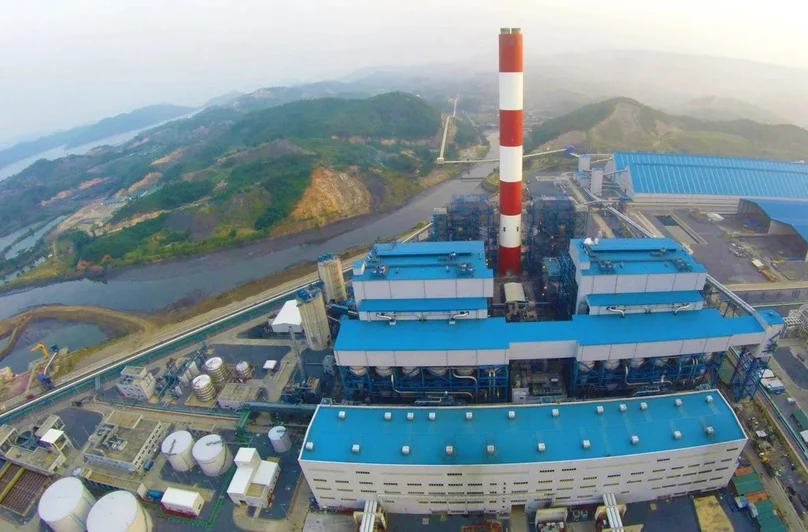
One of the most significant U.S. investments in Vietnam’s energy sector is the Mong Duong 2 BOT thermal power plant in the northern city of Quang Ninh. The $2.1 billion project, developed by U.S. energy company AES with partners, has a capacity of 1,240 megawatts. It began commercial operations in 2015, supplying electricity to Vietnam’s national grid.

AES later expanded its presence in Vietnam’s energy market through the Son My 2 LNG-fired power project in the former central province of Binh Thuan, now part of Lam Dong province. The project comprises an LNG import terminal and a gas-fired power plant with a capacity of about 2,250 MW and estimated investment of around $2.1 billion.

AES and Vietnam’s PV GAS signed an agreement to develop Son My 2 in 2019. The project is expected to begin commercial operations around 2028, subject to completion of investment procedures and construction.

AES’s projects illustrate how U.S. investment in Vietnam initially focused heavily on capital-intensive sectors such as power generation and energy infrastructure. It has since expanded into higher-value sectors, including semiconductors, chip design and artificial intelligence.

From Intel to the semiconductor value chain

If energy has been one of the sectors behind billion-dollar projects, technology is emerging as another major area of U.S. corporate presence in Vietnam.

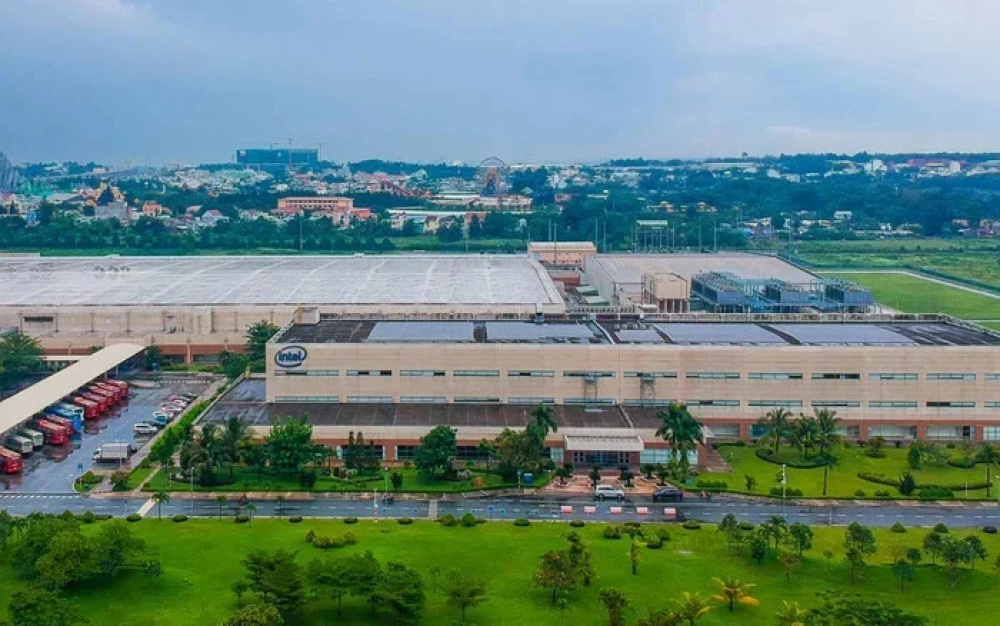
Intel broke ground on its facility at the Saigon Hi-Tech Park in Ho Chi Minh City in 2006 and began operations in 2010. With an initial investment of $1 billion, after several expansions, the company’s total committed investment in Vietnam has reached about $4.1 billion.

Intel Products Vietnam focuses on chip assembly and testing. After two decades of operations, the facility has shipped more than 4 billion products and generated more than $110 billion in export value.
Following Intel, Amkor Technology also established a semiconductor facility at Yen Phong II-C Industrial Park in Bac Ninh city, a neighbor of Hanoi. The project’s investment has reached about $1.6 billion across multiple phases, with construction beginning in 2019. The facility focuses on semiconductor packaging and testing.

While Intel and Amkor are focusing on manufacturing, packaging and testing, Synopsys and Marvell have a stronger presence in chip design and R&D. Synopsys expanded its operations in Vietnam from around 2018, while Marvell has built chip-design and R&D teams in the country.

Neither company has disclosed investment on the multibillion-dollar scale like the energy projects or manufacturing facilities of Intel and Amkor. Their operations, however, are concentrated in more knowledge- and engineering-intensive segments of the semiconductor value chain.

In artificial intelligence, Nvidia has also expanded cooperation with Vietnamese companies including FPT and Viettel, focusing on AI development, human resource training and ecosystem building.

U.S. capital extends beyond FDI

The presence of U.S. capital in Vietnam extends beyond traditional FDI, with private investment funds also deploying capital through corporate investments and mergers and acquisitions (M&As).

Warburg Pincus said it had invested more than $2 billion in Vietnam since 2013. Its portfolio includes Vincom Retail, BW Industrial Development, Techcombank and MoMo, as well as investments in real estate, tourism and healthcare.

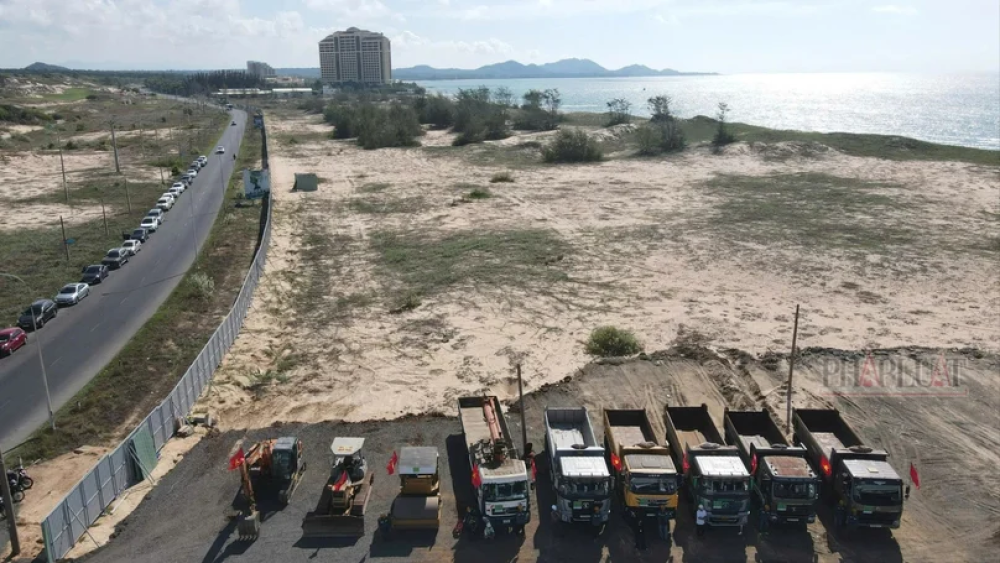
In Ho Tram, the former Ba Ria-Vung Tau province (now part of Ho Chi Minh City), it has invested in The Grand Ho Tram resort, tourism and entertainment complex, which has a total investment of $4.23 billion. As of April 2025, the project had disbursed about $1.5 billion, employed more than 2,000 workers, and contributed more than VND2.2 trillion ($84.57 million) to the state budget over five years.
KKR has also injected more than $2 billion into Vietnam through investments in local firms such as Masan, Vinhomes, EQuest, KiotViet and Saigon Medical Group. At Masan, it poured $159 million into Masan Consumer, raising the total value of its investments across the broader Masan ecosystem to about $359 million.

While the $12.5 billion in registered FDI highlights the scale of U.S. investment in Vietnam’s energy and industrial sectors, U.S. capital is also increasingly present in semiconductors, chip design, R&D, artificial intelligence and private-equity investments.

The broader footprint of U.S. capital is therefore reflected not only in registered FDI, but also in corporate investment, technology transfer, R&D and participation in global supply chains.

Source: Dinh Duy, Minh Hue

Photo: Photo courtesy of AES

Latest Posts

Decrees to be revised to remove bottlenecks in sci-tech and innovation

Decrees to be revised to remove bottlenecks in sci-tech and innovation

The move aims to resolve urgent difficulties and bottlenecks, establish a favorable legal framework, and unlock resources for science, technology, and innovation activities.

The Ministry of Science and Technology (MST) on October 1 forwarded an appraisal dossier for a draft decree amending and supplementing several articles of the decrees detailing and guiding the implementation of the Law on Science, Technology, and Innovation to the Ministry of Justice for review.

The draft aims to amend and supplement five Government decrees promulgated in 2025, including decrees 262, 263, 265, 267, and 268.

The objective of the draft is to resolve urgent difficulties and bottlenecks, establish a favorable legal framework, and unlock resources for science, technology, and innovation activities.

Its core focus centers on cutting or simplifying administrative procedures, ensuring synchronization and consistency with the 2025 Law on Public Employees, and addressing pressing hurdles in carrying out science, technology, and innovation initiatives.

The most notable change involves revisions and additions to regulations governing innovation tasks under Decree No. 268.

According to the MST, feedback from credit institutions and enterprises during the implementation of interest-rate subsidy programs indicated that current disbursement procedures interfere with the debt collection workflows applied by credit institutions. As a result, many lenders have been reluctant to participate.

Furthermore, delayed funding disbursements from the State Treasury could jeopardize enterprises' ability to fulfill their debt obligations to credit institutions on time.

Consequently, the MST proposed amending and supplementing Clause 8, Article 22 of Decree No 268/2025/ND-CP. Under the proposal, the Fund would proactively transfer support funds into a "dedicated account" at the relevant credit institution according to the debt collection schedule, releasing the subsidy payments based on valid on-time debt collection vouchers. This ensures that the lenders' standard debt collection processes remain undisturbed while safeguarding enterprises' repayment obligations.

Additionally, the draft introduces a clause stating: "The Fund shall suspend interest rate subsidies on loans during any period in which the enterprise incurs overdue debt." In such cases, the enterprise must pay the full interest due to the credit institution under the signed credit agreement.

The MST also noted that Decree No 268 and Decree No 267 do not yet clearly distinguish between science and technology tasks and innovation tasks.

In practice, this lack of clarity has led ministries, sectors, local authorities, organizations, and enterprises to interpret the provisions differently, causing substantial friction in identifying, approving, executing, and managing these tasks.


Vietnam records $122.2bln in crypto asset activity, ranking fourth in CSAO

Vietnam records $122.2bln in crypto asset activity, ranking fourth in CSAO

Market growth driven mainly by peer-to-peer (P2P) transactions and cross-border flows.

Vietnam recorded an estimated $122.2 billion in crypto asset activity between July 1, 2025 and June 30, 2026, ranking fourth in the Central and Southern Asia, Southeast Asia and Oceania (CSAO) region, according to data from Chainalysis, a US-based blockchain analytics and digital asset data company.

Vietnam ranked behind Singapore, with $284.1 billion in activity, Australia with $173.1 billion and India with $135 billion.

The data showed that Vietnam’s Utility Index, which measures activity related to the use of crypto assets, increased 127% from the previous period, while its Financial Index declined 5%. This suggests that market growth was driven mainly by peer-to-peer (P2P) transactions and cross-border flows rather than institutional financial channels.

Chainalysis also reported strong P2P activity in Vietnam, the Philippines and Thailand. The three countries recorded a combined 5.4 million domestic and cross-border P2P transfers, accounting for 14.4% of global P2P transactions, despite representing only 2.5% of the global crypto economy by value.

Vietnam’s stablecoin activity included $6.9 billion in domestic transactions and $10.5 billion in cross-border transactions.

Meanwhile, crypto asset activity through centralised exchanges (CEXs) in Vietnam reached approximately $69.9 billion, equivalent to 57% of the country’s total crypto asset activity of $122.2 billion during the period.

The figures indicate the significant role of retail and P2P transactions in Vietnam’s crypto market, while activity through institutional financial channels remains comparatively smaller.


Pandora opens US$150m flagship manufacturing plant in Vietnam

Pandora opens US$150m flagship manufacturing plant in Vietnam

Pandora, the world's largest jewelry brand, begins operations at a US$ 150 million manufacturing facility in Vietnam, utilizing 100% recycled silver and gold.

Located in the Vietnam Singapore Industrial Park III (VSIP III), the facility spans over 55,000 square meters on a 7.5-hectare site. Pandora designates the plant as its largest handcrafted jewelry facility, built to LEED Gold sustainable standards and powered entirely by renewable energy.

The plant launches with 735 employees, with headcount projected to reach 1,000 by year-end. At full capacity, the facility accommodates 7,000 artisans, scaling annual output to 60 million pieces and expanding the company's overall capacity by 50%.

Pandora leads the global jewelry sector by volume, selling 112 million pieces in 2025 and generating DKK 32.5 billion (US$ 4.9 billion) in revenue. The Vietnamese plant marks the brand's fourth production site and its first outside Thailand.

Chief Executive Officer Berta de Pablos-Barbier states that Vietnam earns selection for the flagship hub due to its favorable business environment and infrastructure. Furthermore, the country's longstanding goldsmithing tradition facilitates access to skilled talent.

Chief Supply Chain Officer Jeerasage Puranasamriddhi says that the Vietnamese plant initially prioritizes gold-plated product lines amid surging demand. Over the long term, the facility underpins the production of platinum-plated jewelry as the company diversifies its material strategy.

Production utilizes 100% recycled silver and gold certified by the Responsible Jewellery Council (RJC).

He adds that the company imports raw materials directly from international sources while progressively enhancing local technical capabilities for localization, and notes that suppliers must meet the Responsible Sourcing programme regarding integrity, financial capacity, and compliance.

Headquartered in Copenhagen, Denmark, Pandora holds a market capitalization exceeding US$ 9.7 billion. The group employs approximately 39,000 people globally and operates 7,000 points of sale across more than 100 countries. Second-quarter revenue reaches DKK 32.5 billion (approx. US$ 1.1 billion), a 2% increase year-on-year.

The brand initiates retail operations in Vietnam in 2011. CEO Berta de Pablos-Barbier reports that the market climbs to seventh in Asia, amid rapid economic development and a young consumer demographic matching the product portfolio.

She says that the global jewelry industry transitions from status symbols to expressions of individuality and personal values, requiring continuous innovation and refined design quality.


See all blog