Lumen Vietnam Fund

Blog

UKVFTA boosts Việt Nam’s textile exports, but new hurdles emerge

UKVFTA boosts Việt Nam’s textile exports, but new hurdles emerge

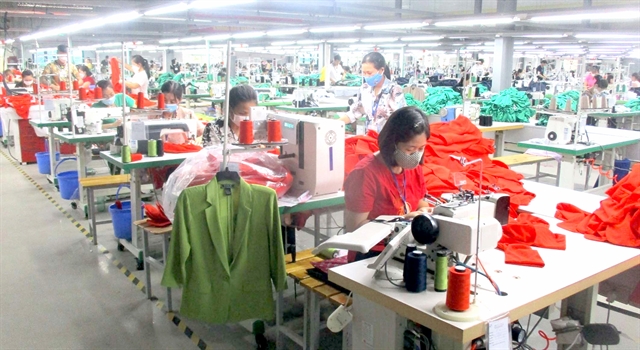
Textiles and garments are among Việt Nam’s major export categories to the UK and are considered one of the sectors that benefit significantly from the UKVFTA.

HÀ NỘI — The UK-Vietnam Free Trade Agreement (UKVFTA) has helped boost Việt Nam’s textile and garment exports to the UK, but maintaining market share and achieving sustainable growth will require exporters to adapt to increasingly stringent market requirements.

Textiles and garments are among Việt Nam’s major exports to the UK and one of the sectors benefiting significantly from the trade agreement.

According to the Vietnam Textile and Apparel Association (VITAS), exports to the UK accounted for 1.7 per cent of Việt Nam’s total textile and garment export turnover in 2020. The share rose to 2 per cent last year, reflecting the growing importance of the UK as Vietnamese businesses diversify their export markets.

Under the UKVFTA’s tariff commitments, 42.5 per cent of tariff lines were eliminated from January 1, 2021, with the remainder phased out over two, four or six years, helping improve the price competitiveness of Vietnamese products in the UK.

The outlook for exports remains positive. The UK economy is gradually stabilising, while easing inflation is expected to support consumer purchasing power. At the same time, efforts by UK importers to diversify their supply chains are creating additional opportunities for Vietnamese suppliers.

Alexandra Smith, British consul general in HCM City and trade director for Việt Nam, told Công Thương (Industry and Trade) newspaper that there remained significant room for cooperation between the two countries.

She said further progress could be achieved by focusing on areas where the UK has strengths and Việt Nam has clear development needs, as more businesses take advantage of favourable trade conditions.

Despite rising export turnover, Việt Nam’s share of the UK textile and garment market remains modest, with the UK importing around US$20 billion worth of textiles and garments annually.

One major challenge is compliance with the UKVFTA’s two-stage rule of origin, under which both fabric production and garment manufacturing must take place in Việt Nam or the UK for products to qualify for preferential tariffs. Việt Nam, however, remains heavily dependent on imported fabrics.

VITAS data shows that fabric imports increased from $11.9 billion in 2020 to about $15 billion last year, reaching $8.9 billion in the first seven months of this year.

The UKVFTA provides some flexibility by allowing Vietnamese exporters to use fabrics imported from South Korea, which has a free trade agreement with the UK. However, Korean fabrics are generally more expensive than those from China and Taiwan.

Beyond tariffs and rules of origin, exporters face increasingly demanding compliance requirements. Environmental standards, emissions, labour practices, social responsibility, traceability and supply chain transparency are becoming important criteria for UK buyers when selecting suppliers.

VITAS chairman Vũ Đức Giang said brands and importing markets were imposing multiple layers of requirements, ranging from audits to origin certification. This requires businesses to develop management systems and software capable of demonstrating the origin of goods, the validity of customs declarations and other relevant data.

The Ministry of Industry and Trade has recommended that textile and garment businesses strengthen production capacity, move into higher-value stages of production, diversify sources of raw materials across the region and develop domestic supply chains.

Businesses should also improve their understanding of rules of origin, closely monitor market demand and select orders that match their capabilities.

In the longer term, product quality will remain crucial. Businesses also need to gradually reduce their dependence on contract manufacturing and increase investment in design, branding and digital transformation, while developing direct relationships with UK retailers and distributors.


Source: VNS

Photo: VNA/VNS
Latest Posts

Vietnam’s fruit and vegetable exports up 21.8% to nearly $5.9 bln

Vietnam’s fruit and vegetable exports up 21.8% to nearly $5.9 bln

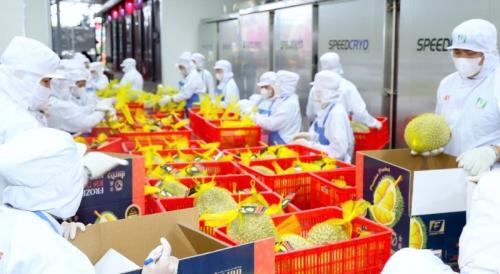
Driven by durian and other key fruit exports, the sector is closing in on its full-year target of $9.5-10 billion.

Vietnam’s fruit and vegetable exports reached nearly $5.9 billion in the first eight months of the year, up 21.8% year-on-year, according to the Ministry of Agriculture and Rural Development.

The export turnover of this product group in August 2026 stood at about $1.1 billion, up 1.3% month-on-month and 14.6% year-on-year. This marks the second consecutive month that the sector exceeded the $1-billion threshold.

Surpassing the $5.8-billion mark a month earlier than in 2025 demonstrates a clear acceleration in growth speed for the sector.

Driven by durian and other key fruit exports, the sector is closing in on its full-year target of $9.5-10 billion.

Durian continues to be the primary engine driving fruit and vegetable export growth. Major growing areas in the Central Highlands, including Dak Lak and Lam Dong provinces, entered their peak harvest season, ensuring a rich supply to meet import market demand.

Data from Vietnam Customs shows that in the first seven months of 2026, durian exports reached $1.77 billion, surging 47.1% year-on-year and accounting for nearly 37% of the nation’s total fruit and vegetable export turnover.

Beyond value growth, durian production has expanded rapidly. By the end of 2025, the country’s total durian cultivation area reached roughly 195,000 hectares, nearly triple that of 2020. Annual output grew from about 600,000 tons in 2020 to 1.8 million tons in 2025, and is expected to exceed 2 million tons in 2026.

During a business trip to China in August 2026, a delegation from the Ministry of Agriculture and Environment met with the General Administration of Customs of China (GACC). Evaluation results confirmed that 401 growing areas and 166 packaging facilities in Vietnam received approval from Chinese authorities.


Manufacturing production rises at fastest pace in just over two years

Manufacturing production rises at fastest pace in just over two years

The positive results of the Vietnam Manufacturing Purchasing Managers' Index (PMI) for August 2026 is attributed to the growth in the Vietnamese manufacturing sector which continued to strengthen midway through the third quarter of the year.

The S&P Global Vietnam Manufacturing Purchasing Managers' Index™ (PMI®) posted 53.3 in August, up from 52.9 in July and above the 50.0 no-change mark for the fourteenth consecutive month, according to a report released by S&P Global on September 3.

This result indicates that the improvement in business conditions in the manufacturing sector is being maintained at its strongest and most positive level since February.

The positive results of the Vietnam Manufacturing Purchasing Managers' Index (PMI) for August 2026 is attributed to the growth in the Vietnamese manufacturing sector which continued to strengthen midway through the third quarter of the year,

Output and new orders both rose sharply on the back of new product development and improving customer demand. Meanwhile, inflationary pressures softened further. Less positive was a renewed fall in employment in the sector, while confidence in the year-ahead outlook ticked lower.

Anecdotal evidence linked growth in August to a range of factors, including the development and release of new products, better material availability and softer price pressures. These contributed to marked increases in both new orders and manufacturing production during the month.

Output rose for the sixteenth consecutive month, and at a rapid pace that was the fastest in just over two years. Likewise, the pace of expansion in new orders also quickened and was the sharpest since last October.


Tourism is expected to contribute 10-12 percent of GDP by 2030

Tourism is expected to contribute 10-12 percent of GDP by 2030

Under a new resolution of the Politburo, Vietnam targets 45-50 million international visitors and 160 million domestic tourists by 2030.

General Secretary of the Communist Party of Vietnam Central Committee and President To Lam recently signed Resolution 26-NQ/TW of the Politburo on the development of Vietnam’s tourism industry as a spearhead economic sector in the new era, with the industry expected to contribute 10-12 percent and 14-15 percent of GDP by 2030 and 2045, respectively .

According to the new resolution, Vietnam aims to become one of Southeast Asia's leading tourism destinations in terms of scale and growth, attracting 45-50 million international visitors and serving 160 million domestic tourists by 2030, and then to rank among the world's 30 most competitive tourism economies, attracting 70 million international visitors by 2045.

The resolution calls for the development of high-quality, smart, green and innovative tourism that is deeply rooted in national cultural identity and competitive both regionally and internationally.

The resolution highlighted tourism's role in generating stronger spillover effects across the economy, contributing to growth, innovation, cultural industries and national soft power while promoting sustainable development.

According to the resolution, tourism is expected to generate total revenue of $80-90 billion, with priority given to attracting visitors who spend more and stay longer.

The country plans to develop three major tourism growth poles in Hanoi, HCM City and Da Nang, together with 10 key tourism centers and 20 national tourism areas.

The resolution also sets a target of approximately 1.5 million tourist accommodation rooms and an industry workforce of around 2.3 million direct employees and 3.5 million indirect workers.

Vietnam will also establish a national smart tourism ecosystem, including a national tourism database and a national digital tourism platform, the resolution noted.

Under the resolution, a major policy shift is the move away from a tourism model that primarily focuses on increasing visitor numbers and exploiting resources towards one that focuses on quality, efficiency, higher added value and distinctive visitor experiences.

The resolution calls for a transition from conventional administrative management to management of an integrated tourism service ecosystem. Tourism development is also to be closely integrated with economic, cultural, environmental, national defense and security, and international integration strategies.

Policies will support emerging tourism-related models, including the sharing economy, digital-platform businesses, the night-time economy, riverfront and coastal economies, and integrated tourism, cultural, sports and entertainment complexes, according to the resolution.

It also calls for research into a value-added tax refund mechanism to encourage shopping tourism, as well as regulations governing cross-border online tourism platforms.

Under the resolution, public-private partnerships are to be expanded in the preservation, management and sustainable exploitation of destinations of special value, while strategic investors will be encouraged to participate in tourism infrastructure and major tourism projects.

Visa and entry policies are to be further reformed, including broader visa exemptions and more flexible arrangements for key markets, in order to attract higher-spending and longer-staying visitors, the resolution stated.

Financial resources for tourism development will also be strengthened through the tourism development support fund, investment funds, credit guarantees and preferential loans, including interest-rate support for green and sustainable tourism projects.

The resolution places strong emphasis on developing multimodal transport infrastructure connecting international gateways with major economic regions, tourism centers and national tourism areas.

Accordingly, priority will be given to aviation, railways, inland waterways, seaports and marinas, as well as convention and exhibition centers, cultural facilities and digital infrastructure.

Vietnam will improve its capacity to receive large cruise ships and encourage the development of large-scale resorts and integrated tourism, cultural, sports, entertainment and shopping complexes.

The resolution identifies Hanoi, HCM City, Da Nang, heritage cities and Phu Quoc island as important tourism growth poles and centers.

The country will diversify tourism products, prioritizing cultural tourism associated with cultural industries, heritage and the night-time economy; marine and island tourism; mountain and forest ecotourism; waterway and high-end rail tourism; medical and wellness tourism; sports tourism; meetings, incentives, conferences and exhibitions (MICE); shopping; cuisine; and community-based tourism, it noted.

The resolution encourages localities to develop distinctive tourism products while strengthening links among travel agencies, transport operators, accommodation providers and other service businesses.

Such linkages are expected to increase domestic value creation and enable Vietnamese tourism enterprises to participate more deeply in global tourism value chains.

Tourism promotion will be coordinated at the national level and closely linked with Vietnam's national image, culture, people and investment environment, the resolution added.


See all blog