Lumen Vietnam Fund

Blog

UK’s BII pledges $1.6 bln for Southeast Asia climate finance, with Vietnam set to benefit

UK’s BII pledges $1.6 bln for Southeast Asia climate finance, with Vietnam set to benefit

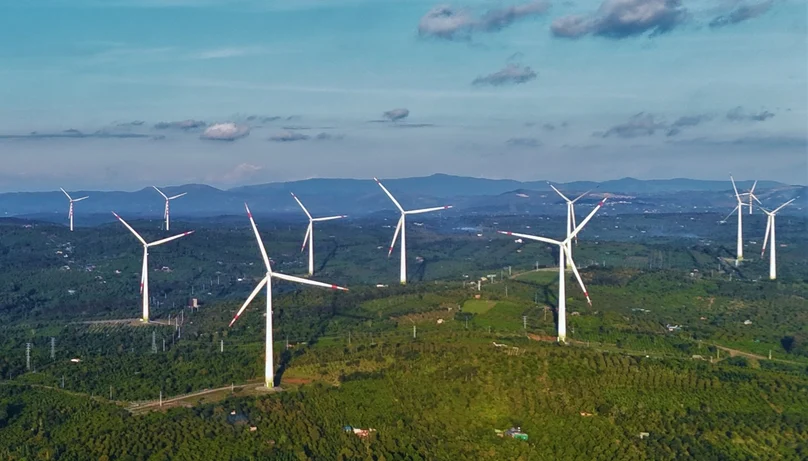
Vietnam and its regional neighbors are set to receive a major boost in their transition toward clean energy as British International Investment (BII), the UK’s development finance institution and impact investor, announced a $1.6 billion climate finance commitment for Southeast Asia.

The capital push, marking the fifth anniversary of BII’s regional headquarters in Singapore, aims to accelerate the energy transition in high-emitting, rapidly growing economies including Vietnam, Indonesia, the Philippines, Malaysia, and Thailand.

Vietnam’s financial sector is already benefiting from earlier BII commitments. The UK institution has previously extended green financing to major Vietnamese lenders, including VPBank and HDBank, to fund local climate-related projects, sustainable agriculture, and small- and medium-sized enterprises (SMEs).

Under the new funding umbrella, Vietnam remains a prime target as the nation seeks to shift away from heavy reliance on fossil fuels toward renewables.

Over the next five years, BII plans to provide roughly half of the $1.6 billion directly from its balance sheet, while leveraging private investors to mobilize the remainder. A significant portion of this capital will flow through British Climate Partners (BCP), a specialized climate finance platform launched by BII earlier this year to target carbon-intensive Asian economies.

“The climate crisis is a national security issue that demands urgent attention,” said UK Foreign Secretary Ed Miliband. “I am proud that BII is taking action to help countries across Southeast Asia build cleaner, more resilient economies. BII is central to the UK’s efforts to unlock much more private investment to deliver on our climate and development goals.”

The funding push targets critical green sectors, including renewable energy generation, power transmission, electric vehicle (EV) infrastructure, waste management, and water resilience. Across Southeast Asia, BII projects that the new investments will add an estimated 1.8 gigawatts (GW) of clean energy capacity and prevent nearly 1.7 million tons of carbon emissions.

To date, BII has committed nearly $400 million to climate initiatives in the region between 2023 and 2025, backing developers such as ib vogt, Skye Renewables, and Xurya, alongside funds including Pentagreen Capital’s Green Investment Partnership and Gresham House’s SUSI Asia Energy Transition Fund.

Its existing portfolio has supported over 358 megawatts (MW) of operational or installed clean energy, generated more than 556,000 megawatt-hours (MWh) of green electricity, and avoided approximately 368,000 tonnes of carbon emissions.

“Our singular focus for the South-East Asia region is to fund climate finance projects that will contribute to the region’s clean and sustainable economic future,” said Leslie Maasdorp, CEO of BII, during the strategy launch in Singapore. “The global challenge of the climate emergency knows no borders.”

Source: Hai Yen
Latest Posts

Vietnam seeks to turn FDI inflows into domestic value added

Vietnam seeks to turn FDI inflows into domestic value added

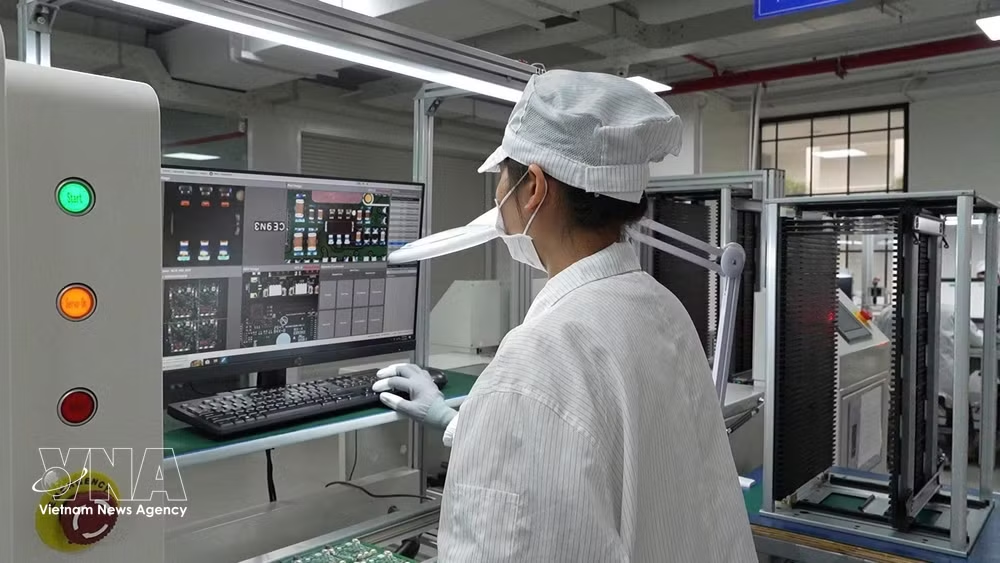
Vietnam is shifting its FDI attraction strategy from expanding investment volumes to prioritising capital inflows that brings technology, knowledge, modern management practices and stronger links with domestic businesses, particularly in semiconductors, artificial intelligence (AI), chips and renewable energy.

Hanoi (VNA) - High-quality foreign direct investment (FDI), coupled with the growing global standing of national trade, offers a pathway for Vietnam to move from an “assembly workshop” to a “high-value link” in global supply chains.
Vietnam is shifting its FDI attraction strategy from expanding investment volumes to prioritising capital inflows that bring technology, knowledge, modern management practices and stronger links with domestic businesses, particularly in semiconductors, artificial intelligence (AI), chips and renewable energy.
​Rising inflows of technology investment

Resolution No. 10 issued by the Political Bureau on developing the foreign-invested economy targets 200–300 billion USD in registered FDI by 2030, with 75% of newly registered capital coming from developed economies with strengths in technology, capital and modern governance. It also aims to attract at least three global technology corporations to establish research and development (R&D) centres in Vietnam and bring 10,000 domestic enterprises into multinational corporations’ supply and value chains.
According to the National Statistics Office (NSO), total registered foreign investment, including newly registered and adjusted capital and capital contributions and share purchases, reached 40.63 billion USD by the end of August, up 55.4% year on year. Disbursed FDI stood at approximately 17.25 billion USD, up 12% and the highest level for the first eight months in five years.
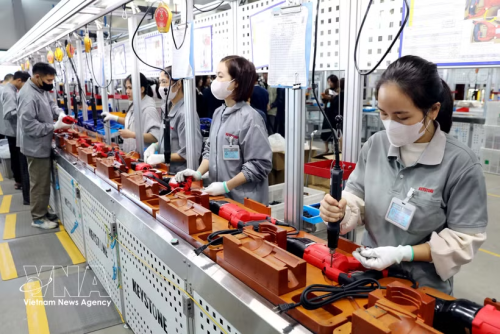
Manufacturing and processing led newly registered investment with 12.15 billion USD, accounting for 56%. Alongside traditional manufacturing, an increasing number of projects are emerging in electronics, semiconductors, high technology and other segments with higher value added.
The country also aims to develop its semiconductor industry, targeting at least 100 design enterprises, one small-scale chip fabrication plant and 10 packaging and testing plants by 2030. In the 2040–2050 period, Vietnam aims to master research and development in the semiconductor and electronics industries.
​Measures sought to join global value chains

​While FDI connects Vietnam to global supply chains, trade reflects the depth of its economic integration. After years of opening up and joining free trade agreements (FTAs), Vietnam has become one of the world’s top 20 economies by import-export turnover.

Assoc. Prof. Dr. Nguyen Thuong Lang from the Institute of Trade and International Economics at the National Economics University (NEU) said Vietnam’s challenge is to convert part of its trillion-dollar trade turnover into domestic value added. FDI attraction must therefore go hand in hand with trade upgrading.

Moving beyond contract manufacturing to product design, high-tech components, software, technical services, logistics, branding and international distribution will enable Vietnamese businesses to retain more value domestically. Otherwise, export growth could largely reflect the expansion of foreign-led production networks, he said.

He also stressed that leveraging export markets, free trade agreements (FTAs) and multinational corporations’ networks to support Vietnamese businesses will help turn trillion-dollar trade into a driver of domestic industrial development.

Prof. Vu Minh Khuong from the Lee Kuan Yew School of Public Policy at the National University of Singapore (NUS) said FDI should be viewed as a strategic lever for upgrading Vietnamese enterprises and the economy, rather than as a separate sector alongside domestic businesses.

Despite attracting major international corporations, Vietnam has yet to fully realise the potential for linkages between foreign-invested and domestic firms. Vietnamese businesses should be viewed as partners that can drive innovation, cut costs and boost global competitiveness.

This requires domestic enterprises to invest in technology, human resources, digitalisation, AI, green transition, R&D and management capacity. FDI attraction policies must therefore be closely linked with domestic enterprise development, allowing stronger capabilities to drive deeper participation in global value chains.

​Leveraging FDI to strengthen national capacity

Khuong said Vietnam’s ability to connect with many economies and technology ecosystems is a major strategic asset for the country.

FDI must become a major school for technology, management, standards and markets; trade must provide pressure and motivation for businesses to upgrade; and integration must help Vietnam access the world’s best knowledge, talent, technologies and networks, he said.

Lang also stressed that FDI attraction and domestic enterprise development must be addressed together to help Vietnam build an autonomous economy, create breakthoughs and become a developed country by 2045. Priorities should be given to developing supporting industries, improving technical skills and strengthening links between foreign-invested and domestic businesses.

Domestic suppliers must meet multinational corporations’ standards to compete for contracts, he said, calling for targeted support for businesses to upgrade technology, train managers and conduct R&D.

He also proposed linking tax and land-rental incentives for foreign investors to commitments on domestic sourcing, while creating a priority supplier list to connect qualified Vietnamese businesses directly with foreign-invested corporations’ procurement departments.

Such measures would help translate foreign investment and international integration into stronger domestic capabilities, supporting sustainable growth and long-term prosperity.​

Apple, Intel, Meta seek to expand high-tech manufacturing in Vietnam

Apple, Intel, Meta seek to expand high-tech manufacturing in Vietnam

Representatives of Apple, Intel, and Meta have expressed interest in expanding cooperation with Vietnamese partners in technology, innovation, and high-tech manufacturing.

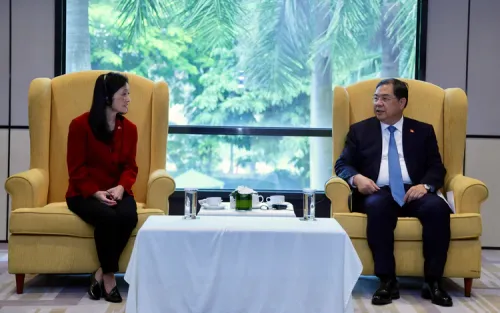
They voiced their wishes during a meeting in Hanoi on Wednesday between Vietnamese Permanent Deputy Prime Minister Pham Gia Tuc, U.S. Ambassador to Vietnam Jennifer Wicks, and representatives of various American businesses, groups, and associations.

The three companies proposed measures to attract next-generation investment, develop the semiconductor industry, and strengthen supply chain links.

They also called for greater investment in high-tech workforce training, support for Vietnamese businesses seeking to join global supply chains, and wider application of artificial intelligence (AI) to production and business operations.

Deputy PM Tuc welcomed the proposals and urged the three companies, along with other U.S. businesses, to proceed with their business and investment plans in Vietnam.

Representatives of other U.S. firms at the meeting also outlined areas for cooperation and called for improvements to the business environment.

Energy company AES and power technology provider GE Vernova expressed interest in continuing cooperation with Vietnam on power generation, transmission systems, and energy equipment supply chains.

Investment firms KKR and Warburg Pincus called for streamlined procedures for mergers and acquisitions, competition assessments, initial public offerings, and stock market listings.

Meanwhile, consumer goods companies PepsiCo and Philip Morris International urged further improvements to industry regulations and policies to facilitate production and business operations.

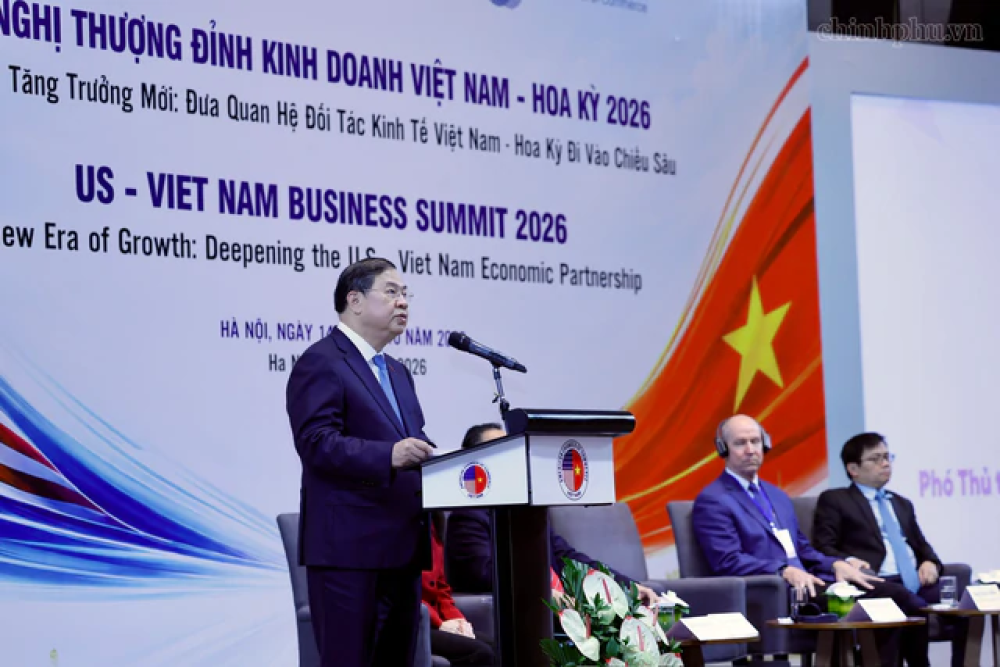
In a related development, at the U.S.-Vietnam Business Summit 2026 in Hanoi on the same day, Tuc outlined five priority areas for bilateral business cooperation: high technology, particularly semiconductors, AI and data; clean energy and the green transition; sustainable supply chains; finance, innovation and startups; and education, training and high-quality workforce development.

He affirmed that the Vietnamese government would continue institutional reforms and improve the investment and business environment to make it more transparent, stable, predictable and investor-friendly.

He called on U.S. businesses to expand their investments in Vietnam, strengthen cooperation in core technologies, particularly semiconductors, and deepen links in technology, equipment, services, production standards and supply chains to lay the groundwork for long-term cooperation.

Vietnam’s industry ministry backs Hai Phong LNG power project over renewable alternative

Vietnam’s industry ministry backs Hai Phong LNG power project over renewable alternative

Vietnam’s Ministry of Industry and Trade (MoIT) has recommended the LNG Hai Phong power plant project in Hai Phong city be proceeded while awaiting the Prime Minister’s decision on a proposal to replace it with a complex combining renewable energy and battery energy storage.

director of the Electricity Authority of Vietnam, said the LNG power project was included in the eighth National Power Development Plan (PDP VIII) and its revised version, approved under the Prime Minister's Decision 768/QD-TTg.

As one of 12 LNG-fired power projects incorporated in the national plan, it received in-principle investment approval, completed investor selection, and broke ground in September 2025, Hung said.

The project, with Vingroup as the investor, also reached several key milestones, including an agreement with US-based GE for gas turbines.

Earlier, the ministry received a proposal to develop a renewable energy complex combined with a battery energy storage system (BESS) as an alternative to the LNG power plant.

After reviewing the proposal, the ministry reported to the Prime Minister and recommended proceeding with the LNG Hai Phong project in line with the approved power development plan.

The ministry has also sought the Prime Minister’s direction on the proposed battery storage and renewable energy complex. "Further details will be provided once the competent authorities make a decision," Hung said.

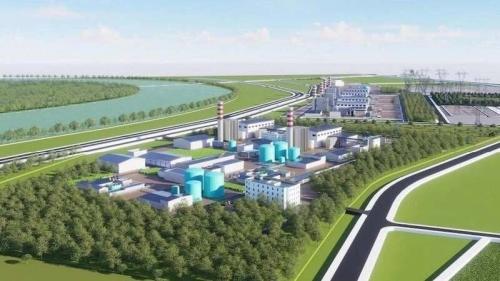
Vingroup and its energy subsidiary VinEnergo officially broke ground on the Hai Phong LNG power project in September 2025. Located in Tan Trao Industrial Park in Hai Phong city, the project covers nearly 100 hectares and has a total investment of more than VND178 trillion ($6.88 billion). Construction is expected to take five years, with the plant scheduled to begin operations by the end of 2030.

The facility will have a planned capacity of 4,800 megawatts, developed in two phases. The first phase will provide 1,600 MW, while the second will add 3,200 MW.

The plant is expected to generate 9.6 billion kilowatt-hours of electricity annually in the first phase, rising to 19.2 billion kWh when the second phase is operational.

The electricity will supply industrial production at Tan Trao Industrial Park and feed additional large-scale capacity into Vietnam’s national grid.


See all blog