Lumen Vietnam Fund

Blog

Three-consortium proposes $1.15 billion financial tower for Vietnam’s IFC in HCMC

Three-consortium proposes $1.15 billion financial tower for Vietnam’s IFC in HCMC

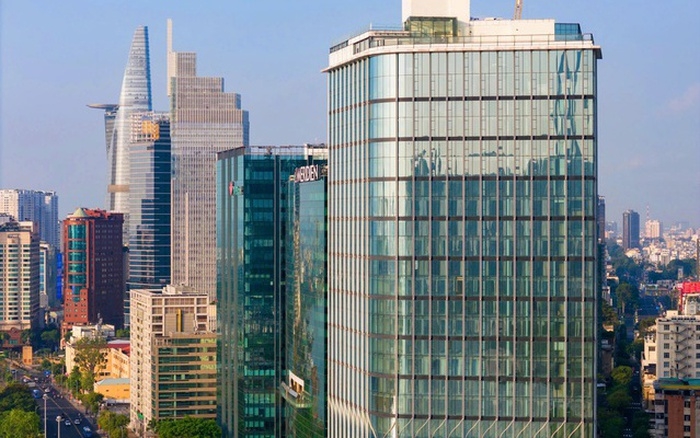
A consortium comprising REE, HFIC, and VinaCapital has proposed investing $1.15 billion to develop a 99-storey financial tower in Ho Chi Minh City's Thu Thiem New Urban Area, expected to become a landmark of Vietnam’s International Financial Centre.

According to the proposal submitted to city authorities, the investors plan to establish a joint venture to develop, operate, and manage the project, with total investment capital estimated at $1.15 billion, of which equity will account for 20 per cent (equivalent to $230 million), and the remainder will be mobilised through loans and customer-related funding.

In terms of capital contribution, REE Group will hold the largest stake at 43 per cent (nearly $99 million), followed by VinaCapital at 24 per cent (over $55 million). HFIC is expected to contribute 33 per cent through land-use rights, which may be converted into office floor area if exceeding the committed value.

Speaking with VnEconomy/Vietnam Economic Times, Mr. Mahesh Kini, Global Head of Cash Management at Standard Chartered Bank, said positioning the financial centre in Ho Chi Minh City’s core urban area is a strategic choice that creates synergy between institutions and infrastructure.

More importantly, he emphasised the need to build an internationally aligned operating environment that enables businesses to manage liquidity and cross-border capital flows efficiently. Notably, Ho Chi Minh City’s rise by 11 places in the Global Financial Centres Index 2026 is seen as a positive signal, reflecting growing confidence among international investors.

In this context, Vietnam is approaching a critical inflection point, transitioning from a “manufacturing hub” to a “capital management hub” within the global value chain.

“As global enterprises expand their presence in Vietnam, they are not only producing and exporting but also scaling domestic consumption, generating significant liquidity. This is attracting increasing attention from regional treasury centres in Singapore and Hong Kong (China), as well as global finance teams in Europe and the US. It is also reshaping how companies approach finance, shifting from basic cash management to optimising working capital,” Mr. Kini said.
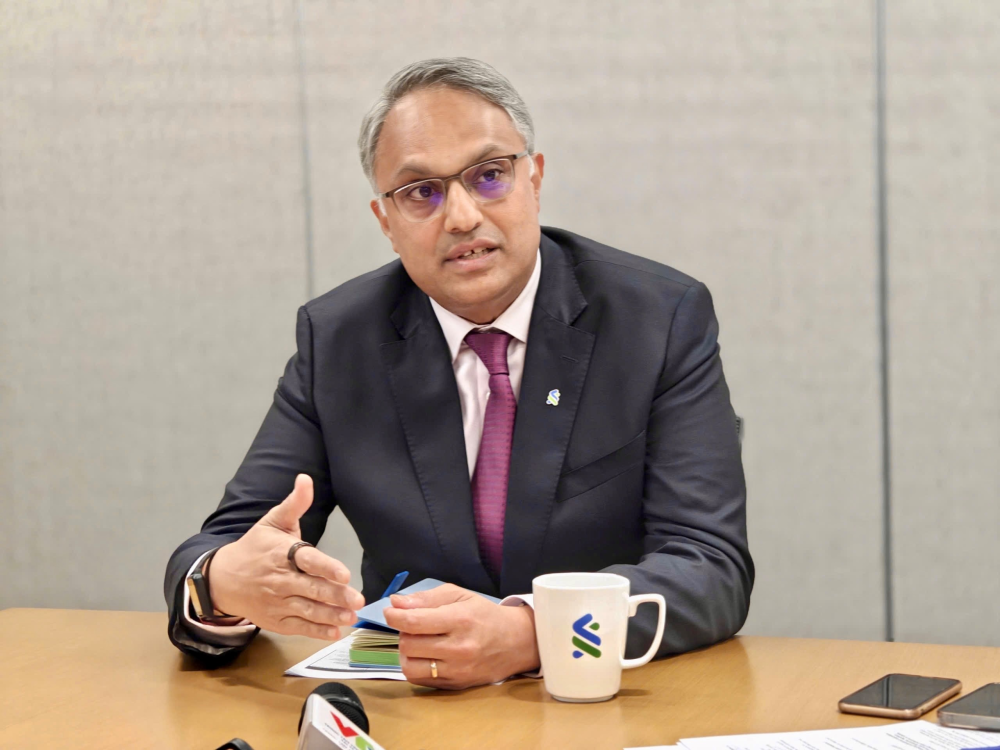
Drawing on experience from international financial centres such as Dubai, GIFT City (India), and the Shanghai Free Trade Zone, he identified four key success factors: a stable and internationally recognised legal framework; a consistent regulatory environment; strong human capital combining local expertise and international talent; and a comprehensive financial ecosystem, including banks, fintech firms, and legal and advisory services.

In the development of an international financial centre, global financial institutions play a role beyond capital provision, acting as bridges to integrate Vietnam more deeply into global financial networks.

According to Mr. Kini, international banks can support from advisory on operating models to providing solutions for liquidity management, foreign exchange, and risk hedging. Notably, linking domestic financial systems with regional and global cash pools via APIs is considered a critical factor in enhancing the competitiveness of Vietnam’s IFC.

At the same time, the growing adoption of artificial intelligence (AI) in finance and banking is fundamentally reshaping cash management. Mr. Kini noted that AI addresses three core challenges: speed, efficiency, and decision-making.

Where treasury functions previously relied on manual processes and spreadsheet-based analysis, AI-integrated systems can now aggregate and analyse data across multiple accounts and currencies in real time, generating actionable insights.

“In foreign exchange management, for example, we recently supported a client in deploying an AI solution capable of forecasting exchange rate risks with over 90 per cent accuracy in real time. This enables businesses to proactively identify risks and reduce hedging costs, particularly in volatile markets,” he said.

Vietnam’s International Financial Centre was established under a National Assembly resolution dated June 27, 2025, following a “one centre, two locations” model in Ho Chi Minh City and Da Nang.

In Ho Chi Minh City, the centre has been operational since February 11, with key pillars including aviation finance, maritime finance, a commodity exchange, and a high-tech clearing and settlement centre.

Within this broader framework, the proposed 99-storey financial tower in Thu Thiem, if realised, would serve not only as a symbolic landmark but also as a strategic anchor for a modern financial ecosystem where capital, technology, and institutions converge.

The project is planned on a 10,000-square-metre site in Thu Thiem, comprising 99 above-ground floors and five basements, with a total gross floor area of up to 400,000 square metres. It is designed as a mixed-use development combining office, commercial, and long-term leasing components of up to 70 years.

To accelerate implementation, the consortium has proposed several special mechanisms under National Assembly Resolution 222, including allowing a mixed apartment–hotel model, phased land-use fee payments over three years, a reference land price of around VND350 million per square metre, and extending land-use tenure to 70 years.


Source: Nhu Quynh
Latest Posts

Foxconn pours additional $58.3 mln into northern Vietnam unit

Foxconn pours additional $58.3 mln into northern Vietnam unit

Taiwan’s Hon Hai Precision (Foxconn), a key electronics supplier to Apple, said it will invest an additional $58.32 million in its Vietnamese subsidiary, Fushan Technology (Vietnam), according to a filing to the Taiwan Stock Exchange.

Foxconn’s unit Chief Expertise Limited will implement the investment, bringing Foxconn’s total investment in Fushan Technology (Vietnam) to $226.29 million while maintaining 100% ownership.

The move is aimed at “long-term investment.” However, the filing did not specify which items the funds would be allocated to.

Before the latest capital hike, Fushan Technology (Vietnam), located at VSIP Bac Ninh Industrial Park in the northern province of Bac Ninh, had been featured in an expansion plan in late 2025.

According to an environmental impact assessment filing for the expansion of its Bac Ninh plant, Fushan Technology (Vietnam) said it plans to install additional production lines to add products such as Xbox gaming devices, electronic components and chargers for smart ring wearables, while lifting smartphone capacity by 30 million units a year to 140 million units annually.

The document also shows the facility would produce up to 100,000 unmanned aerial vehicles (UAVs) each year, with full operations planned from April 2026.

Fushan Technology (Vietnam) was established in November 2011 as Nokia Vietnam. It was renamed Microsoft Mobile Vietnam in December 2014 after US tech giant Microsoft acquired Nokia that year.

In 2017, Microsoft sold its handset business to FIH Mobile, part of the Foxconn ecosystem, after which Microsoft Mobile Vietnam was renamed Fushan Technology (Vietnam) as it is known today.

Fulian receives fresh hundreds of millions in capital injection

Beyond Fushan Technology (Vietnam), another wholly-owned unit of Foxconn in northern Vietnam - Fulian Precision Technology Component - also posted a strong capital increase in Q1/2026.

In January, Fulian Precision Technology Component was approved to raise its charter capital from VND8.48 trillion ($322.08 million) to VND9.13 trillion ($346.77 million), before increasing it further to VND9.46 trillion ($359.3 million) in February.

In March, Foxconn poured a further $287 million into Fulian Precision Technology Component via its subsidiary Ingrasys (Singapore) Pte. Ltd. Following this, Foxconn’s total investment in Fulian Precision Technology Component rose to about $668.5 million, while maintaining 100% ownership. The move ranks among the group’s largest disclosed investments in Vietnam so far this year.

Since beginning its investment in Vietnam in 2007, Foxconn has established a presence in Bac Ninh, Hanoi, Quang Ninh and Nghe An, with Bac Ninh emerging as its key hub.

Speaking at the opening ceremony of the Foxconn Vietnam headquarters office in Hanoi last week, Pham Hoang Son, Chairman of the Bac Ninh People's Committee, said Foxconn has run 20 projects in Bac Ninh with total investment of about $4 billion, creating around 130,000 jobs.

Beyond its economic contributions, Foxconn has also advanced technology transfer, workforce training and the development of a high-tech electronics ecosystem in the locality, he added.

The establishment of the company’s Vietnam headquarters office is a strategic step to enhance operational efficiency and strengthen engagement with regulators and partners, according to Foxconn Vietnam CEO Chou I Wen.

He added that Vietnam is not only a key manufacturing hub, but also an increasingly notable destination for innovation in the region.

Michael Chiang, rotating CEO of Foxconn, said the inauguration not only marks an expansion of operations but also reaffirms the group’s long-term commitment to Vietnam.

Amid shifting global economic dynamics, Vietnam - particularly Hanoi - is playing an increasingly strategic role in Foxconn’s development network, he stressed.

Foxconn is committed to further expanding investment, advancing technology transfer, developing a high-quality workforce, strengthening cooperation with domestic firms, and contributing to the growth of high-tech industries and sustainable supply chains in Vietnam, the CEO said.

Vietnam, UNIDO sign deal for sustainable industrial development

Vietnam, UNIDO sign deal for sustainable industrial development

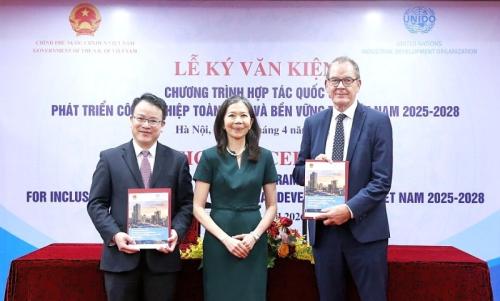
The Country Program for Inclusive and Sustainable Industrial Development for 2025–2028 has an estimated budget of $72 million.

Vietnam and the United Nations Industrial Development Organization (UNIDO) have signed a new Country Program for Inclusive and Sustainable Industrial Development for 2025–2028, marking a further step in their long-standing partnership.

The agreement was signed on April 20 in Hanoi by the Ministry of Finance and UNIDO.

With an estimated budget of $72 million, the program focuses on green industrial transformation, strengthening competitiveness and sustainable value chains, and improving industrial policies and institutions.

Since the official establishment of the partnership, UNIDO has collaborated with Vietnam to implement over 170 projects since 1978 in areas such as small and medium-sized enterprise development, quality infrastructure, energy efficiency, clean production, and sustainable supply chains. Based on this, within the framework of the new program, cooperation between the two parties will continue to be expanded through comprehensive intervention programs and activities, combining policy advice, technical support, and investment mobilization. The program is expected to open up new cooperation opportunities in the field of agricultural processing, particularly for value chains with potential such as rice and tea, focusing on value addition, meeting sustainable standards, enhancing resilience to climate change, and improving livelihoods in rural areas.


Steel giant Hoa Phat inaugurates $76 mln steel pipe plant in southern Vietnam

Steel giant Hoa Phat inaugurates $76 mln steel pipe plant in southern Vietnam

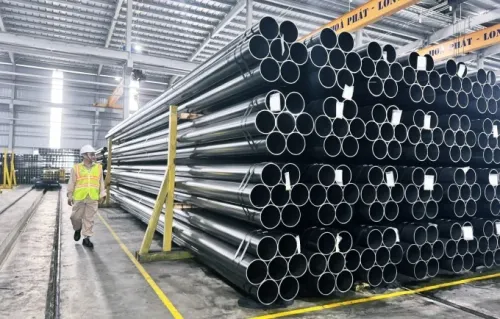
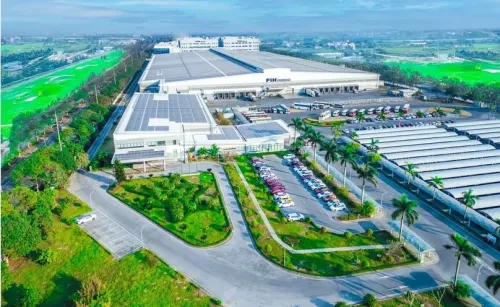
Vietnam’s conglomerate Hoa Phat Group (HoSE: HPG) on Saturday inaugurated a new steel pipe plant in the southern province of Tay Ninh with an investment of VND2 trillion ($75.6 million), as the country’s top steelmaker expands capacity to capture recovering demand in construction and infrastructure.

The facility has an annual capacity of 400,000 tons and produces a range of products, including black steel pipes, galvanized steel, and large-diameter pipes for industrial use.

With the addition, Hoa Phat’s total steel pipe capacity rises to 1.2 million tons per year, reinforcing its leading position in the domestic market with an estimated market share of nearly 35%.

Located in the Thuan Dao Industrial Park, the 15-hectare plant benefits from proximity to Ho Chi Minh City and is about 30 km from Long An international port, allowing the company to optimize logistics costs and expand its reach in southern Vietnam and export markets.

The plant is already supplying steel pipes for major infrastructure projects such as Long Thanh International Airport in Dong Nai province and Phu Quoc airport off An Giang province, the company said.

In addition, the facility is equipped with a rooftop solar power system with a capacity of 10 MW, enabling the firm to meet more than half of its electricity demand and reduce operating costs.

In the first quarter of 2026, the group sold more than 241,000 tons of steel pipes, up around 30% from a year earlier. Southern Vietnam accounted for roughly 90,000 tons.

The company targets revenue of VND210 trillion ($7.97 billion) and net profit of VND22 trillion ($835.47 million) this year, up 33% and 42% respectively from 2025. If achieved, this would mark a record high for the group, with steel continuing to contribute about 95% of total revenue.

HPG shares were traded at VND24,800 ($0.94) each on Monday afternoon.

See all blog