Lumen Vietnam Fund

Blog

Thailand’s Central Group plans $3.5 bln Vietnam investment over next decade

Thailand’s Central Group plans $3.5 bln Vietnam investment over next decade

Central Group plans to invest about $3.5 billion in Vietnam over the next decade, effectively doubling its cumulative investment in the country as the Thai retail and property conglomerate targets growth beyond major cities.

The new commitment was announced in Bangkok on Thursday by Central Group president Wallaya Chirathivat and Olivier Langlet, CEO of Central Retail Vietnam, at an event marking the launch of the 10th Vietnamese Week in Thailand.

Central Group has invested about $1.5 billion in Vietnam since entering the market in 2012. The latest plan will take its total investment in the country to about $5 billion over the next 10 years.

Central Retail Corp., the group’s retail arm, will account for about $1.5 billion of the new investment and plans to open around 50 additional stores over the next decade.

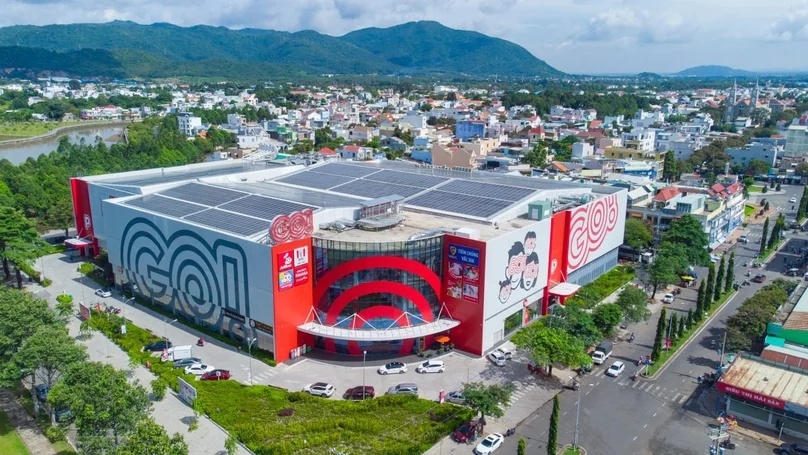
The retailer currently operates more than 300 outlets across 26 of Vietnam’s 34 provinces and cities, serving about 500,000 customers a day and employing roughly 13,000 people. Vietnamese nationals account for 99.5% of its workforce.

In the near term, Central Retail aims to add 35 to 37 stores by 2028, focusing on its GO! hypermarket format and smaller mini go! supermarkets.

Expansion beyond major cities

Central Retail is shifting its expansion focus toward secondary and smaller cities, where it sees room for further growth as major markets such as Hanoi and Ho Chi Minh City become increasingly saturated.

“When entering Vietnam around 15 years ago, the focus was naturally on tier-one cities,” Thai newswire The Nation cited Langlet as saying. “Over time, we have seen that consumers in tier-three and tier-four cities are creating more value and more opportunities.”

The group has identified about 200 potential locations across Vietnam’s four city tiers, with between 50 and 70 sites currently under consideration.

Central Retail plans to use multiple formats, including shopping malls, hypermarkets, standalone stores and supermarkets, to serve different markets.

The retailer has a market share of about 40% in Vietnam’s hypermarket segment, according to the company. Its Vietnam operations have generated cumulative revenue of more than THB330 billion ($9.9 billion) over the past eight years.

$1.5 billion property and hospitality push

A further $1.5 billion from Central Group’s new commitment has been earmarked for Central Pattana, the group’s property development arm, and Centara Hotels & Resorts.

Central Pattana expects to deploy capital over a longer 10- to 15-year period, reflecting the development timelines of large shopping malls and mixed-use projects. The group is considering whether to develop projects directly or through joint ventures. Vietnamese developer Sun Group is among potential partners being considered, Chirathivat said.

Property investments will initially focus on retail and mixed-use developments, with offices and hotels potentially added at later stages.

Centara, which operates 52 hotels in nine countries, is also expanding its Vietnam portfolio. The group currently operates the 984-room Centara Mirage Resort Mui Ne, which opened in 2021, and plans to open two additional properties in Van Don, Quang Ninh province, adding 977 rooms by the end of this year.

Central Retail executives said high property prices and uncertainty over the interpretation of some regulations could affect the pace of expansion.

Langlet said Vietnam had made progress in reducing administrative procedures but that some laws remained unclear in their interpretation, creating challenges for businesses seeking to expand more quickly.

Land acquisition costs are a particular concern, he said, as high prices require the group to carefully assess potential returns on investment.


Source: Hai Yen

Photo: Photo courtesy of the company

Latest Posts

Decrees to be revised to remove bottlenecks in sci-tech and innovation

Decrees to be revised to remove bottlenecks in sci-tech and innovation

The move aims to resolve urgent difficulties and bottlenecks, establish a favorable legal framework, and unlock resources for science, technology, and innovation activities.

The Ministry of Science and Technology (MST) on October 1 forwarded an appraisal dossier for a draft decree amending and supplementing several articles of the decrees detailing and guiding the implementation of the Law on Science, Technology, and Innovation to the Ministry of Justice for review.

The draft aims to amend and supplement five Government decrees promulgated in 2025, including decrees 262, 263, 265, 267, and 268.

The objective of the draft is to resolve urgent difficulties and bottlenecks, establish a favorable legal framework, and unlock resources for science, technology, and innovation activities.

Its core focus centers on cutting or simplifying administrative procedures, ensuring synchronization and consistency with the 2025 Law on Public Employees, and addressing pressing hurdles in carrying out science, technology, and innovation initiatives.

The most notable change involves revisions and additions to regulations governing innovation tasks under Decree No. 268.

According to the MST, feedback from credit institutions and enterprises during the implementation of interest-rate subsidy programs indicated that current disbursement procedures interfere with the debt collection workflows applied by credit institutions. As a result, many lenders have been reluctant to participate.

Furthermore, delayed funding disbursements from the State Treasury could jeopardize enterprises' ability to fulfill their debt obligations to credit institutions on time.

Consequently, the MST proposed amending and supplementing Clause 8, Article 22 of Decree No 268/2025/ND-CP. Under the proposal, the Fund would proactively transfer support funds into a "dedicated account" at the relevant credit institution according to the debt collection schedule, releasing the subsidy payments based on valid on-time debt collection vouchers. This ensures that the lenders' standard debt collection processes remain undisturbed while safeguarding enterprises' repayment obligations.

Additionally, the draft introduces a clause stating: "The Fund shall suspend interest rate subsidies on loans during any period in which the enterprise incurs overdue debt." In such cases, the enterprise must pay the full interest due to the credit institution under the signed credit agreement.

The MST also noted that Decree No 268 and Decree No 267 do not yet clearly distinguish between science and technology tasks and innovation tasks.

In practice, this lack of clarity has led ministries, sectors, local authorities, organizations, and enterprises to interpret the provisions differently, causing substantial friction in identifying, approving, executing, and managing these tasks.


Vietnam records $122.2bln in crypto asset activity, ranking fourth in CSAO

Vietnam records $122.2bln in crypto asset activity, ranking fourth in CSAO

Market growth driven mainly by peer-to-peer (P2P) transactions and cross-border flows.

Vietnam recorded an estimated $122.2 billion in crypto asset activity between July 1, 2025 and June 30, 2026, ranking fourth in the Central and Southern Asia, Southeast Asia and Oceania (CSAO) region, according to data from Chainalysis, a US-based blockchain analytics and digital asset data company.

Vietnam ranked behind Singapore, with $284.1 billion in activity, Australia with $173.1 billion and India with $135 billion.

The data showed that Vietnam’s Utility Index, which measures activity related to the use of crypto assets, increased 127% from the previous period, while its Financial Index declined 5%. This suggests that market growth was driven mainly by peer-to-peer (P2P) transactions and cross-border flows rather than institutional financial channels.

Chainalysis also reported strong P2P activity in Vietnam, the Philippines and Thailand. The three countries recorded a combined 5.4 million domestic and cross-border P2P transfers, accounting for 14.4% of global P2P transactions, despite representing only 2.5% of the global crypto economy by value.

Vietnam’s stablecoin activity included $6.9 billion in domestic transactions and $10.5 billion in cross-border transactions.

Meanwhile, crypto asset activity through centralised exchanges (CEXs) in Vietnam reached approximately $69.9 billion, equivalent to 57% of the country’s total crypto asset activity of $122.2 billion during the period.

The figures indicate the significant role of retail and P2P transactions in Vietnam’s crypto market, while activity through institutional financial channels remains comparatively smaller.


Pandora opens US$150m flagship manufacturing plant in Vietnam

Pandora opens US$150m flagship manufacturing plant in Vietnam

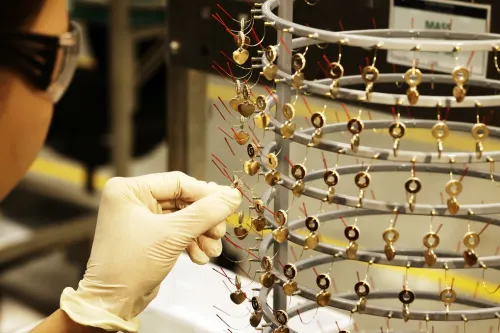
Pandora, the world's largest jewelry brand, begins operations at a US$ 150 million manufacturing facility in Vietnam, utilizing 100% recycled silver and gold.

Located in the Vietnam Singapore Industrial Park III (VSIP III), the facility spans over 55,000 square meters on a 7.5-hectare site. Pandora designates the plant as its largest handcrafted jewelry facility, built to LEED Gold sustainable standards and powered entirely by renewable energy.

The plant launches with 735 employees, with headcount projected to reach 1,000 by year-end. At full capacity, the facility accommodates 7,000 artisans, scaling annual output to 60 million pieces and expanding the company's overall capacity by 50%.

Pandora leads the global jewelry sector by volume, selling 112 million pieces in 2025 and generating DKK 32.5 billion (US$ 4.9 billion) in revenue. The Vietnamese plant marks the brand's fourth production site and its first outside Thailand.

Chief Executive Officer Berta de Pablos-Barbier states that Vietnam earns selection for the flagship hub due to its favorable business environment and infrastructure. Furthermore, the country's longstanding goldsmithing tradition facilitates access to skilled talent.

Chief Supply Chain Officer Jeerasage Puranasamriddhi says that the Vietnamese plant initially prioritizes gold-plated product lines amid surging demand. Over the long term, the facility underpins the production of platinum-plated jewelry as the company diversifies its material strategy.

Production utilizes 100% recycled silver and gold certified by the Responsible Jewellery Council (RJC).

He adds that the company imports raw materials directly from international sources while progressively enhancing local technical capabilities for localization, and notes that suppliers must meet the Responsible Sourcing programme regarding integrity, financial capacity, and compliance.

Headquartered in Copenhagen, Denmark, Pandora holds a market capitalization exceeding US$ 9.7 billion. The group employs approximately 39,000 people globally and operates 7,000 points of sale across more than 100 countries. Second-quarter revenue reaches DKK 32.5 billion (approx. US$ 1.1 billion), a 2% increase year-on-year.

The brand initiates retail operations in Vietnam in 2011. CEO Berta de Pablos-Barbier reports that the market climbs to seventh in Asia, amid rapid economic development and a young consumer demographic matching the product portfolio.

She says that the global jewelry industry transitions from status symbols to expressions of individuality and personal values, requiring continuous innovation and refined design quality.


See all blog