Taiwanese FDI into Vietnam: The shift of the value chain
Taiwanese investment in Vietnam is shifting from low-cost assembly toward higher-value sectors such as semiconductors, AI servers, networking equipment, and industrial robotics, positioning the country as a deeper link in the global technology supply chain.
For many years, Taiwanese capital flows into Vietnam were seen mainly as a relocation of manufacturing away from China, but that narrative now appears outdated as firms move beyond simple assembly lines to relocate more advanced segments of the electronics value chain.
A “Taiwanese electronics belt” taking shape in northern Vietnam
Looking at Vietnam’s industrial map, a “Taiwanese electronics belt” is emerging quite clearly. Bac Ninh province serves as the large-scale electronics core; Ninh Binh and Phu Tho provinces are becoming new satellite destinations; while Hai Phong city and Quang Ninh province act as logistics gateways and hosts for new projects.
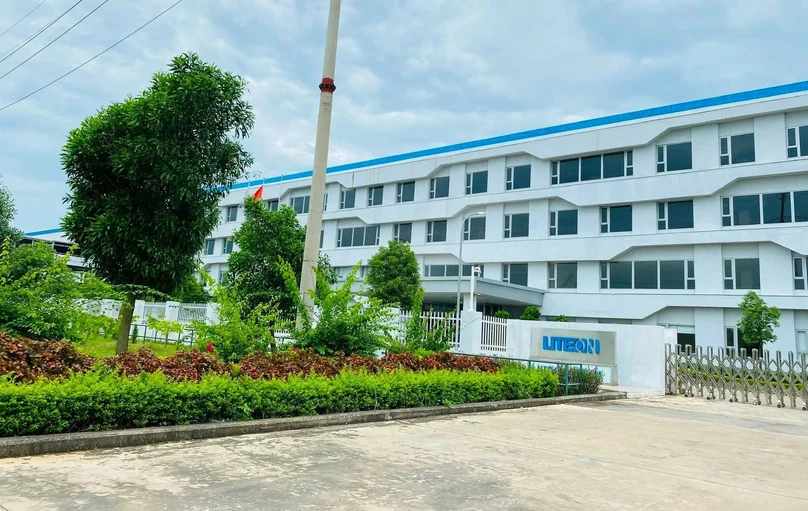
Electronics major Lite-On recently announced a total investment increase of $149 million in Quang Ninh and Hai Phong, while Accton, a parter of Intel, injected an additional $80 million into its subsidiary in Phu Tho. Ninh Binh has been selected by Quanta for a new production base and by Wistron for expansion projects.
Pegatron has already established operations in Hai Phong and previously announced a multi-phase expansion roadmap in Vietnam, with investment scaling from $19 million in the initial phase to $481 million and $500 million in subsequent stages. Earlier disclosures also indicated the company was considering relocating additional R&D activities to Vietnam.
The most notable is that the technological content of incoming capital is changing. In the past, “electronics” often referred to the assembly of finished consumer products. Today, however, new investments indicate a move toward higher value-added segments.
Lite-On is associated with semiconductor and electronic components; Panjit focuses on power semiconductors; Compal emphasizes AI servers; Quanta is a supplier for Apple; while Pegatron has long considered bringing R&D operations to Vietnam.
Accton specializes in networking equipment and communication solutions and has been ranked at Intel’s “Prestige” partner level. According to Intel’s partner profile, Accton’s applications include AI, cloud computing, high-performance computing, and data storage.
This signals that Vietnam is increasingly attracting supply chain segments related to switches, Wi-Fi, servers, high-speed networking, and AI infrastructure, rather than only consumer electronics.
A similar example is Wistron and the group of suppliers connected to SpaceX. After SpaceX requested several Taiwanese suppliers to move part of their production outside Taiwan due to geopolitical risks, Wistron NeWeb expanded operations in Vietnam.
The company manufactures routers and other networking equipment for Starlink in Ninh Binh, while other suppliers such as Universal Microwave Technology have also invested in Vietnam.
Foxconn: The clearest sign of the shift
Within this landscape, Foxconn stands out as the clearest indicator of the scale of this wave.
In 2024 alone, the group received approval for an additional $551 million investment in two projects in Quang Ninh to manufacture smart entertainment products and intelligent system equipment. Earlier, it had launched a $383 million PCB (printed circuit board) project in Bac Ninh.
When a conglomerate like Foxconn expands from consumer electronics into smart devices, circuit boards, telecommunications components, and then into additional categories, it signals that Vietnam is being positioned as a multi-layered manufacturing platform focused on technological core competencies, not merely as a final assembly location.
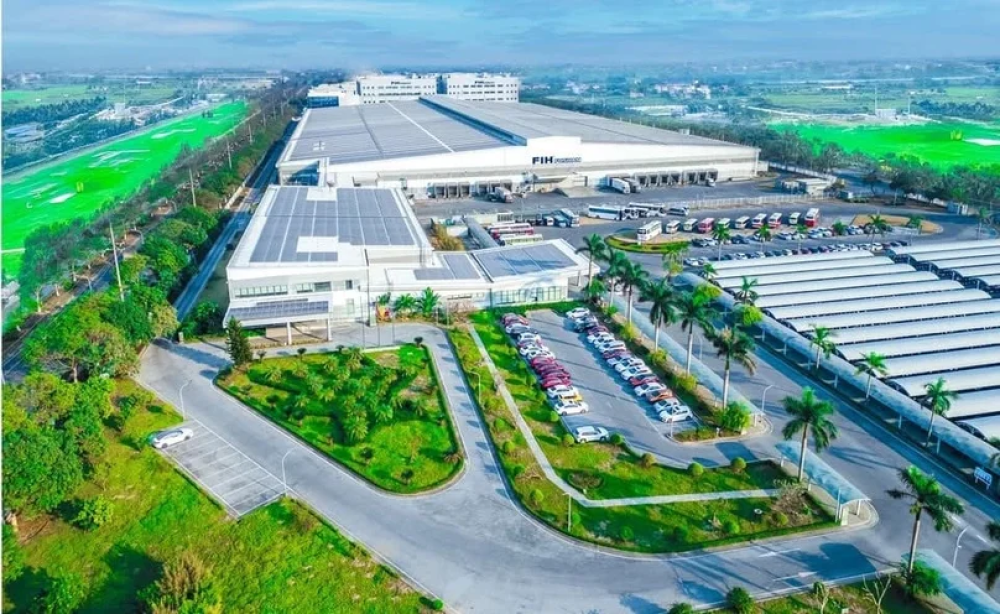
Beyond phones and traditional electronics, Fushan Technology in Bac Ninh has expanded into Xbox products, electronic components, wearables, and drones. More recently, the company added humanoid industrial robots and automation equipment to its portfolio of new products.
Another Foxconn subsidiary, Shunsin, is also targeting an $80 million investment in Vietnam to manufacture integrated circuit boards. Clearly, Foxconn no longer views Vietnam as a simple assembly base but increasingly as a location for production tools and technology infrastructure.
At the inauguration ceremony of Foxconn Vietnam’s headquarters office in Hanoi in mid-April 2026, Bac Ninh People’s Committee Chairman Pham Hoang Son stated that Foxconn had implemented 20 projects in the new Bac Ninh, formed via the 2025 merger with Bac Giang province, with total investment reaching about $4 billion.
Why Taiwanese companies choose Vietnam
As of April 2026, Taiwan had accumulated 3,457 investment projects in Vietnam with total registered capital of $42.37 billion, ranking fourth among countries and territories investing in Vietnam, behind South Korea, Singapore, and Japan, according to the Foreign Investment Agency under the Ministry of Finance.
Vietnam possesses several characteristics that make it attractive to Taiwanese businesses.
First is supply chain restructuring. Quanta Computer, one of Apple’s largest contract manufacturers, officially signed agreements and planned construction of a $120 million factory in Nam Dinh province beginning in 2023. In early 2026, Compal stated that it was expanding capacity in the U.S., Taiwan, and Vietnam to meet customer demands for more resilient supply chains.
This shows that Vietnam is no longer merely benefiting from a simple “China+1” model, but from a deeper diversification trend aimed at reducing dependence on a single location, transport corridor, or geopolitical bottleneck.
The second reason is geography. Vietnam is close enough to China that Taiwanese companies do not need to sever ties with existing vendor networks, yet sufficiently distinct to reduce political and cost-related risks. It is also adjacent to Samsung and LG manufacturing complexes, as well as Apple’s supplier ecosystem in northern Vietnam.
For contract manufacturers, this is a major advantage: proximity to components, ports, customers, and suppliers affects supply chain efficiency just as much as labor costs. The rapid concentration of expansion announcements in northern Vietnam near seaports and airports is no coincidence.
The third reason is that northern Vietnam’s industrial infrastructure has become robust enough to support more sophisticated manufacturing segments. Industrial parks, with many developed by foreign-invested groups specifically to attract high-tech capital, alongside ports, logistics systems, and technical labor capabilities, are far more advanced than they were a decade ago.
The Annual FDI Report published by the Vietnam’s Association of Foreign Invested Enterprises in April 2026 emphasized that Vietnam is entering a phase of deeper and more selective FDI attraction, where competitive advantages no longer lie primarily in tax incentives but in stable electricity supply, logistics, digital infrastructure, and the ability to generate long-term spillover effects.
Earlier this year, the Vietnam Economic and Cultural Office in Taipei pointed out that under Taiwanese businesses’ “Go South” strategy, Vietnam is emerging as a strategic venue thanks to its stable political environment, solid macroeconomic conditions, and increasingly open FDI policies.
“For the electronics and semiconductor industries - sectors with extremely high requirements for infrastructure, logistics, and supply chain connectivity, the establishment of concentrated industrial zones is a key factor. That is precisely why the TVT Electronics Supply Chain Campus in Ninh Binh was created,” said Ngo Pham Tran, chairwoman of the Vietnam-Taiwan Business Association (VTBA).
The Taiwan Electrical and Electronic Manufacturers’ Association (TEEMA) considers Vietnam a bright spot in Taiwanese investment strategy, with more than 100 TEEMA member companies already investing in Vietnam. TEEMA affirmed that it would continue supporting Taiwanese firms already present in Vietnam in expanding their supply chains while also creating greater opportunities for Vietnamese businesses to integrate more deeply into regional production networks.
On the other hand, Vietnam still faces weaknesses that need to be addressed in order to attract more high-tech investment from Taiwan and the world.
In March 2026, then Deputy Prime Minister Nguyen Chi Dung acknowledged major shortcomings such as shortages of high-quality human resources, weak R&D capabilities, inadequate technical infrastructure, and limited participation by domestic enterprises.
Ultimately, the stories of Foxconn, Lite-On, Panjit, Quanta, Pegatron, Wistron NeWeb, and Accton are not simply about additional capital injections. They reflect the formation of a Taiwanese electronics manufacturing ecosystem in northern Vietnam.
The remaining question is how Vietnam will leverage this wave of Taiwanese FDI: merely as a location for factories, or as a genuine link in a new global value chain.
Source: Quang Minh, Minh Hue
Photo: Photo courtesy of Markettimes