Lumen Vietnam Fund

Blog

Six strategic solutions for international tech cooperation through 2030 unveiled

Six strategic solutions for international tech cooperation through 2030 unveiled

This strategy is expected to make practical contributions to the development of strategic technologies aimed at sustainable development, ensuring national defense and security, and strengthening national technological autonomy.

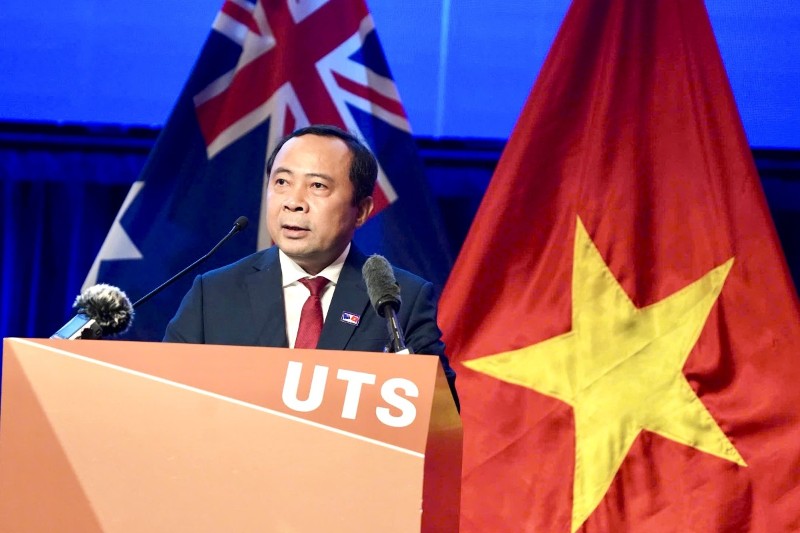
Permanent Deputy Prime Minister Pham Gia Tuc on August 11 signed Prime Ministerial Decision No 139/QD-TTg, officially issuing the "International Cooperation Strategy on Strategic Technologies to 2030."

The strategy focuses on six key solution groups: creating a favorable environment for cooperation; implementing international commitments and agreements; enhancing access to advanced technologies; improving technology development capacity; providing support for enterprises; and offering policy advisory.

This strategy is expected to make practical contributions to the development of strategic technologies aimed at sustainable development, ensuring national defense and security, and strengthening national technological autonomy.

At the recent 33rd Diplomatic Conference, Minister of Science and Technology Vu Hai Quan affirmed that, in line with Party Resolutions No. 57 and No. 06, international integration and diplomacy—specifically science and technology diplomacy—have been positioned as a "strategic breakthrough". This pillar now stands independently and on equal footing with economic and political-security integration.

Notably, Vietnam has officially decided to establish and develop the Global Vietnamese AI Expert Network. This initiative aims to attract and mobilize Vietnamese AI experts worldwide while establishing international-standard mechanisms for leadership, training, and knowledge transfer to enhance the quality of Vietnam’s AI human resources.

In tandem with expanding international cooperation, Vietnam is also refining its research and testing infrastructure. On August 4, Deputy Prime Minister Ho Quoc Dung signed Prime Ministerial Decision No. 1483/QD-TTg, approving a project to "Develop a system of national research centers, testing facilities, and key national laboratories focused on strategic technologies."

Under the project, by 2030, Vietnam aims to upgrade, invest in, and operationalize at least eight national key laboratories. Priority will be given to sectors including: digital technology and next-generation mobile networks (6G); robotics and automation; advanced biology and biomedicine; advanced energy and materials; cybersecurity and quantum technology; marine, ocean, and underground sciences; and aerospace and aviation.

Furthermore, Vietnam strives to establish at least four national research and testing centers focused on unmanned aerial vehicles (UAVs), biotechnology, advanced materials, and high-speed and urban rail systems.


Source: Hạ Chi

Photo: MST
Latest Posts

Cambodia's trade turnover reaches $44B in 7 months

Cambodia's trade turnover reaches $44B in 7 months

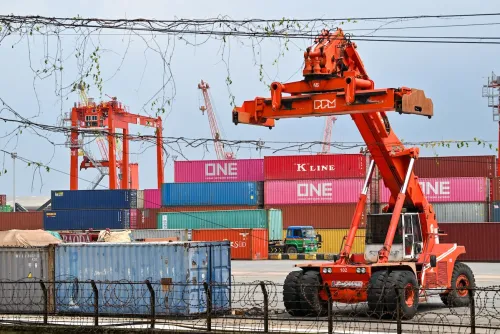
Cambodia's total trade reached $44.07 billion in the first seven months of 2026, up 21.3% year on year, with a trade deficit of US$2.44 billion.

Data from the General Department of Customs and Excise (GDCE) on Aug. 10 showed that exports increased 21.3% to $20.81 billion, while imports rose 21.4% to $23.26 billion, widening the trade deficit from $1.99 billion a year earlier.

Trade with China, Cambodia’s largest trading partner by value, increased 23.9% to $13.63 billion. Cambodian exports to China rose 24.2% to $1.1 billion, reflecting sustained demand for Cambodian goods. Meanwhile, imports from China grew 23.8% to $12.52 billion.

The U.S. remained Cambodia’s largest source of trade surplus, with bilateral trade surging 32.2% to $9.42 billion. Cambodian exports to the U.S. increased 30.6% to $9.05 billion, driven by strong growth in garments, footwear and other manufactured products.

Imports from the U.S. more than doubled, rising 87% to $377 million, pointing to expanding two-way trade ties.

Trade with Vietnam grew 8.2% to $5.35 billion. Cambodian exports to Vietnam rose 12.4% to $2.73 billion, while imports increased 4.2% to $2.62 billion.


Pepper exports top $1B in 7 months

Pepper exports top $1B in 7 months

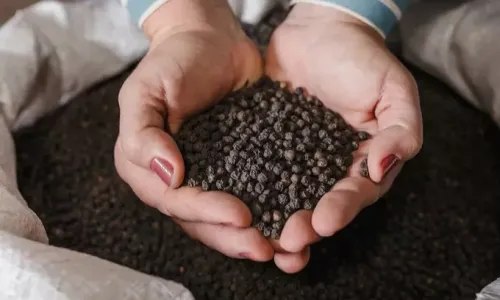
Vietnam exported US$1.08 billion worth of pepper in the first seven months of this year, up 10.1% from a year ago.

Shipments amounted to 168,429 tonnes during the period, a 16.1% year-on-year gain, according to the Vietnam Pepper and Spice Association.

Asia remained the top buyer, soaking up 76,845 tonnes, up 12.3% year-on-year and accounting for 45.6% of the total. Shipments to America rose 34% to 45,470 tonnes while those bound for Europe increased by 7.5% to 36,140 tonnes. Africa imported 9,964 tonnes, up 10%.

The U.S. was the biggest market, buying 40,712 tonnes, a 31.8% year-on-year gain. China followed with 17,110 tonnes, up 55.8%. The Netherlands imported 6,136 tonnes, up 48.8%, while Thailand bought 6,913 tonnes, an 88.7% surge.

Exports to Germany and India, however, tumbled 18.1% and 26.4%, respectively.

On the import front, Vietnamese companies brought in 48,812 tonnes of pepper worth $279.3 million in the first seven months, up 55.1% in volume and 43% in value from a year earlier.

Imports from Cambodia, the top supplier, jumped 256.9% to 25,413 tonnes, accounting for 52.1% of all inbound pepper.

While pepper roared ahead, spices like cinnamon and star anise showed signs of cooling. Cinnamon exports reached 73,085 tonnes worth $186.5 million over January-July, down 1% in volume and 0.6% in value year-on-year.

Star anise shipments totaled 8,434 tonnes valued at $33.4 million during the same period, a 9.1% drop in volume and 6.2% decline in value.

Le Viet Anh, the association's chairman, said pepper prices should hold steady in the near term barring any major geopolitical shocks. US-bound pepper exports are expected to remain stable over the medium and long haul.

A bright spot emerged on the regulatory front as EU warnings tied to Vietnamese pepper and spices fell from 34 cases in the first half of 2025 to 22 in the same period of this year. For pepper alone, alerts dropped from five to three.

That progress underscores real improvements in quality control, pesticide residue management, and compliance awareness among farmers and exporters.

Anh stressed that the industry’s core challenge has shifted. After more than two decades as the world’s top pepper exporter, Vietnam has almost no room left to expand planted acreage.

Land is increasingly scarce and other crops compete for space while new rules, especially the European Union Deforestation Regulation, are piling on tougher requirements.

The pepper sector can no longer bet on higher output or low pricing. Instead, it must pivot to a growth engine fueled by quality, branding and deeper value addition. The same pivot applies to cinnamon, star anise and other spices.

The association urged companies to ramp up investment in certified raw material zones, tighten partnerships with farmers, enforce stricter pesticide residue controls, build out traceability systems and meet every technical standard demanded by importing markets.

At the same time, the industry should get ahead of the green consumption wave by embracing regenerative agriculture, circular economy models, lower carbon emissions and smarter water use.


Vietnam raises $709mln through Government bond auctions in July

Vietnam raises $709mln through Government bond auctions in July

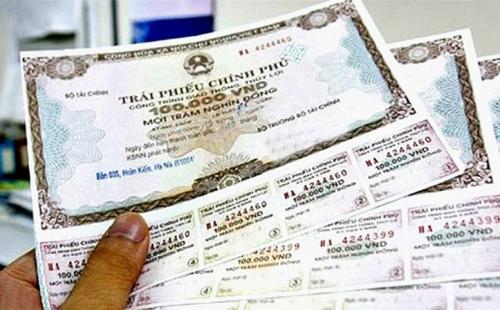
The figure bringing the total amount of fundraising through Government bond issuance in the first seven months of 2026 to VND201.2 trillion ($7.65 billion), fulfilling 40% of the 2026 plan.

The Hanoi Stock Exchange (HNX) held 25 Government bond auctions on behalf of the State Treasury in July 2026, raising VND18.6 trillion ($709 million), with a successful bidding rate of 27%.

In the first seven months of the year, the State Treasury raised VND201.2 trillion ($7.65 billion), fulfilling 40% of its 2026 issuance plan.

Ten-year and five-year bonds accounted for the bulk of the amount raised in July, representing 51% and 46% of total issuance, respectively, equivalent to VND9.41 trillion and VND8.55 trillion.

The State Treasury offered bonds with maturities of three, five, 10, 15 and 30 years in July, with all five maturities successfully auctioned. Winning yields edged up by 3, 2, 1, 10 and 1 basis points, respectively, compared with the final successful auctions in May.

At the final auction in July, winning yields stood at 3.55% per year for three-year bonds, 4.20% for five-year bonds, 4.36% for 10-year bonds, 4.50% for 15-year bonds and 4.59% for 30-year bonds.


See all blog