Lumen Vietnam Fund

Blog

SBV moves to scrap gold jewellery licences

SBV moves to scrap gold jewellery licences

Under existing regulations, businesses must satisfy various requirements regarding facilities, equipment and operational conditions before receiving certification.

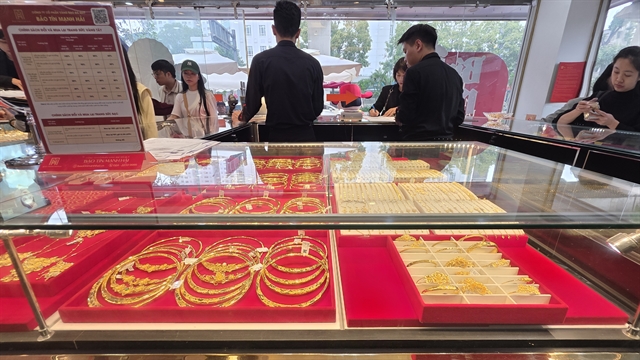
HÀ NỘI — Việt Nam's gold jewellery industry could face a major regulatory shift from July, as the State Bank of Vietnam (SBV) proposes removing all licensing requirements for the production, processing and trading of gold jewellery and fine-art gold products under a new amendment to Decree 24 on gold market management.

The proposal is part of a draft decree currently open for public consultation and represents the latest step in the Government's broader effort to revise the legal framework governing Việt Nam's gold market.

Under the draft, activities related to the production, processing, purchase and sale of gold jewellery and fine-art gold products would no longer be classified as conditional business sectors.

If approved, enterprises operating in these segments would no longer be required to obtain the certificate of eligibility for gold jewellery and fine-art gold production previously issued by the SBV.

Existing certificates granted before the new decree takes effect would also cease to be mandatory conditions for business operations.

The draft decree is expected to take effect on July 1.

At that point, pending applications for the issuance, amendment or supplementation of such certificates that have not yet been processed would no longer be considered under the transitional provisions proposed by regulators.

According to the draft amendment, enterprises and individuals involved in gold jewellery production and trading would instead be regulated through compliance requirements relating to product quality, technical standards, measurement rules, product labelling, price disclosure, invoicing, taxation, fire prevention, environmental protection, consumer rights, anti-money laundering regulations and other relevant legal provisions.

The proposal marks a significant departure from the current framework under Decree 24/2012/NĐ-CP, which treats gold jewellery production as a conditional business activity requiring approval from the central bank.

Under existing regulations, businesses must satisfy various requirements relating to facilities, equipment and operating conditions before receiving certification.

The latest amendment follows Decree 232/2025/NĐ-CP, issued in August 2025, which primarily revised regulations governing the production, trading and import of gold bars.

While previous amendments focused largely on the bullion market, the new draft shifts attention towards the jewellery segment and proposes a substantial reduction in administrative procedures.

The draft also introduces new provisions governing the temporary import of raw gold materials for export-oriented manufacturing.

Under the proposal, enterprises registered for gold jewellery production or processing and holding contracts with foreign partners could be considered by the SBV for permits to temporarily import raw gold materials for processing and subsequent re-export.

The volume of imported gold would need to correspond to contractual requirements and could only be used for the registered export-processing activities.

For foreign-invested enterprises, annual import permits for raw gold materials could be granted based on production capacity and export performance. Imported gold materials would be restricted to export production purposes and could not be transferred or sold on the domestic market without approval from the central bank.

While the draft proposes substantial deregulation for the jewellery segment, the SBV continues to maintain a stricter approach to the bullion market.

According to the proposal, the production and trading of gold bars would remain conditional business activities subject to licensing requirements from the central bank. Regulatory oversight of bullion transactions would continue under the existing management framework.

The draft amendment also contains additional provisions concerning payment methods and the responsibilities of licensed enterprises and financial institutions involved in gold import and export activities.

Notably, the proposal states that purchases of gold bars conducted through credit cards or payment methods linked to credit facilities must comply with regulations governing lending activities.


Source: BIZHUB/VNS

Photo: VNS Photo Ly Ly Cao
Latest Posts

Vietnam trade turnover exceeds US$445 million in five months, up 25%

Vietnam trade turnover exceeds US$445 million in five months, up 25%

VOV.VN - Vietnam’s import-export turnover reached US$445.12 billion in the first five months of 2026, up 25% year on year, according to data from the National Statistics Office under the Ministry of Finance.

Exports totaled US$215.66 billion during the January–May period, up 19.5% year on year.

Foreign-invested enterprises were the key driver of Vietnam’s exports, accounting for nearly 80% of export turnover and recording significantly stronger growth than the domestic business sector.

Notably, 26 export items generated more than US$1 billion each in turnover, together contributing over 90% of the country’s total export value. Among them, seven products surpassed the US$10 billion mark.

On the import side, Vietnam recorded US$229.46 billion in imports, up 30.8% compared with the same period last year. The foreign-invested sector also accounted for a large share of imports, posting faster growth than domestic enterprises.

Major trading partners continued to play dominant roles in Vietnam’s trade balance.

The United States remained Vietnam’s largest export market, with export turnover hitting US$69.6 billion. Meanwhile, China continued to be Vietnam’s largest source of imports, supplying goods worth US$92.6 billion.

Vietnam recorded a trade deficit of US$13.8 billion in the first five months of 2026, reversing from a trade surplus of US$5.1 billion in the same period last year.

The country continued to post trade surpluses with the United States and the European Union, while recording large trade deficits with China, the Republic of Korea and ASEAN countries.

The latest figures indicate that Vietnam’s trade activities have maintained strong growth momentum, but also highlight the country’s considerable dependence on imported raw materials and components, particularly from Asian economies.

The sharp rise in imports partly reflected growing demand for machinery, equipment and intermediate goods to support manufacturing expansion and export production.


Vietnam industrial real estate enters race for new capital

Vietnam industrial real estate enters race for new capital

As foreign direct investment becomes increasingly selective and low costs cease to be a competitive advantage, Vietnam’s industrial real estate developers are being forced to reinvent themselves, demonstrating project execution capabilities, cost management expertise, and compliance with green standards.

When land banks no longer enough

For the past two decades, Vietnam’s industrial real estate has relied on a “golden trio” of advantages: inexpensive land, low-cost labor, and tax incentives. These factors fulfilled their historical role by attracting the first wave of FDI and laying the foundation for the country’s industrialization. Today, however, they are no longer sufficient to retain a new generation of investors.

“Finding cheap land, securing incentives, and building as quickly as possible is no longer a winning formula for industrial real estate,” said Vu Minh Chi, director of industrial services at Avison Young Vietnam.

According to Chi, emerging sectors such as energy, technology, and digital infrastructure require industrial parks to meet highly specific technical requirements in order to ensure efficient operating costs and support broader industrial ecosystems.

“In the past, companies typically looked for cleared land with lease terms of 25 to 30 years. Today, FDI investors often require leases of at least 35 years, along with a range of additional conditions to support long-term investment planning and cash flow calculations,” he said.

Sharing the same view, Nguyen Anh Nguyet, an industrial park analyst at FPT Securities (FPTS), noted that the sector is transitioning from a period of limited supply to one of strong expansion, with industrial park land expected to increase by roughly 14% by 2028.

At the same time, land clearance and construction costs have risen by between 25% and more than 81% compared with previous periods. Green and smart industrial parks require construction investments that are 20-30% higher than conventional developments.

“This means that merely owning a land bank is no longer enough. To attract investment capital, developers must also demonstrate strong cost management and cash flow control capabilities at a time when investment expenses are rising sharply,” she said.

On investment criteria, Nguyet said that tenants, particularly foreign investors, are no longer simply leasing land but are selecting production environments that align with their operational requirements, prioritizing environmental, social and governance (ESG) standards, low-carbon emissions, and stable energy infrastructure.

The FPTS expert expected industrial land rents to continue rising, albeit at a slower pace of around 2-3% annually due to abundant new supply. Northern Vietnam is seen as having greater room for rental growth than the south, given its lower current price base and its strong appeal to high-tech manufacturers such as Samsung, Apple, and Foxconn.

Industrial real estate transforms in 2026

The business performance of several industry players reflects these broader market shifts.

According to its Q1 financial results, core industrial real estate revenue at major developer Becamex IDC Corp. (HoSE: BCM) fell 47% year-on-year to VND754 billion ($28.64 million), weighing on the company’s overall performance.

Becamex reported net revenue of VND1.1 trillion ($41.78 milion) for the quarter, down 40% from a year earlier, while net profit declined 22% to nearly VND280 billion ($10.63 million), marking its weakest quarterly result since the second quarter of 2024.

Documents prepared for the company’s upcoming annual shareholders’ meeting on June 28 show that Becamex is targeting consolidated revenue of VND10.23 trillion ($388.53 million) and after-tax profit of VND3.88 trillion ($147.36 million) this year, up 4% and 10%, respectively, from 2025.

After the first quarter, the company had completed just 12% and 7% of its respective revenue and profit targets.

The group plans to continue developing next-generation smart eco-industrial parks, focusing on renewable energy, water recycling, and emissions reduction. Key projects include the 380-hectare Phase 2 of Bau Bang Expansion Industrial Park and the 700-hectare Cay Truong Industrial Park in Ho Chi Minh City.

The firm aims to gradually transform traditional industrial parks through automation and sustainability initiatives. It is also studying investments in digital technology zones and science and technology industrial parks in HCMC in the coming years.

Another notable name highlighted by FPTS is Sai Gon VRG Investment Corporation (HoSE: SIP). In the first quarter, the company posted a 12% year-on-year increase in revenue to VND2.17 trillion ($82.42 million), although after-tax profit declined 11% to VND357 billion ($13.56 million). The company had achieved 41% of its full-year profit target.

Industrial land leasing revenue remained stable at VND117 billion ($4.44 million), with gross margins holding at 70.6%. Leasing activity was particularly strong, with more than 49 hectares signed during the first quarter of 2026, equivalent to 72% of the total area leased throughout 2025 and 82% of the company’s full-year leasing target for 2026.

Of that total, 35 hectares were leased at Phuoc Dong Industrial Park in Tay Ninh province, mainly to rubber product manufacturers, while 14.3 hectares at Loc An-Binh Son Industrial Park in Dong Nai were leased to logistics operators Transimex and CJ Korea Logistics.

ACB Securities (ACBS) expected investment attraction at Loc An-Binh Son Industrial Park and Phase 2 of Long Duc Industrial Park to remain encouraging, supported by Dong Nai province’s centrally governed city status and the planned commercial operation of Long Thanh International Airport by the end of 2026. With several new industrial parks set to launch in Dong Nai, rental rates at these projects are forecast to remain competitive rather than experiencing sharp increases.

Meanwhile, Long Hau Corporation (HoSE: LHG), one of the pioneers in ESG-focused industrial real estate development, reported positive results, having achieved 34% and 68% of the year's revenue and profit targets approved at the 2026 annual shareholders’ meeting.

In the first quarter, Long Hau generated net revenue of more than VND176 billion ($6.68 million), down 25% year-on-year, largely due to lower income from serviced land leases and built-to-suit factory rentals. Despite the decline in revenue, its net profit edged higher to more than VND112 billion ($4.25 million).

In its core business segment, Long Hau currently operates approximately 200,000 square meters of ready-built factories. In March 2026, the company broke ground on Long Hau LEED Park, an ESG-compliant warehouse and manufacturing complex developed under the internationally recognized LEED Certified green building standard.

The project incorporates energy optimization solutions, water management systems, improved workplace environmental quality, and environmentally friendly construction materials. Scheduled for completion of Phase 1 in November 2026, Long Hau LEED Park targets industries including electronics, medical equipment, precision engineering, logistics, and research and development - sectors that are expected to drive the next wave of FDI inflows. It is among the few production and logistics developments in southern Vietnam to meet LEED standards.

Amid market volatility and adjustments to tax incentive policies, Long Hau has shifted its investment attraction strategy away from incentives and toward core strengths such as location, infrastructure quality, production space, and integrated service ecosystems. The company is among the few industrial park developers in Vietnam that fully satisfy all four ESG pillars.

For 2026, Long Hau has identified increasing factory occupancy rates as a key priority to ensure operational efficiency and achieve its revenue targets. Current occupancy exceeds 95%, with the first phase of its six-story multi-storey factory reaching 97% occupancy and the second phase, comprising nine floors, about 95%.

Foreign investment inflow in Jan–May up 34.9 per cent year-on-year

Foreign investment inflow in Jan–May up 34.9 per cent year-on-year

Việt Nam attracted US$24.81 billion in foreign investment in the first five months of the year, up 34.9 per cent year-on-year, according to the National Statistics Office.

HÀ NỘI — Việt Nam attracted US$24.8 billion in foreign investment during the first five months of this year, a year-on-year increase of 34.9 per cent, according to the latest update from the National Statistics Office.

The figure includes newly registered capital, additional capital injected into existing projects, and foreign investors’ capital contributions and share purchases.

As of May 31, a total of 1,576 new projects had been licensed with registered capital of $14.84 billion, up 1.7 per cent in project numbers and more than double the value recorded in the same period last year.

Capital mainly flowed into the manufacturing and processing industry, which attracted $9.64 billion, accounting for 65 per cent of total new commitments. Electricity, gas, water supply and air-conditioning projects received $2.45 billion, or 16.5 per cent, while other sectors attracted the remaining $2.75 billion.

Notably, disbursed FDI increased by 9.6 per cent to an estimated $9.75 billion during the January-May period, marking the highest five-month disbursement level in the past five years.

The manufacturing and processing sector accounted for $8.06 billion, or 82.7 per cent of total realised FDI, while real estate accounted for $716.5 million, equivalent to 7.3 per cent, and electricity, gas, steam and air-conditioning supply projects attracted $356.6 million, or 3.7 per cent.

Among the 58 countries and territories with new projects in Việt Nam during the period, Singapore remained the largest investor with $6.8 billion, followed by the Republic of Korea with $4.22 billion and mainland China with $1.79 billion.

Additional capital pledged to existing projects totalled $5.78 billion across 415 projects, down 32.1 per cent from the same period last year.

Foreign investors also made 1,164 capital contribution and share purchase transactions worth a combined $4.19 billion, up 46.7 per cent year-on-year.


See all blog