Lumen Vietnam Fund

Blog

Q3 eyed as active time for real-estate M&A

Q3 eyed as active time for real-estate M&A

The period of August–September 2026 is projected to witness heightened merger and acquisition (M&A) activity in the real-estate market, driven by enterprises accumulating sufficient resources, favourable site inspection conditions, and accelerated year-end disbursement schedules, experts said.

HCM CITY — The period of August–September 2026 is projected to witness heightened merger and acquisition (M&A) activity in the real-estate market, driven by enterprises accumulating sufficient resources, favourable site inspection conditions, and accelerated year-end disbursement schedules, experts said.

"Việt Nam's industrial market is transitioning to a higher-quality supply development phase, where professional management and operation services and supporting ecosystems become key factors. This trend will see logistics continue as an important driver leading M&A activity in satellite cities in 2026," said Tạ Mỹ Bách, director of capital markets, JLL Vietnam.

He further elaborated that market sentiment during the August-September period could receive a boost from the anticipated FTSE Russell review for the upgrade of Việt Nam's stock market in the third quarter of 2026.

In the outlook towards the 2026–30 period, the market is poised to continue competing based on product and service quality. M&A activities are likely to play a significant role in portfolio restructuring and enhancing supply quality, with industrial land rental prices projected to grow by 5–6 per cent annually over the next five years. With a stable macro-economic foundation, ongoing improvements in infrastructure connectivity, and sustained positive FDI inflows, logistics is positioned to be one of the core segments of Việt Nam's industrial real estate in the upcoming period.

JLL suggests that to advance in attracting foreign investment and promoting the M&A market in 2026, comprehensive attention is needed towards addressing three groups of legal challenges.

First is the inconsistency in policy implementation across localities, leading to "same law, different interpretations," particularly challenging for logistics projects spanning multiple provinces.

Second is administrative processing efficiency and transparency levels, as many promising projects remain delayed awaiting guidance documents or insufficient coordination among agencies regarding land, planning, environment, and transportation; applying a "single electronic window" mechanism with specific processing time commitments could significantly improve progress.

Lastly, there is a neccesity to complete the M&A legal framework, including regulations on equity transfers, land use rights in joint venture projects, and dispute resolution mechanisms; simplifying procedures and shortening approval times will create more favourable conditions for large-scale transactions.
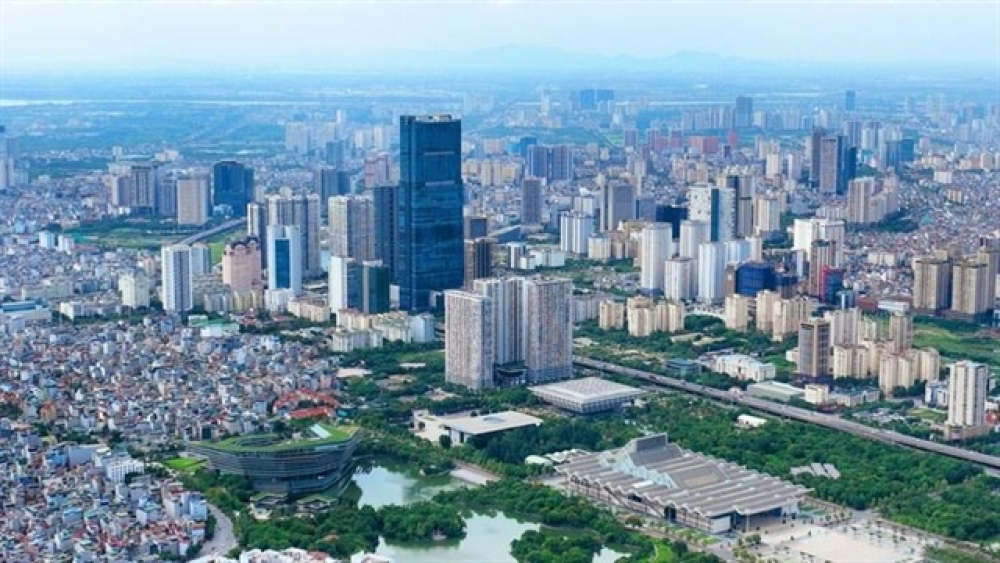
The real estate M&A market in Việt Nam recorded significant progress in 2025, with the total transaction value reaching approximately US$2.5 billion. This development reflects advancements in legal and planning procedures, along with more effective coordination among market participants.

Capital flows continue to prioritise projects with clear legal statuses, approved land banks, and defined development roadmaps. Domestic investors lead in transaction frequency across small- and mid-sized deals, while foreign investors focus on strategic assets in integrated townships, high-end residential areas, and industrial real estate segments.

According to JLL's observations, three factors supporting M&A capital flows into logistics are continued demand growth from e-commerce and distribution sectors, placing higher requirements on modern warehousing and goods processing centres; rising land costs in established industrial zones, while modern logistics models require larger land banks, leading to expansion trends toward satellite areas; simultaneously, increasingly high operational standards regarding technology, automation, and ESG practices are driving asset quality upgrades and portfolio restructuring.

Within the industrial real estate sector, logistics remains the primary driver of M&A activity, aligned with the trend of expansion into satellite areas. In the South, infrastructure projects including Long Thành Airport, Ring Road 3, Metro Line 2, and Phú Mỹ Bridge 2 are expanding capacity for large-scale logistics centres.

In the North, inter-provincial connectivity is being strengthened through Capital Region Ring Road 4, sections of the North-South Expressway East connecting Ninh Bình – Hải Phòng – Quảng Ninh, and projects enhancing access to Lạch Huyện Port and key expressways, thereby improving supply chain linkages among industrial clusters.

According to JLL's Q4 2025 report, the logistics market scale is recorded as follows: ready-built factory space in key provinces in the North and South reached 4,067,000sq.m and 5,720,000sq.m, respectively; meanwhile, ready-built warehouse supply in the South reached 2,410,000sq.m and in the North reached 2,043,000sq.m. Average occupancy rates remain above 80 per cent, with average gross asking rents around $5 per one square metre per month. The North leads in new supply in 2025 and is expected to experience strong growth in 2026, with active participation from major market developers.

In the context of implemented FDI maintaining record highs at $27.6 billion, foreign investors, particularly from South Korea, Singapore, Japan, and the United States, continue to apply multi-dimensional due diligence with a focus on credibility and execution capability.

Source: VNS

Photo: Photo thuongtruong.com.vn

Latest Posts

ThaiGroup plans $4.9 bln tourism-resort complex in northern Vietnam

ThaiGroup plans $4.9 bln tourism-resort complex in northern Vietnam

Vietnam’s multi-sector corporation ThaiGroup plans to implement a VND128 trillion ($4.86 billion) tourism and resort complex in the northern province of Ninh Binh, home to the UNESCO-recognized Trang An scenic landscape complex, later this year.

The project is expected span more than 1,000 hectares and include between 15,000 and 20,000 hotel and resort rooms, significantly expanding accommodation capacity in Ninh Binh.

ThaiGroup said the project aims to diversify the province’s tourism offerings beyond traditional heritage tourism by adding large-scale entertainment, leisure and nighttime economy attractions designed to encourage visitors to stay longer.

The company expects the average tourist stay in Ninh Binh could increase to four-five days once the complex is operational.

The firm said the project is intended to help reposition Ninh Binh as an international destination for tourism, entertainment and experiential travel rather than solely a cultural and heritage site.

It estimated that the development may contribute over VND35 trillion ($1.33 billion) in land-use fees to the state budget.

To support the project’s planning and design, ThaiGroup has partnered with U.S.-based architecture and urban planning firms Populous and Skidmore, Owings & Merrill (SOM).

Ninh Binh, located about 90 kilometers south of Hanoi, has emerged as one of Vietnam’s fastest-growing tourism destinations in recent years, benefiting from its UNESCO-recognized Trang An scenic landscape complex and limestone mountains. The province is also home to Bai Dinh Pagoda – one of the largest Buddhist temple complexs in Southeast Asia.

After an administrative merger with neighboring Ha Nam and Nam Dinh provinces last July, Ninh Binh province now spans 3,642 km2 with a population of over 4.4 million people.

According to the provincial tourism watchdog, Ninh Binh welcomed nearly 9.9 milion tourist arrvials in the first quarter of 2026, including one million foreign visitors.

ThaiGroup, formerly known as Xuan Thanh Group, was founded in 1976 by businessman Nguyen Duc Thuy, also known as “Bau Thuy.” It initially operated in construction and cement production before expanding into real estate, transportation, insurance and financial services.

Samil Pharmaceutical expands manufacturing footprint in Vietnam

Samil Pharmaceutical expands manufacturing footprint in Vietnam

VOV.VN - The Republic of Korea’s Samil Pharmaceutical is expanding its operations in Vietnam to reduce production costs and seek new growth opportunities.

The move comes as the company’s Chairman Heo Seung Beom increases his shareholding to support the company’s third-generation leadership transition.

Established in 1947, Samil Pharmaceutical is widely known in the Republic of Korea for its children’s antipyretic medicine Brupen. It also manufactures and markets pharmaceuticals and nutraceuticals including Libact, Foributin and Monoprost.

Under its strategic shift, the company is increasingly focusing on overseas production. In 2022, Samil Pharmaceutical completed a contract development and manufacturing organisation (CDMO) facility in Vietnam specialising in ophthalmic products.

The plant spans about 24,800 square metres and has an annual production capacity of 330 million eye-drop units.

The company aims to take advantage of lower labour costs in Vietnam to strengthen its price competitiveness. However, the facility has not yet entered full-scale commercial production, as it awaits Good Manufacturing Practice (GMP) approvals in key target markets.

Following GMP certification from Vietnamese authorities in 2024, Samil Pharmaceutical is now seeking approval from the RoK’s Ministry of Food and Drug Safety in the second half of this year. The company said the approval process is expected to take around two to three months.


The unit prices under this Contract shall remain unchanged throughout the contract execution period

The unit prices under this Contract shall remain unchanged throughout the contract execution period

Việt Nam spent approximately US$2.93 billion importing nearly 3.37 million tonnes of petroleum products in the first quarter of 2026, an increase of 77.8 per cent in value and over 44 per cent in volume compared to the same period last year.

HÀ NỘI — Việt Nam's energy imports have increased sharply in the first three months of 2026, reflecting a rapid recovery in domestic consumption demand along with pressure to secure supply in the face of geopolitical instability and global energy price fluctuations.

Data from Việt Nam Customs shows that the country spent approximately US$2.93 billion importing nearly 3.37 million tonnes of petroleum products in the first quarter of 2026, an increase of 77.8 per cent in value and over 44 per cent in volume compared to the same period last year.

Aside from refined petroleum products, many other energy products also recorded a sharp increase, including coal imports, which rose by 76.4 per cent to nearly $2.8 billion, and crude oil, which surged by 381 per cent to $2.4 billion.

In the first half of April, the upward trend in imports continued, with import value of crude oil and petroleum products approaching $1.25 billion.

Experts attributed the sharp increase in energy imports this year to the rebound of domestic consumption in the wake of a recovered industrial production. The steel, cement, chemical, thermal power and transportation sectors have all recorded higher fuel consumption compared to the same period last year.

Meanwhile, domestic energy supply has not met demand. Domestic crude oil production has been declining for many years due to major fields entering a natural depletion phase.

At the same time, the country's two main refineries, Dung Quất and Nghi Sơn, although operating, are still insufficient to fully meet market demand, especially during periods of significant global oil price fluctuations.

Another factor causing the surge in energy imports was the impact of global geopolitical instability. Conflict in the Middle East in the first quarter caused international oil prices to surge at times, leading to escalating energy import costs. According to the Ministry of Industry and Trade, key businesses have had to significantly increase imports since March to ensure domestic supply and maintain safe inventory levels.

Experts forecast that the trend of sharply increasing energy imports will continue for the next few years as the economy maintains its high growth target, while many gas-fired power, petrochemical and heavy industry projects are put into operation. This will put a significant pressure on trade balance as well as national energy security strategy.


See all blog