Lumen Vietnam Fund

Blog

PM pushes to remove legal overlaps and bottlenecks, unlock resources

PM pushes to remove legal overlaps and bottlenecks, unlock resources

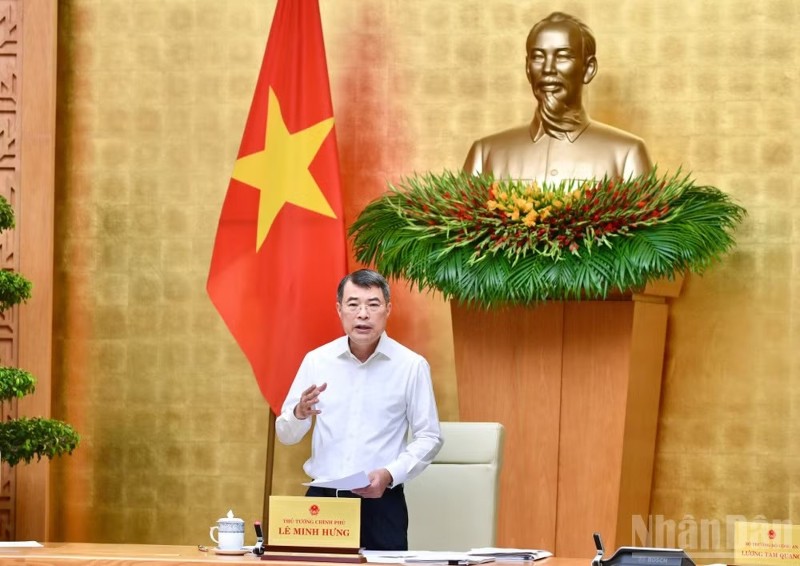
Chairing the September thematic session on lawmaking, Prime Minister Le Minh Hung called for the thorough resolution of overlapping and inadequate regulations, the unlocking of resources, the protection of the legitimate rights and interests of citizens and businesses, and greater efficiency in state management.

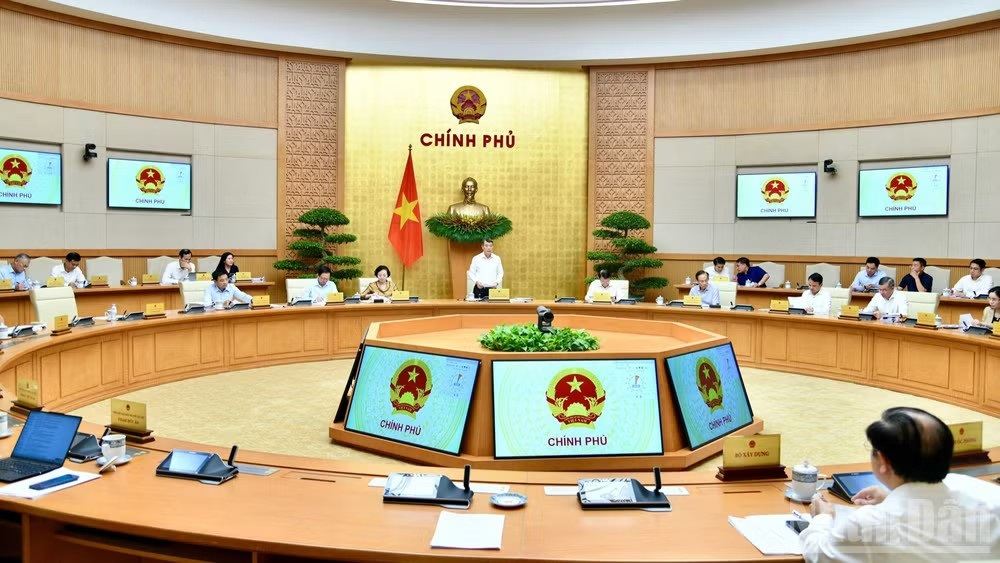
Chairing the Government's September thematic session on lawmaking, Prime Minister Le Minh Hung called for the thorough resolution of overlapping and inadequate regulations, the unlocking of resources, the protection of the legitimate rights and interests of citizens and businesses, and greater efficiency in state management.

The session, held on September 16, considered and gave opinions on eight draft laws and resolutions scheduled to be submitted to the second session of the 16th National Assembly.

The Government leader asked ministers to personally direct the full incorporation of appropriate comments from Government members, the Ministry of Justice's appraisal opinions, and the conclusions reached at the session. Ministries were instructed to urgently finalize the dossiers for the draft laws and resolutions and report them to the Deputy Prime Minister in charge before September 21.

Regarding the draft amendment to the Land Law, the PM described it as a particularly important legislative project with a direct and far-reaching impact on socio-economic life.

The draft must also ensure consistency with the Housing Law, the Law on Real Estate Business and other relevant legislation. The Government will accelerate the development and integration of land databases based on the principle of maximum transparency and promote transactions in the market. It will also continue decentralizing and delegating authority while simplifying administrative procedures according to the principle of “one point of contact, one-stop service.”

For the draft revised Housing Law, PM Hung assigned the Ministry of Construction to continue studying and refining mechanisms concerning the useful life of apartment buildings, different types of rental housing, and accompanying financial mechanisms.

The regulations should aim to simplify procedures for investment in, development of and access to housing, meeting people's need for stable, long-term accommodation. At the same time, they should clearly establish criteria for restricting the subdivision and sale of residential land plots and preventing speculation.

The PM also asked the ministry to study and report to the National Assembly on a proposal to pilot a mechanism under which the State could buy back commercial housing projects from developers that are no longer capable of implementing them or are unable to transfer them to another party.

Regarding the draft revised Law on Real Estate Business, the Ministry of Construction was tasked with completing mechanisms to make the real estate market a public, transparent, healthy, stable and sustainable channel for allocating land resources.

The draft law should clearly define criteria for identifying speculative activities and market manipulation, while ensuring legal certainty and protecting the rights and interests of market participants, particularly homebuyers.

It should also provide for the connection and sharing of real estate data with land, planning, tax, notarization, population and credit databases.
For the law amending and supplementing a number of provisions of the Investment Law, the Government's objective is to continue removing institutional barriers and bottlenecks while ensuring policies that are stable, transparent and easy to implement, as well as fair and consistent treatment of investors.

Investment incentives and support policies should focus on attracting high-quality and high-tech projects that involve technology transfer and linkages with domestic enterprises. At the same time, overlapping provisions with laws on land, construction, planning, bidding and the environment must be definitively resolved.

Easing difficulties for production and ensuring major economic balances

Alongside lawmaking, PM Hung directed several key and urgent socio-economic tasks, with a particular emphasis on achieving the country's growth target.

Ministries and sectors were instructed to continue promoting public investment and removing obstacles so that delayed and long-standing projects can be put into operation. They must also ensure progress on key projects and works, particularly in infrastructure, transport, science and technology, and energy, while maintaining macroeconomic stability, controlling inflation and safeguarding major economic balances.

The Prime Minister asked the Ministry of Finance to coordinate with the Ministry of Industry and Trade and local authorities to assess the situation facing businesses, particularly small and medium-sized enterprises, and promptly address their difficulties and obstacles in order to facilitate production and business activities.

Regarding the fuel and electricity markets, the Ministry of Industry and Trade was instructed to closely monitor developments and ensure adequate reserves and supplies from now until the end of the year. It was also asked to urgently submit amendments to Decree No. 83 on petroleum trading, finalize the amended and supplemented Power Development Plan VIII, and complete the overall plan for restructuring the electricity sector.

Source: Ha Le

Photo: Thanh Giang/Nhan Dan
Latest Posts

Vietnam sees market upgrade as starting point for new stock market development cycle: PM

Vietnam sees market upgrade as starting point for new stock market development cycle: PM

From September 21, Vietnam’s stock market will officially be classified as a “Secondary Emerging Market” under FTSE Russell’s classification framework.

Vietnam views its upgrade to emerging-market status as the starting point for a new phase of higher-quality, larger-scale and more professional development of its stock market, according to Prime Minister Le Minh Hung.

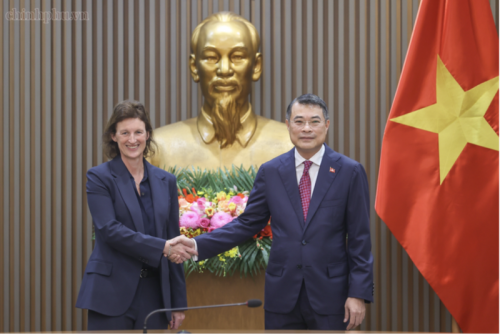
He made the remark during a reception in Hanoi on September 17 for Ms. Fiona Bassett, Chief Executive Officer of FTSE Russell, and a delegation representing global investment institutions visiting and working in Vietnam.

The delegation included executives from global investment funds, including BlackRock and Vanguard, the world’s two largest asset managers. Vanguard’s emerging-market index funds have committed to investing in and adding Vietnamese stocks to their portfolios from September 21, 2026.

At the meeting, Prime Minister Hung praised FTSE Russell for monitoring, assessing and supporting Vietnam’s stock market, helping promote greater transparency, efficiency and alignment with international standards. From September 21, Vietnam’s stock market will officially be classified as a “Secondary Emerging Market” under FTSE Russell’s classification framework.

The government will focus on maintaining the new status through transparent and regular dialogue with market participants and FTSE Russell, ensuring reforms operate smoothly and addressing any issues identified during future assessments.

Vietnam also plans to accelerate the introduction of a central counterparty (CCP) mechanism, effectively address issues raised by global securities firms and custodians, and strengthen support for companies in adopting environmental, social and governance (ESG) standards, greater disclosure and OECD corporate governance principles.

Prime Minister Hung said cooperation with FTSE Russell and global partners would help Vietnam’s stock market maintain its new classification and further strengthen its regional position. He also asked FTSE Russell to continue providing objective, accurate and comprehensive assessments reflecting the actual conditions of Vietnam’s economy and capital market.


Vietnam-Australia Forum highlights leadership capacity for two-tier local governance

Vietnam-Australia Forum highlights leadership capacity for two-tier local governance

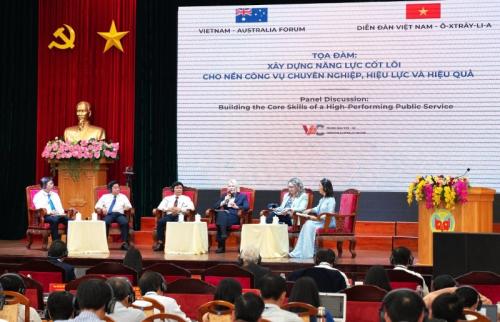
Nearly 300 delegates gathered in the central city of Da Nang to share insights on public leadership, workforce development, and local governance models at the Vietnam-Australia Forum 2026.

Opening the forum, themed “Enhancing Local Leadership Capacity for an Effective Two-Tier Governance Model,” on September 16 in central Da Nang city, Assoc. Prof. Dr. Doan Trieu Long, Director of the Ho Chi Minh National Academy of Politics Region III, highlighted Australia’s successful track record in administrative reform, state apparatus efficiency, and local governance.

Dr. Long noted that Australian practices provide valuable references for Vietnam to explore innovative approaches to institutional reform and establish effective mechanisms to bolster national and local governance performance.

Discussions focused on emerging leadership demands, organizational management, and policy implementation to support Vietnam’s two-tier local administration system. Participants shared practical experience in developing leadership talent, managing human resources, delivering public services, and implementing evidence-based decision-making.

A central focus was how state agencies can foster essential leadership skills and qualities to deliver effective public services, meet citizen expectations, and maintain public trust amid ongoing institutional and administrative reforms.

Ms. Naomi Cook, Acting Deputy Ambassador of Australia to Vietnam, expressed Australia's readiness to support Vietnam’s public sector governance.

“Australia is delighted to share its experience in leadership development and institutional connectivity to assist Vietnam in enhancing governance and public sector efficiency,”shesaid.

“However, public sector reform is a continuous journey. As public expectations, technology, and society evolve constantly, Australia also continuously learns alongside and from its partners.”

The forum serves as a flagship initiative of the Vietnam-Australia Centre (VAC), implemented with support from the Australian Embassy in Vietnam and the Ho Chi Minh National Academy of Politics.


Vietnam's $20.5 bln trade deficit: How FDI inflows are supporting the dong

Vietnam's $20.5 bln trade deficit: How FDI inflows are supporting the dong

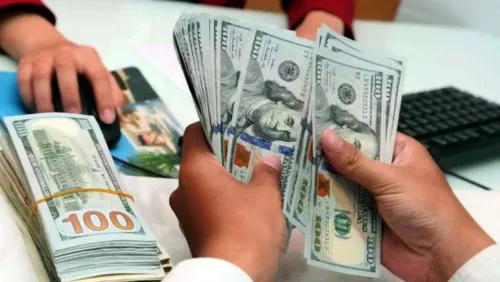
Vietnam's $20.46 billion trade deficit in the first eight months has not translated into a corresponding rise in the USD/VND exchange rate. Disbursed foreign direct investment (FDI), along with other foreign currency inflows, is helping balance dollar supply and demand, but questions remain over the quality of these capital flows and their ability to generate net foreign currency for the economy.

Large trade deficit, but FDI creates a "matching source of dollars"

Vietnam recorded a trade deficit of $20.46 billion in the first eight months of 2026, with imports reaching $395.3 billion, up 35.3%, while exports rose 22.4% to $374.84 billion. In August alone, the trade deficit was just $120 million.

What is notable is that the exchange rate has not moved in the same direction as the trade deficit. According to the National Statistics Office, the U.S. dollar price index rose 1.31% year-on-year on average in the first eight months. In August alone, it fell 0.36% from a year earlier and 0.38% from December 2025.

Meanwhile, according to brokerage MBS, the interbank USD/VND exchange rate stood at 26,083 dong per dollar at the end of August, down 0.8% from the end of July and 0.7% from the start of the year.

Why has the large trade deficit not put corresponding pressure on the exchange rate?

Rong Viet Securities (VDSC) said import and export data do not fully reflect developments in the foreign exchange market. The value of goods crossing borders does not necessarily mean foreign currency payments arise immediately at the same time. Assessing exchange-rate pressure requires looking at actual foreign currency supply and demand.

Dr. Can Van Luc also said the trade deficit has some impact on the foreign currency balance and exchange rate, but not a significant one. He said the foreign currency balance is also supported by the VND-USD interest rate differential, disbursed FDI, remittances and international tourism. These flows help offset foreign currency demand generated by imports, allowing the USD/VND exchange rate to remain within a controlled range.

From this perspective, FDI has become one of the notable sources of foreign currency supply.

In the first eight months, total registered FDI reached $40.63 billion, up 55.4% year-on-year. Disbursed FDI stood at $17.25 billion, up 12% and the highest level for the first eight months in five years.

Notably, the FDI sector still posted a trade surplus of $10.14 billion, while the domestic economic sector recorded a deficit of as much as $30.6 billion. The FDI sector also accounted for 80.1% of total exports, at $300.37 billion.

Thus, in terms of the trade balance, the FDI sector is generating a significant amount of foreign currency through exports, helping offset the economy's foreign currency demand.

But this is only one side of the flow.

In the first eight months, the FDI sector also imported $290.23 billion worth of goods, up 40.1%. The sector is therefore both generating foreign currency revenue from exports and creating substantial dollar demand for imported machinery, components, raw materials and production inputs.

The key issue, therefore, is not just how much FDI flows into Vietnam, but how much net foreign currency this capital generates for the economy.

The FDI sector's $10.14 billion trade surplus has some significance for the foreign currency balance. Meanwhile, 94.1% of the country's imports were production inputs, indicating that most current dollar demand is linked to production, investment and the expansion of economic capacity.

Are FDI dollar inflows sustainable enough to support the dong?

If FDI is one of the important sources of foreign currency supply, the next question is whether these flows are large and stable enough to provide a "buffer" for the exchange rate in the final months of the year.

In reality, FDI is not the only source of foreign currency supporting the market.

Speaking to the media recently, expert Dao Hong Chau said companies increasing their foreign borrowing and selling dollars for dong could increase the supply of foreign currency sold into the market, thereby helping lower the dollar's value.

He said exchange-rate stability also has a positive impact on the ability to attract and retain foreign capital as investors become less concerned about the risk of dong depreciation.

Expert Nguyen The Minh said foreign currency supply is being supported by foreign currency credit, foreign borrowing by companies and banks, and disbursed FDI. A stable exchange rate, he said, helps ease pressure on inflation, macroeconomic balances and foreign currency-denominated debt obligations.

Thus, current exchange-rate movements do not depend solely on the trade balance but are also affected by various foreign currency flows. This is why a widening trade deficit does not necessarily translate into a corresponding rise in the dollar.

However, this should not be viewed as a condition that can automatically persist.

Eight-month data show imports by the FDI sector rose 40.1%, faster than the 26.9% growth in its exports. On the one hand, this reflects expanding production and investment activity; on the other, it shows that foreign currency demand for imported inputs remains substantial.

As disbursed FDI continues to rise and the FDI sector maintains a trade surplus, foreign currency inflows from the sector have a stronger basis for supporting the foreign currency balance. However, the extent of that support will also depend on import trends and other foreign currency flows.

VDSC also noted that exchange-rate pressure only emerges when foreign currency flows actually arise in the market. Therefore, looking only at the headline trade deficit to assess exchange-rate pressure could give an incomplete picture.

At present, foreign currency supply from disbursed FDI, foreign borrowing and other capital flows is creating a buffer for the foreign exchange market. At the same time, movements in the global dollar are also helping ease pressure on the USD/VND exchange rate.

Still, this "buffer" will only be sustainable if FDI continues to translate into production capacity, exports and value added in Vietnam.

In other words, exchange-rate pressure is not determined simply by how large Vietnam's trade deficit is, but, more importantly, by what sources of foreign currency the economy has to offset that deficit and whether those sources are sustainable.

For FDI, the current signals are relatively positive, with capital disbursement at its highest level in five years and the sector still posting a trade surplus of more than $10 billion. But the 40.1% increase in FDI-sector imports also shows that these dollar flows are moving in both directions.

FDI is therefore helping support the exchange rate, but for it to become a long-term anchor, what matters more is the ability to turn foreign capital inflows into a source of net foreign currency generation for Vietnam.


See all blog