Bilateral trade between Vietnam and South Korea reached over US$82 billion in the first eight months of 2026, a record high for the same period, putting the two countries on track to surpass $100 billion in annual trade for the first time this year, according to Vietnam's Ministry of Foreign Affairs.
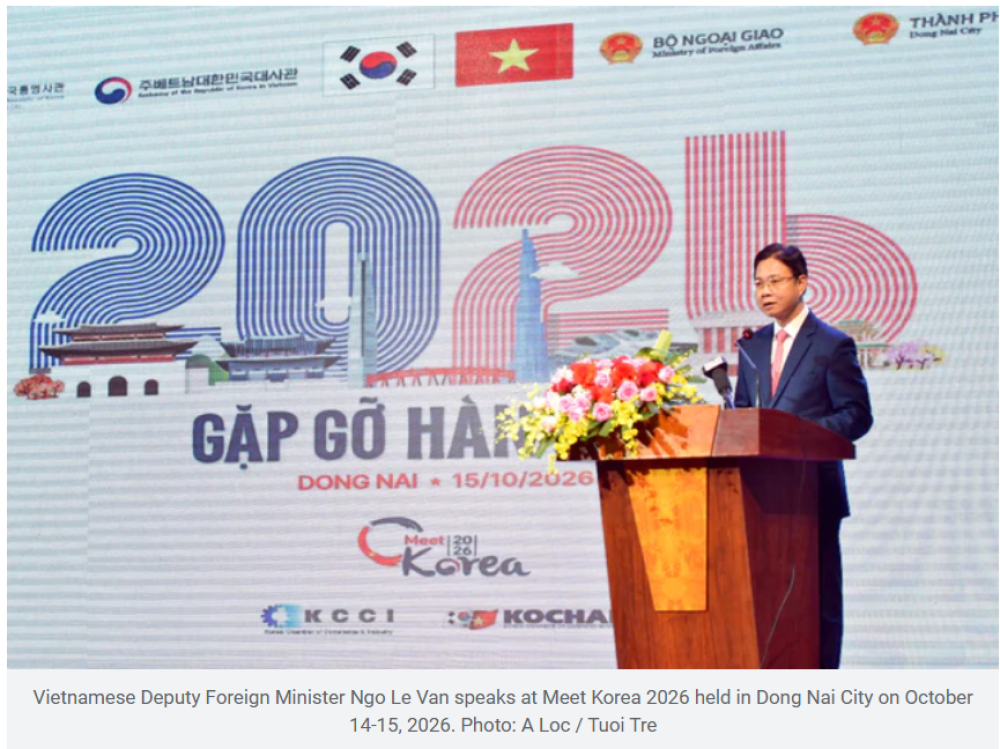
The figure was highlighted by Vietnamese Deputy Foreign Minister Ngo Le Van at Meet Korea 2026, a business networking conference held in Dong Nai City on October 14-15 and jointly organized by the city’s administration, the Ministry of Foreign Affairs and the South Korean Embassy in Vietnam.
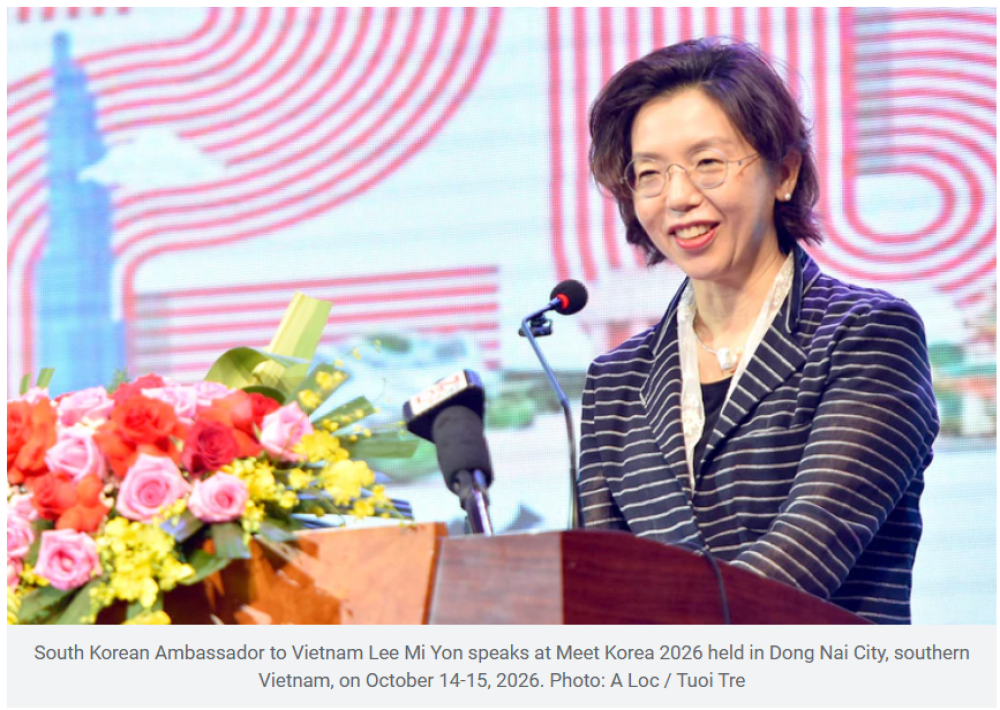
The event brought together around 400 delegates from Vietnamese ministries and localities, businesses and investment promotion organizations from both countries, with South Korean Ambassador to Vietnam Lee Mi Yon also in attendance.
Van said that more than three decades after Vietnam and South Korea established diplomatic relations, their comprehensive strategic partnership continued to deepen, with economic cooperation serving as a key pillar.
South Korea is Vietnam's third-largest trading partner, with bilateral trade reaching $89.5 billion in 2025, up 9.6 percent from 2024.
In the first eight months of 2026, bilateral trade reached $82.38 billion, up 42.2 percent year on year, putting the two countries on track to exceed $100 billion in annual trade for the first time this year.
Looking further ahead, both sides aim to increase bilateral trade to $150 billion by 2030.
South Korea is also Vietnam's largest foreign investor, with 10,598 projects and approximately $102.7 billion in registered capital, according to the Ministry of Foreign Affairs.
Van encouraged South Korean companies to make long-term investments in high technology, supporting industries and clean energy.
He also called for closer cooperation to build resilient and secure supply chains, particularly in semiconductors and energy, while enabling Vietnamese businesses to play a greater role.
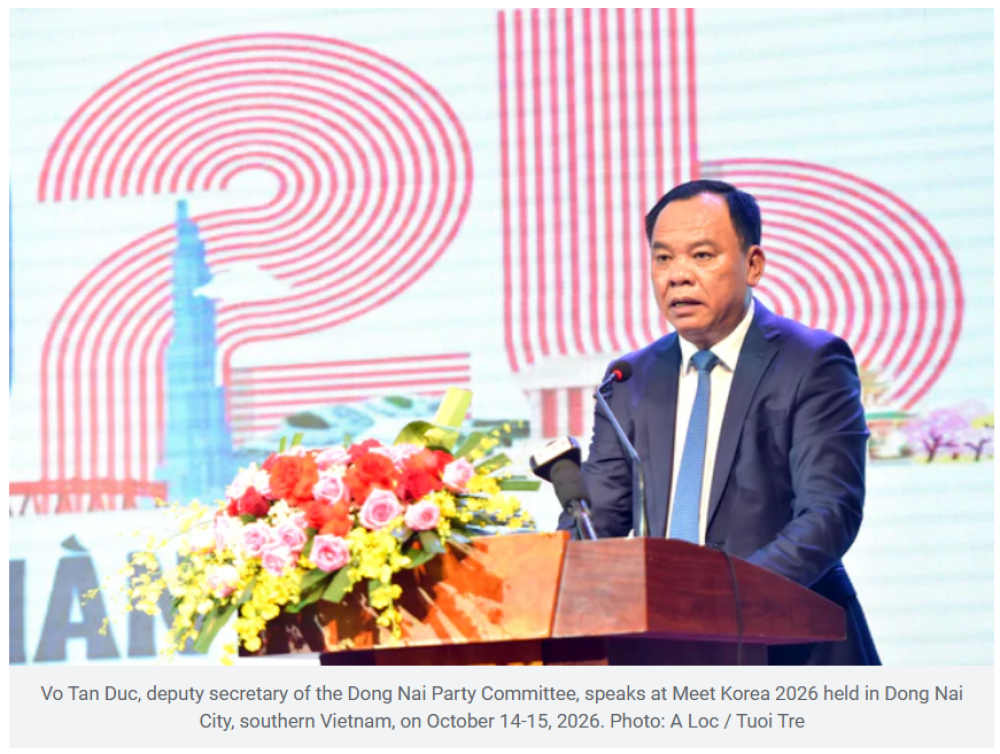
Other priorities include developing a highly skilled workforce through cooperation among authorities, businesses and educational institutions, and expanding collaboration in science, technology, innovation and cultural industries.
South Korea is also a major investor in Dong Nai, with 469 active projects worth more than $8.37 billion in registered capital, according to Vo Tan Duc, deputy secretary of the municipal Party Committee.
Given its strategic position in the southern region's industrial, manufacturing and logistics networks, as well as the upcoming opening of Long Thanh International Airport, Dong Nai has the potential to become "a multifunctional growth pole and a national innovation hub," Duc said.
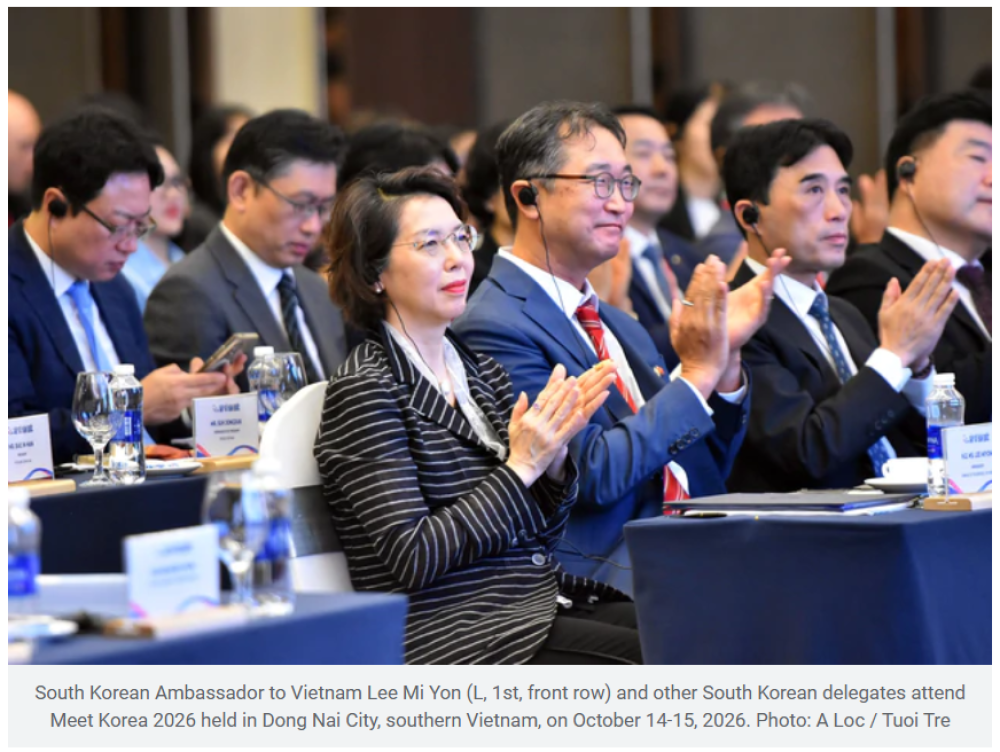
Ambassador Lee said South Korean companies in Dong Nai have invested in manufacturing, components, spare parts and logistics, creating jobs for more than 170,000 workers.
She called for greater investment in advanced components and materials, environmentally friendly products, smart logistics, smart cities, critical minerals and the defense industry.
Lee also said South Korean investment in Vietnam's high-tech sector had increased by approximately 160 percent in 2026 compared with 2025.
She urged the Vietnamese government and local authorities to maintain stable, predictable investment policies and ensure consistent implementation.