Lumen Vietnam Fund

Blog

Next wave of energy transition

Next wave of energy transition

Vietnam Economic Times / VnEconomy gathered the thoughts of EU and global partners on how Vietnam can turn its natural advantages into large-scale renewable investment and energy security.

Mr. Tibor Stelbaczky, Ambassador-at-Large, Principle Adviser on Energy Diplomacy at European External Action Service

I would like to mention three additional perspectives at the policy level regarding the Just Energy Transition Partnership (JETP).

Firstly, the JETP is built upon the shared goals of Vietnam and the International Partners Group (IPG), which is to achieve net-zero emissions by 2050, implementing the Paris Agreement and working toward this goal. Based on that shared goal, this is the best way to realize the principle of shared but differentiated responsibilities in implementing the Paris Agreement. This is a commitment from the IPG and the G7 to support Vietnam, and also a commitment from Vietnam to move toward net-zero emissions. Clearly, this is in the common interest of all participating parties, and we are very much looking forward to continuing cooperation to promote the meaningful and effective implementation of the JETP.

The second is that the “P” in JETP stands for “Partnership”. This signifies close cooperation between us and Vietnamese authorities, government, companies, and stakeholders. I think it is very important to gain experience from each other. Vietnam’s economic growth is remarkable - even fantastic. However, IPG countries also have a lot of experience in energy transition, and we are ready to share this experience and lessons with Vietnam. More importantly, it is not just about sharing experience, but also about being ready to invest and provide concrete support, from financial to technical assistance, to achieve tangible results in the implementation of the JETP.

Thirdly, in the past few years, especially since the signing of the Political Declaration in 2022 and the development of the Resource Mobilization Plan, as well as initial projects in place, the JETP has always been seen as an opportunity for Vietnam to leverage support from the IPG. However, in the current volatile context, this is no longer just an opportunity but a pressing need not only in Vietnam but also in many other countries, including IPG countries.

As the global energy market undergoes significant changes, shifting toward domestic energy sources such as renewable energy, while investing in energy storage, batteries, and grid development, becomes a necessary direction. This is not only a way to ensure the necessary energy supply to support economic growth, but also to ensure energy security and reduce external dependence. This is a common challenge for both Europe and Vietnam.

Therefore, we believe that moving toward greater renewable energy deployment and all investments in this sector, such as storage and grid development, as well as related regulatory measures and reforms, is the best way to ensure energy security, sustain impressive economic growth, and support Vietnam’s catch-up process - a mutual goal of both the IPG and Vietnam.

Mr. Alessandro Antonioli, Vietnam Country Manager at Copenhagen Offshore Partners

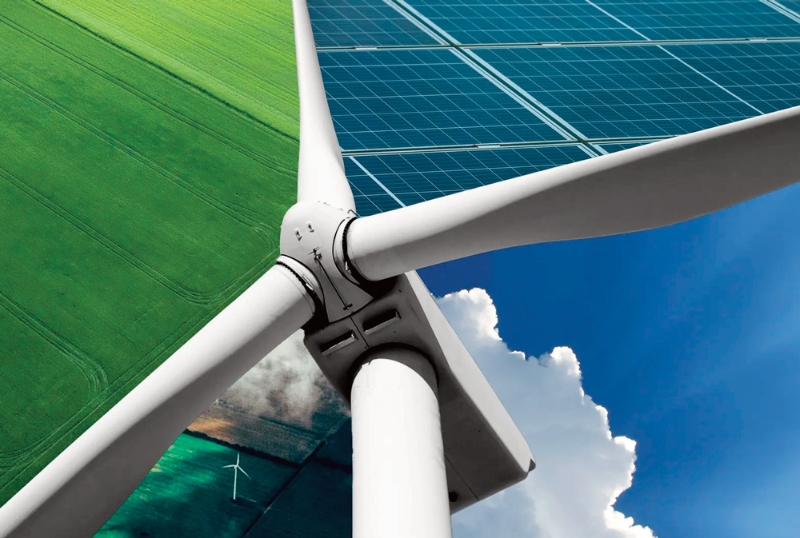
Vietnam is extremely competitive when it comes to the use of natural resources for renewables, because it is blessed with good wind and good solar radiation.

We expect the cost of renewable energy to progressively decrease, and Vietnam is very well positioned to capture a huge amount of these resources. This is the real “oil” of Vietnam, and is where the country should invest more in terms of cost competitiveness. It is a very fortunate coincidence that you have a well-established industry, especially in offshore engineering. This leads me to think that Vietnam is going to be, in the near term, if things go well, a regional power when it comes to offshore wind, because it can capture most of the benefit not just from generating power, but also from manufacturing the components in the country. So there is a double benefit in growing a local supply chain and also managing to get clean, affordable, and available power from resources.

The domestic market was relying on local loans to finance small-scale renewable energy projects. Now, as the technology becomes more complex and requires more capital, this is not enough to scale up the renewable energy system. So Vietnam needs to attract more international capital, about $130 billion by 2030, 90 per cent of which has to come from private capital.

To do that, Vietnam needs to provide guarantees to international investors: that they can invest safely, extract dividends, receive fair tax treatment, and resolve disputes in international forums. It is also important to ensure an appropriate level of returns for investors who take risks in a still immature regulatory framework for large-scale renewable energy.

Grid infrastructure remains a constraint on renewable energy expansion to the extent that there are physical bottlenecks. There needs to be more capacity and more battery storage, and this requires the right policies and incentives for both infrastructure and generating assets. We expect upcoming policies to provide more clarity.

Another important element is pricing mechanisms. This is still at an early stage, and the right mechanisms for renewable energy are not yet fully developed. We have seen what happened in the past with feed-in tariffs. The hope is to learn from that and move toward more dynamic and risk-mitigated pricing mechanisms.

Copenhagen Infrastructure Partners has been here for many years, and this point in time feels like a moment of truth. There is a new government, new ambition, and some policy development over the last year.

If Vietnam maintains the pace and keeps the focus on shifting the energy system from carbon-based and hydrocarbon-based sources to renewable energy with battery storage, then it will see a completely different future in the near term.

Mr. Nguyen Phan Dinh, Vietnam Market Director at EDP Global, Head of EuroCham’s Energy Working Group

European businesses can make significant contributions to Vietnam’s energy transition in three main areas. First, their experience in policy and legal frameworks. With over 30 years of renewable energy development, Europe has accumulated a solid foundation, from establishing grid standards and carbon pricing mechanisms to liberalizing the electricity market. Through organizations like EuroCham, the European business community also contributes ideas, promotes reforms, and improves the investment environment.

Second, their system integration capabilities and technical expertise. European countries have extensive experience operating energy systems with a high proportion of renewable energy, particularly in managing the intermittent nature of power sources such as wind and solar. These are practical capabilities that European businesses can transfer to and support Vietnam with.

Third, their abundant green capital. When projects achieve financial viability, European banks and financial institutions are ready to provide significant funding to the Vietnamese market.

A prerequisite for attracting this capital flow is policy consistency and the stability of the legal framework. Changes that could reverse previous commitments, such as retroactive collection mechanisms, will directly affect investor confidence. Meanwhile, confidence is a key factor, especially since renewable energy projects typically have a lifespan of 10-20 years.

In the current context, Vietnam identifies renewable energy as a strategic direction to ensure energy security. However, to realize this goal, in addition to technological investment, building a stable and predictable long-term legal framework is crucial to strengthening confidence and attracting large-scale investment.

Ms. Anna Gibson, Climate Counsellor at the British Embassy in Vietnam

We saw the signing of a credit agreement for grid transmission infrastructure, aimed at enhancing transmission capacity and integrating renewable energy. Alongside this were a loan agreement for a hydropower expansion project and the breaking-ground ceremony for the Bac Ai pumped-storage hydropower project. These are all significant milestones. These advances demonstrate how international public financing can be used to drive the next wave of energy transition projects in Vietnam, while also paving the way and facilitating deeper private capital participation in the market.

Alongside these asset projects, we also witnessed the signing of financing agreements within the framework of the Just Energy Transition Partnership (JETP) over the past year. These include green financing packages, such as a $200 million grant for energy transition between the European Investment Bank (EIB) and Techcombank, as well as a $350 million green investment package from VPBank with support from development finance institutions within the International Partners Group (IPG), including the UK, Canada, and Japan.

Clearly, there has been progress and momentum for the JETP, but much remains to be done. Many agreements are underway, and technical assistance is in the works. A crucial part of the JETP is how to effectively combine tools - from technical assistance, development finance, public finance to private finance - to create synergistic, catalytic impacts and drive a substantive transformation of Vietnam’s green, clean, and sustainable energy system.


Source: Vietnam Economic Times
Latest Posts

General Secretary and President of Vietnam holds talks with Chinese counterpart

General Secretary and President of Vietnam holds talks with Chinese counterpart

During their talks in Beijing on April 15, the two leaders affirmed that the two Parties and countries should further strengthen solidarity, enhance strategic trust, and promote policy connectivity, trade, infrastructure, and energy.

General Secretary of the Communist Party of Vietnam (CPV) Central Committee and President of Vietnam To Lam had talks with General Secretary of the Communist Party of China (CPC) Central Committee and President of China Xi Jinping in Beijing on April 15 morning, according to a report from theVietnam News Agency.

Welcoming the Vietnamese leader and high-ranking delegation,President Xiwarmly congratulatedMr.To Lam on his recent election as President of Vietnam by the 16th National Assembly. He appreciated his guest choosing China to visit first following the resounding success of the 14th National Congress of the CPV and the consolidation of state leadership positions, considering this as a demonstration of the high regard and top priority given by the Vietnamese Party and State in general, and General Secretary and President Lam in particular, to the traditional friendship and comprehensive strategic cooperation between China and Vietnam, as well as the strategic nature and high level of bilateral relations.

The Vietnamese leader sincerely thanked General Secretary and President Xi for the warm and thoughtful welcome, and for the strong support shown in various forms for the 14th National Congress of the CPV.

Announcing the new theoretical and practical highlights of the 14th National CPV Congress, General Secretary and President Lam emphasized that the new leadership of the Vietnamese Party and State wishes to work with their Chinese counterparts to continuously nurture the traditional friendship, promote the Comprehensive Strategic Cooperative Partnership and the Vietnam – China community with a shared future that carries strategic significance.

He congratulated the Chinese Party, State, and people on their epoch-making achievements, and expressed confidence that China will successfully implement its 15th five-year Plan, achieve high-quality development and Chinese-style modernization, successfully realize the "second centenary goal”, and continue to play an increasingly important role in the region and the world.

Vietnam always considers developing relations with China as a consistent policy, a strategic choice, and a top priority in its overall foreign policy of independence, self-reliance, self-strengthening, multilateralization and diversification of external relations, he stated, affirming that Vietnam supports China's global initiatives on development, security, civilization, and governance, and consistently implements the "one China" policy.

Once again congratulating the CPV on its successful 14th National Congress, General Secretary and President Xi highly valued and congratulated Vietnam’s outstanding achievements in socialism building and the Doi Moi (Renewal) process, which have opened up a new era of development for the country.

He emphasized that China supports Vietnam in steadfastly upholding the Party's leadership and promoting the building of socialism, affirming Vietnam is a priority direction in China's neighborhood diplomacy.

The Chinese leader said he believes that under the leadership of the new CPV Central Committee, headed by General Secretary and President To Lam, Vietnam will successfully achieve the goals and tasks set forth by the 14th National Congress, and soon realize the two centenary goals, transforming Vietnam into a high-income and developed socialist-oriented nation.

The top leaders held in-depth and comprehensive discussions on their respective national situations, bilateral relations, and regional and international issues of mutual concern.

They expressed their satisfaction with the positive developments in bilateral ties in recent years. Notably, high-level strategic exchanges have become increasingly frequent; cooperation mechanisms have been more comprehensive, diverse, and trustworthy; and defense and security cooperation has evolved from exchanges to more substantive activities. Economic, trade, and investment ties, along with transport connectivity, have seen new breakthroughs, while local-level cooperation and people-to-people exchanges have remained vibrant. Coordination in multilateral frameworks has also grown closer.

Amid complex global developments, the two leaders affirmed that the two Parties and countries should further strengthen solidarity, enhance strategic trust, and promote policy connectivity, trade, infrastructure, and energy. They agreed to continue deepening and elevating Vietnam–China relations in the new phase, practically contributing to peace, cooperation, and development in the region and the world.

Regarding future directions, they agreed to continue directing relevant agencies to adhere to the overarching “six major orientations”, maintain regular high-level exchanges, and promote the guiding role of Party-to-Party channels. They emphasized the need to expand substantive cooperation across sectors, reinforce the social foundation of bilateral ties, enhance close coordination at multilateral mechanisms, and better manage and resolve differences.

At the talks, the two leaders officially announced the launch of the “Vietnam–China Tourism Cooperation Year 2026–2027,” agreeing to step up joint promotion activities, improve tourism infrastructure and services, and maintain each country’s position as a leading source of tourists for the other.

General Secretary and President Lam also proposed both sides consider visa exemptions for group tourists at designated destinations on a reciprocal basis.

He proposed that the two sides strengthen political trust and strategic coordination at a new level, step up high-level exchanges, and continue to promote the role and effectiveness of comprehensive cooperation across Party, Government, National Assembly/National People’s Congress, and Vietnam Fatherland Front/Chinese People’s Political Consultative Conference channels.

The Party and State leader of Vietnam called for enhanced theory exchanges and cadre training, stronger substantive cooperation between key agencies, particularly in diplomacy, national defense, and public security, and the effective implementation of the ministerial-level “3+3” strategic dialogue mechanism. He also proposed increasing cooperation in security, defense industry, and military trade, along with support each other in successfully hosting APEC Year 2026 and 2027 in each country.

He further suggested elevating economic, trade, investment, and tourism ties to a new height to contribute to the realization of each country’s development goals. Priority should be given to upgrading strategic infrastructure connectivity, especially railway, shifting from simple trade to deeper economic linkages, and associating bilateral trade with infrastructure, logistics, and market connectivity.

General Secretary and President Lam proposed that China open its market as wide as possible to Vietnamese goods and work toward balanced and heathy trade. He also called for stronger investment, technology transfer, development of supporting industries, and the establishment of complete production and supply chains in Vietnam, as well as coordination in building mechanisms to ensure strategic energy supply.

In addition, he emphasized expanding cooperation in education and training, science and technology, culture, people-to-people exchanges, and local-level cooperation, including providing more scholarships for Vietnamese students and boosting collaboration between leading universities of the two countries.

Agreeing with and highly valuing the proposals, General Secretary and President Xi suggested that the two sides further intensify political trust and strategic exchanges, maintain the tradition of high-level contacts, and bring into play the special role of Party-to-Party relations. He asked for in-depth exchanges of experience in the Party building and state governance, and for maximizing the role of the ministerial-level “3+3” strategic dialogue on foreign affairs, national defense, and public security between Vietnam and China to firmly advance the socialist cause in both countries.

The host recommended the two sides effectively align the Belt and Road Initiative with the “Two Corridors, One Belt” framework, accelerate strategic infrastructure connectivity, and actively implement the three standard-gauge railway projects linking the two countries.

He welcomed the increasing export of high-quality Vietnamese goods to the Chinese market, and called for deeper cooperation in key sectors, stronger production and supply chain collaboration, and encouragement for Chinese enterprises to invest more in Vietnam.

The two countries should enhance policy coordination in science and technology, promote diverse people-to-people exchanges, actively implement global initiatives on development, security, civilization, and governance, and jointly contribute to a stable, open and cooperative international environment while together promoting the socialist cause around the word as well as safeguarding peace, stability, and prosperity in the region and beyond, the Chinese leader added.

At the talks, the two sides agreed to properly resolve differences and promote cooperation in line with the new level of Vietnam – China relations on the basis of international law, seriously comply with the consensus between the Association of Southeast Asian Nations (ASEAN) and China on the implementation of the Declaration on the Conduct of Parties in the East Sea (DOC), and accelerate negotiations to soon finalize an effective and substantive Code of Conduct (COC) in accordance with international law, particularly the 1982 United Nations Convention on the Law of the Sea (UNCLOS).

The top leader of Vietnam asked both sides to truly respect each other’s rights and legitimate interests and resolve differences through peaceful means in line with international law, especially the 1982 UNCLOS.

Following the talks, the two leaders witnessed the signing of cooperation documents across Party, public security, judicial, economic, science and technology, production and supply chain, social welfare, media, and local collaboration, reflecting the comprehensive outcomes of the visit.


Top Vietnamese leader travels to Nanning, highlights bilateral rail cooperation

Top Vietnamese leader travels to Nanning, highlights bilateral rail cooperation

Highlighting the significance of high-speed rail cooperation, he called on Chinese railway authorities and enterprises to share expertise, support technology transfer and participate in the development of key railway projects in Vietnam.

Beijing (VNA)– General Secretary of the Communist Party of Vietnam (CPV) Central Committee and President of Vietnam To Lam, his spouse and the high-ranking delegation of Vietnam departed Beijing on April 16 morning for a visit to Nanning city, continuing their state visit to China.

They travelled by high-speed train after concluding official activities in Beijing. Chinese officials accompanying the delegation included Liu Haixing, head of the International Department of the Communist Party of China Central Committee; Chen Zhou, deputy head of the same body; and Chinese Ambassador to Vietnam He Wei and his spouse.

At the station, Beijing Mayor Yin Yong and staff of the Vietnamese Embassy in China saw off the delegation.
During the journey, leaders of Chinese railway businesses briefed the Vietnamese leader on the rapid development of the local rail system. As of early 2026, China’s operational railway network has reached 165,000 km, including about 54,000 km of high-speed rail – the largest in the world, accounting for over 70% of the global total.

Since the launch of the medium- and long-term railway network plan in 2004, China has built a modern and extensive rail system connecting major urban centres, with rail access reaching 99% of cities with populations of over 200,000. More than 130 county-level localities are now connected by rail. The total network length has risen 2.4 times from 68,700 km in 2000.

Looking ahead to 2035, China aims to develop a high-quality transport network spanning around 700,000 km, including 200,000 km of railway lines that play a central role in linking county- and higher-level administrative units, border gates and key infrastructure hubs nationwide.

Expressing his impression of China’s high-speed rail achievements, General Secretary and President Lam noted that the system is not only the longest but also among the most widely utilised globally, with strong prospects for further expansion. He underscored the importance of enhancing bilateral cooperation in transport connectivity, particularly railways, to support green development and national growth.

Highlighting the significance of high-speed rail cooperation, he called on Chinese railway authorities and enterprises to share expertise, support technology transfer and participate in the development of key railway projects in Vietnam.

In a recent inspection of Vietnam – China railway cooperation progress in Lang Son province, the top leader of Vietnam affirmed that railway cooperation between the two countries represents both a demand and an opportunity. If effectively implemented, such cooperation will help reduce logistics costs and transport time, facilitate trade, boost border economic development, ease congestion at land border gates, and connect Vietnam to the broader Asia – Europe rail network, thereby strengthening regional linkages and enhancing the country’s role in Asian supply chains.​

Bank credit supports high GDP growth in Q1 2026

Bank credit supports high GDP growth in Q1 2026

Credit in the first quarter of 2026 surged by 3.18% against late last year to VND19.18 quadrillion (US$730 billion), supporting Vietnam’s GDP growth of 7.83%, Pham Thanh Ha, deputy governor of the State Bank of Vietnam (SBV), said at an event on April 14.

Addressing the press conference on reviewing Q1 2026 performance of the banking industry held in Hanoi, Ha noted that bank credit in the period focused on business and production, economic growth drivers and priority sectors, especially industry, agriculture and rural development, small- and medium-sized enterprises (SMEs), trade and services.

Institutions actively disbursed funds for credit programmes as directed by the Government and the Prime Minister, such as the credit programme for the forestry and fisheries sector and the programme for lending to production, processing and consumption of high-quality and low-emission rice products in the Mekong Delta region.

Ha said: "The SBV continued to maintain the benchmark interest rates in Q1 2026 to facilitate credit institutions in having access to capital from the SBV at low costs, contributing to supporting the economy.

“At the same time, the SBV directed credit institutions to continue publishing lending interest rate information on their websites to provide customers with reference information when accessing loans.”

Pham Chi Quang, director of the SBV’s Monetary Policy Department, told the event that at the end of March 2026, the SBV issued Official Letter No. 2342/NHNN-CSTT and held a meeting early this month, requesting credit institutions and branches of foreign banks to focus on implementing solutions to reduce deposit interest rates, contributing to cut lending rates in the coming time to support economic growth.

“Right after the meeting, commercial banks agreed to reduce interest rates," Quang said.

"Some 26 commercial banks have so far adjusted their listed deposit interest rates down by about 0.1-0.5 percentage points per year, mainly for terms of six months or more. This will provide a basis for reducing lending interest rates to support economic growth in the future.”

According to Ha, the SBV has set a credit growth of 15% for 2026, with adjustments depending on the actual situation, ensuring inflation control, macroeconomic stability, support for economic growth, and the safety of the credit institution system.

“The SBV has also required credit institutions to strictly control the rate of credit disbursement to high-risk sectors, including real estate, in 2026 to channel credit flows into production and business sectors, priority sectors, and growth drivers of the economy, while ensuring the stability of monetary market liquidity and the safety of the credit institution system.”

Regarding exchange rate management, he said that since the beginning of this year, the foreign exchange market had remained stable, with the USD/VND exchange rate generally trending downwards in the period before the Lunar New Year amid reduced international market pressure and improved foreign exchange supply and demand balance.

However, Ha noted, the exchange rate and foreign exchange market continued to face pressure from complex and unpredictable developments in the international market and domestic challenges and difficulties. In this context, the SBV managed the exchange rate flexibly, contributing to absorbing external shocks.

“The SBV has applied monetary policy tools to stabilise the foreign exchange market, contributing to macroeconomic stability and inflation control," Ha said.

"As a result, the foreign exchange market operates smoothly, and the legitimate foreign currency needs of the economy are met fully and promptly.”


See all blog