Lumen Vietnam Fund

Blog

Malaysia eyes $20bn trade target with Vietnam ahead of schedule

Malaysia eyes $20bn trade target with Vietnam ahead of schedule

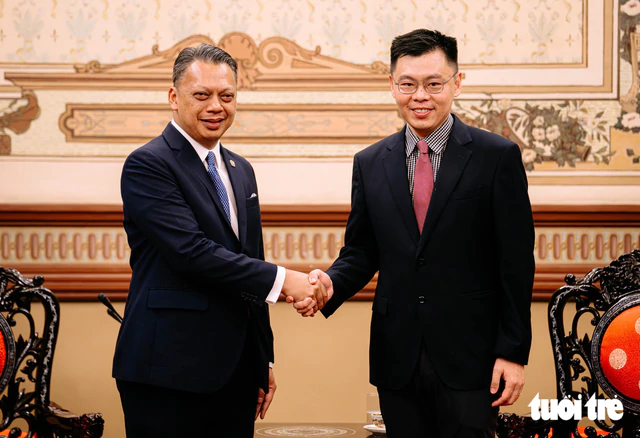
Malaysia is seeking to accelerate economic cooperation with Vietnam, aiming to raise bilateral trade to US$20 billion as early as 2027 or 2028, ahead of the two countries' 2030 target, Malaysian Ambassador to Vietnam Jamal Sharifuddin Bin Johan said during a meeting with Ho Chi Minh City officials on Friday.

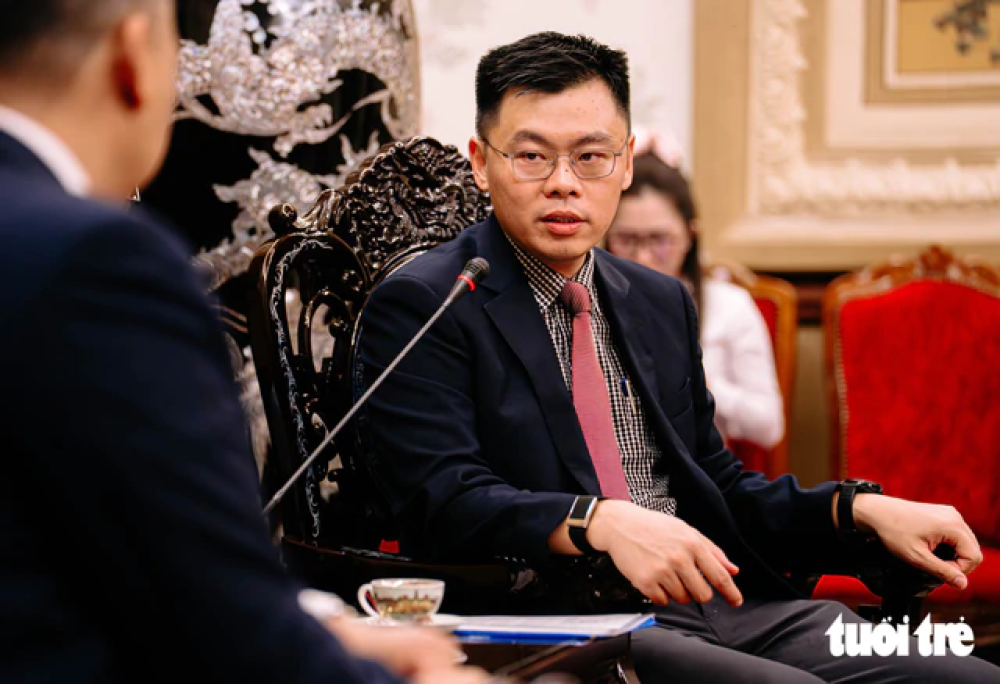
The remarks came during the ambassador's introductory visit to Ho Chi Minh City, where he met Truong Minh Huy Vu, vice-chairman of the municipal administration, to discuss trade, investment and future cooperation opportunities.

At the meeting, Vu said Malaysia and its business community have maintained close cooperation with Ho Chi Minh City.

Key areas of collaboration include manufacturing, technology, services and trade, with cooperation now expanding into high technology, education and training.

Student exchanges, tourism and people-to-people activities have further strengthened ties between the two countries, he added.
Malaysia is currently Vietnam's third-largest trading partner within ASEAN.

In Ho Chi Minh City, Malaysia ranks among the top 10 foreign investors, with 514 projects and total registered capital exceeding $6.1 billion.

Trade between Ho Chi Minh City and Malaysia surpassed $3.5 billion in 2025.

Vu emphasized that Ho Chi Minh City consistently prioritizes strengthening its friendship and cooperation with Malaysia.

In response, Ambassador Jamal Sharifuddin Bin Johan thanked Ho Chi Minh City leaders for their warm reception and noted that this was his first visit to the southern Vietnam metropolis.

“We have great relations in every sphere,” the Malaysian diplomat said when it came to Vietnam-Malaysia ties.
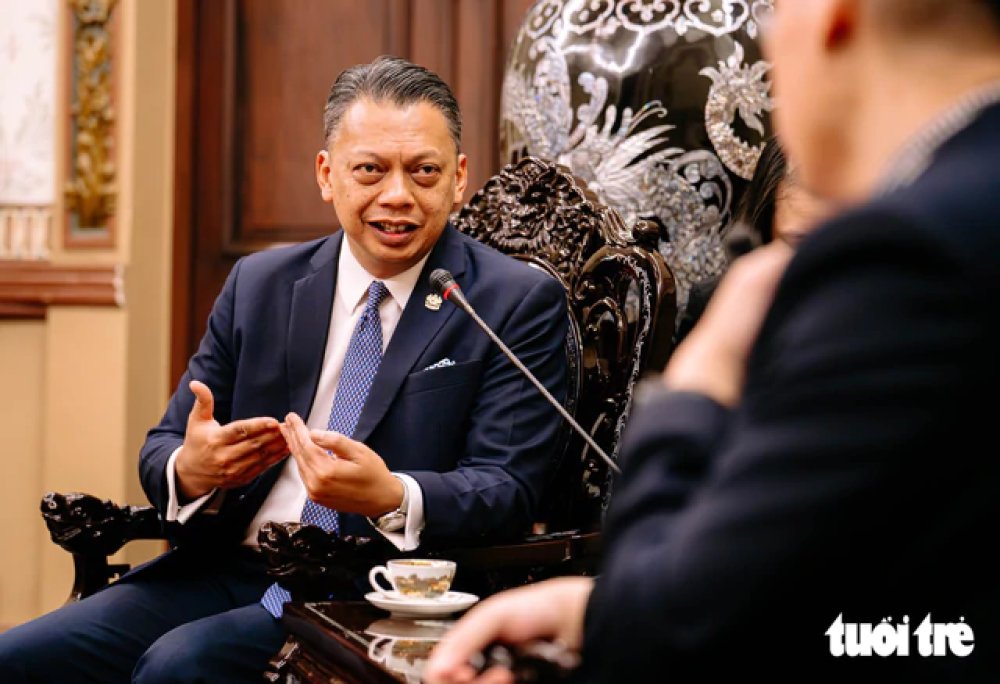
According to the ambassador, total bilateral trade currently stands at approximately $16.3 billion.

While the two countries have set a goal of reaching $20 billion by 2030, Malaysia believes the target can be achieved two to three years earlier.

Aside from trade and investment, both sides identified the digital economy as a promising area for future cooperation. The ambassador said Malaysia and Vietnam have already held discussions with Vietnam's Ministry of Science and Technology on expanding collaboration in this field.

Education was another priority topic, with both countries seeking to broaden student exchanges, research partnerships and technical knowledge-sharing programs.
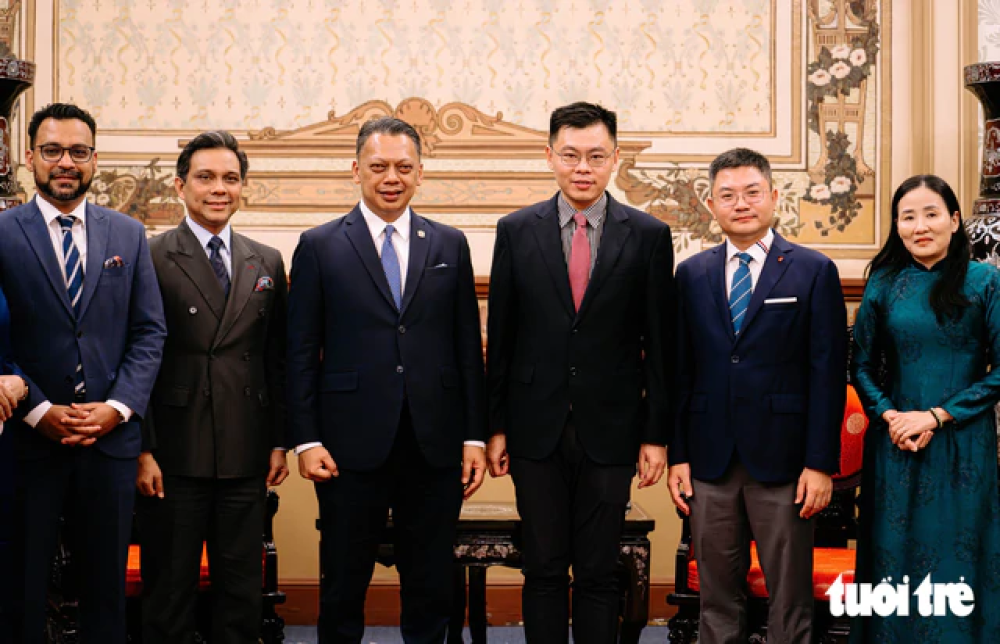
Outlining priorities for future cooperation, Vu proposed expanding exchanges at various levels and promoting collaboration in areas that match the strengths and needs of both sides, including big data, high technology and the digital economy.

He also highlighted potential collaboration in developing Vietnam's International Financial Center in Ho Chi Minh City, particularly in areas such as Islamic finance, Halal banking services, and financial instruments such as sukuk, or Islamic bonds.

The city leader expressed hope that both sides would further expand cultural and educational exchanges, especially youth programs and capacity building initiatives.

Ho Chi Minh City pledged continued support for Malaysia to effectively implement cooperation initiatives in the years to come, with the aim of deepening the Vietnam-Malaysia comprehensive strategic partnership, which was elevated in 2024.

Source: Minh Duy - Thanh Hiep / Tuoi Tre News
Latest Posts

PM meets with Brazilian, Canadian leaders on 49th ASEAN Summit sidelines

PM meets with Brazilian, Canadian leaders on 49th ASEAN Summit sidelines

The leaders discussed developments in bilateral relations and measures to advance cooperation in the coming period, with a view to effectively implementing the Strategic Partnerships between Vietnam and the two countries.

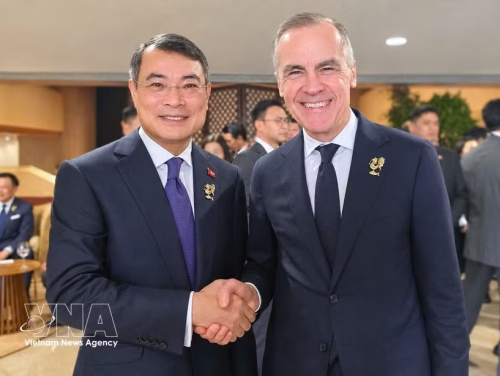
​Manila (VNA) - Prime Minister Le Minh Hung held bilateral meetings with Brazilian President Luiz Inácio Lula da Silva and Canadian Prime Minister Mark Carney on November 15 on the sidelines of the 49th ASEAN Summit in Manila, the Philippines.

During the meetings, the leaders discussed developments in bilateral relations and measures to advance cooperation in the coming period, with a view to effectively implementing the Strategic Partnerships between Vietnam and the two countries.

Meeting with Brazilian President Lula, PM Hung affirmed that Vietnam always attaches importance to its relations with Brazil, one of its leading important partners in Latin America. Building on the progress made in bilateral ties in recent years, he expressed his hope that the President and the Brazilian Government will continue to give priority to promoting the Vietnam-Brazil Strategic Partnership during the new term.

President Lula also stressed that Brazil values its relations with Vietnam and expressed his wish for both sides to continue working together to deepen their Strategic Partnership.

The two leaders spoke highly of the progress in bilateral relations since Vietnam and Brazil upgraded their ties to the Strategic Partnership in November 2024. To further promote cooperation, they agreed to step up implementation of the 2025–2030 Action Plan signed in March 2025.

The plan identifies six areas of cooperation: politics, defence, security and global challenges; economy, trade and investment; science, technology and innovation; climate change and the environment; education, culture, sports, tourism and people-to-people exchanges; and consular affairs and community support.

At his meeting with Canadian PM Carney, the two leaders highlighted the significance of upgrading Vietnam-Canada relations to a Strategic Partnership during the state visit to Canada by General Secretary of the Communist Party of Vietnam (CPV) Central Committee and President To Lam in September 2026. The move opened a new chapter in bilateral relations, with a higher level of engagement and closer ties, bringing tangible benefits to the people and businesses of both countries, they held.

PM Hung said the Vietnamese Government is directing ministries, sectors and localities to implement the outcomes of the visit. He proposed that the two sides soon translate their commitments into specific cooperation programmes and projects. These initiatives should have clear timelines and deliver tangible results for bilateral relations.

PM Carney affirmed that Canada attaches importance to its Strategic Partnership with Vietnam. He agreed that the two sides should work closely together in implementing high-level agreements and promote cooperation in areas of shared priority and strength.

The two PMs agreed to assign their respective foreign ministries to coordinate efforts to accelerate implementation of the Action Plan for the Vietnam-Canada Strategic Partnership.​

IMF supports Vietnam's growth outlook after review

IMF supports Vietnam's growth outlook after review

The International Monetary Fund (IMF) has concluded its 2026 Article IV consultation with Vietnam, with a mission team noting the country remains among the world's fastest-growing economies on the back of the global AI-driven technology cycle and strong public and private investment.

The team, led by Martin Sommer, held discussions in Hanoi and Ho Chi Minh City from November 3 to 13 and issued a statement at the end of the mission. Vietnam's real GDP grew 9 per cent on-year in the first three quarters of 2026. Inflation eased to 5.1 per cent in October, though the January–October average remained slightly above the authorities' 4.5 per cent annual target.

The current account balance moved into deficit amid higher oil and semiconductor prices, although the exchange rate and foreign exchange reserves have remained broadly stable, supported by robust foreign direct investment inflows and higher interest rates. Bank funding pressures amid rapid credit growth have put upward pressure on interest rates, prompting the State Bank of Vietnam (SBV) to provide liquidity support through multiple instruments.

Growth is projected at 9.2 per cent in 2026 and 8.9 per cent in 2027, with activity exceeding its estimated potential level. Inflation is forecast to remain above the authorities’ target in both years. Risks are tilted towards weaker growth and higher inflation, including from prolonged tensions in the Middle East, a potential reassessment of AI prospects, trade policy uncertainty, public investment outpacing absorptive capacity, rapid credit growth, and extreme weather events.

A broadly neutral fiscal stance in 2027 would support macro-financial stability. A well-calibrated rollout of the planned public investment and the prioritisation of high-return projects would reduce overheating risks, while ensuring investment efficiency. Fiscal policy will need to be nimble in the period ahead and spending should be scaled back if overheating risks materialise.

With global oil prices easing, the broad energy price support should be phased out as planned, with targeted transfers protecting vulnerable groups. Stronger public investment management, greater transparency, and close oversight of risks from public-private partnerships and state-owned enterprises would help safeguard public finances.

According to the IMF, monetary policy should prioritise price stability. The SBV should continue to aim for year-end credit growth of around 15 per cent. Monetary policy tightening would be warranted if underlying inflation intensifies. Modernising the policy framework, reducing reliance on administrative measures, allowing greater exchange rate flexibility, and gradually bolstering foreign exchange reserves over time would help strengthen resilience.

It is important to press ahead with plans to strengthen banks’ capital and liquidity buffers. Faster transition towards the recently introduced Basel III standards should be encouraged. Lending should be aligned with banks’ capital and stable funding capacity, and further regulatory easing should be avoided. Careful monitoring and management of asset quality, sectoral exposures, and concentration risks would be helpful. Over time, transition to a modern macroprudential framework for managing risks would help support financial stability.

Recent institutional restructuring, administrative streamlining, and social insurance reforms provide a foundation for further progress. Priorities include raising productivity by further improving the business environment, reducing skill mismatches, levelling the playing field among businesses, and facilitating stronger linkages between domestic and foreign-invested enterprises.

Deeper domestic capital markets and more diversified trade and investment would strengthen resilience, while broader social protection and reduced labour market informality would support household consumption. Local authorities’ plan to establish a comprehensive multi-tier social security system by 2030 will be helpful in this regard. Further strengthening economic and financial statistics is an urgent priority for effective policymaking and risk management.


Vietnam ready to partner with Francophone countries in AI, digital technology: Top leader

Vietnam ready to partner with Francophone countries in AI, digital technology: Top leader

Vietnam welcomes investment projects involving advanced technologies, promoting research and development and human resource training. Vietnamese businesses are ready to seize opportunities for digital trade and investment cooperation with Francophone markets.

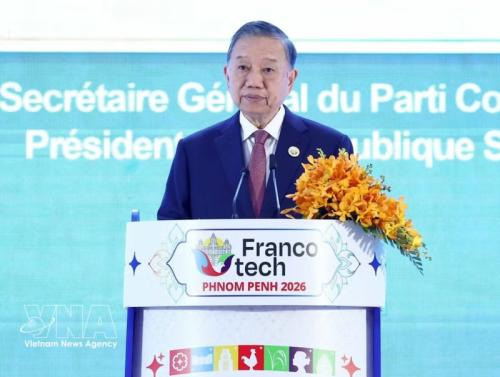
Vietnam stands ready to work with Francophone countries and partners in promising fields such as AI, digital technology, the semiconductor industry and green transformation, General Secretary of the Communist Party of Vietnam Central Committee and President To Lam said at the 2026 Francophone Business and Innovation Forum (FrancoTech 2026) in Phnom Penh, Cambodia, on November 15 as part of the 20th Francophonie Summit, according to the Vietnam News Agency.

He said Vietnam welcomes investment projects involving advanced technologies, promoting research and development and human resource training. Vietnamese businesses are ready to seize opportunities for digital trade and investment cooperation with Francophone markets.

Vietnam is also prepared to work with Francophone members on concrete initiatives to strengthen scientific, technological and innovation links across the community, the leader stated.

General Secretary and President Lam said the global economy is undergoing profound changes, driven by the far-reaching impacts of science, technology and innovation. Big data, AI and emerging technologies were fundamentally transforming socio-economic life and governance methods. These developments raised the question of how scientific and technological advances could be turned into development opportunities for countries and businesses while delivering tangible benefits to the people.

He held that advances in science, technology and the digital economy are opening up unprecedented opportunities for the community to overcome geographical barriers, strengthen connectivity and expand markets.

The Vietnamese leader stressed that the Francophone community needs to make scientific, technological and digital economic cooperation a driving force for development across the Francophone space. He suggested a focus on key areas of cooperation, saying members should clearly identify priorities and take concrete action to advance cooperation in science, technology and the digital economy.

He proposed the organization of a Francophone ministerial conference on the digital economy to strengthen policy coordination, identify cooperation policies in this field and establish a legal framework enabling businesses to engage in trade and investment in the digital environment.

To strengthen innovation links within the Francophone community, he called for greater knowledge sharing, research cooperation, technology transfer and commercialization of research results across the Francophone economic space, bringing scientific and technological achievements into production and business activities as well as everyday life.

He advocated a connected approach to technology and innovation, including a “triple helix” model within the Francophone community, bringing together the State, researchers and businesses to jointly conduct research, develop technologies and put them into practice.

He welcomed the signing of a memorandum of understanding on cooperation to promote digital transformation in higher education between Viettel Cambodia (Metfone), the Agence Universitaire de la Francophonie (AUF) and Cambodia’s Ministry of Education, Youth and Sport, describing it as a concrete and practical step towards implementing this cooperation model.

General Secretary and President Lam also called for the development of human resources capable of meeting the demands of the digital era, with particular attention to young people and women, and for training to be aligned with businesses’ practical needs. This would enhance workers’ adaptability and their ability to participate in the digital economy.

He stressed the selection of sectors with strong potential and complementary strengths among member countries to support the development of the Francophone digital economy, including digital technology infrastructure, e-commerce ecosystems, digital payment tools and business management solutions. In addition, he stressed the need to strengthen cooperation in the responsible, inclusive and human-centred application of AI, helping build a dynamic, safe and trusted Francophone AI ecosystem, narrow the digital divide and generate fresh momentum for sustainable development.

Held under the theme “One Francophone Community, One Digital Future”, this is the forum's second edition, following the inaugural event in France in 2024. It brought together representatives from more than 90 governments, featured 200 exhibition booths and attracted 5,000 visitors, investors and representatives of innovation organisations. Vietnam took part with a national pavilion, alongside major businesses including Vietnam Airlines, Viettel Cambodia (Metfone), Military Commercial Joint Stock Bank (MB), the Joint Stock Commercial Bank for Investment and Development of Vietnam (BIDV), MekongNet and the Vietnam Posts and Telecommunications Group (VNPT).

On the occasion, General Secretary and President Lam, together with a number of Francophone leaders, toured exhibition booths at the forum.

At the national pavilion and booths operated by Vietnamese corporations and businesses, the leaders took time to learn about their products and projects, ranging from aviation services, telecommunications and digital banking to regional connectivity platforms.


See all blog