Lumen Vietnam Fund

Blog

Japanese investors eye new opportunities in Vietnam

Japanese investors eye new opportunities in Vietnam

Japan remains a top-three investor in Vietnam with more than US$81.2 billion in cumulative registered capital, and many Japanese companies keep announcing investment and expansion plans, a signal that they still see growth upside in the Southeast Asian country.

A strategic investor with deep roots

Political and diplomatic ties are deepening, but economic, trade and investment cooperation remain the load-bearing pillars of the Vietnam–Japan Comprehensive Strategic Partnership. Trade keeps scaling and Japanese capital retains a remarkable position.

Bilateral trade has grown steadily and in balance, hitting about US$52 billion in 2025, double 2014’s US$27.4 billion and up 11% from 2024. Over the past decade, the trade volume has expanded 1.8 times.

In the first nine months of 2026, trade between the two countries reached US$43.71 billion, up about 15.34% annually. Vietnam earned US$3.18 billion from exports to Japan and spent US$20.53 billion on imports. At the current pace, full-year trade is expected at about US$58 billion.

Spokeswoman of the Ministry of Foreign Affairs Pham Thu Hang said on November 4 that the growth trajectory could bring the 2030 trade target of US$60 billion forward. Electrical equipment, electronic components and auto parts are expected to remain the standout categories.

Investment is also a highlight of bilateral cooperation. As of September 30, Japan had about 5,872 valid projects worth over US$81.2 billion in Vietnam, ranking third among 154 countries and territories. Registered Japanese FDI in the first nine months stood at US$2.65 billion, up 15.5%, reported the Ministry of Finance’s Foreign Investment Agency.

Opening more room to lure quality Japanese capital

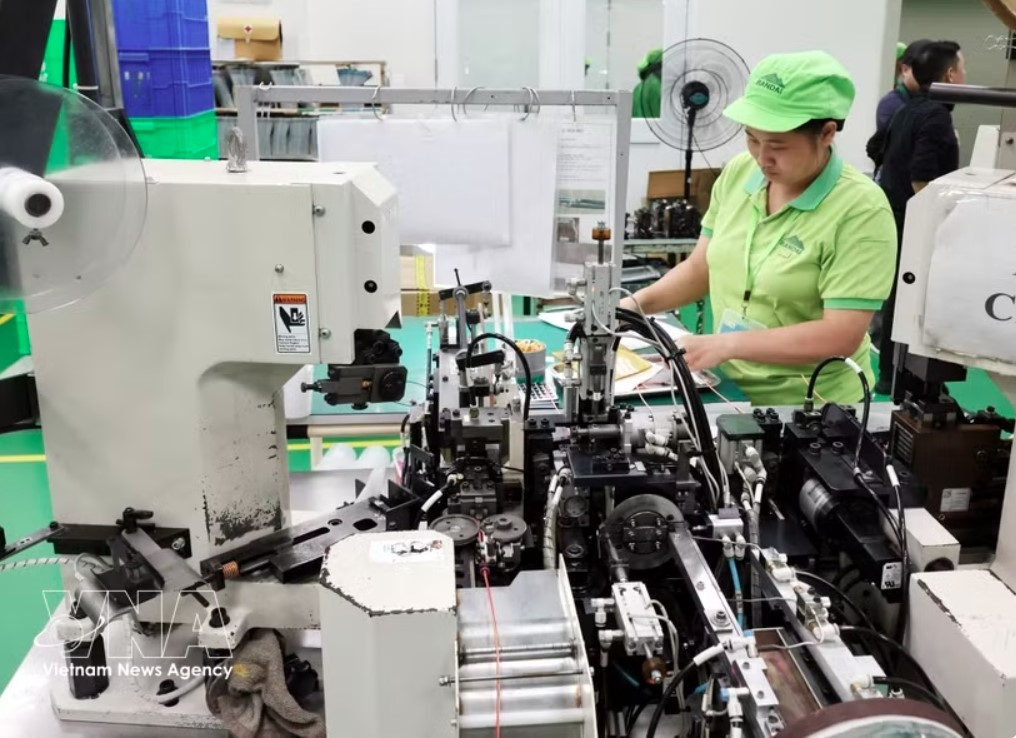
About 2,000 Japanese firms are operating in Vietnam. They concentrate in processing and manufacturing (61%), power production and distribution (15%) and real estate (12%), with a presence in 33 of the 34 cities and provinces. Ho Chi Minh City is the biggest destination, followed by Thanh Hoa, Hanoi, Hai Phong and Dong Nai.

A new survey by the Japan External Trade Organisation (JETRO) found that 56.9% of Japanese companies in Vietnam plan to expand in the next one to two years, citing higher exports, stronger domestic demand and a push to beef up sales functions.

Chief Representative of JETRO Hanoi Ozasa Haruhiko said expansion plans edge up only slightly, but Vietnam lead ASEAN for a second straight year and tops Asia and Oceania on the metric. It shows that Japanese firms still view Vietnam as a highly promising market and retain positive expectations for its investment climate and growth outlook.

Japanese registered capital during January–September rose just 4.7% year on year, below the 76.4% rise for Vietnam overall.

With US$2.65 billion in registered FDI during the nine-month period, Japan ranked seventh among 101 countries and territories investing in Vietnam, down three places year-on-year. That puts pressure on Vietnam to convert more of the relationship into high-tech projects, stronger business-to-business links and better use of potential in high technology, innovation and green transition.

Tsuchibashi Akito, Chairman of the Japan Chamber of Commerce and Industry in Vietnam, said Japanese companies invest with a long-term, decades-long partnership view. They want Vietnam to keep improving its legal framework, make policy more predictable and simplify administrative procedures.

A stable and transparent business environment, he said, will help pull in new capital, accelerate technology transfer and develop talent, bringing benefits to both sides.


Source: VNA

Latest Posts

Vietnam explores Samurai bond issuance potential at roadshow in Japan

Vietnam explores Samurai bond issuance potential at roadshow in Japan

From November 5 to 10, the Ministry of Finance organised a Non-Deal Roadshow in Japan to engage with investors. The programme took place on the sidelines of the visit by Party General Secretary and State President To Lam, following a series of investment promotion activities in the US in October.​

During the visit, the MoF delegation held a series of in-depth meetings with leading Japanese financial institutions, banks, asset management companies and insurers. The delegation also paid courtesy visits and held strategic discussions with credit rating agency Rating and Investment Information, Inc. (R&I) and the Japan Bank for International Cooperation (JBIC).

Samurai bonds and the credit rating upgrade roadmap

During the meetings, discussions focused on the Vietnamese government's international capital mobilisation plans, particularly the possibility of issuing bonds denominated in Japanese yen (Samurai bonds). Japanese investors expressed considerable interest in the potential issuance size, maturities, offering timeline and expected yields.

One key factor highlighted by Japanese investors was the role of JBIC's guarantee. JBIC's participation in providing a guarantee is regarded as an important support mechanism, helping build confidence among Japanese financial institutions considering investment, particularly in Vietnam's inaugural Samurai bond issuance.

The programme aimed to explore the feasibility of issuing Vietnamese government bonds in the Japanese market while strengthening links between Vietnam's economy and the international financial community.

Alongside the guarantee mechanism, Vietnam's roadmap for improving its sovereign credit rating towards achieving investment-grade status before 2030 also attracted considerable attention. Most investors expressed interest in maturities of three to five years, while some institutions indicated that they could consider longer maturities if an appropriate guarantee mechanism were available.

Representatives of Japanese financial institutions expressed positive assessments of Vietnam's economic resilience. Against a backdrop of persistent global geopolitical uncertainty and volatility in financial markets, Vietnam's ability to maintain stable growth demonstrates the effectiveness and flexibility of its macroeconomic policy management.

Japanese investors also examined in depth Vietnam's medium- and long-term growth drivers, including public investment, foreign direct investment inflows, processing and manufacturing industries, the private economic sector, and innovation. Emerging technology sectors such as AI, data infrastructure, and major transport and energy infrastructure projects attracted particular interest.

Other technical issues were also discussed candidly, including exchange rate management, foreign exchange reserve levels, potential impacts of US tariff policies, the recovery of the real estate market, and the safety of Vietnam's banking system.

With a focus on transparency and capital safety, Japanese investment institutions sought further clarification on Vietnam's fiscal framework, the structure of capital mobilisation sources, medium-term debt repayment obligations, and the impact of major infrastructure projects planned for 2026-2030 on borrowing requirements and public debt sustainability.

Some financial institutions also inquired about the mechanisms and potential for issuing local government bonds, particularly in major cities such as Ho Chi Minh City, where infrastructure investment needs are substantial.

R&I credit rating upgrade and JBIC commitment to support Vietnam

On November 10, 2026, the delegation held an important working session with R&I. The meeting followed a significant milestone on October 8, 2026, when R&I officially upgraded Vietnam's foreign currency issuer rating from BB+ to BBB-, with a Stable Outlook. This marked the first time Vietnam had achieved investment-grade status under R&I's assessment.

According to R&I, the upgrade objectively recognises Vietnam's strong growth potential, the government's institutional reform efforts, ample fiscal headroom, and the economy's resilience to external shocks.

The agency noted that the new BBB- rating was only a starting point and that Vietnam's credit profile could improve further if its macroeconomic fundamentals remained sound. R&I's assessment is regarded as an important reference point, or a "passport", for Japanese investors considering investment in Vietnamese bonds.

On the same day, during a meeting with JBIC, its chairman Tadashi Maeda reaffirmed the bank's commitment to continuing its partnership with the Vietnamese government and MoF.

JBIC stands ready to share practical experience in raising capital in global markets, supporting Vietnam in diversifying its funding channels, optimising financing costs and strengthening its financial risk management capacity.

The Non-Deal Roadshow (ND) in Japan showed positive interest among Japanese investors in Vietnam's economic prospects and the government's potential to access international capital markets as a sovereign bond issuer.

Through direct dialogue, Vietnam gained a clearer understanding of market requirements regarding credit ratings, guarantee mechanisms for Samurai bonds, yield expectations and appropriate maturity structures.

The NDR programme not only helped enhance information transparency but also marked further progress in Vietnam-Japan financial cooperation. It provides a foundation for researching and developing optimal capital mobilisation plans while gradually broadening Vietnam's international investor base in the years ahead.

At the economic center

At the economic center

Vietnam’s new era of development and ambitious growth targets require that the oil and gas industry evolve from its role as a traditional growth pillar.

Vietnam’s oil and gas industry does more than supply conventional fuels; it is a strategic pillar of national energy security and macro-economic stability, supporting Vietnam’s transition to a new growth model. Amid geopolitical uncertainty, an accelerating energy transition, and a technology race driven by AI, semiconductors, and data, the industry must evolve from a traditional growth pillar into a driver of innovation, green transition, and strategic autonomy.

Vietnam is entering a new phase of development, targeting double-digit economic growth as it pursues its ambition of becoming a developed country by 2045. Achieving this goal will require vast energy and raw material supplies, alongside extensive industrial infrastructure. Party resolutions on high-quality growth, the maritime economy, and national security underscore the need to safeguard energy security, placing the oil and gas industry at the center of the country’s development ambitions and efforts to strengthen economic autonomy and international integration.

Major contributions

Together with policies strengthening the leading role of major State-owned economic groups and promoting the private sector, the country’s development orientations through 2030 and vision for 2045 provide a framework for the oil and gas and energy sectors. These priorities set clear expectations for the industry and guide its contribution to Vietnam’s long-term development.

Macro-economic data and development indicators show that the oil and gas industry makes five major contributions.

First, safeguarding national energy security. The industry supplies essential fuels and energy for industrial production and transportation. It accounts for approximately 15 per cent of the country’s total electricity output, supplies 35 per cent of the gas used for power generation, meets 70-80 per cent of household gas demand, and provides up to 70 per cent of the nitrogen fertilizer required by the agriculture sector. The Nghi Son and Dung Quat refineries help ensure a stable domestic petroleum supply at competitive prices relative to regional markets.

Second, making a substantial contribution to the State budget. The Vietnam National Industry - Energy Group (Petrovietnam) consistently ranks among the largest contributors to the national budget among State-owned enterprises (SOEs), with payments totaling VND165.9 trillion ($6.38 billion). Overall, the oil and gas industry contributes approximately 9-9.2 per cent of national GDP, providing an important source of funding for development investment.

Third, driving economic growth and completing the value chain. The industry is developing an integrated ecosystem spanning upstream activities, including exploration and production; midstream operations, including the gas industry and energy infrastructure; and downstream activities, including refining and petrochemicals, gas-fired power generation, fertilizer production, and distribution. It also encompasses high-value technical services. The industry now operates in 16 countries and territories and provides stable employment for more than 50,000 people at home and abroad.

Fourth, asserting and protecting maritime sovereignty and jurisdictional rights. Oil and gas exploration and production activities extend across Vietnam’s continental shelf and exclusive economic zone, serving as “milestones at sea” that help safeguard national sovereignty and maritime security.

And fifth, taking the lead in shaping the new energy transition. The industry is proactively paving the way for greener energy sources and a more sustainable future through the development of offshore wind power, liquefied natural gas (LNG) infrastructure, green hydrogen, green ammonia, sustainable aviation fuel (SAF), and carbon capture, utilization, and storage (CCUS) technologies.

Current requirements

Despite its substantial contributions to the economy, the oil and gas industry faces an urgent need to transform its growth model. Traditionally, the industry’s value has been measured primarily by oil and gas production volumes, total revenue, and contributions to the State budget.

In the current environment, however, this approach has significant limitations. The industry must rapidly shift toward creating value across a broader range of activities, from surveying, geology, drilling, production, and processing to equipment manufacturing, technical services, digital technology applications, automation, offshore construction, and specialized services requiring advanced technical expertise.

To achieve this transformation and overcome existing challenges, the industry’s new growth model must meet five core requirements.

First, maximize the efficiency of remaining resources by optimizing exploration and production at existing and mature fields, including marginal fields, as geological conditions become increasingly complex.

Second, develop a high-technology, low-emissions energy structure by streamlining production processes, improving energy efficiency, and minimizing environmental impacts.

Third, develop an integrated energy industry ecosystem by establishing a comprehensive value chain connecting infrastructure, production, and services to generate broader economic benefits.

Fourth, contribute to the development of the maritime economy and the goal of becoming a strong maritime nation by aligning oil and gas operations with the national maritime strategy, strengthening Vietnam’s position at sea, and protecting its maritime sovereignty.

Fifth, accelerate the adoption of advanced technologies by expanding the integration of automation, predictive maintenance, and generative AI to prevent operational risks and optimize asset performance throughout its lifecycle.

Macro-economic policy directions

To enable the oil and gas industry to realize its full potential in the years ahead, policymakers need to implement five major policy priorities in a coordinated manner.

First, redirect industry development toward higher value-added activities and broader economic spillovers. The industry should move away from a growth model heavily dependent on resource extraction, production volumes, and revenue toward the integrated development of the entire oil and gas value chain. Priorities should include advanced processing, petrochemicals, technical services, support industries, and other technology-intensive sectors.

Second, strengthen national energy security to support high growth and improve resilience. Vietnam should exploit its domestic oil and gas resources rationally and efficiently while diversifying supply sources and import markets. It should also develop an integrated system of processing, transportation, storage, and distribution infrastructure. In parallel, the country needs to strengthen its capacity to forecast energy market developments, manage risks, and respond to energy price volatility and disruptions to international supply chains.

Third, improve institutions, policies, and the investment environment to unlock resources for industry development. Authorities should review and address obstacles to oil and gas projects, particularly large-scale projects involving complex technical requirements and long investment cycles. They should also consider refining investment incentives to reflect the specific characteristics of oil and gas exploration, appraisal, and production. In addition, coordination across the gas-to-power value chain must be strengthened to ensure that investment projects are developed in a synchronized and efficient manner.

Fourth, advance science and technology, innovation, and digital transformation to improve productivity, efficiency, and competitiveness. Priority should be given to researching, applying, and progressively mastering technologies for oil and gas exploration, production, processing, and facility operations. The industry should also accelerate the adoption of AI, big data, automation, and other digital technologies.

Research and technological innovation programs should be developed in response to practical industry needs, with stronger collaboration between businesses, research institutes, and universities. Developing a highly-skilled technical and technological workforce should also be a priority.

And fifth, proactively adapt to the energy transition and expand into new energy and economic sectors. The industry should leverage its existing expertise, infrastructure, and technical capabilities in surveying, design, fabrication, construction, operation, and maintenance of offshore facilities to participate in offshore wind power, offshore engineering services, and other suitable emerging energy sectors. At the same time, it should promote energy efficiency and emission reductions across oil and gas operations, ensuring a balance between economic growth, energy security, and sustainable development.

(*) Mr. Nguyen Hoa Cuong is the Deputy Director of the Institute for Policy and Strategy Studies at the Central Commission for Policy and Strategy.

Japan, Vietnam to fund six semiconductor research projects

Japan, Vietnam to fund six semiconductor research projects

Japan and Vietnam will jointly fund six semiconductor research projects, deepening science and technology cooperation between the two countries.

The Japan Science and Technology Agency (JST) and the Ministry of Science and Technology (MST) will fund the projects under the NEXUS programme, according to an announcement on November 9. JST has approved funding for six new international joint research projects under the Networked Exchange, United Strength for Stronger Partnerships between Japan and ASEAN (NEXUS) framework, covering Japan-Vietnam joint research in semiconductors.

NEXUS is a flexible, multi-layered cooperative framework built on the long history of science and technology cooperation between Japan and ASEAN. It aims to strengthen joint research between the two sides as partners in co-creating innovation.

One of its initiatives, 'International Joint Research', supports joint research between the two sides on shared priority challenges.

In collaboration with the MST, JST issued a call for proposals for international joint research projects. The call also supports initiatives to build researchers' capacity that contribute to international joint research.

Sixteen applications were submitted. After evaluation by experts from both countries and consultations between JST and MST, the two sides selected six projects for funding. The research period is planned at three and a half years.

Besides this initiative, Japan aims to train 250 Vietnamese semiconductor specialists through doctoral programmes in Japan. Both countries also intend to expand cooperation in AI research and training.


See all blog