Japanese FDI in Vietnam: From manufacturing hub to strategic capital flows
Japanese investment in Vietnam is shifting away from a factory-led model toward a long-term ecosystem spanning manufacturing, energy, industrial parks, retail, and banking-financial services.
At the invitation of Prime Minister Le Minh Hung, Japanese Prime Minister Takaichi Sanae will pay an official visit to Vietnam from May 1-3, in the context that economic cooperation continues to serve as a key pillar in bilateral relations.
For Vietnam, Japan is not only a major partner in ODA, trade, and labor cooperation, but also one of the most influential foreign investors over the past three decades.
As of March 31, 2026, Japan had 5,760 active projects in Vietnam with total registered capital of $79 billion, ranking third among the 154 countries and territories investing in Vietnam, behind South Korea and Singapore, according to data from the Vietnamese Ministry of Finance.
Compared with many other capital flows, Japanese investment typically comes with supplier ecosystems, governance standards, workforce training, and stringent operational requirements.
Manufacturing and processing - backbone of Japanese investment
For years, the manufacturing sector has been the “backbone” of Japanese capital flows into Vietnam. Major names such as Honda, Toyota, Canon, Panasonic, Nidec, Sumitomo Electric, and Meiko have helped shape key production clusters across the country’s major industrial hubs.
In the automotive and motorcycle segment, Honda Vietnam and Toyota Vietnam are the most prominent examples. Honda Vietnam has developed a large ecosystem spanning motorcycles, automobiles, dealerships, and an extensive supplier network. Toyota Vietnam has been present since 1995 in Vinh Phuc, and is widely regarded as one of the early pioneers of Vietnam’s automotive industry.
In electronics and industrial equipment, Canon, Panasonic, and Nidec have also left a significant footprint. Canon has established manufacturing facilities in Hanoi, Bac Ninh, and Hung Yen in northern Vietnam, producing printers, office equipment and components. Panasonic has invested in home appliances, electrical equipment and industrial components. Meanwhile, Nidec was among the early Japanese investors in the Saigon Hi-Tech Park in Ho Chi Minh City, focusing on motors, fans and electronic components.
This group carries significance beyond capital scale. They generate employment, develop supplier networks, raise manufacturing governance standards, and help deepen Vietnam’s integration into regional supply chains.
Energy, industrial parks and economic infrastructure
Alongside manufacturing, Japanese capital has also expanded into core infrastructure projects.
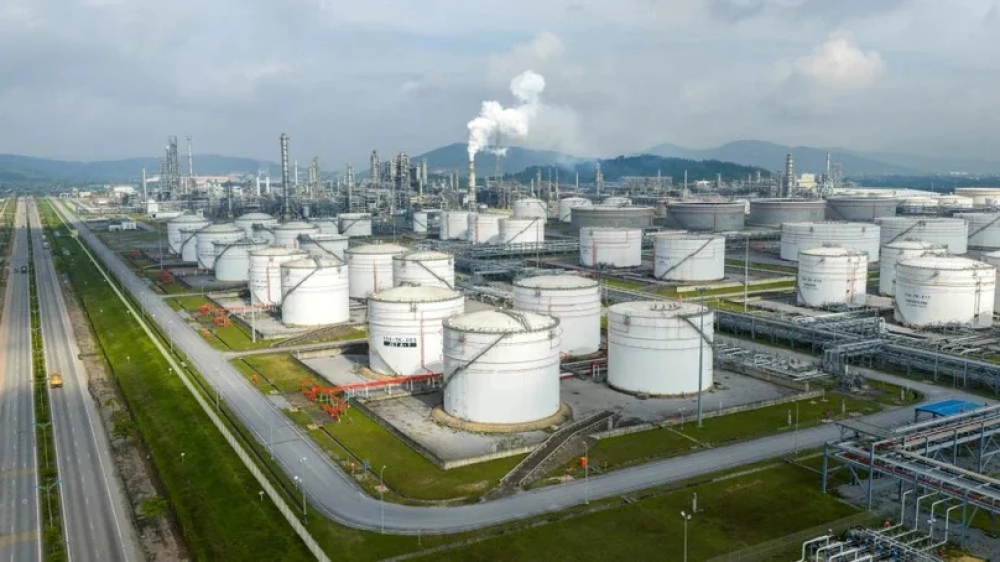
In the energy and heavy industry segment, Idemitsu Kosan and Mitsui Chemicals are associated with the Nghi Son Refinery and Petrochemical Complex in Thanh Hoa province, central Vietnam. The project includes Idemitsu Kosan holding a 35.1% stake and Mitsui Chemicals 4.7%, alongside partners Kuwait Petroleum International and state-owned energy giant Petrovietnam.
In the power sector, Marubeni Corporation is a notable investor, participating in electricity generation projects including the Nghi Son 2 BOT thermal power plant in Thanh Hoa with a capacity of 1,200 MW.
In the south-central province of Khanh Hoa, Sumitomo is the investor in the Van Phong 1 BOT thermal power plant, with an installed capacity of 1,432 MW and a net capacity of 1,320 MW. This is the largest foreign-invested project in terms of capital scale in Khanh Hoa to date.
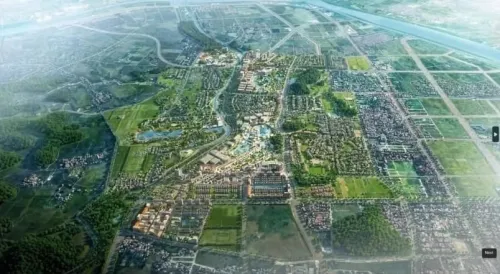
In the industrial park infrastructure segment, Sumitomo Corporation is also among the most influential investors. Its Thang Long industrial park system, spanning Hanoi, Hung Yen and Phu Tho, along with plans for expansion into Thanh Hoa, underscores its role not only as an infrastructure developer but also as a “space creator” enabling Japanese firms and supply-chain partners to establish manufacturing facilities in Vietnam.
Beyond industrial parks, Japanese trading houses such as Mitsubishi Corporation and Sojitz Corporation have also expanded their footprint into real estate, logistics, distribution, food and consumer services.
This group of investors plays a key role in linking multiple segments of the economy, spanning manufacturing and commerce, as well as infrastructure and consumption.
Strong presence in retail and financial services
A notable shift in Japanese capital flows in recent years is the expansion into domestic-demand-oriented sectors.
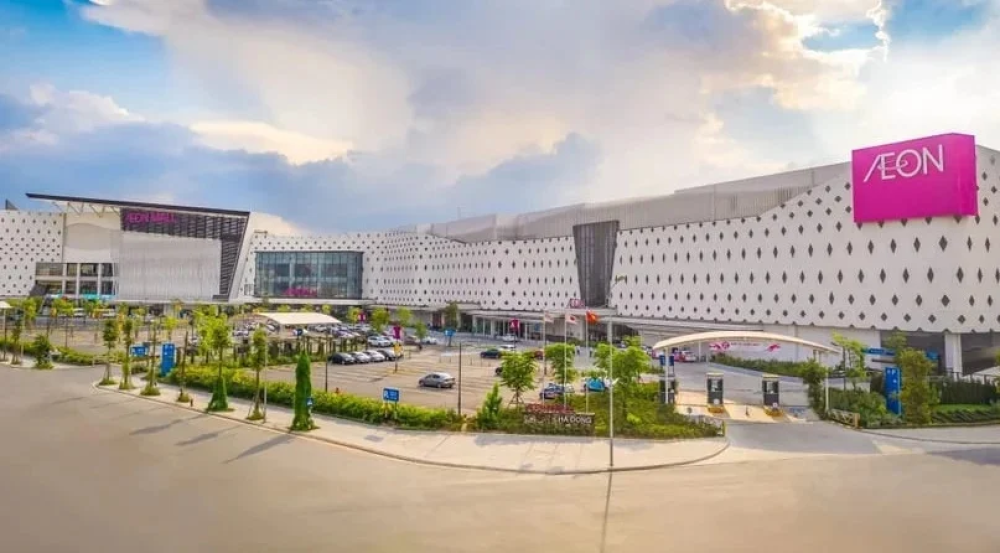
Aeon Mall is a prime example. With large-scale shopping malls in Hanoi, HCMC, Binh Duong, Hai Phong and Hue, and further expansion plans across multiple provinces, Aeon reflects long-term confidence in Vietnam’s growing middle class, rapid urbanization and rising consumer spending power.
In finance-banking, major Japanese institutions have also secured strategic positions in Vietnam. MUFG Bank is a strategic shareholder of VietinBank, one of Vietnam’s Big 4 banks, Mizuho Bank has long been closely associated with Vietcombank, also among the Big 4, while Sumitomo Mitsui Banking Corporation (SMBC) drew attention with its $1.5 billion acquisition of a 15% stake in Vietnam’s private lender VPBank in 2023.
The presence of Japanese banks is not limited to financial investment. It also serves as a key channel supporting Japanese corporate capital flows into Vietnam, providing services in trade finance, M&A advisory, corporate lending, supply-chain financing, and infrastructure project funding.
Expansion trend
The latest 2025 survey by the Japan External Trade Organization (JETRO) on Japanese companies operating overseas is a notable indicator of sentiment among Japanese businesses in Vietnam.
According to the survey, 56.9% of Japanese firms operating in Vietnam plan to expand their business over the next one to two years, above the ASEAN average of 46.8% and the 45% recorded for the broader Asia-Oceania region. Vietnam continues to lead ASEAN for the second consecutive year in the share of Japanese companies planning business expansion.
A key point is that this expansion trend is no longer driven solely by export manufacturing. Japanese companies are increasingly viewing Vietnam through a broader lens - not only as a competitive production base, but also as a consumer market, a services hub, and a link within the regional investment ecosystem.
The JETRO survey also showed that 67.5% of Japanese firms in Vietnam expect to post a profit in 2025, the highest level since 2009. The data further underscores an improving operating backdrop for Japanese businesses in Vietnam, although certain sectors continue to face pressure from competition, labor costs, and fluctuations in export demand.
From Japanese “factories” to a broader ecosystem
Viewed over a longer time horizon, Japanese FDI in Vietnam is undergoing a process of repositioning.
In the early phase, Vietnam was primarily viewed as a cost-competitive manufacturing base with abundant labor and a favorable position in Asia’s supply chains. Investment was concentrated in automobiles, motorcycles, electronics, components, machinery and office equipment, which formed the core pillars of Japanese industrial presence.
In the current phase, Vietnam is increasingly seen as an integrated hub for production, market and services. Japanese companies are no longer focused solely on manufacturing facilities, but are also investing in industrial parks, logistics, retail, financial services, food, pharmaceuticals, energy and urban development.
This shift reflects a maturing stage of bilateral investment relations, as Japanese investors expand from manufacturing into production-support services.
According to Prof. Dr. Nguyen Mai, former chairman of Vietnam's Association of Foreign Invested Enterprises (VAFIE), Vietnam remains a “promised land” for Japanese businesses and continues to stand out as a “positive outlier” in attracting FDI amid a volatile global backdrop.
However, to upgrade the quality of foreign capital inflows, Vietnam needs to step up R&D, innovation, high-quality workforce training, and reduce procedural bottlenecks in project implementation.
Against the backdrop of ongoing global supply-chain restructuring, Japan is seeking to diversify its investment destinations, while Vietnam aims to upgrade the quality of its FDI inflows.
The visit by PM Takaichi Sanae therefore carries significance beyond diplomacy, serving as an opportunity for both sides to advance a new phase of economic cooperation focused more on technology, clean energy, strategic infrastructure, high-quality human resources and sustainable supply chains.
Source: Quang Minh, Chau Anh
Photo: Photo courtesy of Thanh Nien (Young People) newspaper