Investment deal signed for $2 bln LNG power project in central Vietnam
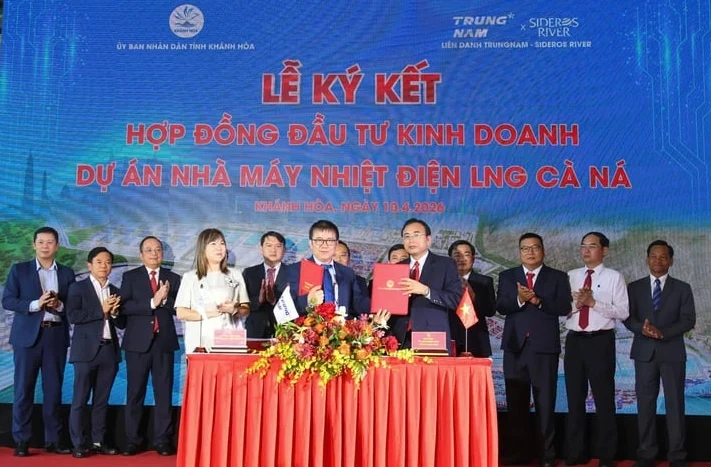
The Trung Nam-Sideros River consortium on Friday signed a business and investment contract for the VND57.4 trillion (approximately $2.18 billion) Ca Na LNG-fired thermal power plant project, unlocking new development momentum for an integrated energy-industrial complex in the south-central province of Khanh Hoa.
This marks the first LNG power project in Vietnam selected through an international bidding process under the Power Development Plan VIII (PDP VIII).
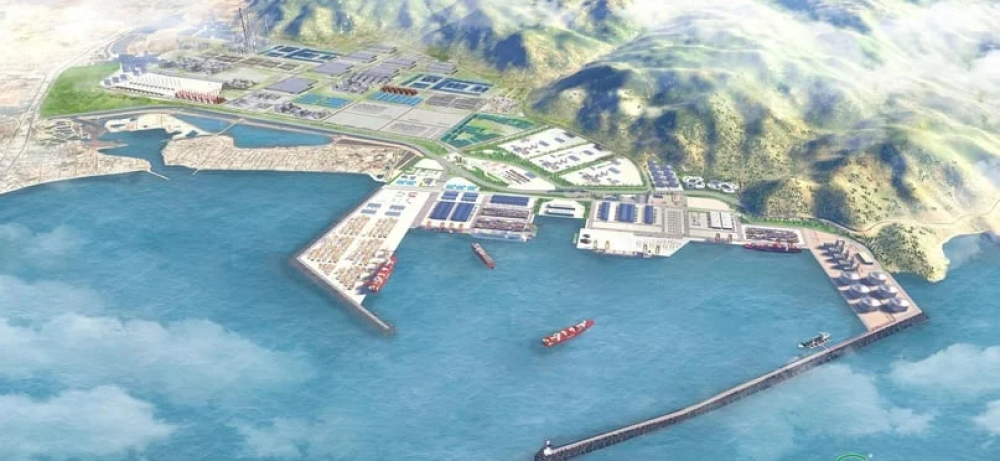
Located in the former Thuan Nam district of Ninh Thuan province (now part of Khanh Hoa following their merger last July), the project will feature a 1,500MW combined-cycle gas turbine power plant fueled by imported LNG.
Once operational in 2030, it is expected to generate around 9 billion kWh annually for the national grid.
The development also includes an LNG storage and regasification system with a capacity of 1-1.2 million tons per year, a 220,000-cubic-meter storage tank, an LNG import terminal, a 2,400-meter eastern breakwater, and other supporting infrastructure. The project spans a total area of approximately 139.76 hectares, including 28.06 hectares of land and 111.70 hectares of water surface.
Beyond power generation, the project is positioned as a foundation for developing energy-linked industries, services, and infrastructure. It is expected to expand the LNG value chain, enhance regional competitiveness, and help establish an LNG hub for central and southern Vietnam, leveraging the area’s deep-water port and stable geological conditions.
Trinh Minh Hoang, Vice Chairman of the provincial People’s Committee, said the project will provide a stable baseload power source for the south-central and Central Highlands regions, helping reduce electricity shortages and strengthen national energy security.
The project will also support Vietnam’s commitments at the 26th United Nations Climate Change Conference (COP26) to gradually phase down coal-fueled power and transition toward cleaner energy sources, he added.
For Khanh Hoa province, the project is expected to drive development of an industrial-port-energy complex in the southern area. Once operational, it will contribute significantly to the local budget, create thousands of jobs, and support a shift toward a modern, green, and sustainable economic structure.
Hoang urged the developer to mobilize financial, human, and technological resources promptly, complete investment procedures, and implement the project in a professional and timely manner in line with commitments.
Nguyen Tam Thinh, chairman of Trungnam Group, said the project represents an important step in realizing the commitment of domestic enterprises to key national and regional energy projects.
With nearly 1.6 GW of renewable energy already connected to the national grid, Trungnam continues to expand its capabilities in the energy sector, particularly LNG power development.
The company aims to reduce reliance on coal-fired power, prioritize domestic gas-fired generation, and expand LNG import capacity. It also plans to develop LNG-based projects and infrastructure at scale, with a long-term vision toward hydrogen and ammonia (NH₃) production, he noted.
In addition, the group envisions an integrated complex combining an industrial zone, an LNG power plant, and an international port, helping position energy and industry as key growth drivers of Khanh Hoa’s economy in the coming period, he added.
On the same day, Ca Na General Port JSC and the Vietnam Development Bank (VDB) signed a credit agreement for the Ca Na Wharf Complex – Phase 1, with a maximum loan of VND3 trillion ($113.9 million), to be disbursed before June 30, 2027.
The wharf complex is part of the broader Ca Na General Port project, a deep-water port capable of accommodating vessels of 300,000-500,000 tons.
Source: Nguyen Tri, Minh Hue
Photo: Photo by The Investor/Nguyen Tri