HCMC sees surge in land-related revenue as property firms pay tens of millions of US dollars
Budget revenue from land in Ho Chi Minh City has rebounded sharply as a series of real estate projects overcome legal bottlenecks and developers begin fulfilling financial obligations, according to the city’s Finance Department.
In the first four months of the year, several major property companies paid hundreds of billions to trillions of Vietnamese dong (VND1 trillion = $38 million) into the state budget, contributing significantly to the city’s fiscal revenue growth.
According to the Department of Finance, total state budget revenue in HCMC during the January-April period was estimated at over VND328.11 trillion ($12.46 billion), equivalent to more than 40% of the full-year target and up 18.8% from a year earlier. Domestic revenue reached nearly 252 trillion dong, rising more than 23% year-on-year.
Notably, land-related revenue posted a sharp increase compared with the same period last year. Revenue from land-use fees alone totaled nearly VND14.63 trillion ($555.56 million), up 84.2% from the first four months of 2025.
The finance department said the increase was driven by progress in resolving legal issues at multiple real estate projects, enabling developers to begin paying land-use fees and related financial obligations.
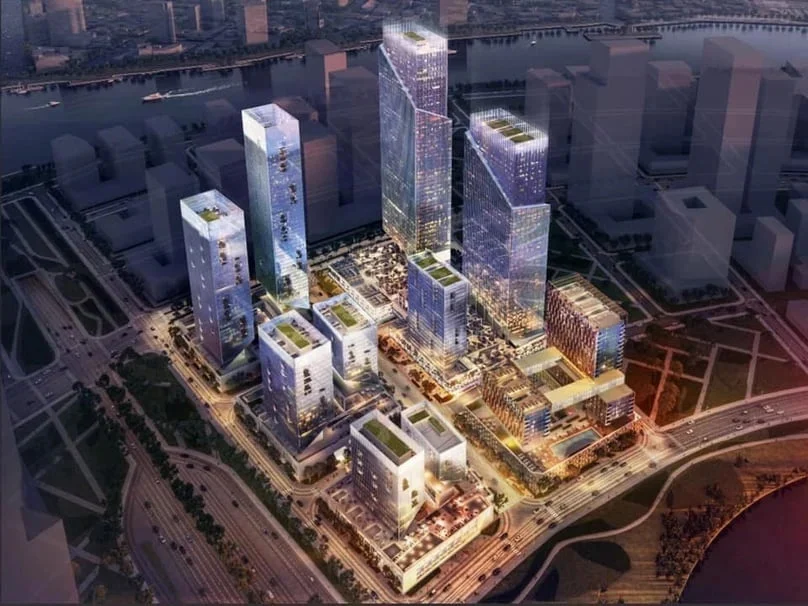
Several property developers recorded substantial budget payments in the early months of the year. Can Gio Tourism Urban JSC paid nearly VND1.89 trillion ($71.64 million), while Lotte Properties HCMC contributed approximately VND1.18 trillion ($44.82 million).
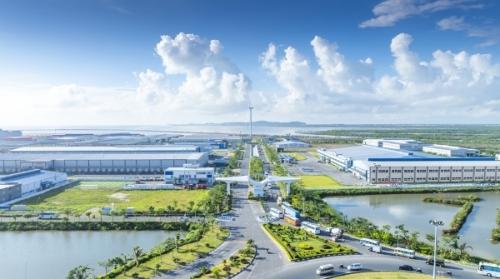
Other notable contributors included Greatree Industrial JSC with around VND870 billion ($33.05 million), Metro Star Investment JSC with VND698 billion, Nguyen Phuong Real Estate Co Ltd with VND446 billion, and Levacom Real Estate JSC with VND362 billion.
The developments suggest that HCMC’s property market is beginning to regain momentum, at least in terms of legal procedures and financial flows. After a prolonged period in which many projects were stalled due to licensing and legal hurdles, the easing of bottlenecks is generating additional revenue for the city budget.
However, land-related revenue remains below the pace targeted for the full year. Revenue from land-use fees has so far fulfilled just over 16% of the year's target, while revenue from land and water surface rental fees has reached around 9%. Registration fee collections have completed about 28% of the year's plan.
The finance department said the shortfall reflected an uneven recovery in the real estate market and the continued slow legal processing of many projects, which directly affects land-related revenue collection.
Beyond land revenue, several key sectors of Ho Chi Minh City’s economy also recorded positive growth.
Revenue from the non-state business sector reached over VND84.88 trillion ($3.22 billion), up 33.8% from a year earlier, while revenue from foreign-invested enterprises rose 21.8% to nearly VND61.78 trillion ($2.35 billion).
Corporate income tax and value-added tax remained the largest contributors to the city budget. Personal income tax revenue reached nearly VND38.9 trillion ($1.48 billion), supported by annual tax finalization activities and an increase in real estate transfer transactions.
On the other hand, the finance department noted that some revenue categories lagged targets due to government support measures for the economy. Environmental protection tax collections reached only nearly 30% of the year's target after continued tax cuts on gasoline and aviation fuel.
Local budget expenditure in the first four months of the year rose nearly 29% year-on-year to around VND53.9 trillion ($2.05 billion). However, public investment disbursement remained slow, reaching only about 15% of the 2026 capital plan.
Authorities attributed the delay to this year being the first year of implementing a new medium-term public investment plan, with many projects still in the preparation phase, including design completion and contractor selection.
Challenges related to land clearance, relocation of technical infrastructure and volatility in construction material prices have also continued to weigh on disbursement progress.
In the second quarter, state budget revenue in HCMC is projected to exceed VND209 trillion ($7.94 billion). If current growth momentum is maintained, cumulative revenue in the first half of the year could surpass VND457 trillion ($17.36 billion), equivalent to nearly 57% of the full-year target.
Source: Vu Pham, Thai Ha
Photo: Photo courtesy of Lotte Group