Lumen Vietnam Fund

Blog

HCM City to break ground on seven major projects worth over VND380 trillion on April 30

HCM City to break ground on seven major projects worth over VND380 trillion on April 30

VOV.VN - Ho Chi Minh City plans to break ground on seven major projects with a combined investment of over VND380 trillion (about US$14.5 billion) on April 30, 2026, marking Reunification Day, expected to boost infrastructure, accelerate public investment and support economic growth in the next period.

Speaking at a meeting of the Executive Committee of the municipal People’s Committee Party Committee for the 2025-2030 term on April 10, Nguyen Thanh Toan, Deputy Director of the city’s Department of Finance, said relevant departments, agencies, localities and investors are working to shorten procedures as much as possible while ensuring compliance with current regulations, with the goal of meeting conditions to start construction on schedule.

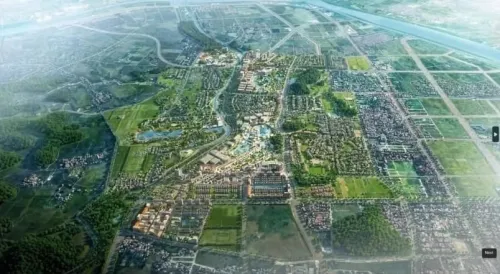
The projects include a central square and administrative center in Thu Thiem New Urban Area, a riverside park at Ben Nha Rong-Khanh Hoi, a rail line linking Ben Thanh and Thu Thiem, an urban expressway connecting Ho Tram and Long Thanh International Airport, an international university urban area in Hoc Mon, and major port projects in Cai Mep Ha and Can Gio. These projects are expected to contribute to the city’s development and have been closely directed by the municipal Party Committee and People’s Committee.
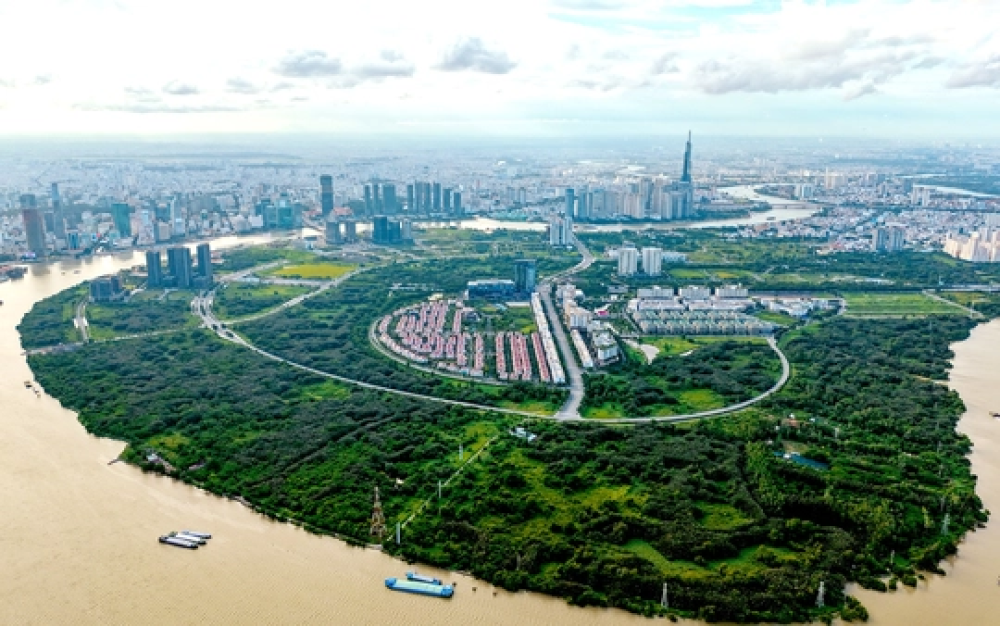
He added that special mechanisms under National Assembly Resolution 260 have been effectively applied to the first major projects in the city. Following the Rach Chiec Sports Complex, the Thu Thiem central square and administrative center project will continue to be implemented, thus contributing to urban renewal, the development of a modern central area, improved public administration and better services for residents and businesses.

The Ben Nha Rong-Khanh Hoi riverside park project is of particular significance, as it is linked to historical and cultural education and commemorating President Ho Chi Minh’s revolutionary activities. The project is expected to be completed by National Day on September 2, 2026.

Nguyen Thanh Toan said accelerating preparations and launching these projects simultaneously has significant political meaning and helps mobilize social resources, accelerate public investment disbursement, stimulate private investment and create strong spillover effects for Ho Chi Minh City’s economic growth in 2026 and the following years.

Source: VOV
Latest Posts

Q3 eyed as active time for real-estate M&A

Q3 eyed as active time for real-estate M&A

The period of August–September 2026 is projected to witness heightened merger and acquisition (M&A) activity in the real-estate market, driven by enterprises accumulating sufficient resources, favourable site inspection conditions, and accelerated year-end disbursement schedules, experts said.

HCM CITY — The period of August–September 2026 is projected to witness heightened merger and acquisition (M&A) activity in the real-estate market, driven by enterprises accumulating sufficient resources, favourable site inspection conditions, and accelerated year-end disbursement schedules, experts said.

"Việt Nam's industrial market is transitioning to a higher-quality supply development phase, where professional management and operation services and supporting ecosystems become key factors. This trend will see logistics continue as an important driver leading M&A activity in satellite cities in 2026," said Tạ Mỹ Bách, director of capital markets, JLL Vietnam.

He further elaborated that market sentiment during the August-September period could receive a boost from the anticipated FTSE Russell review for the upgrade of Việt Nam's stock market in the third quarter of 2026.

In the outlook towards the 2026–30 period, the market is poised to continue competing based on product and service quality. M&A activities are likely to play a significant role in portfolio restructuring and enhancing supply quality, with industrial land rental prices projected to grow by 5–6 per cent annually over the next five years. With a stable macro-economic foundation, ongoing improvements in infrastructure connectivity, and sustained positive FDI inflows, logistics is positioned to be one of the core segments of Việt Nam's industrial real estate in the upcoming period.

JLL suggests that to advance in attracting foreign investment and promoting the M&A market in 2026, comprehensive attention is needed towards addressing three groups of legal challenges.

First is the inconsistency in policy implementation across localities, leading to "same law, different interpretations," particularly challenging for logistics projects spanning multiple provinces.

Second is administrative processing efficiency and transparency levels, as many promising projects remain delayed awaiting guidance documents or insufficient coordination among agencies regarding land, planning, environment, and transportation; applying a "single electronic window" mechanism with specific processing time commitments could significantly improve progress.

Lastly, there is a neccesity to complete the M&A legal framework, including regulations on equity transfers, land use rights in joint venture projects, and dispute resolution mechanisms; simplifying procedures and shortening approval times will create more favourable conditions for large-scale transactions.

The real estate M&A market in Việt Nam recorded significant progress in 2025, with the total transaction value reaching approximately US$2.5 billion. This development reflects advancements in legal and planning procedures, along with more effective coordination among market participants.

Capital flows continue to prioritise projects with clear legal statuses, approved land banks, and defined development roadmaps. Domestic investors lead in transaction frequency across small- and mid-sized deals, while foreign investors focus on strategic assets in integrated townships, high-end residential areas, and industrial real estate segments.

According to JLL's observations, three factors supporting M&A capital flows into logistics are continued demand growth from e-commerce and distribution sectors, placing higher requirements on modern warehousing and goods processing centres; rising land costs in established industrial zones, while modern logistics models require larger land banks, leading to expansion trends toward satellite areas; simultaneously, increasingly high operational standards regarding technology, automation, and ESG practices are driving asset quality upgrades and portfolio restructuring.

Within the industrial real estate sector, logistics remains the primary driver of M&A activity, aligned with the trend of expansion into satellite areas. In the South, infrastructure projects including Long Thành Airport, Ring Road 3, Metro Line 2, and Phú Mỹ Bridge 2 are expanding capacity for large-scale logistics centres.

In the North, inter-provincial connectivity is being strengthened through Capital Region Ring Road 4, sections of the North-South Expressway East connecting Ninh Bình – Hải Phòng – Quảng Ninh, and projects enhancing access to Lạch Huyện Port and key expressways, thereby improving supply chain linkages among industrial clusters.

According to JLL's Q4 2025 report, the logistics market scale is recorded as follows: ready-built factory space in key provinces in the North and South reached 4,067,000sq.m and 5,720,000sq.m, respectively; meanwhile, ready-built warehouse supply in the South reached 2,410,000sq.m and in the North reached 2,043,000sq.m. Average occupancy rates remain above 80 per cent, with average gross asking rents around $5 per one square metre per month. The North leads in new supply in 2025 and is expected to experience strong growth in 2026, with active participation from major market developers.

In the context of implemented FDI maintaining record highs at $27.6 billion, foreign investors, particularly from South Korea, Singapore, Japan, and the United States, continue to apply multi-dimensional due diligence with a focus on credibility and execution capability.

Vietnam’s registered FDI rebounds on back of mega investments in semiconductor, LNG power

Vietnam’s registered FDI rebounds on back of mega investments in semiconductor, LNG power

Two newly registered projects with combined investment capital of more than $6.2 billion in March helped reverse the downward trend of foreign direct investment (FDI) into Vietnam after two consecutive months of decline.

In the first quarter of 2026, total registered FDI rebounded strongly, driven largely by substantial inflows from Singapore and South Korea.

It was $15.2 billion, up 42.9% year-on-year. This marks a sharp turnaround from a 40.6% drop in January and a 12.6% decline in February, according to the Foreign Investment Agency (FIA).

At the General Statistics Office's calculations, registered capital comprises capital for newly-registered projects, additional capital for existing projects, and capital for stake acquisitions.

The most prominent newly registered project in March was the Samsung Vietnam Semiconductor project, developed by Singapore-based Samsung Semiconductor Asia Holdings. Located in the northern province of Thai Nguyen, the project focuses on semiconductor packaging and testing, with total registered capital exceeding $4 billion.

Another major investment was the Quynh Lap LNG power plant project in the central province of Nghe An, with total capital of more than $2.2 billion. The project, invested by a consortium including PV Power, Nghe An Sugar Co., Ltd, and South Korea’s SK Innovation, will generate electricity from LNG and include LNG storage facilities.

Together, these two projects accounted for more than two-thirds of total FDI registered in March.

The Samsung Vietnam Semiconductor project also lifted total newly registered and adjusted FDI in Thai Nguyen to $5.72 billion in the first quarter, keeping the province at the top nationwide.

Thanks largely to this investment, Singapore overtook South Korea to become Vietnam’s largest foreign investor in Q1, with $5.32 billion compared to $3.68 billion.

Earlier, in February, Thai Nguyen licensed another major project - Samsung Electro-Mechanics Vietnam No. 2 worth $1.2 billion, focused on high-end electronic circuit board production.

With these large-scale projects, Singapore and South Korea widened their gap with the remaining 66 countries and territories investing in Vietnam during Q1. These two countries alone accounted for two-thirds of total newly registered and adjusted capital.

Caution persists despite strong inflows

Despite the surge, the FIA noted that the global investment climate in Q1 remained challenging, shaped by sluggish economic recovery, volatile trade policies, prolonged geopolitical risks, and growing economic fragmentation - all of which continue to weigh on investment decisions by multinational corporations.

Within this context, Vietnam recorded increases across all FDI indicators, including new registrations, capital adjustments, share purchases, and disbursed capital, which exceeded $5.4 billion, up 9.1% year-on-year. Rising disbursement is seen as a positive sign, reinforcing the FDI sector’s role in supporting production, exports, and economic growth.

“The continued attraction of large-scale, high-tech projects points to improving FDI quality,” the FIA said, noting that the Samsung Vietnam Semiconductor project highlights Vietnam’s growing appeal in high-tech and semiconductor segments with higher value-added potential.

However, the agency cautioned that the strong 42.9% increase in registered capital should be interpreted carefully, as it was largely driven by a handful of major projects.

Excluding these two projects, overall FDI growth in Q1 would have been lower year-on-year, suggesting that the broader investment landscape has yet to show a strong, widespread recovery.

This underscores Vietnam’s continued reliance on large-scale investments, while most projects remain small to medium in size. It also reflects a more cautious, step-by-step approach by investors compared to previous periods.

The FIA further noted that 251 projects registered capital adjustments in Q1, down 37.3% year-on-year, with additional capital totaling more than $2.3 billion, a decline of 55.1%.

“The drop in adjusted capital indicates that existing FDI enterprises are taking a more cautious stance on expansion in the short term, particularly amid global economic uncertainty,” the agency said.

Overall, Vietnam’s FDI landscape in Q1 shows encouraging but uneven progress. While the country continues to attract new investment, especially in manufacturing, high-tech industries, and energy, the decline in adjusted capital and reliance on a few mega-projects suggest that investor sentiment remains cautious and broad-based expansion has yet to fully materialize.


Gov't proposes $315b public investment for 2026–2030

Gov't proposes $315b public investment for 2026–2030

The 2021–2025 medium-term public investment plan has fulfilled and surpassed all five targets.

HÀ NỘI — The Government has proposed a total of around VNĐ8.22 quadrillion (US$315 billion) in public investment for the 2026–2030 period, prioritising strategic infrastructure, regional connectivity, and key development programmes.

Minister of Finance Ngô Văn Tuấn, on behalf of the Prime Minister, presented the medium-term public investment plan for 2026–2030 to the 16th National Assembly's first session on Thursday afternoon.

The 2021–2025 medium-term public investment plan had fulfilled and surpassed all five targets, said the minister.

Total public investment for the period reached VNĐ2.87 quadrillion. The Government allocated central budget funds to 4,652 projects, roughly halving the number compared to the previous period, thereby streamlining the project portfolio and reducing fragmented investment.

Total disbursement is estimated at VNĐ3.02 quadrillion, focusing on the implementation of major national and strategic infrastructure projects. The significant reduction in centrally-funded projects has contributed to improved investment efficiency.

However, several shortcomings remain. Project preparation quality in some cases has been inadequate, leading to repeated adjustments and delays. Implementation at certain ministries and localities has been inconsistent and at times ineffective.

Slow disbursement persists, particularly for ODA-funded projects and national target programmes. In some localities, budget allocation remains dispersed. Although the incremental capital-output ratio (ICOR) has declined compared to the previous period, it remains at 6.4 per cent, while mobilisation of non-state resources has fallen short of expectations.

For the 2026–2030 period, the Government has developed the public investment plan based on conclusions of the Party Central Committee, the Politburo, and the National Assembly, setting out five specific objectives and eight key groups of solutions.

Total public investment is projected at VNĐ8.22 quadrillion, including approximately VNĐ3.8 quadrillion from the central budget and VNĐ4.42 quadrillion from local budgets.

The Government also aims to reduce the number of projects by at least 30 per cent compared to the previous period, strengthen fiscal discipline, and enhance coordination between public and private investment, thereby further reducing the ICOR.

To implement the plan, the Government has outlined several solutions, including improving the efficiency-based management of public investment, refining institutional frameworks, and strengthening accountability of leaders throughout the entire investment process from project selection and preparation to disbursement and settlement.

At the same time, efforts will be made to mobilise private sector resources through public-private partnerships (PPP), foreign funding, and contributions from businesses and citizens, combined with the state budget to implement large-scale projects.

A new approach under consideration is the rolling planning method for public investment, which would enhance flexibility and enable more proactive responses to domestic and international developments.


See all blog