Lumen Vietnam Fund

Blog

HCM City forms advisory board for international financial centre

HCM City forms advisory board for international financial centre

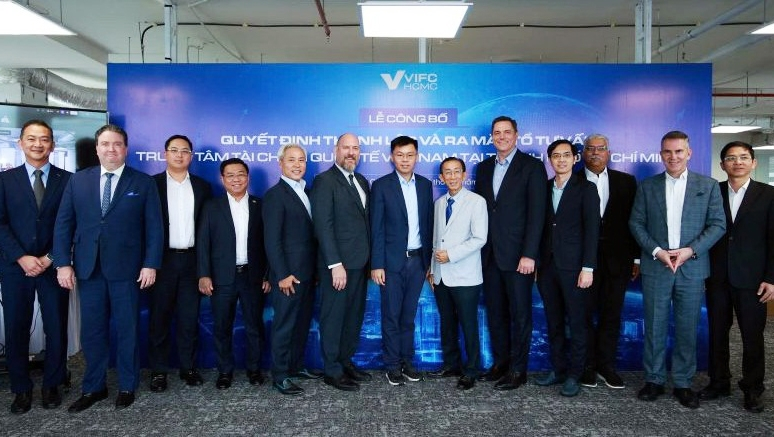
VOV.VN - The Vietnam International Financial Centre in Ho Chi Minh City (VIFC-HCMC) on July 12 announced the establishment of an advisory board to provide strategic policy recommendations and professional expertise for the development of the country's international financial centre.

The 13-member advisory board comprises leading Vietnamese and international experts with extensive experience in finance, investment, public policy and the management of major global financial centres.

Associate Professor Dr. Tran Hoang Ngan, a National Assembly deputy and chairman of the Advisory Council for Breakthrough Development at Saigon University, has been appointed head of the advisory board.

The board includes several internationally recognized experts who have held senior positions at global financial institutions and international financial centres.

Among them is Philip Rösler, former Vice Chancellor of Germany and former Managing Director of the World Economic Forum (WEF). He will contribute expertise in international strategic cooperation, digital assets, aviation finance and investor engagement.

Former US Ambassador to Vietnam Marc Knapper has also joined the advisory board, bringing extensive experience in diplomacy, trade, investment, Vietnam-US relations, energy, education and international cooperation.

The advisory board also brings together several prominent figures from leading international financial centres and institutions, including Stephen Glynn, former Chief Executive Officer of the Astana Financial Services Authority (AFSA) and former Head of Enforcement at the Dubai Financial Services Authority (DFSA); Jeff Singer, former Chief Executive Officer of the Dubai International Financial Centre (DIFC); and Bhaskar Dasgupta, former Chief Market Infrastructure Officer at the Abu Dhabi Global Market (ADGM).

The advisory board also includes Jochen Biedermann, Chief Executive Officer of the World Alliance of International Financial Centers (WAIFC), as well as Don Lam, Founder and Chief Executive Officer of VinaCapital, representing the investment and financial technology sectors.

They are joined by some Vietnamese members, such as Professor Dr. Nguyen Khac Quoc Bao, Vice President of the University of Economics Ho Chi Minh City (UEH), and Associate Professor Dr. Hoang Cong Gia Khanh, President of the University of Economics and Law.

The advisory board will support research, provide policy advice and recommend strategic directions throughout the development of Vietnam's international financial centre in Ho Chi Minh City.

According to the VIFC-HCMC governing body, establishing the advisory board marks an important step toward strengthening the project's professional foundation and improving policy formulation as Vietnam moves forward with building a new-generation international financial centre.


Source: VOV

Photo: VIFC-HCMC
Latest Posts

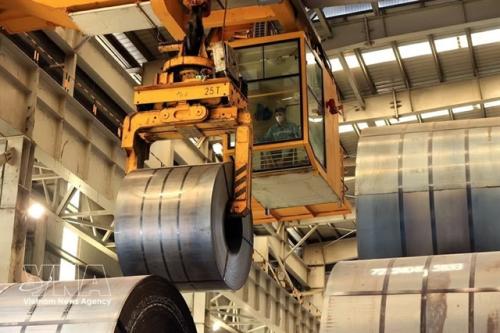
Vietnamese steelmakers find growth momentum despite export challenges

Vietnamese steelmakers find growth momentum despite export challenges

According to the Vietnam Steel Association (VSA), crude steel production hit an estimated 14.8 million tonnes in the first half, a 21.2 per cent year-on-year jump, while steel consumption climbed 13.1 per cent to about 17.9 million tonnes, providing a sturdy base for growth.

HÀ NỘI — Vietnamese steelmakers are contending with a triple blow of mounting trade barriers, tougher green production mandates and persistent global market turbulence.

A manufacturing rebound, public investment-led domestic demand and a drive to sharpen competitiveness are nonetheless giving the industry space to sustain its growth trajectory.

Steel exports have been under pressure since the start of the year as chronic global overcapacity keeps fueling protectionism in key markets.

The US has slapped duties as high as 50 per cent on some steel products under the Trade Expansion Act’s Section 232, while Việt Nam remains a frequent target of trade remedy probes and tighter rules on origin, quality and technical standards.

As a result, Vietnamese mills are now grappling not just with market share erosion but mounting pressure to bolster compliance paperwork, tighten supply chain management and raise their ability to meet customer requirements. Simultaneously, greenhouse gas reduction mandates and the Carbon Border Adjustment Mechanism (CBAM) have become essential for entry into major export markets.

The squeeze is especially acute as steel is among the sectors covered by the European Union’s CBAM. Failing to overhaul production technology, clamp down on emissions and deliver transparent carbon reporting could strip the industry of its competitive edge in its traditional high-value export destinations.

The industry is also exposed to wild swings in imported raw materials such as iron ore and scrap steel. Continued volatility in input costs, freight and exchange rates, and geopolitical risks could materially dent production efficiency and earnings.

Deputy General Director of Vietnam Steel Corporation (VNSteel) Phạm Công Thảo said the 2026 outlook remains positive, propped up by steady domestic demand. VNSteel is targeting aggressive growth while maintaining its industry-leading role and contributing to the country’s double-digit economic expansion goal.

To do that, VNSteel is channeling investment into quality steel products to gradually displace imports, particularly those serving national defence-security and strategic industrial segments where domestic involvement is still thin.

It is also tightening corporate governance and wringing maximum value from internal resources under the Politburo’s Resolution 79-NQ/TW on State-owned economic sector development, while driving targeted investment to lift productivity, quality and business efficiency.

According to the Vietnam Steel Association (VSA), crude steel production hit an estimated 14.8 million tonnes in the first half, a 21.2 per cent year-on-year jump, while steel consumption climbed 13.1 per cent to about 17.9 million tonnes, providing a sturdy base for growth.

Exports, however, totalled just 1.79 million tonnes, down 4.8 per cent from a year earlier, underscoring uneven global demand, fluctuating steel prices and an ever-tightening web of trade restrictions.

Forging a green-fueled expansion

The VSA forecast that Việt Nam's crude steel output could reach 27 million tonnes in 2026, up 10 per cent year-on-year. Finished steel production is projected at 33 million tonnes, with domestic consumption of 28 million tonnes and exports of six million tonnes. Steel imports are expected to decline, signaling an improved domestic production capacity and the growing bite of market management and trade remedy measures.

VSA Chairman Nghiêm Xuân Đa said the industry must fortify the domestic market against cheap, low-quality imports and unfair competition. He called for tighter quality control rules for imported steel, including mandatory compliance with Vietnamese standards before products can reach the domestic market, to level the playing field.

Steelmakers must also fast-track their green transition and digital transformation, pouring capital into energy-efficient technology, resource optimisation and emissions cuts.

At the same time, they need rigorous adherence to rules of origin and greater transparency across raw material sourcing and supply chains to dodge anti-circumvention trade probes and burnish their reputation in export markets.

On the policy front, the State should beef up early warning systems and market forecasting while giving enterprises more firepower to fight trade remedy cases. It must keep upgrading technical standards and steel product regulations and roll out stable, long-term investment policies consistent with Việt Nam’s international commitments.

Speaking at a recent conference on supercharging exports to achieve double-digit growth, Minister of Industry and Trade Lê Mạnh Hùng said the ministry would continue reviewing regulations and consulting enterprises and industry associations to further slash red tape, cut costs and smooth the path for production and trade.

It will redouble efforts to squeeze maximum advantage from free trade agreements, fuel sustainable export growth and reinforce trade remedy early warning for firms.

At the same time, it will work hand-in-hand with ministries and agencies to unpick market obstacles, ignite industrial development, raise localisation rates and build more resilient, self-reliant domestic supply chains, thus sharpening the international competitiveness of Vietnamese goods, he added.​


HCMC: Apartments nearly sold out, affordable homes still in short supply

HCMC: Apartments nearly sold out, affordable homes still in short supply

Despite the apartment absorption rate exceeding 99% in Ho Chi Minh City, a growing imbalance between high-end supply and demand for affordable homes continues to price many buyers out of the market, said Le Huyen Trang, country head at real estate consultancy JLL Vietnam.

Apartment prices rise 10%, affordable housing remains scarce

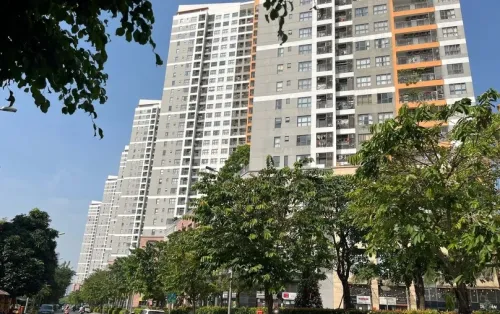
According to JLL's data for the first half of 2026, about 3,000 new apartment units were offered for sale in HCMC, bringing the cumulative housing supply to nearly 342,300 units.

The eastern part of the city continued to lead the market, accounting for 70% of new supply, with 43.2% of the new supply classified as high-end.

The market recorded around 3,600 successful transactions, with the cumulative absorption rate remaining above 99.3%. The average primary selling price in the second quarter of 2026 reached VND98.1 million ($3,735) per square meter, representing a 10.5% increase compared to the same period last year.

According to Trang, these figures indicate that the market is not lacking demand but rather products that match the affordability of the majority of buyers. New supply continues to be heavily concentrated on the premium segment, while most genuine homebuyers are seeking mid-range or more affordable housing options.

This has resulted in a clear mismatch between supply and demand. Housing prices continue to rise despite higher interest rates, largely because input costs, particularly land recovery costs, now account for an increasingly significant share of total project development expenses.

Nevertheless, the JLL Vietnam leader noted that buyer sentiment has changed considerably. While many buyers previously entered the market expecting rapid price appreciation, financially capable purchasers are now becoming more selective, prioritizing projects with clear legal status, strong infrastructure connectivity, high construction quality, and long-term value retention.

As a result, real estate is increasingly viewed as a safe-haven asset for capital preservation rather than a vehicle for short-term speculation.

Investors changing preferences

On the other hand, continuously rising home prices are prompting more young families to consider long-term renting as a viable housing option. According to Trang, this trend could create significant opportunities for the development of a professional rental housing market, particularly if supportive policies on land use and development costs are introduced.

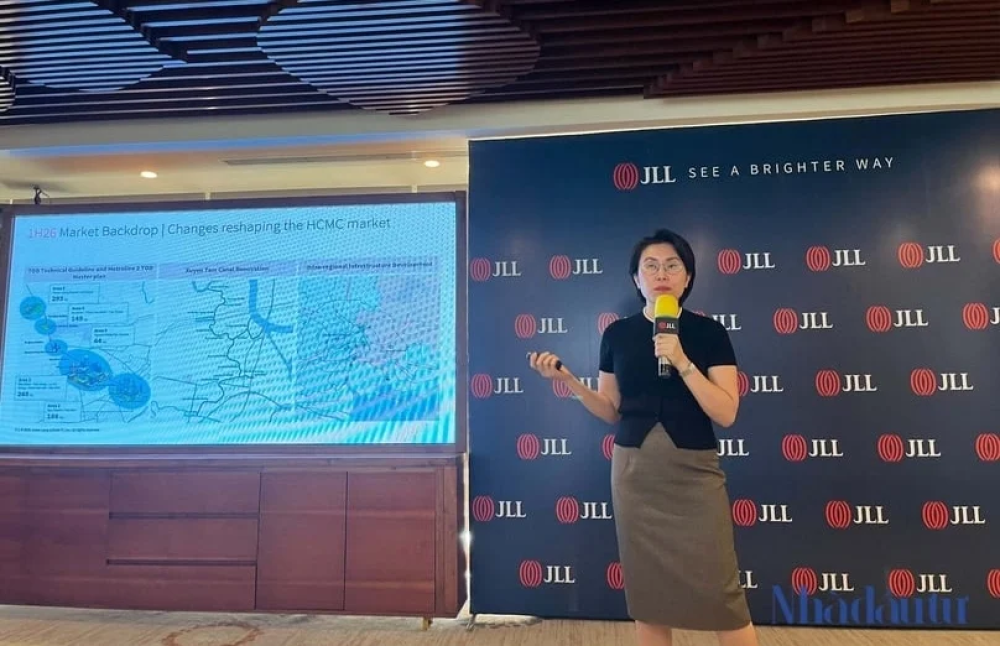
Le Thi Huyen Trang, country head at JLL Vietnam, at a press briefing on July 8, 2026. Photo by The Investor/Dang Kiet.

One potential solution is a policy-supported rental housing model similar to the R4 land scheme of China, where land designated for rental housing is priced significantly lower than land allocated for permanent homeownership. This helps reduce development costs and enables developers to provide more affordable housing.

Looking ahead, Trang believed that infrastructure expansion and transit-oriented development (TOD) will be key to addressing HCMC’s housing challenges. As metro lines, Ring Road 3, and major regional transport corridors are completed, the city's urban footprint will expand beyond the traditional downtown core, creating new growth centers.

According to her, future market growth will no longer be concentrated solely in the traditional central areas but will increasingly spread to those supported by metro networks, logistics corridors, and large-scale regional infrastructure projects. This is expected to enhance the liquidity of suburban residential developments, which generally offer more affordable pricing.

"For investors and developers, this is the time to look beyond the boundaries of the city center and seize long-term growth opportunities across Ho Chi Minh City and the Southern Key Economic Region," she concluded.

Suntory PepsiCo opens $300mln beverage plant in Tay Ninh

Suntory PepsiCo opens $300mln beverage plant in Tay Ninh

The new plant is among the largest production facilities within the Suntory and PepsiCo network in Asia in terms of manufacturing capacity.

Suntory PepsiCo Vietnam Beverage Co., Ltd. on July 10 officially inaugurated its new manufacturing plant at Huu Thanh Industrial Park in southern Tay Ninh Province, marking a major expansion of the company's production network in Vietnam.

The new facility is the sixth factory operated by Suntory PepsiCo in the country, joining existing plants in Bac Ninh, Quang Nam, Dong Nai, Ho Chi Minh City and Can Tho.

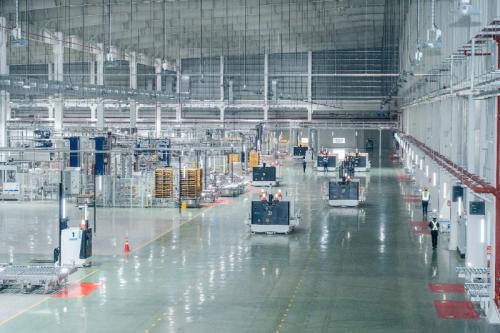
Built on a 20-ha site with a planned investment of $300 million, the Tay Ninh facility is the company's largest and most advanced manufacturing plant in Vietnam. It is also among the largest production facilities within the Suntory and PepsiCo network in Asia in terms of manufacturing capacity.

The plant has a designed annual production capacity of approximately 1.244 billion liters of beverages and is expected to generate around 3,000 jobs across the local supply chain, contributing to regional economic development.


See all blog