Lumen Vietnam Fund

Blog

General Secretary, President To Lam begins official visit to the EU and Belgium

General Secretary, President To Lam begins official visit to the EU and Belgium

The visit aims to further strengthen cooperative relations with key partners in Europe.

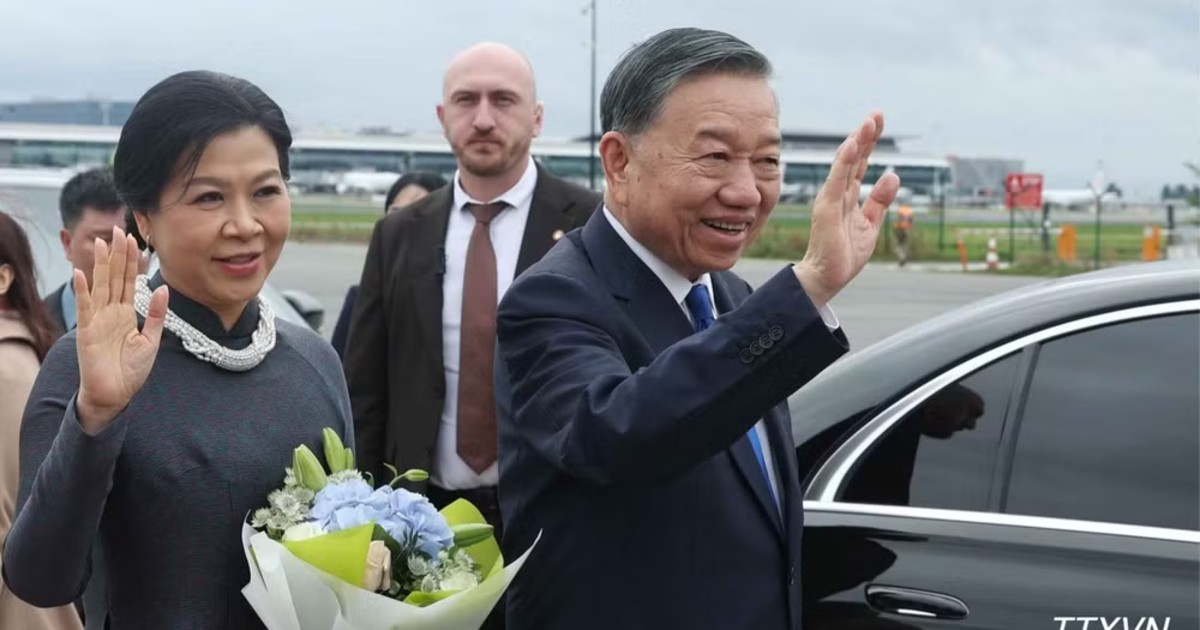
General Secretary of the Communist Party of Vietnam Central Committee and President To Lam, his spouse, and a high-ranking Vietnamese delegation, arrived in Brussels on October 21 afternoon (local time), marking the start of an official visit to the European Union (EU) and the Kingdom of Belgium, at the invitation of European Council President António Costa and Belgian Prime Minister Bart De Wever.

According to the Vietnam News Agency, the top Vietnamese leader, his spouse and the delegation were welcomed at Melsbroek Military Airport by First Vice President of the Belgian Senate Andries Gryffroy; Belgian Ambassador to Vietnam Pieter Leenknegt; Vietnamese Ambassador to Belgium and Head of the Vietnamese Delegation to the EU Nguyen Huong Tra, among others.

The visit aims to further strengthen cooperative relations with key partners in Europe.

The visit takes place in the context of the ongoing deepening of Vietnam-EU relations. Since establishing diplomatic relations in 1990, both sides have gradually expanded cooperation in various fields. The Vietnam-EU Framework Agreement on Comprehensive Partnership and Cooperation, effective since 2016, provides an important political and legal framework for bilateral relations.

In January 2026, Vietnam and the EU upgraded their relationship to a comprehensive strategic partnership, opening opportunities to enhance cooperation in economics, trade, green transition, energy, innovation, security, and regional and international issues.

Regarding the Kingdom of Belgium, more than 50 years since establishing diplomatic relations in 1973, bilateral cooperation has been continuously strengthened in political, trade, agriculture, education, science and technology, and development cooperation. The two countries also actively coordinate in multilateral forums.

The visit reaffirms the importance of the EU and Belgium in Vietnam's foreign policy and international integration; it contributes to strengthening political trust, promoting the realization of high-level commitments, and advancing cooperative relations to a new stage of development.

Leveraging overseas resources, promoting knowledge and investment connections

On the same afternoon in Brussels, General Secretary and President To Lam, along with his spouse and the delegation, met with staff and employees of the Vietnamese representative agencies in Belgium and representatives of the Vietnamese community in Europe.

During the meeting, Ambassador Nguyen Huong Tra reported that the community of approximately 1.5 million Vietnamese in Europe is increasingly stable, deeply integrated, holds a position in the host countries, and always looks towards their homeland.

Associations, particularly the Union of Vietnamese Associations in Europe, have played a role in connecting the community, preserving cultural identity, and promoting friendly relations between Vietnam and European countries.

Representatives of the overseas Vietnamese expressed their desire to contribute more practically to the country's development, especially through connecting knowledge, technology, capital, and international networks with domestic projects. They also requested more attention to preserving the Vietnamese language and culture for the younger generation born abroad.

In his remarks at the meeting, General Secretary and President To Lam acknowledged and highly appreciated the contributions of the Vietnamese community in Europe to the country and the host society, particularly in business, science, technology, education, and culture.

He emphasized that in the new development phase, Vietnam needs to combine internal strength with international resources, promoting the great unity of the entire nation, including over 100 million compatriots in the country and 6.5 million Vietnamese living, studying, and working abroad.

Regarding Resolution No. 23-NQ/TW of the Politburo on the work of overseas Vietnamese, General Secretary and President To Lam affirmed that the Party and State will continue to improve institutions, mechanisms, and policies in a comprehensive, open, and breakthrough manner, creating conditions for overseas Vietnamese to participate deeply in socio-economic life, accompanying and co-creating in the country's development process.

He urged Vietnamese associations in Europe to continue to play a core role in solidarity, enhancing the community's position, and acting as a bridge to promote friendly and cooperative relations between Vietnam and European countries.

Particularly, the business community needs to actively bring Vietnamese goods to the European market and connect European businesses to invest in Vietnam. Experts, intellectuals, and scientists should promote research, develop advanced and strategic technologies, and implement cooperation programs and projects with the country.

General Secretary and President To Lam also called on ministries, sectors, and localities to proactively connect and create a favorable environment for overseas Vietnamese to invest in, research, and transfer technology to the homeland. Vietnamese representative agencies abroad must be a reliable support, protecting the legitimate rights and interests of the overseas Vietnamese, while promoting specific and practical cooperation programs.

On this occasion, General Secretary and President To Lam praised the initiative to organize the 5th Global Overseas Vietnamese Conference, scheduled to take place in Hanoi from December 17–20, 2026. He urged relevant agencies to coordinate and facilitate the participation of overseas Vietnamese.


Source: Huynh Dung
Latest Posts

Central Vietnam province Lam Dong eyes 101-km electric rail network

Central Vietnam province Lam Dong eyes 101-km electric rail network

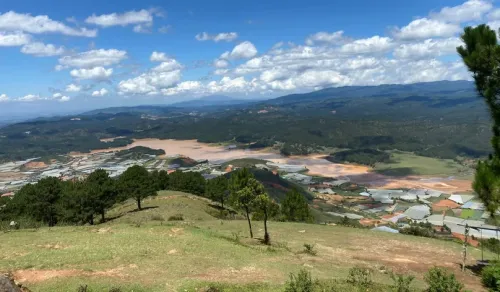
Authorities in Vietnam’s central province of Lam Dong have proposed building six urban electric rail lines spanning over 101 km to connect its famous tourist attraction Da Lat with Lien Khuong International Airport and other major destinations, as part of a long-term urban transport plan through 2050.

The proposal is included in the master plan for five Da Lat wards to 2050, which is under consultation, the provincial government said last week.

The proposed network would comprise six lines with a total length of 101.43 km, using either light rail or monorail technology. The routes would link central Da Lat with Lien Khuong airport and popular destinations such as Suoi Vang Lake, LangBiang Mountain, Tuyen Lam Lake, and the Valley of Love.

The line connecting Da Lat railway station with Lien Khuong airport in Duc Trong commune is prioritized for construction before 2030, providing an additional public transport option for passengers traveling between the airport and the downtown city. The other five lines are planned for development after 2030.

The proposed routes include an 18.5-km line from Da Lat station to Suoi Vang, an 8.55-km line from An Kroet junction to LangBiang, and a 15.78-km line linking Da Lat station with Tuyen Lam lake. Two other routes would connect Da Lat station with the Valley of Love and Tung Lam junction.

The plan also calls for restoring the 84-km Thap Cham-Da Lat railway, which uses a 1,000-mm track gauge, to support tourism and improve connections between Da Lat and the south central coast.

The proposed network is expected to ease pressure on roads, connect tourist destinations with urban gateways and help preserve Da Lat’s landscape, according to the planning consultant.

The master plan covers five wards: Xuan Huong-Da Lat, Cam Ly-Da Lat, Lam Vien-Da Lat, Xuan Truong-Da Lat, and Lang Biang-Da Lat, with a total area of 68,088 hectares.

Situated on a plateau around 1,500 meters above sea level, Da Lat enjoys year-round cool weather that stands in contrast to Vietnam's tropical climate. It used to be a summer hideout for French officials during the colonial time who built villas in the hills to escape the heat and humidity of the lowlands. Da Lat is also known as one of Vietnam’s biggest flower-growing regions.

On July 1, 2025, Lam Dong province was merged with Dak Nong and Binh Thuan provinces to form the new Lam Dong province which borders Dak Lak province, Dong Nai city, Khanh Hoa province, Ho Chi Minh City, Cambodia, and the East Sea.

In the first 10 months of this year, Lam Dong welcomed nearly 20.7 million tourist arrivals, including 1.2 million foreign visitors, generating VND57.51 trillion ($2.24 billion), according to the provincial tourism watchdog.


Consortia involving TotalEnergies, AG&P vie for $1.5 bln southern Vietnam LNG power plant

Consortia involving TotalEnergies, AG&P vie for $1.5 bln southern Vietnam LNG power plant

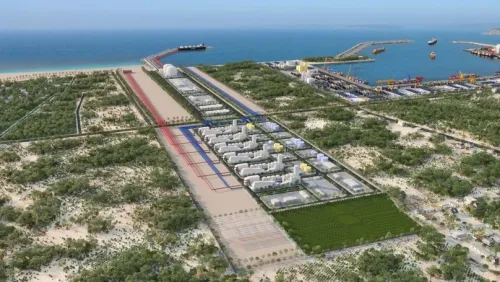
Three investor groups have registered to develop the VND39.87 trillion ($1.55 billion) Long Son LNG-fired power plant in Ho Chi Minh City, highlighting growing competition for opportunities in Vietnam’s gas-fired power sector.

The project will cover 42.56 hectares outside the Long Son Petrochemical Industrial Park in Long Son commune.

According to the bid-opening record, the three applicants are a consortium of T&T Group and France’s TotalEnergies Gaz & Electricite Holdings (T&T-TEGEH); a partnership between EVNGENCO3 and Singapore-based AG&P Terminals & Logistics (EVNGENCO3-AG&P LNG); and Ngoc Long Hai Son Group JSC.

The project is included in the revised eighth national power development plan (PDP VIII). It is designed to use combined-cycle gas turbine technology, with imported liquefied natural gas as its primary fuel.

LNG will be supplied through pipelines connecting the Cai Mep LNG terminal to the Long Son area and the planned Southeast Vietnam LNG terminal system. The plant is expected to connect to the 500-kV grid through a transmission line to the Bac Chau Duc 500-kV substation, with commercial operation targeted for June 2031.

It will be one of Vietnam's largest LNG power projects, playing a crucial role in ensuring energy security for the southern region and nationwide while supporting the energy transition through 2050.

Among the three applicants, the T&T-TEGEH consortium stands out for combining a Vietnamese private-sector investor with experience in energy development and an international partner with LNG expertise.

T&T Group is a Vietnamese conglomerate expanding its investments in the energy sector. Through its core energy unit, T&T Energy Group, it is developing power projects with a total capacity of around 2,900 MW, of which nearly 1,200 MW is already commercially operational.

In gas-fired power, T&T is working with South Korean partners to develop the first phase of the Hai Lang LNG power project in the central province of Quang Tri, with a capacity of 1,500 MW.

On September 10, 2026, T&T Energy Group and TotalEnergies Gas & Power Activities signed a memorandum of understanding in Paris to cooperate on the Long Son project.

Under the agreement, TotalEnergies will lead project financing and act as the primary LNG supplier at a competitive price. Meanwhile, T&T Energy will manage domestic regulatory approvals, government relations, and local administrative procedures.

TotalEnergies Gas & Power Activities is part of France-based TotalEnergies SE, a global integrated energy group. In Vietnam, TotalEnergies has supplied LNG to the Thi Vai terminal, which serves as a fuel source for the Nhon Trach 3 and 4 power plants, Vietnam’s first LNG power facility.

Meanwhile, the EVNGENCO3-AG&P LNG consortium combines domestic power generation experience with expertise in gas infrastructure, logistics, and LNG supply chains.

EVNGENCO3, under state utility EVN, operates in power generation and has experience managing and operating large-scale power plants in Vietnam. It recently partnered with Thuan Hai Transport Services JSC to become the sole applicant for the VND7.1 trillion ($276.9 million) Ninh Binh flexible power plant project.

Its partner, AG&P Terminals & Logistics, operates in gas infrastructure and logistics, with a focus on LNG supply chains.

The competition among three applicants underscores investor interest in Vietnam’s LNG-fired power market. However, registration is only the initial stage of the investor selection process. The candidates’ financial and technical capabilities, as well as their ability to meet the project’s implementation requirements, will be assessed in subsequent stages.


Vietnam, US boost agricultural trade cooperation

Vietnam, US boost agricultural trade cooperation

Vietnam and the United States continue to strengthen balanced two-way trade, technology transfer, and investment in supply chain development.

Within the framework of trade commitments established for the 2025-2027 period, Vietnam has encouraged businesses to diligently implement purchasing agreements with US partners totaling approximately $3 billion.

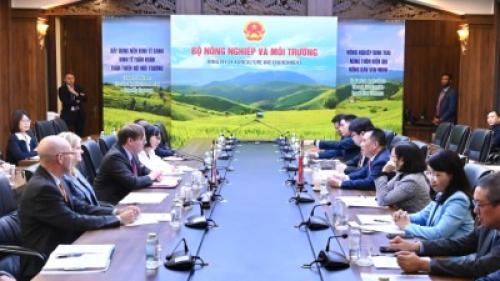
The information was announced during a bilateral meeting between Vietnamese Deputy Minister of Agriculture and Environment Dang Ngoc Diep and Deputy Secretary of the US Department of Agriculture (USDA) Stephen Vaden on November 10, coinciding with the largest US agricultural trade promotion delegation's visit to Vietnam.

Breakthroughs in agricultural trade

According to Mr. Diep, all agreements have been executed, significantly exceeding the committed value. In the latter half of 2025 alone, the total import turnover of products under signed memoranda of understanding reached approximately $2.1 billion. For the first nine months of 2026, the value of purchases amounted to approximately $2.8 billion, of which about $2.5 billion comprised committed items including milk and dairy products, livestock products, fruits and vegetables, corn, soybeans, animal feed, and raw timber.

In addition to promoting imports, Deputy Minister Diep requested the US to address certain market access issues for passion fruit and to promptly approve hot vapor treatment measures for fresh fruit exports to the US.

Acknowledging the significant growth aimed at balancing bilateral trade, USDA Deputy Secretary Stephen Vaden noted that amidst negotiations for a reciprocal trade agreement, the US had proposed Vietnam increase its annual import turnover of goods by an additional $1 billion. In reality, after only 10 months of 2026, Vietnam had already imported approximately $3.6 billion, not including about $1.4 billion in cotton imports.

Mr. Vaden also praised the agricultural trade relationship between the two countries, stating that agricultural products from both Vietnam and the US are favored by consumers in each nation.

The delegation includes a large number of producers of specialty agricultural products, fruits, and vegetables, with many businesses from California, he said, adding that the presence of these businesses demonstrates the US's desire to expand market access opportunities in Vietnam and to foster a more substantive trade relationship.

Promoting cooperation in biotechnology and food safety

During the meeting, both sides also discussed enhancing scientific and technological cooperation.

"This could become a new pillar," Mr. Diep said. "Vietnam wishes to promote cooperation with the US in areas such as crop varieties, biotechnology, artificial intelligence, big data, precision agriculture, and digital transformation."

Specifically, the Deputy Minister proposed that both sides research and implement cooperation programs and technology transfer for disease-resistant, drought-tolerant, and salt-tolerant crop varieties, suitable for climate change adaptation.

In response to this proposal, Deputy Secretary Vaden affirmed the US's readiness to cooperate in providing Vietnam access to biotechnology. He commended Vietnam's interest in applying scientific principles in agricultural management and production, and welcomed the initiative to facilitate US companies in bringing research and development (R&D) activities to Vietnam.

He also expressed hope that Vietnam would continue to collaborate with the US in promoting a science-based approach to biotechnology, thereby expanding the application of modern agricultural technologies.

Regarding food safety, Mr. Vaden highlighted similarities in the work programs of both ministries, particularly concerning Salmonella control and DNA residue testing requirements for imported products. The US expressed its desire to continue discussions with Vietnam on regulations related to Salmonella and DNA residue testing, aiming to reduce instances of rejected shipments while ensuring state management responsibilities for food safety.

Currently, the USDA is developing a new framework for Salmonella risk assessment thresholds, aiming to balance consumer health protection requirements with trade facilitation.

The US wishes to coordinate with Vietnamese specialized agencies to discuss and review technical requirements, avoiding unnecessary disruptions in the flow of goods, said Mr. Vaden, stressing that ensuring that Vietnamese and US consumers have access to safe food, while management regulations do not become unnecessary barriers to trade.


See all blog