Lumen Vietnam Fund

Blog

Fuel prices fall for third straight week

Fuel prices fall for third straight week

Fuel prices fell for a third straight week, keeping retail rates in Việt Nam below those in neighbouring countries.

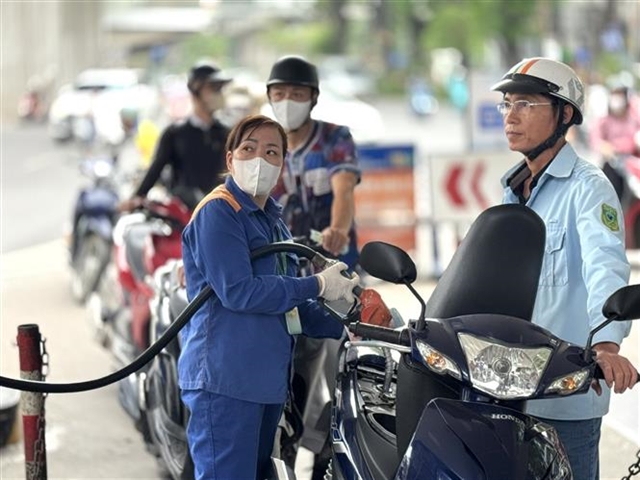
HÀ NỘI — Retail fuel prices in Việt Nam were cut for a third consecutive week from 3pm on Thursday, with E5RON92 petrol recording the sharpest decline in the latest adjustment.

Under a joint decision by the ministries of Industry and Trade and Finance, the maximum retail price of E5RON92 was reduced by VNĐ452 to VNĐ21,332 per litre (US$0.81).

Diesel 0.05S fell by VNĐ989 to VNĐ25,877 per litre, while mazut 180CST 3.5S dropped by VNĐ1,037 to VNĐ18,608 per kilogramme.

The ministries also decided to continue allocations to the petroleum price stabilisation fund, with contributions set at VNĐ100 per litre for biofuel petrol and VNĐ200 per litre or kilogramme for diesel and mazut products.

Meanwhile, E10RON95 petrol remains outside the State's price management mechanism. Retail prices are determined by fuel distributors based on production costs, taxes, logistics expenses and other factors.

At Petrolimex stations, E10RON95-III is selling at VNĐ22,330 per litre and E10RON95-V at VNĐ23,230 per litre.

The Ministry of Industry and Trade said global oil markets during the latest pricing period were influenced by geopolitical developments, including tensions in the Middle East and the continuing conflict between Russia and Ukraine.

Average international prices used for the adjustment declined across major fuel products. RON92 gasoline fell 0.32 per cent, diesel dropped 1.63 per cent and mazut decreased 3.98 per cent compared with the previous pricing period.

The ministry said it would continue monitoring market developments and coordinate with relevant agencies to ensure adequate fuel supplies nationwide while taking action against any violations of fuel trading regulations.

Fuel prices in Việt Nam remain lower than in neighbouring countries.

As of June 11, gasoline prices in Thailand, Cambodia, Laos and China ranged from VNĐ30,743 to VNĐ37,560 per litre, while diesel prices stood between VNĐ30,893 and VNĐ33,505 per litre, compared with VNĐ21,332 and VNĐ25,877, respectively, in Việt Nam.


Source: BIZHUB/VNS

Photo: VNA/VNS

Latest Posts

Việt Nam auto sales rise 20% in five months as hybrid vehicles lead market

Việt Nam auto sales rise 20% in five months as hybrid vehicles lead market

Hybrid vehicles continued to gain momentum. Monthly hybrid sales reached 1,670 units in May, representing a 59 per cent increase from April.

HÀ NỘI — The automotive market continued its strong recovery in the first five months of 2026, with total vehicle sales rising 20 per cent year-on-year.

Hybrid vehicle sales surged 80 per cent, emerging as one of the strongest growth drivers in the country’s accelerating vehicle electrification trend.

Earlier this week, the Việt Nam Automobile Manufacturers Association (VAMA), whose members account for roughly 62 per cent of the country’s automotive market, reported total sales of 29,935 vehicles in May. While the figure was down 6 per cent from April, it remained 6 per cent higher than the same month last year.

Passenger vehicles accounted for 19,182 units sold during the month, down 10 per cent from April. Commercial vehicle sales increased 5 per cent to 10,288 units, while sales of specialised vehicles fell sharply by 45 per cent to 465 units.

Sales of domestically assembled vehicles reached 13,080 units in May, down 6 per cent from the previous month. Imports of completely built-up (CBU) vehicles also declined by 6 per cent to 16,855 units.

Hybrid vehicles continued to gain momentum. Monthly hybrid sales reached 1,670 units in May, representing a 59 per cent increase from April. Cumulative hybrid sales for the January–May period totaled 8,518 units, up 80 per cent compared with the same period in 2025.

Toyota remained the market leader in May with sales of 5,653 vehicles. Ford ranked second with 3,493 units, followed by Mitsubishi with 3,111 vehicles, Kia with 2,512 units and Mazda with 2,304 units.

The Mitsubishi Xpander was the best-selling vehicle in May with 1,236 units sold, narrowly ahead of the Toyota Yaris Cross at 1,214 units. The Mazda CX-5 ranked third with 1,159 units, followed by the Toyota Veloz Cross with 797 units and the Mitsubishi Xforce with 693 units.

According to VAMA data, cumulative sales during the first five months of 2026 reached 156,729 vehicles, an increase of 20 per cent year-on-year. Passenger vehicles remained the dominant segment with 103,802 units sold, up 13 per cent, while commercial vehicle sales rose 32 per cent to 50,270 units.

Battery electric vehicles (BEVs) reported by VAMA members totaled 64 units during the period, highlighting the gradual expansion of electrified vehicle offerings in the Vietnamese market.

VAMA said sales of domestically assembled vehicles increased 11 per cent during the first five months of the year compared with the same period in 2025. Meanwhile, imported vehicle sales jumped 27 per cent, reflecting intensifying competition from foreign-made models in Việt Nam.

The figures suggest that Việt Nam’s automotive sector has maintained a positive growth trajectory in 2026 despite a short-term sales slowdown in May.

Demand for personal mobility, commercial transportation and fuel-efficient vehicles, particularly hybrids, is expected to remain a key growth catalyst in the months ahead.

However, industry analysts caution that the VAMA data does not provide a complete picture of the market. Several automotive brands operating in Việt Nam do not publicly disclose sales figures, including Audi, BYD, Jaguar Land Rover, Geely, GAC, Lynk & Co, Omoda & Jaecoo, Mercedes-Benz, Nissan, Subaru, Volkswagen and Volvo.

In addition, major industry players such as Hyundai Thanh Cong and VinFast have yet to release their latest sales results, making it difficult to fully assess overall market performance so far this year.

Strong domestic production

Việt Nam’s automotive industry also achieved a significant milestone on the supply side, with domestic vehicle production and assembly reaching a record level in May and substantially outpacing imports.

According to the General Statistics Office, approximately 76,837 new vehicles were supplied to the Vietnamese market during May, the highest monthly figure recorded since the beginning of the year. The total represented a 13.2 per cent increase from April.

The strongest performance came from domestic manufacturing and assembly operations. Vehicle output reached 53,700 units during the month, up 4.7 per cent from April and 40 per cent higher than in May 2025.

Domestic production significantly exceeded imported vehicle volumes, which totaled approximately 23,137 completely built-up units. The gap of more than 30,000 vehicles in a single month underscores a notable shift in supply dynamics toward local assembly plants.

During the first five months of 2026, domestic manufacturers produced an estimated 232,100 vehicles, representing year-on-year growth of 26.7 per cent.

The increase in local production has enabled manufacturers to reduce logistics costs and improve supply-chain efficiency. From a broader economic perspective, the trend is viewed as a positive development, supporting job creation, reducing import dependence and contributing to improvements in Việt Nam’s trade balance.

Hanoi's tourism maintains strong growth

Hanoi's tourism maintains strong growth

The capital city welcomes nearly 15 million visitors in the first five months of 2026.

Hanoi's tourism sector continued its strong recovery and expansion in the first five months of 2026, welcoming nearly 15 million visitors and generating close to VND63 trillion ($2.4 billion) in tourism revenue.

According to city authorities, international arrivals reached approximately 4.06 million during the period, an increase of 28.1% compared with the same period in 2025. Total tourism revenue rose 20.6% year-on-year, reflecting robust demand from both domestic and international travelers.

Building on this momentum, Hanoi aims to attract over 9 million international visitors and more than 27 million domestic tourists in 2026, with total tourism revenue projected to reach VND160 trillion.

To achieve these targets, the capital plans to diversify and upgrade its tourism offerings by leveraging its geographical advantages and regional transport connectivity. Moving beyond traditional city-center sightseeing tours, Hanoi is working with tourism businesses to develop new travel experiences and expand its tourism portfolio.

Among the new products scheduled for launch are the Muong Coc community-based tourism model, expanded night tourism experiences, rural and agricultural tourism programs, and experiential tours linking traditional pottery villages with safe vegetable-growing communities.

A key focus is the development of the city's nighttime economy. Rather than simply extending business hours, Hanoi is seeking to create a comprehensive overnight tourism ecosystem centered on culture, heritage and urban experiences.


Foxconn, Brookfield partner on 1GW renewable energy project in Vietnam

Foxconn, Brookfield partner on 1GW renewable energy project in Vietnam

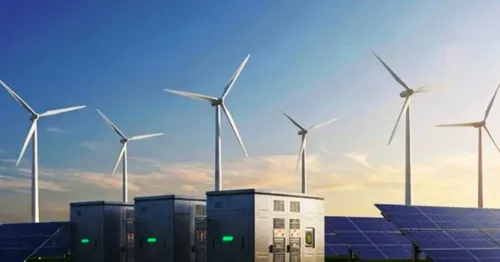
VOV.VN - Hon Hai Technology Group (Foxconn) and Brookfield, a global investment firm, have partnered to develop up to 1 gigawatt (GW) of utility-scale wind, solar and battery storage capacity in Vietnam to supply electricity to Foxconn’s manufacturing operations and supply chain partners in the country.

The strategic collaboration marks Foxconn’s latest step toward greening its production footprint in Southeast Asia. It is the first time Foxconn has directly engaged in renewable energy development in Vietnam, although no timeline has been set for achieving the 1GW target.

Under the agreement, the Foxconn-Brookfield alliance will focus on large-scale solar and wind projects, as well as battery energy storage systems (BESS). The electricity generated will supply Foxconn factories and key suppliers operating in Vietnam.

Foxconn said both companies will co-invest in and directly manage the renewable energy projects. On Brookfield’s side, funding will be channelled through its Catalytic Transition Fund, which invests in net-zero-aligned projects in emerging markets.

Notably, the projects will be backed by long-term power purchase agreements (PPAs), ensuring a stable supply of clean electricity for industrial zones.

The partnership underscores Vietnam’s growing role as a regional and global manufacturing hub, where renewable energy is increasingly becoming a magnet for foreign industrial investment.

Brookfield Asia Pacific Head of Energy Daniel Cheng said: “Brookfield’s partnership with Foxconn underscores the scale of corporate demand for renewable power in Vietnam, one of Asia’s fastest-growing economies.

As global manufacturers increasingly turn to renewables for its cost-competitiveness, speed to market and energy security benefits, we’re seeing strong and rising demand for long-term supply from across the region. Policy momentum around Southeast Asia is also providing a second-order tailwind for renewables development and our Catalytic Transition strategy, which has been very active over the past 12 months.”

Foxconn has steadily expanded its manufacturing footprint in Vietnam in recent years amid ongoing shifts in global supply chains.

Foxconn Chief Investment Officer James Tu said: “We are pleased to be a strategic partner to Brookfield to secure long-term access to renewable energy for our operations and supply chain in Vietnam. This initiative where we’re investing and managing alongside Brookfield ensures stable and cost-effective power supply for our continued growth in the region.”


See all blog