Lumen Vietnam Fund

Blog

French-led consortium signs consultancy contract for Vietnam’s North-South high-speed railway

French-led consortium signs consultancy contract for Vietnam’s North-South high-speed railway

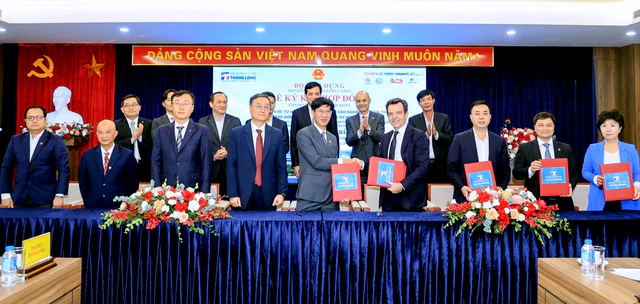
A consortium of eight firms from France, South Korea, and Vietnam signed a consultancy contract for Vietnam’s North-South high-speed railway project with the Thang Long Project Management Board on Wednesday afternoon.

Led by France’s SYSTRA, the consortium includes three South Korean firms – Sambo Engineering, Yooshin Engineering Corporation, and Korea National Railway (KNR) – and four Vietnamese firms – TEDI, TEDI SOUTH, TRICC, and HOANG LONG.

Speaking at the signing ceremony, Dinh Cong Minh, director of the Thang Long Project Management Board, said the railway would span about 1,541 kilometers, with 23 passenger stations and five freight stations.

It will feature double tracks with a standard gauge of 1,435 millimeters, a design speed of 350 kilometers per hour, and an axle load of 22.5 metric tons.

The railway is a national key project of exceptional scale and strategic significance, expected to play a vital role in Vietnam’s socioeconomic development in the years ahead.

Minh said the consultancy package, which includes a feasibility study and front-end engineering design (FEED), would provide a crucial basis for investment approval, technology selection, technical standards, cost estimates, and contractor selection for subsequent packages.

He urged the consortium to promptly mobilize personnel and experts, draw up a detailed implementation plan, and leverage its international experience to ensure the quality and timely completion of the consultancy work.

A consortium representative said the group aimed to strengthen Vietnam’s railway industry through close cooperation, hands-on training, and active participation by Vietnamese experts and organizations.

The consortium also pledged to develop realistic implementation plans, prepare rigorous cost estimates, carefully assess alternatives, identify risks early, and provide well-founded recommendations to Vietnamese authorities.

Quality, progress remain top priorities

Deputy Minister of Construction Bui Xuan Dung said this was Vietnam’s first high-speed railway project of such scale and technical complexity, making the preparatory phase critical to its feasibility, quality, and investment efficiency.

He called on the consortium to establish a professional management structure, mobilize key personnel, and set clear deadlines for each deliverable.

Survey data must be comprehensive, accurate, and reliable to support route alignment, engineering design, and investment cost estimates.

The deputy minister also stressed the need to structure bidding packages appropriately to ensure competition, transparency, and compliance with Vietnamese law.

The feasibility study and FEED must incorporate advanced technologies and technical standards suited to local conditions, ensuring safety, operational efficiency, and effective long-term maintenance.

The consortium was also urged to prioritize technology and expertise transfer to help Vietnamese engineers gradually master high-speed railway technology.

He said timely completion of package TV-02 was a top priority, with clear milestones, defined responsibilities, and regular progress monitoring.

“All parties must strictly honor their contractual commitments and refrain from shifting responsibility. Accelerating progress must go hand in hand with maintaining quality,” he emphasized.

Source: Ngoc Nguyen - Duc Phu / Tuoi Tre News
Latest Posts

International flight frequency to Vietnam rises 8.3% in winter 2026

International flight frequency to Vietnam rises 8.3% in winter 2026

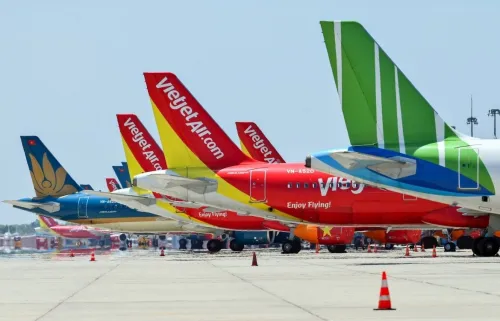
Eighty-three airlines are operating international flights to and from Vietnam under the winter 2026 schedule at a total frequency of 3,523 round-trip flights per week, up 271 flights per week, or 8.3%, from the previous winter season, according to the Civil Aviation Authority of Vietnam (CAAV).

The network includes four Vietnamese carriers operating more than 117 international routes to 22 countries and territories, up six routes year-on-year, and 79 foreign airlines from 31 countries and territories running regular services on 159 routes to Vietnam, up 16 routes.

New carrier Sun PhuQuoc Airways also entered international operations this winter with 18 routes to 10 countries and territories at 126 round-trip flights per week.

Among key markets, the Republic of Korea led with 625 round-trip flights per week, followed by China with 595 and Thailand with 343. China recorded the sharpest expansion, adding 60 round-trip flights per week and three airlines compared with winter 2025, while Singapore, Malaysia and the Philippines increased by 47, 34 and 32 round-trip flights per week, respectively.

At major gateway airports, Noi Bai International Airport handled 53 international airlines with 1,299 round-trip flights per week, up 181 from winter 2025, while Tan Son Nhat International Airport served 52 airlines with 1,199 round-trip flights per week. Da Nang, Cam Ranh and Phu Quoc also kept high operating volumes, with Phu Quoc reaching 276 international round-trip flights per week, up 79 flights and seven international routes operated by Vietnamese carriers.

The aviation authority said the expanded network reflects steady international air connectivity demand with Vietnam, supporting passenger transport capacity, tourism, trade and international exchanges.


Ninh Binh approves $117m bridge and road project

Ninh Binh approves $117m bridge and road project

The project is expected to establish a direct transport link between the Gian Khau urban and industrial area and the left bank of the Day River.

Authorities of northern Ninh Binh Province have approved a project to build a bridge across the Day River and a connecting road linking National Highway 1A with the No. 07 Longitudinal Road.

The project has a total investment of nearly VND3 trillion (approximately $117 million), funded by the provincial budget, and is scheduled for implementation between 2026 and 2028.

Stretching nearly 12 kilometerss across three communes – Gia Tran, Phong Doanh and Tan Minh – the project is expected to establish a direct transport link between the Gian Khau urban and industrial area and the left bank of the Day River.

The road will run approximately 11.84 kilometers, starting at its junction with National Highway 1A in Gia Tran Commune and ending at an intersection with National Highway 37B in Tan Minh Commune. It will have four motor vehicle lanes, with three different cross-sectional designs to suit existing operating conditions and future expansion plans.

A key feature of the project is the construction of two major bridges, each with a deck width of 22.5 meters, including a 613.9-m bridge across the Day River, and a 301.4-m bridge crossing the eastern section of the North-South Expressway (CT.01).

The approval marks a step towards completing Ninh Binh’s strategic transport infrastructure following its administrative merger. Once completed, the new bridge and connecting road are expected to overcome the natural barrier created by the river, strengthen regional and inter-provincial connectivity, and shorten travel and trading distances between the Gian Khau urban and industrial area and communities on the river’s left bank.


EU moves towards broader access to Vietnamese agri-food market

EU moves towards broader access to Vietnamese agri-food market

The European Commission's Directorate-General for Agriculture and Rural Development (DG AGRI) will organize an agri-food business mission from the European Union (EU) to Vietnam from March 23 to 26, 2027.

The trip coincides with the 14th International Food, Drinks, Hospitality, Foodservice, Bakery and Equipment Exhibition (Food and Hospitality Vietnam - FHV) in Ho Chi Minh City.

According to the European Commission (EC), the mission is part of efforts to strengthen EU economic diplomacy in the agri-food sector and facilitate business networking for European companies. A senior DG AGRI official will lead the delegation.

The EC has invited eligible businesses under the EU's agricultural trade promotion policy to join, particularly in the sectors of meat and meat products; dairy products, including cheese; fruit and vegetables; processed agricultural goods such as confectionery, chocolate, sauces and condiments; olive oil and olives; and wine, beer and spirits.

Under the program, the delegation will explore Vietnam's import market access conditions, identify new opportunities for EU agri-food products, join business-to-business matchmaking activities during FHV, survey retail networks and conduct field visits.

The EU will serve as the guest of honor at FHV and host its own pavilion at the fair. Mission members will meet directly with importers, retailers and buyers from Vietnam and Southeast Asia while presenting EU high-quality standards, geographical indications and organic products.

The EC sees Vietnam as a key and fast-growing market in Southeast Asia with strong potential for EU agri-food exports.

With a population of over 100 million and an expanding middle class, Vietnam offers broad opportunities for dairy, meat, fruits and vegetables, wine and spirits, olive oil and processed farm produce. The EU-Vietnam Free Trade Agreement (EVFTA), which took effect on August 1, 2020, supports this potential through tariff elimination schedules and the protection of numerous geographical indications.

In recent years, the EU has implemented multiple initiatives to promote agri-food products in Vietnam, including co-financing 22 promotion programs run by organizations from several EU member states. It also sent a high-level delegation to Vietnam in 2022, took part in FHV and a seminar on food safety and sanitary and phytosanitary (SPS) measures that same year, joined the Vietnam International Food Industry Exhibition 2024 (Vietnam Foodexpo 2024), and published a market entry handbook for Vietnam in 2025 ahead of the upcoming trip.


See all blog