Lumen Vietnam Fund

Blog

French firms see major investment opportunities in Vietnam: French ambassador

French firms see major investment opportunities in Vietnam: French ambassador

French businesses see significant opportunities in Vietnam’s energy, rail, and green transition sectors, according to French Ambassador to Vietnam Didier Le Bret.

Speaking on the sidelines of France-Vietnam Forward 2026 held in Ho Chi Minh City on Thursday, Ambassador Le Bret said science and technology are becoming pillars of bilateral cooperation.

He added that Vietnam’s push to expand infrastructure, accelerate its green transition, and strengthen technological capacity aligns with France’s expertise.

The ambassador recalled that during French President Emmanuel Macron’s 2025 visit to Vietnam, both countries agreed to promote a year of cooperation in science and technology.

He said Vietnamese Party General Secretary and State President To Lam’s visit to France last month, which included stops at the Paris-Saclay innovation hub and the French Alternative Energies and Atomic Energy Commission, underscored Vietnam’s interest in French research and innovation.

The visits also pave the way for both countries to advance more practical joint projects that link scientific research with economic and industrial development needs, he said.

Energy is among Vietnam’s most pressing areas for cooperation, the French diplomat said.

Vietnam’s installed power capacity is about 90 GW, with plans to expand by 10 percent, or adding roughly 9 GW, to meet economic growth demands.

This requires developing multiple sources, including wind, solar, hydropower, and nuclear.

France, with its experience in hydropower and nuclear technology, hopes to partner with Vietnam in these projects.

“Energy is truly the key factor to ensure industrial projects can develop effectively,” the ambassador emphasized.

Transport infrastructure is another priority.

Vietnam is planning high-speed rail and expanding metro networks in Hanoi and Ho Chi Minh City.

France, a pioneer in high-speed rail, has already contributed to Hanoi’s metro line No. 3, which connects Nhon with Hanoi Station.

French firms are expected to play a larger role in consulting, design, and technology transfer, helping Vietnam build long-term capacity in railway operations and maintenance.

Digital transformation also offers two-way opportunities.

Vietnamese tech companies are investing in France, while French firms are adopting Vietnamese-developed software solutions.

France’s strengths in quantum technology and Vietnam’s growing digital sector create potential for collaboration in emerging fields.

The ambassador concluded that Vietnam’s opportunities lie not only in applying technology to boost productivity but also in participating in global research, product development, and supply chains.

The green transition, he added, makes energy supply and raw materials critical for new industries.

Source: Minh Duy - Nhu Binh / Tuoi Tre News

Latest Posts

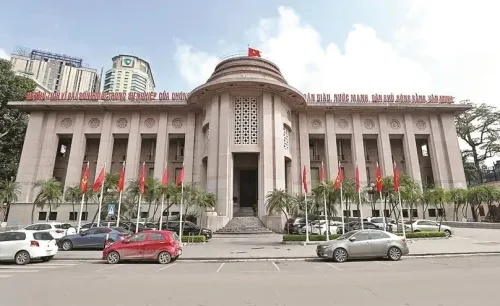
Vietnam central bank orders banks to cut listed deposit rates by at least 0.5 percentage points

Vietnam central bank orders banks to cut listed deposit rates by at least 0.5 percentage points

The State Bank of Vietnam (SBV) has ordered credit institutions to cut listed deposit interest rates by at least 0.5 percentage points per year for maturities of six months or longer, while lowering lending rates by 1.5-2 percentage points for production, business activities and priority sectors.

Banks that fail to comply could face cuts to their credit growth targets.

The SBV issued a document on Sunday requiring credit institutions and foreign bank branches to implement coordinated measures to maintain macroeconomic stability, control inflation, support economic growth, and ensure the safety of the banking system.

Accordingly, credit institutions must strictly comply with the government's, the prime minister's and the SBV's regulations and directives on interest rates. They must mobilize all available resources, reduce costs, share profits and take decisive, coordinated measures to bring down interest rates across the market.

As an immediate measure, banks must cut listed deposit rates by at least 0.5 percentage points per year for maturities of six months or longer. The SBV stressed that banks must not engage in a race to raise deposit rates or resort to unfair competition that could destabilize financial and monetary security.

On lending rates, the regulator requires banks to reduce rates for customers, with cuts of 1.5-2 percentage points per year focused on production, business activities and priority sectors.

The directive requires banks to adjust both sides of their business operations simultaneously by lowering funding costs and lending rates, while maintaining liquidity safety, credit quality and operational efficiency.

The SBV also instructed credit institutions to maintain a balanced relationship between deposits and lending, regularly review their funding structures by currency and maturity, and diversify funding channels.

Banks must control liquidity risks and maturity mismatches while increasing the proportion of medium- and long-term funding to ensure a sustainable balance between funding sources and their use.

The push to lower interest rates does not mean a relaxation of risk management requirements. Instead, banks must proactively restructure their funding, reduce costs and improve operational efficiency to create room for rate cuts.

Banks told to tighten controls on riskier lending

Regarding credit allocation, the SBV requires lending growth to be safe and effective, with funding directed towards production, business activities, priority sectors and key drivers of economic growth.

Banks are encouraged to lend to feasible key projects that support socio-economic development, while prioritizing science and technology, innovation, digital transformation, green transition, the digital economy, green economy, circular economy, education and training, and cultural industries.

For large-scale projects, the SBV encourages syndicated lending. However, it stressed that credit institutions must not lower lending standards or sacrifice credit quality to expand loan volumes.

The directive places particular emphasis on risk control. Credit institutions must closely monitor lending to potentially high-risk sectors and customers or customer groups with large outstanding loan balances.

Banks must pay particular attention to concentration risks among customer groups and related parties, credit exposure by customer, and large-scale projects. They should monitor groups of customers sharing one or more of the following characteristics: the same manager or legal representative, or an owner holding more than 5% of a customer's charter capital; shared collateral or the same collateral owner; capital concentrated in the same project; or a common source of debt repayment.

Banks must diversify their credit portfolios and combine these assessments with indicators such as property price movements, market liquidity, project inventories and corporate bond issuance conditions. These measures are intended to help identify violations, shortcomings and emerging risks early, enabling banks to take appropriate corrective and risk-control measures.

The SBV also requires strict controls on lending to organizations and individuals seeking funds for the following purposes:

(i) Paying for capital contributions to, or purchasing or acquiring transferred capital stakes in, limited liability companies or partnerships; or contributing capital to, purchasing or acquiring transferred shares in joint-stock companies that are not listed on the stock market or registered for trading on the UPCoM (unlisted public companies market) trading system.

(ii) Paying capital contributions under capital contribution agreements, investment cooperation contracts or business cooperation contracts to implement investment projects that are not legally eligible for commercialisation at the time the credit institution decides to extend the loan.

(iii) Providing financial compensation or reimbursement, except for certain loans that fully meet the prescribed conditions.

The SBV emphasized that risk control and the safety of the credit institution system are critically important to economic development, national security, public order and social safety.

It said banking legislation would continue to be refined to ensure effective and substantive oversight of share ownership, customers and related customer groups, and the purposes for which borrowed funds are used.

For the remainder of 2026, credit institutions that fail to comply strictly with the government's, the prime minister's or the SBV's interest rate directives, or engage in unfair competition that destabilises markets and creates risks for banking operations, could face sanctions under the law and additional measures depending on the nature and severity of the risks.

These measures include reviewing their credit growth targets for the remainder of 2026 and assigning lower credit growth targets for 2027, as well as requiring them to comply with one or more prudential ratios set at levels higher than the prescribed requirements.


Quang Ninh urges fast-tracking of $1 billion Monbay Van Don project

Quang Ninh urges fast-tracking of $1 billion Monbay Van Don project

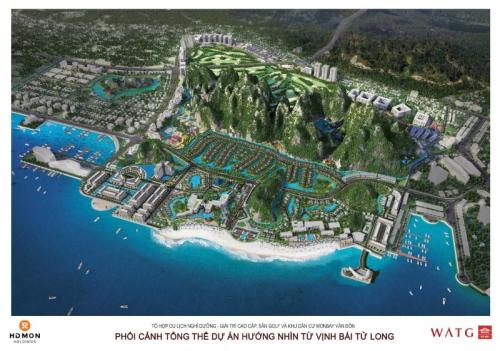
The high-end tourism, resort and entertainment complex, golf course and residential area is planned to include 236 villas, 257 townhouses, more than 2,600 high-rise apartments and 606 social housing units.

Northern Quang Ninh city's authorities have urged the investor of the Monbay Van Don complex to accelerate preparations and begin construction as soon as all regulatory requirements are met, with groundbreaking targeted for 2026.

The project, officially named the Monbay Van Don high-end tourism, resort and entertainment complex, golf course and residential area, is being developed by Hai Dang Real Estate Investment Company Limited.

With total investment exceeding VND24.883 trillion (nearly $1 billion), the development is planned to include 236 villas, 257 townhouses, more than 2,600 high-rise apartments and 606 social housing units.

Once completed, the complex is expected to accommodate approximately 3,000 overnight guests per day and around 9,800 residents.

Quang Ninh authorities have instructed the city’s Department of Agriculture and Environment to guide the investor through land allocation and leasing procedures, promptly appraise eligible applications and submit them for approval. The department is also tasked with determining land prices and related financial obligations, facilitating the handover of land on site, and guiding procedures for allocating sea areas required for the project’s land reclamation component.

The investor has also been asked to complete the project’s feasibility study report and prepare a detailed implementation schedule specifying key milestones, deadlines and responsibilities. The schedule must be submitted to the Van Don Special Zone administration and relevant authorities for approval and monitoring.

Authorities have called on the investor to coordinate closely with local officials and relevant agencies to ensure construction can commence in 2026, once all legal conditions have been satisfied.


Crypto flows in Vietnam are shifting

Crypto flows in Vietnam are shifting

Cryptocurrencies in Vietnam are no longer just a matter of price speculation, with demand expanding towards value transfer and storage, posing new challenges for the domestic market.

The global crypto market has undergone a sharp correction, but on-chain activity has not declined by a comparable amount. According to the 2026 Global Crypto Adoption Index published by Chainalysis on September 23, market capitalization at one point fell by 50%, equivalent to $2.1 trillion, while the value of on-chain activity declined by just 1.6%, from $9.5 trillion to $9.4 trillion, over the two 12-month periods ending in June 2025 and June 2026.

The divergence suggests that crypto assets are being used for purposes beyond price speculation.

$122 billion market, stablecoins gain traction

In a regional report published on September 30, Chainalysis estimated that crypto asset activity in Vietnam reached $122.2 billion between July 1, 2025 and June 30, 2026, ranking fourth in Central and Southern Asia, Southeast Asia and Oceania, behind Singapore at $284.1 billion, Australia at $173.1 billion and India at $135 billion.

The significance lies not only in the market's size. Vietnam's Utility Index, which measures activity associated with practical use, rose 127% from the previous period, while its Financial Index, which tracks financial activity through platforms, fell 5%.

According to Chainalysis, the former reflects direct and cross-border asset transfers, while the latter captures financial activity conducted through platforms.

Notably, cross-border stablecoin activity in Vietnam reached about $10.5 billion, 1.5 times the domestic total of $6.9 billion. Stablecoins are crypto assets designed to maintain a stable value against a reference asset, typically the U.S. dollar.

Vietnam, Thailand and the Philippines recorded 5.4 million direct asset transfers worth less than $10,000, accounting for 14.4% of the global total. More than 80% of domestic transfers in this category were below $1,000, with an average value of $618.

Chainalysis quoted Nicole Nguyen, co-founder of APAC DAO, as saying that some Vietnamese users hold stablecoins as a store of value linked to the U.S. dollar. Freelancers and people working across borders are also driving direct transactions.

Nevertheless, Chainalysis estimated that $69.8 billion in assets flowed from Vietnam into centralized exchanges, indicating that emerging use cases have yet to fully displace investment and speculative activity.

Exchange race: from capital raising to platform testing

In Vietnam, businesses are preparing infrastructure for a pilot phase. The government's Resolution 05/2025/NQ-CP requires operators of crypto asset trading markets to have minimum paid-in charter capital of VND10 trillion ($386.58 million), along with requirements covering shareholders, technology and risk controls.

Among the prospective operators, Vietnam Prosperity Crypto Asset Exchange JSC (CAEX), part of the VPBank ecosystem, has taken concrete steps.

In April 2026, CAEX announced that OKX Ventures and HashKey Capital had signed investment and cooperation agreements with the company and its founding shareholders, VPBankS and LynkiD. The agreements aim to support technology development, security and liquidity.

At VPBank's 2026 annual general meeting, CEO Nguyen Duc Vinh said CAEX had fully contributed the required VND10 trillion ($386.58 million) in capital and completed an audit of its capital contributions, but had not yet received a licence to trade.

CAEX began testing its platform on September 6 and extended the program through September 25, restricting access to employees and selected partners. Its website continues to state that it is seeking a licence and has not officially opened trading.

Techcom Crypto Asset Exchange JSC (TCEX), which has capital contributions from Techcom Securities (TCBS), announced on May 5 that the Ministry of Finance had confirmed that certain groups of documents in its application were complete and valid, while requesting additional documents for the remaining sections. This did not constitute a licensing decision.

Among listed securities firms, VIX Securities has joined in establishing VIX Crypto Asset Exchange JSC (VIXEX), with initial charter capital of VND1 trillion ($38.66 million). VIX holds a 15% stake, FTG Vietnam owns 64.5% and 3C Company holds 20.5%.

VIX plans to use VND1 trillion from a share offering to make an additional capital contribution to VIXEX.

Sacom Crypto Asset Exchange JSC (SCEX), formerly known as LPEX, increased its charter capital from VND360 billion to VND5 trillion ($193.29 million) in August 2026, nearly 14-fold.

The company is also developing the SCEX Simulator platform as part of a digital asset education program, allowing users to trade with simulated funds rather than real money.

Outside the financial sector, Sun Group holds a 64% stake in Vietnam Digital Assets JSC, established in January 2026 with initial charter capital of VND1 trillion ($38.66 million).

Under Resolution 05, domestic investors who already own crypto assets may open accounts with organizations licensed by the Ministry of Finance to hold and trade those assets within the permitted scope. Six months after the first organization receives a licence, transactions conducted outside licensed systems may be subject to sanctions depending on the nature and severity of the violations.

However, the race to establish exchanges is only the first step. Another question is which assets can be issued and traded on these platforms.

In a recent article, Nguyen Huong Diu Ngan, an associate at the Tony Blair Institute for Global Change in Vietnam, proposed three potential areas for development: tokenizing trade finance, agricultural commodities and green infrastructure bonds.

One example is Argentina's Agrotoken model, which allows grain to be tokenized based on physical stocks verified in warehouses, helping producers gain access to credit.

The government's Resolution 05/2025/NQ-CP restricts the underlying assets and eligible participants in new issuance programs. As a result, domestic exchanges must not only attract investors but also develop product offerings that comply with the law, have clearly identified underlying assets, and establish the rights of holders.

As domestic crypto exchanges race to raise trillions of dong (VND1 trillion = $38.66 million) and complete their technology infrastructure, the challenge extends beyond securing licences. More importantly, they must find products that meet market demand within the legal framework, turning circulating crypto assets into organized business activity.



See all blog