Lumen Vietnam Fund

Blog

FDI shifts 'taste', land banks lose edge as southern Vietnam's industrial property market gets more mature

FDI shifts 'taste', land banks lose edge as southern Vietnam's industrial property market gets more mature

Southern Vietnam’s industrial real estate market is entering a more mature phase as foreign direct investment (FDI) pivots toward high-tech and green industries, putting greater emphasis on logistics infrastructure, operational capacity and ESG standards over land availability.

Data from first-quarter industry reports show the market is no longer in the rapid supply expansion phase seen in 2021-2024, but is instead moving into a cycle of absorption, restructuring and more selective capital allocation.

“The Southern Key Economic Region is entering a new stage of maturity, where supply is being absorbed and demand is increasingly shaped by high-value industries and shifting FDI priorities,” said Chuong Doan, deputy director of industrial and office leasing at Cushman & Wakefield Vietnam.

She said accelerated inter-regional infrastructure development, combined with more selective tenant requirements, is pushing the market toward a new equilibrium between stability and transformation, reinforcing the region’s role as a manufacturing, logistics and advanced industry hub.

The current slowdown does not indicate weakening demand, but rather reflects a more mature market following years of rapid expansion.

Total industrial land supply in the Southern Key Economic Region remains at about 36,400 hectares, with no new projects recorded in the first quarter, Doan said. Occupancy stood at roughly 74.8%, slightly higher quarter-on-quarter but lower year-on-year.

Although net absorption rose 182% quarter-on-quarter, the market has yet to return to the “land-hungry” conditions of previous cycles, reflecting greater caution among FDI manufacturers in expansion decisions.

Global headwinds, including elevated interest rates, geopolitical tensions, rising logistics costs and growing trade protectionism, are also driving multinational firms to scale expansion more selectively rather than pursue broad-based capacity growth.

In other words, while FDI inflows into Vietnam remain resilient, investor priorities have shifted.

John Campbell, director of industrial services at Savills Vietnam, said Vietnam is entering a “large-scale industrial phase,” in which FDI is moving away from mass production expansion toward higher-value segments such as electronics, technology equipment and semiconductors.

He said this shift is pushing the market from a cost-led model to one increasingly driven by infrastructure quality, logistics efficiency and operational standards.

Ho Chi Minh City remains the region’s largest manufacturing and logistics hub, supported by strong demand from high-tech and value-added industries. However, limited land availability and rising costs are gradually redirecting investment toward neighboring provinces, including Dong Nai and Tay Ninh.

Tay Ninh is emerging as a new low-cost industrial rental hub in the South, with significant development potential fueled by comparatively competitive land pricing. Meanwhile, Dong Nai continues to benefit from infrastructure upgrades, including the Long Thanh International Airport, Bien Hoa-Vung Tau Expressway and seaports linked to the Cai Mep–Thi Vai complex.

Analysts say transport infrastructure is becoming the key variable reshaping southern Vietnam’s industrial property map, with major projects such as Long Thanh airport, ring roads, interprovincial expressways and logistics corridors opening new development zones for both industrial real estate and supply chains.

Shift toward logistics, ESG and high-quality factories

A key structural change in the market is the rising dominance of ready-built factories and modern logistics facilities.

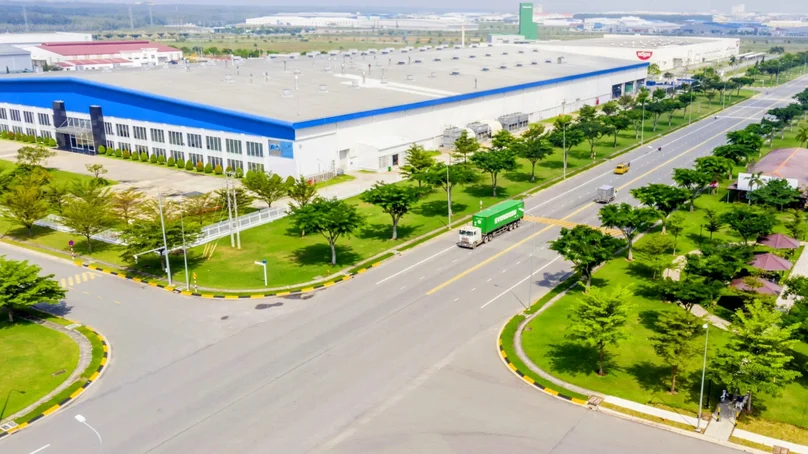
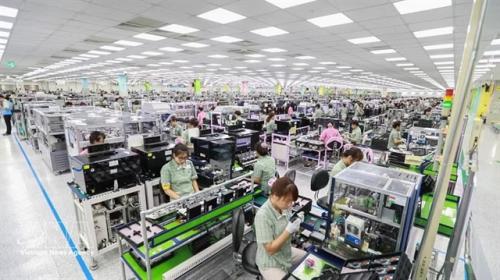
Ready-built factory (RBF) supply in the South reached about 6.8 million square meters in the first quarter, with nearly 192,000 square metres added. Several industrial clusters in Binh Duong and Dong Nai reported near-full occupancy, with Dong Nai leading at about 95% and Tay Ninh over 93%.

The trend reflects a clear shift in FDI strategy. Rather than building facilities from scratch - a capital-intensive and time-consuming process, manufacturers are increasingly opting for ready-built factories to accelerate production timelines, reduce upfront investment and improve operational flexibility.

The trend is particularly pronounced in electronics, precision engineering, supporting industries, and high-tech manufacturing.
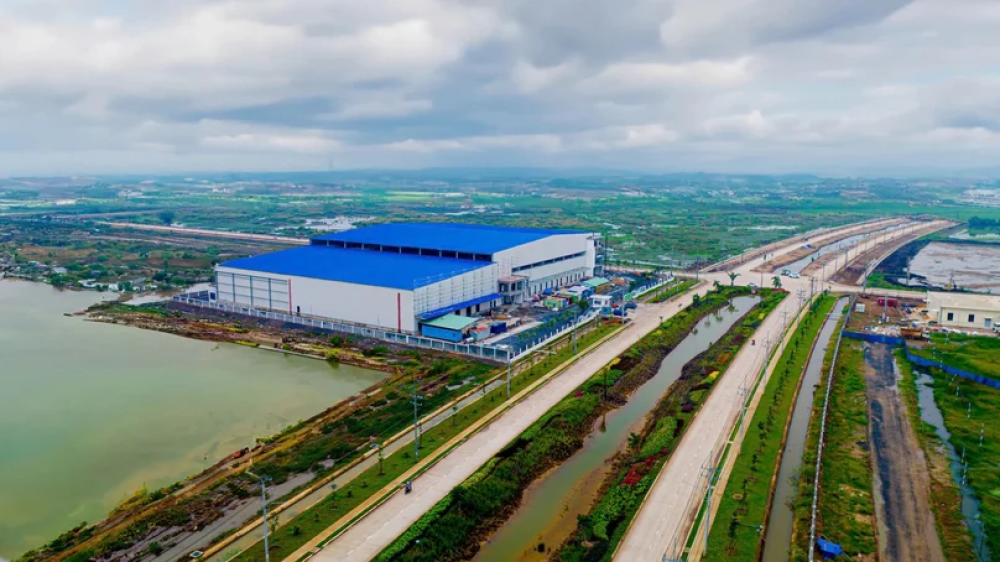
Demand is also increasingly concentrated on assets with higher operational standards, automation capabilities and ESG (environmental, social, and governance) compliance. Green requirements are evolving from optional features into baseline expectations for international tenants. Eco-industrial park models are no longer experimental but are becoming a competitive necessity.

This is intensifying competition among industrial park developers. Land availability alone is no longer sufficient to attract tenants; developers are now required to build integrated ecosystems combining manufacturing, logistics and supporting services.

Industrial zones lacking logistics connectivity, infrastructure depth or sustainability standards are increasingly under pressure, even when offering lower rental costs.

Alongside ready-built factories, demand for ready-built warehouses is also expanding, driven by e-commerce and logistics growth. Warehouse occupancy in southern Vietnam reached 91.7% in the latest quarter despite no new supply. Ho Chi Minh City was nearly fully occupied at about 99%.

The trend is driving spillover demand into satellite provinces with larger land banks and lower operating costs. Over the medium term, logistics assets linked to ports, airports and ring roads are expected to be the most attractive segment of the market.

Some analysts say Vietnam’s industrial real estate sector still has room for growth, supported by global supply chain diversification and the “China +1” strategy. However, the phase of easy expansion is over.

The market is no longer driven by land banking and speculative appreciation. Instead, competitiveness is increasingly defined by infrastructure execution, logistics capability, ability to attract high-tech tenants and ESG compliance.

Provinces with strong infrastructure, clean land supply, logistics connectivity and transparent investment frameworks are expected to outperform. By contrast, projects relying on outdated development models risk lagging, even if they retain land advantages.

Registered FDI capital in Vietnam reached $15.2 billion in Q1/2026, up 42.9% from a year earlier. The figure had plunged by 40.6% year-on-year in January and dropped 12.6% in February, before a surge in March, according to the National Statistics Office.

The country recorded $5.41 billion in disbursed FDI capital for the period, up 9.1% year-on-year and marking the highest level for the quarter in five years.

Source: Vu Pham, Minh Hue

Photo: Photo courtesy of VSIP
Latest Posts

Việt Nam urged to shift mindset in attracting foreign direct investment in new period

Việt Nam urged to shift mindset in attracting foreign direct investment in new period

He stressed that domestic firms must proactively improve corporate governance, technological capabilities and workforce quality in order to participate more deeply in global supply chains. “Vietnamese enterprises cannot enter the supply chains of multinational corporations unless they meet required standards,” Cuong said.

HÀ NỘI — It’s time for Việt Nam to shift from its long-standing approach of attracting foreign direct investment (FDI) at all costs towards a more selective strategy focused on technology, innovation, green development, value creation and stronger linkages with domestic enterprises, experts have said.

According to Associate Prof. Dr Hoàng Văn Cường, Vice Chairman of the Vietnam Association of Economic Science, Vietnamese enterprises themselves cannot remain outside the process if the country wants to build stronger and more substantive connections with the FDI sector.

He stressed that domestic firms must proactively improve corporate governance, technological capabilities and workforce quality in order to participate more deeply in global supply chains. “Vietnamese enterprises cannot enter the supply chains of multinational corporations unless they meet required standards,” Cường said.

In reality, weak internal capacity remains a major bottleneck for domestic businesses. Surveys showed that around 60-70 per cent of Vietnamese enterprises are still using outdated technologies, operating on a small scale and lacking sufficient resources to upgrade production systems.

Former Deputy Director of the Banking Strategy Institute Phạm Xuân Hòe cited Samsung’s supplier requirements as an example. To qualify for the conglomerate’s supply chain, firms often need to invest hundreds of VND in technological production lines, while many domestic businesses struggle to secure counterpart capital or collateral for bank loans.

The situation highlights the important role of the State in supporting enterprises through easier access to capital, science and technology, innovation and high-quality human resources training.

Experts said Việt Nam should identify sectors where domestic enterprises possess competitive advantages and concentrate investment resources there instead of spreading support too broadly.

At the same time, the country needs to prepare a highly skilled workforce capable of undertaking higher value-added jobs and gradually replacing foreign workers in specialised positions.

From a long-term growth perspective, economists also recommended stronger efforts to attract FDI into sectors serving the domestic market.

Currently, foreign investment inflows into these sectors remain relatively modest compared to export-oriented manufacturing.

Improving this imbalance would help Việt Nam make better use of foreign capital while reducing excessive dependence on exports and enhancing economic resilience.

Alongside policy changes, many foreign-invested enterprises are also shifting from purely investment-focused models towards long-term cooperation with Vietnamese businesses.

According to Shin JuBack, General Director of LOTTE MART Vietnam, building trust and shared development goals is the prerequisite for creating synergy between FDI enterprises and the domestic private sector.

In his view, FDI should not be seen merely as a source of capital, but also as a bridge for technology transfer, governance standards, operational expertise and international market connections. Meanwhile, Vietnamese enterprises hold major advantages in market understanding, adaptability and entrepreneurial spirit.

To turn such cooperation into a real growth driver, substantive integration within value chains is essential. LOTTE MART Vietnam has prioritised cooperation with local suppliers, especially small- and medium-sized enterprises in essential sectors such as agricultural products, fresh food and fast-moving consumer goods.

Beyond sourcing products, the retailer has also supported Vietnamese firms in improving product quality, food safety standards, traceability systems, packaging, logistics and operational capacity in order to meet the increasingly strict requirements of modern retail systems.

Notably, as green transition becomes an inevitable global trend, the company is also prioritising partners that meet environmental standards. This includes encouraging emissions reductions in logistics, cutting single-use plastics, promoting sustainable consumption and gradually building greener and more transparent supply chains.

Such cooperation models demonstrate that, if designed properly, FDI can become an important driving force helping Vietnamese enterprises mature and move beyond low-cost outsourcing roles.

Experts said Việt Nam would struggle to achieve breakthroughs in productivity and value-added growth if it continues relying on the traditional FDI attraction model based on cheap labour and broad investment incentives.

However, by shifting towards high-quality investment flows centred on technology, innovation, green transition and stronger domestic business linkages, the FDI sector could become not only a growth engine but also a launchpad for strengthening the economy’s endogenous capacity.

In that context, the opening door would no longer simply welcome new investment capital, but also knowledge, advanced technologies and greater national competitiveness in a rapidly changing global economy.


Vinh Long approves coastal corridor road project worth over $340 mln

Vinh Long approves coastal corridor road project worth over $340 mln

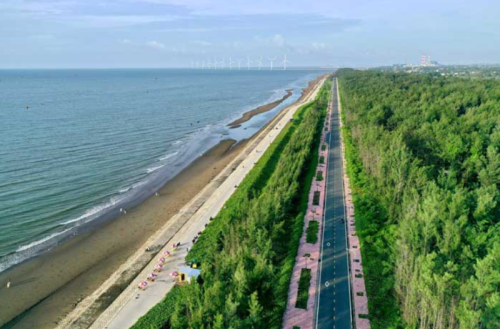
Along the Mekong Delta province’s route, 30 new bridges will be built.

The People’s Committee of thể Mekong Delta province of Vinh Long has officially approved the Coastal Corridor Road Project in the former Tra Vinh province.

Tra Vinh province has been merged with Vinh Long since July 2025.

The project is invested by the Vinh Long Provincial Transport Project Management Board and will be implemented across the communes of Long Hoa, My Long, Cau Ngang, Hiep My, Ngu Lac, Nhi Truong, Long Huu, Long Hiep, Tap Son, and Hung Hoa, and Duyen Hai Ward.

Regarding investment scale, component 1 of the project involves constructing the coastal corridor road with a total designed length of about 60.28 km. Of this, the main road section will be approximately 56.38 km long, built to Grade III of delta road standards with two lanes, a design speed of 80 km/h, and a roadbed width of 14 m. Along the route, 30 new bridges will be constructed using reinforced concrete and prestressed reinforced concrete.

The total investment for the project is nearly VND9.187 trillion (approximately $342 million). Funding will come from loans from the Asian Development Bank (ADB) and counterpart capital. Under the financial mechanism, the central Government will allocate 90% of the ADB loan, while the province will re‑borrow 10% and arrange counterpart capital.

The project is scheduled for implementation during 2025–2030, aiming to complete the coastal corridor road connecting from Đai Ngai Bridge on National Highway 60, through the Cung Hau estuary overpass, Co Chien 2 Bridge, and Cua Dai Bridge in Vinh Long Province, while also linking with the coastal road system of Dong Thap Province which is also located in the Mekong Delta.


HSBC launches US$4bn low-carbon financing facility targeting Vietnam

HSBC launches US$4bn low-carbon financing facility targeting Vietnam

VOV.VN - HSBC on May 25 unveiled a credit facility of up to US$4 billion in mainland China to support the international expansion of clean energy and low-carbon companies, with Vietnam identified as a key destination.

The initiative shows HSBC’s focus on supporting clients in their transition efforts while enabling innovation, growth and new business opportunities.

The Sustainability and Transition Credit Facility will provide financing for eligible mainland China businesses across sectors including clean power, transport electrification, data centres and artificial intelligence.

China accounts for 47% of global cleantech exports, and around two-thirds of global solar and battery exports. EV sales are expected to reach 26 million globally in 2026, while electricity consumption from data centres worldwide is projected to roughly double from about 485 TWh in 2025 to 945 TWh by 2030. This expansion is further supported by the ASEAN-China Free Trade Area (ACFTA) 3.0 Upgrade Protocol, signed during the 47th ASEAN Summit in Kuala Lumpur in October 2025, which for the first time extends China-ASEAN trade cooperation into the green economy, digital economy and supply chain connectivity.

Vietnam stands to benefit from increased access to clean energy technologies, as 91% of new wind and solar projects commissioned in 2024 were cheaper than the lowest-cost fossil fuel alternatives globally.

At the recent 48th ASEAN Summit in the Philippines, regional leaders reiterated their commitment to accelerating development of the ASEAN Power Grid and building “a more integrated, secure, and sustainable energy future.”

Vietnam presents a significant opportunity within the initiative. Renewables accounted for 27.9% of the country’s total installed power capacity in 2025. EV sales penetration reached about 40% in 2025, among the highest rates in ASEAN and one of the fastest globally. Vietnam Prime Minister’s Decision 768/QD-TTg (2025) on national power sector development projects total investment of US$134.3 billion in power generation and transmission by 2030, creating substantial demand for clean energy technologies and battery materials.

As Chinese companies seek overseas expansion to meet rising demand, HSBC’s new facility aims to help bring clean technologies and solutions to market more efficiently, contributing to global decarbonisation efforts. HSBC will extend credit limits for eligible companies, streamline credit approvals and develop tailored financial solutions based on individual business needs.

Tim Evans, CEO and Head of Banking at HSBC Vietnam, emphasized that “Vietnam's clean energy transition is happening at pace and at scale right now. The country's rapid EV adoption, its ambitious power development targets, and its growing openness to sophisticated foreign investment make it a compelling destination for Chinese clean energy companies looking to expand internationally. HSBC is uniquely positioned to support that flow of capital and technology, and this facility strengthens our ability to support this important trend.”

“China is home to some of the world’s most dynamic low-carbon companies. These businesses are setting new benchmarks in high-end manufacturing while playing a vital role in transforming transition ecosystem”, said Natalie Blyth, Global Head of Sustainable Finance and Transition at HSBC.

“As they scale internationally, they need financial partners with the global reach and expertise to support them. This facility is designed to do exactly that and no bank is better placed than HSBC to help clients find, access and navigate growth opportunities across global ecosystems”, she added.


See all blog