Lumen Vietnam Fund

Blog

EU backs Vietnam’s shift to risk-based management to unlock green investment

EU backs Vietnam’s shift to risk-based management to unlock green investment

The EU strongly supports Vietnam’s efforts to improve law enforcement and shift from pre-inspection to risk-based management, expanding opportunities for European small and medium-sized enterprises.

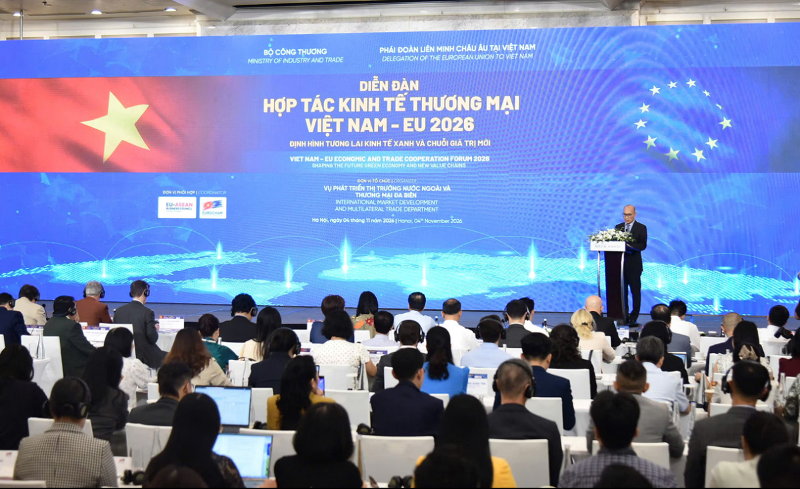
Speaking at the 9th Vietnam-EU Economic and Trade Cooperation Forum on November 4 in Hanoi, H.E. Mr. Julien Guerrier, Ambassador and Head of the Delegation of the European Union to Vietnam, reaffirmed that the European Union views Vietnam as a bright spot of economic dynamism, resilience, and growth aspiration amid global fragmentation and slowing economic growth.

According to him, Vietnam’s economic development represents one of the most impressive achievements of the modern era. The nation’s targets to become a high-income, innovation-driven developed country by 2045 and achieve net-zero carbon emissions by 2050 reflect a strong strategic vision for sustainable development.

The EU diplomat emphasized that upgrading bilateral ties to a Comprehensive Strategic Partnership in early 2026, alongside the recent visit to the EU and the Kingdom of Belgium by General Secretary and President To Lam, created powerful political momentum.

To fully capture new high-quality investment flows from Europe, particularly in the green economy and future value chains, he strongly advocated for Vietnam to streamline regulatory frameworks and transition toward risk-based management.

EVFTA remains pillar of economic partnership

Highlighting the EU-Vietnam Free Trade Agreement (EVFTA) as a solid pillar, Ambassador Julien Guerrier expressed confidence that full and effective implementation of the agreement will unlock even greater economic potential. Vietnam currently stands as the EU’s largest trading partner within ASEAN and ranks 16th globally.

His assessments were echoed by trade indicators presented by Vietnamese Deputy Minister of Industry and Trade, Mr. Luong Hoang Thai. In the first nine months of 2026, Vietnam’s GDP grew over 9 percent year-on-year, while total import-export turnover surpassed $1 trillion by November 4. Two-way trade between Vietnam and the EU reached over $65 billion during the nine-month period, up nearly 20 percent year-on-year.

Addressing energy transformation, Ambassador Julien Guerrier highly commended the nearly €4 billion ($4.5 billion) invested in renewable energy in Vietnam during the first half of 2026. Through the Just Energy Transition Partnership (JETP) and the Global Gateway strategy, European institutions stand ready to provide financial resources and advanced technologies to support Vietnam’s green transition.

Mr. Noel Clehane, Vice Chairman of the EU-ASEAN Business Council (EU-ABC), added that European enterprises are eager to co-create a sustainable ecosystem, as production competitiveness is now closely tied to green standards and sustainable finance.

In response, Mr. Trinh Quoc Vu, Deputy Director General of the Electricity Regulatory Authority under the Ministry of Industry and Trade, outlined implementation plans under the Adjusted Power Development Plan 8. Vietnam is prioritizing three key areas of cooperation with European partners: offshore wind development, battery energy storage systems (BESS) alongside pumped-storage hydropower, and high-quality human resource training.

Vietnam committed to continuing institutional reforms and improving its investment environment to create favorable conditions for European investors participating in energy transition projects, he said.


Source: Huyen Vy
Latest Posts

Thanh Hoa approves $304 million upgrade to National Highway 45

Thanh Hoa approves $304 million upgrade to National Highway 45

The project is expected to improve traffic capacity and connectivity between industrial parks.

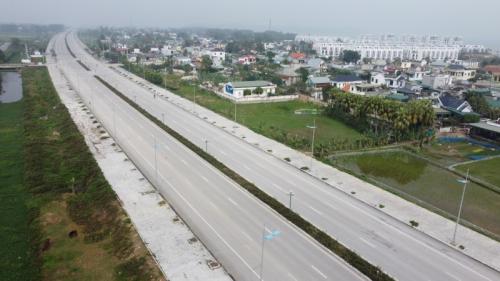
The People’s Council of central Thanh Hoa Province has approved a resolution adjusting the investment policy for a project to upgrade National Highway 45, from the boundary with northern Ninh Binh Province to Thanh Hoa’s provincial center.

The project’s total investment has been increased to a maximum of VND8.073 trillion ($304 million), comprising VND5.5 trillion from central government budget and VND2.573 trillion from the provincial budget.

Spanning approximately 68.35 kilometers, the project is expected to improve transport links between Thanh Hoa’s midland and mountainous areas and its provincial centre, while strengthening interprovincial connectivity with Ninh Binh. Improved traffic capacity could give goods from production facilities and industrial parks better access to major north-south transport routes.

The upgraded infrastructure is also expected to support more effective use of land along the route and attract investment in industry, logistics, tourism and services. These benefits will depend on project implementation and coordinated connections with surrounding roads.

Construction is scheduled for 2028–2029, with completion, acceptance and commissioning expected in 2030.


Indian investor proposes $1.3 bln bio-methanol complex in Thanh Hoa

Indian investor proposes $1.3 bln bio-methanol complex in Thanh Hoa

An Indian investor has proposed a study for a $1.3 billion bio-methanol production complex using bamboo and luong in Thanh Hoa Province, requiring about 200 ha of land.

The Thanh Hoa Provincial People's Committee on November 5 held a working session with an Indian delegation to discuss investment research within the Nghi Son Economic Zone.

Provincial People's Committee Vice Chairman, Cao Van Cuong, hosted the delegation led by MeOH Tech & Applications Pvt CEO, Prashanth Srinivas, alongside representatives from NewEra Cleantech and Sao Thai Duong Investment JSC.

According to the preliminary proposal, the bio-methanol production complex involves a total estimated investment of approximately $1.3 billion. The facility requires about 200 ha of land and is designed for a daily output capacity ranging from 2,300 to 6,900 tons. The project aims to deeply process biomass resources, expanding outlets for local bamboo, luong, and planted forest products.

Thanh Hoa currently has about 72,000 ha of bamboo and luong, including more than 46,000 ha of restored and managed luong forests. The annual harvest output exceeds 65 million trees, with paper material supply reaching approximately 85,000 tons. Raw material supply is projected to remain stable through the 2027 to 2030 period.

Bio-methanol is produced from renewable biomass for use in chemical manufacturing and energy sectors. Alongside bio-methanol, the investor's plan includes producing bamboo pellets and derivative products.

The Management Board of Nghi Son Economic Zone and Industrial Parks has introduced Dong Vang Industrial Park as a potential site based on land requirements and project scale.

Mr. Cuong requested that the investor group clarify its financial qualifications, detailed raw material demands, production technology, and environmental safety processes. He emphasized that Thanh Hoa prioritizes large-scale, modern, and environmentally friendly projects aligned with green growth strategies.


Vietnam welcomes 19.5 million foreign visitors in ten months

Vietnam welcomes 19.5 million foreign visitors in ten months

China led the top ten source markets in the ten-month period with nearly 4.4 million arrivals, followed by South Korea with 3.4 million, Russia with 1.25 million, and Taiwan (China) with 1.07 million.

The Vietnamese tourism sector welcomed 19.5 million international arrivals in the first ten months of 2026, up 13.8 percent year-on-year.

According to the Vietnam National Authority of Tourism (VNAT)'s report, a stable environment, enhanced security, direct international flight connections, and favorable visa policies continue to attract global travelers. Diversified tourism products and rich resources also drove double-digit international growth.

The VNAT report also showed that European markets posted strong growth, significantly contributing to overall results alongside traditional Asian source markets.

China led the top ten source markets in the ten-month period with nearly 4.4 million arrivals, followed by South Korea with 3.4 million, Russia with 1.25 million, and Taiwan (China) with 1.07 million.

Other major source markets included the US with 808,700 arrivals, Cambodia 787,100, Japan 757,500, India 744,600, the Philippines 579,200, and Australia 543,000.

By region, Europe posted the highest growth rate at 51.5 percent, followed by Africa up 30.7 percent, Oceania up 21.5 percent, the Americas up 18.1 percent, and Asia up 7.3 percent. Europe registered the largest absolute surge, contributing an additional 1.09 million arrivals year-on-year.

Within Europe, Russia surged 150.0 percent, remaining the largest source market in the region. Other notable European markets included Poland up 45.8 percent, the Czech Republic up 21.9 percent, Switzerland up 23.1 percent, and Sweden up 21.4 percent.

Meanwhile, South Korean arrivals dropped 6.3 percent, signaling a need for targeted promotional policies and product development to retain competitiveness in this key traditional market.

Vietnam reached 19.5 million foreign arrivals in the first ten months of 2026, fulfilling nearly 78 percent of its 25-million annual goal. To secure the remaining 5.5 million visitors, VNAT is launching targeted promotions across key markets including China, South Korea, India, and Russia.

Recent high-level engagements further support this push. Vietnamese officials met with South Korean counterparts to simplify visas and expand high-end golf and culinary offerings. Concurrently, Vietnam is targeting high-spending Austrian tourists by pushing for improved air connectivity to unlock long-haul European growth.


See all blog