Lumen Vietnam Fund

Blog

Essential role of private captal for Vietnam's development

Essential role of private captal for Vietnam's development

Not just mobilizing but also fully utilizing private capital will be essential for Vietnam’s ongoing development.

Vietnam has already achieved remarkable success. Over the last three decades, the country has transformed itself into one of Asia’s, and the world’s, most dynamic economies. But the next stage of development will demand better growth: growth that is more productive, more resilient, and more inclusive. Mobilizing private capital is not just about filling a funding gap. It is about upgrading the way the economy works.

Reasons to mobilize private capital

The first reason to mobilize private capital is the sheer scale of what lies ahead. Vietnam faces an estimated $1.5 trillion funding gap over the coming years to support infrastructure development and industrialization. The government’s own estimates indicate that public finances alone cannot carry this burden. If Vietnam relies primarily on State budgets and bank credit, growth will slow and risks will accumulate. Private capital is therefore not optional, it is essential.

Second, private capital brings discipline. Countries that rely more heavily on private and foreign investment tend to allocate resources more efficiently. Vietnam’s localization rate is approximately one-third, meaning the country still has significant work to do in supporting industrialization and building out supply chains. Vietnam’s labor productivity remains roughly half that of Thailand’s, something the International Monetary Fund (IMF) and multiple economists have indicated should be significantly higher. This challenge can be addressed, in part, by domestic and foreign private sector enterprises, which tend to focus on productivity-enhancing investments and projects.
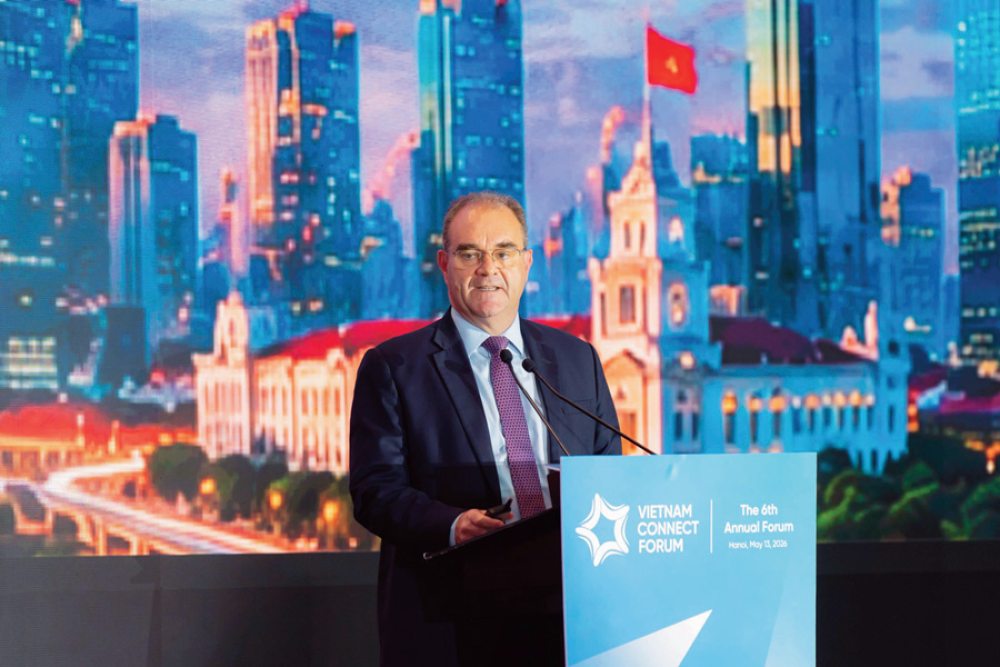
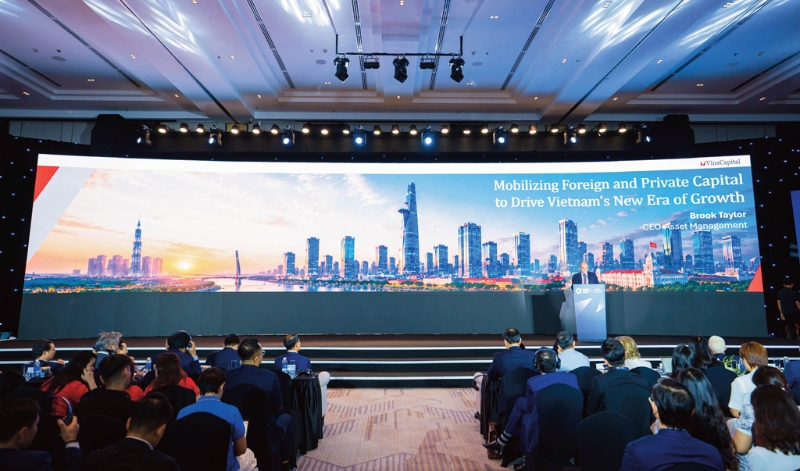
Third, mobilizing capital can help Vietnam accelerate its economic advantage. I wrote a book, “Vietnam: Asia’s Rising Star”, about how Vietnam is following the East Asian development model that created the original Asian Tigers. Economies such as South Korea, Japan, and Taiwan (China) benefited from strong external support and global integration at the right moment in history. In the decades following World War II, the US supported and encouraged economic development in these countries.

Vietnam is also at such a moment, though the dynamic is somewhat different. Today, FDI diversification is replacing direct external support, while supply chain diversification, geopolitical realignment, and strong global investor interest are creating a historic opportunity. Private capital can help Vietnam move faster than public capital alone allows.

Finally, diversifying funding sources increases economic stability. Economies that are overly dependent on bank lending are more vulnerable to interest rate shocks and inflation risks. A diversified system - combining banks, capital markets, long-term institutional investors, and foreign capital - creates resilience.

Such systems allow governments to preserve fiscal capacity and provide a buffer for future economic interventions when necessary. They also allow for better market optimization, enabling governments to steer funding toward priority areas such as housing.

Even governments in advanced economies like Singapore and the US play an active role in the housing sector, alongside private capital, to ensure citizens are better able to afford homes.

How to mobilize

I would like to focus on three areas where policy execution matters most in attracting capital. All of them relate to creating a stable and predictable investment environment.

Creating the conditions

First and foremost is confidence. Investors are willing to accept risk. What they cannot accept is uncertainty. Stable and predictable policy is the foundation of all long-term investment. This means adopting international regulatory best practices, improving transparency, and maintaining consistent enforcement.

The government clearly recognizes this, as reflected in recent reforms, including Politburo Resolution No. 68 supporting private sector development. Steps such as adopting Basel III standards and maintaining prudent loan-to-deposit ratios also enhance financial stability.

Next is ease of doing business. Vietnam has competed successfully with peers such as China in attracting manufacturing investment. But competition is intensifying. Despite considerable progress, many foreign investors still cite difficulties around licensing, land use, and dispute resolution. Maintaining reform momentum in these areas will be critical.

Finally, macro-economic stability is equally important. Inflation control, financial system soundness, and prudent debt management send powerful signals to investors. Vietnam’s continued alignment with global standards, including Basel III for banking and improved loan-to-deposit ratios, reinforces trust in the system. The government has done an excellent job sustaining growth amid global uncertainty.

In short, capital flows where it feels safe, and stays for decades, not just years.

Deepen and professionalize capital markets

The second pillar is capital market development. Vietnam’s overreliance on bank credit constrains growth and increases systemic risk. Deepening capital markets is essential to reducing that risk and unlocking growth.

One key goal should be achieving, and sustaining, an investment-grade sovereign rating. This would send a powerful signal of stability and reliability to global investors, dramatically lowering the cost of capital and opening access to vast pools of global funding. Many pension funds, insurance companies, and long-term asset managers cannot invest in markets below investment grade.

Equally important is the development of private sector pension funds. These funds do more than provide retirement security for citizens. They institutionalize stock and bond markets, provide long-term funding for corporate bonds, and align economic growth with household wealth creation.

Together, deeper financial markets and pension systems reduce dependence on rapid credit growth and improve financial stability.

The newly-launched International Financial Center (IFC) in Vietnam, of which VinaCapital is a founding member, will also play a key role in attracting foreign capital and lowering the cost of debt. Its rapid development reflects the government’s commitment to reform and urgency.

Together with an investment-grade rating, the IFC can help lower Vietnam’s cost of debt and enable the country to compete more effectively with regional peers.

Physical infrastructure development

The third and final pillar I want to highlight is physical infrastructure. We are all aware of the long list of infrastructure projects underway, or soon to begin, including airports, seaports, highways, and railway lines around the country. But infrastructure is not just about building roads and power plants. It is about unlocking productivity.

Vietnam’s logistics costs, as a percentage of GDP, remain high compared to regional peers. Reducing these costs directly improves export competitiveness and domestic efficiency.

Better transport infrastructure allows factories to spread more evenly across the country, supporting regional development, reducing congestion, and tapping into underutilized labor pools. This also connects directly with workforce mobility, housing affordability, and urban planning.

Energy infrastructure deserves special attention. Reliable, affordable energy is the backbone of industrialization and, increasingly, of a digital future. Given Vietnam’s abundance of renewable energy resources, and in light of changing global dynamics, including developments in the Middle East, the country is uniquely positioned to attract data center investment.

Transit-oriented development (TOD), proper suburban planning, and integrated housing and transport policies will help ensure that growth is sustainable, not just fast.

In short, infrastructure is one of the areas where domestic and foreign private capital can deliver some of the highest economic multipliers, if structured correctly.

The next phase of Vietnam’s development will not be defined by how fast capital comes into the country, but by how wisely it is mobilized.


Source: Brook Taylor
Latest Posts

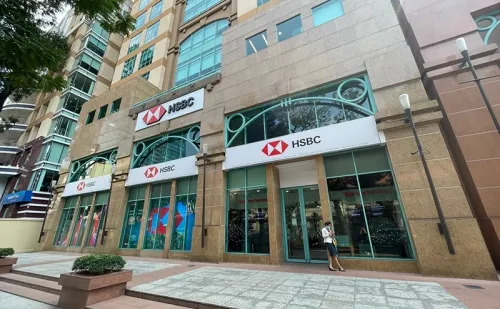
HSBC launches US$4bn low-carbon financing facility targeting Vietnam

HSBC launches US$4bn low-carbon financing facility targeting Vietnam

VOV.VN - HSBC on May 25 unveiled a credit facility of up to US$4 billion in mainland China to support the international expansion of clean energy and low-carbon companies, with Vietnam identified as a key destination.

The initiative shows HSBC’s focus on supporting clients in their transition efforts while enabling innovation, growth and new business opportunities.

The Sustainability and Transition Credit Facility will provide financing for eligible mainland China businesses across sectors including clean power, transport electrification, data centres and artificial intelligence.

China accounts for 47% of global cleantech exports, and around two-thirds of global solar and battery exports. EV sales are expected to reach 26 million globally in 2026, while electricity consumption from data centres worldwide is projected to roughly double from about 485 TWh in 2025 to 945 TWh by 2030. This expansion is further supported by the ASEAN-China Free Trade Area (ACFTA) 3.0 Upgrade Protocol, signed during the 47th ASEAN Summit in Kuala Lumpur in October 2025, which for the first time extends China-ASEAN trade cooperation into the green economy, digital economy and supply chain connectivity.

Vietnam stands to benefit from increased access to clean energy technologies, as 91% of new wind and solar projects commissioned in 2024 were cheaper than the lowest-cost fossil fuel alternatives globally.

At the recent 48th ASEAN Summit in the Philippines, regional leaders reiterated their commitment to accelerating development of the ASEAN Power Grid and building “a more integrated, secure, and sustainable energy future.”

Vietnam presents a significant opportunity within the initiative. Renewables accounted for 27.9% of the country’s total installed power capacity in 2025. EV sales penetration reached about 40% in 2025, among the highest rates in ASEAN and one of the fastest globally. Vietnam Prime Minister’s Decision 768/QD-TTg (2025) on national power sector development projects total investment of US$134.3 billion in power generation and transmission by 2030, creating substantial demand for clean energy technologies and battery materials.

As Chinese companies seek overseas expansion to meet rising demand, HSBC’s new facility aims to help bring clean technologies and solutions to market more efficiently, contributing to global decarbonisation efforts. HSBC will extend credit limits for eligible companies, streamline credit approvals and develop tailored financial solutions based on individual business needs.

Tim Evans, CEO and Head of Banking at HSBC Vietnam, emphasized that “Vietnam's clean energy transition is happening at pace and at scale right now. The country's rapid EV adoption, its ambitious power development targets, and its growing openness to sophisticated foreign investment make it a compelling destination for Chinese clean energy companies looking to expand internationally. HSBC is uniquely positioned to support that flow of capital and technology, and this facility strengthens our ability to support this important trend.”

“China is home to some of the world’s most dynamic low-carbon companies. These businesses are setting new benchmarks in high-end manufacturing while playing a vital role in transforming transition ecosystem”, said Natalie Blyth, Global Head of Sustainable Finance and Transition at HSBC.

“As they scale internationally, they need financial partners with the global reach and expertise to support them. This facility is designed to do exactly that and no bank is better placed than HSBC to help clients find, access and navigate growth opportunities across global ecosystems”, she added.


Rooftop solar emerges as key tool to reduce energy costs in industrial parks

Rooftop solar emerges as key tool to reduce energy costs in industrial parks

Rooftop solar power, especially when combined with Battery Energy Storage Systems (BESS), is emerging as a strategic solution, paving the way for a greener, more flexible and more sustainable industrial park model.

HÀ NỘI — Amid increasingly unpredictable global energy prices, intensifying extreme weather and mounting pressure to reduce emissions, Việt Nam’s industrial parks are facing the challenge of securing sufficient electricity for production while also controlling costs and moving toward energy independence.

Rooftop solar power, especially when combined with Battery Energy Storage Systems (BESS), is emerging as a strategic solution, paving the way for a greener, more flexible and more sustainable industrial park model.

According to energy experts, businesses can save between 20 and 40 per cent on electricity costs by adopting rooftop solar power systems, with an average payback period of around four to six years, while system lifespans can extend from 25 to 30 years.

This helps stabilise long-term production costs amid fluctuating electricity prices. Practical implementation in several major industrial parks has already demonstrated clear benefits.

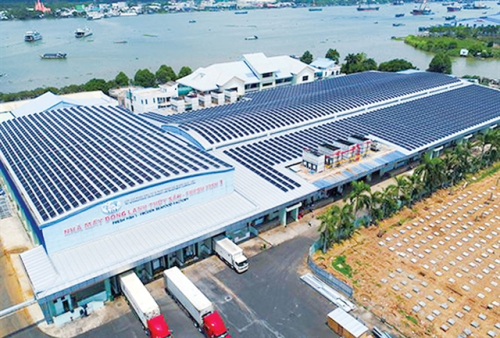
A rooftop solar power system with a total capacity of approximately 90MWp has been in operation at Thăng Long Industrial Park in Hà Nội since 2021, helping many businesses reduce electricity costs while also meeting increasingly stringent sustainability and emissions reduction standards required by international partners.

Assistant general director of Thăng Long Industrial Park Lisa Iguchi said the deployment stemmed from the practical needs of factories, especially in the electronics sector, as well as environmental responsibility and sustainable development requirements.

“The use of renewable energy not only delivers economic benefits, but also enhances competitiveness within the global supply chain,” she said.

Similarly, at Amata Industrial Park in Đồng Nai Province, the ecological industrial park model associated with renewable energy is also being strongly promoted. Many FDI enterprises in the park have invested in rooftop solar systems to meet increasingly strict ESG standards.

Rooftop solar power has a major advantage because its highest electricity output occurs during the daytime, exactly when industrial park production loads peak.

This synchronisation allows businesses to significantly reduce the amount of electricity purchased from the grid, especially during peak hours.

However, Dr Nguyễn Huy Hoạch from the scientific council of Vietnam Energy Magazine told the Hà Nội Mới newspaper that solar power still has an inherent limitation due to its intermittent generation pattern.

This means its economic efficiency cannot be fully maximised without complementary solutions, according to Hoạch.

For this reason, BESS is increasingly seen as the missing piece needed to complete the energy independence equation.

When combined with rooftop solar systems, BESS allows excess daytime electricity to be stored and used during periods with higher electricity prices, helping businesses reduce costs and optimise energy use.

BESS also helps shave peak loads, reducing pressure on the national grid and ensuring stable operations for industries that require uninterrupted power supply.

More broadly, the integration of rooftop solar and BESS is gradually creating a distributed energy ecosystem within industrial parks, with the national grid serving as a flexible backup source when needed.

At a more advanced stage, industrial parks could even evolve toward microgrid models, enabling flexible operations, real-time cost optimisation and greater resilience against energy disruptions.

However, practical implementation still faces many challenges. Investment costs for energy storage systems remain high, while electricity pricing mechanisms and regulations regarding self-generated and self-consumed electricity are still being refined.

In addition, grid infrastructure and green financing models have yet to develop in line with market demand.

According to experts, for this model to achieve its full potential, Việt Nam needs to quickly finalise time-of-use electricity pricing mechanisms, creating sufficient price differences between time periods to encourage investment in energy storage.

At the same time, it is necessary to promote a competitive electricity market, develop smart grid infrastructure and diversify financial tools to support businesses in their green transition.


Land database is to be completed in 2026

Land database is to be completed in 2026

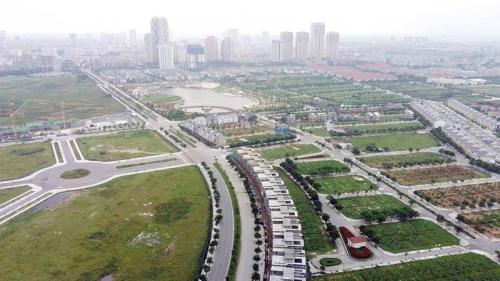
Vietnam currently has around 106 million land plots nationwide. Of these, data for 23.5 million plots have been reviewed, updated and standardized to ensure they are "accurate, sufficient, clean and live."

Vietnamese Deputy Prime Minister Ho Quoc Dung has urged ministries, sectors and localities to double efforts to accelerate cadastral mapping, land registration and the development of a comprehensive national land database in 2026, aiming to enhance market transparency and promote digital transformation, according to a report from the Government News.

The Ministry of Agriculture and Environment was quoted by the News as reporting that Vietnam currently has around 106 million land plots nationwide. Of these, data for 23.5 million plots have been reviewed, updated and standardized to ensure they are "accurate, sufficient, clean and live."

Around 38.9 million plots already have data but remain incomplete, requiring further cleaning, supplementation and verification, while the remaining 43.2 million plots have yet to be incorporated into the database.

In total, approximately 82.1 million land plots, equivalent to 77.5 percent of the total, still require data cleaning, information completion and database development.

To achieve the target of finalizing measurement, statistics, digitalization and data standardization nationwide, while ensuring seamless connectivity with other national database systems, the Government has assigned ministries, sectors and local authorities a number of key tasks and deadlines for 2026.

Under the plan, the Ministry of Agriculture and Environment, in coordination with the Ministry of Public Security and relevant agencies, is tasked with guiding localities to complete the campaign on enriching and cleaning the national land database by March 2026.

Localities have been requested to mobilize all available resources to complete cadastral mapping and land records. The construction of land databases must also be finalized and fully integrated into the national system for unified management, operation and exploitation by December 2026.


See all blog