Drivers behind Vietnam’s first-half economic achievements
Ms. Nguyen Thi Huong, Director General of the National Statistics Office at the Ministry of Finance, tells Vietnam Economic Times / VnEconomy about the drivers behind Vietnam’s robust first-half economic performance, the challenges that could weigh on growth in the second half, and the policy priorities needed to achieve the country’s ambitious 2026 GDP target.
The second-quarter and first-half 2026 GDP figures have just been released, revealing impressive growth. In your view, what were the key drivers behind Vietnam’s economic performance in the period?

Ms. Nguyen Thi Huong, Director General of the National Statistics Office.
Vietnam’s GDP growth in the second quarter and first half of 2026 stand out as major bright spots, reflecting both the economy’s strong recovery and its resilience. Building on the momentum from the first quarter, GDP expanded by 8.39 per cent year-on-year in the second quarter, up from 8.14 per cent in the same period of 2025. For the first half of the year, growth reached 8.18 per cent, compared with 7.63 per cent a year prior. This is an impressive achievement given the backdrop of sluggish global demand, rising trade protectionism, and persistent geopolitical uncertainty.
Growth was broad-based across all three major sectors of the economy. Agriculture, forestry, and fisheries expanded by 4.06 per cent in the second quarter and 3.87 per cent in the first half. Industry and construction recorded the strongest performance, growing by 10.51 per cent and 9.81 per cent, respectively, while services maintained solid momentum at 7.87 per cent and 8.09 per cent.
To understand what drove this performance, we need to look at both the supply and demand sides of the economy. From the supply side, growth reflected the combined strength of all three sectors.
Agriculture, forestry, and fisheries continued to serve as a key pillar of the economy. Structural reforms, technological advances, and improved management of cultivation area codes significantly boosted crop and aquaculture productivity, while effective disease control and the wider adoption of bio-secure farming practices supported steady growth in livestock and forestry.
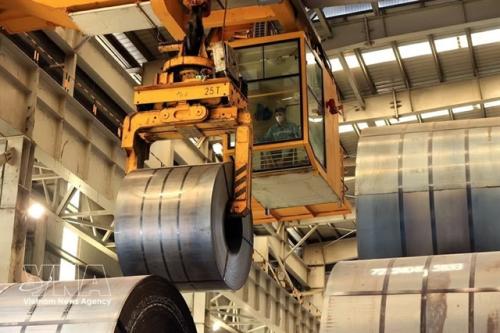
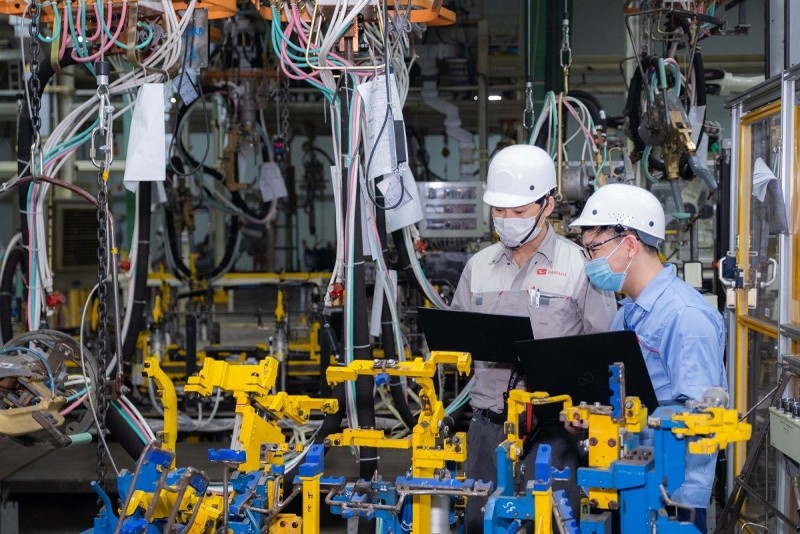
Industry and construction remained the economy’s primary growth engine. Manufacturing continued to lead the way, expanding by 10.56 per cent in the second quarter and 10.23 per cent in the first half, contributing 2.85 and 2.73 percentage points, respectively, to overall GDP growth. The gains were driven by a strong recovery in export orders for key industries, including electronics, computers, optical products, metals, and motor vehicles.
The mining sector also recorded its fourth consecutive quarter of positive growth, expanding by 7.59 per cent in the second quarter, largely due to higher crude oil and natural gas output that helped secure domestic supplies of essential raw materials.
Construction accelerated sharply, posting growth of 12.28 per cent in the second quarter, while electricity and gas production and distribution rose 12.19 per cent, meeting rising energy demand from both households and industry.
Despite mounting input cost pressures, the services sector also maintained strong momentum, with several industries outperforming the sector average. Wholesale and retail trade, along with motor vehicle and motorcycle repair, grew by 9.62 per cent in the second quarter and 9.67 per cent in the first half. Transportation and warehousing expanded by 11.19 per cent and 10.18 per cent, respectively, while arts, entertainment, and recreation grew by 10.49 per cent and 10.11 per cent.
By contrast, accommodation and food services, which grew by just over 8.3 per cent, and banking and finance, at nearly 8 per cent, fell short of expectations. Public administration and defense contracted by 9.71 per cent in the second quarter, reflecting tighter control over recurrent State budget spending as resources were redirected toward priority growth initiatives.
With first-half GDP results now available, how much growth will Vietnam need in the second half of 2026 to meet the National Assembly’s full-year target? What are the biggest challenges the economy is likely to face?
The first-half results are certainly encouraging, but the road ahead will be far more challenging. Based on the latest growth scenario aligned with the government’s economic ambitions, achieving the National Assembly’s full-year GDP growth target of 10 per cent will require an exceptional performance in the second half of 2026.
With GDP growth of 7.94 per cent in the first quarter and 8.39 per cent in the second, bringing first-half growth to 8.18 per cent, the economy will need to expand by 11.16 per cent in the third quarter and 12.09 per cent in the fourth quarter to reach the annual target, or 11.7 per cent over the second half as a whole. Meeting such an ambitious target will require extraordinary macro-economic management as Vietnam navigates mounting domestic and external headwinds.
As one of the world’s most open economies, Vietnam is highly exposed to shifts in global markets. Rising trade protectionism, expanding technical barriers, and more frequent trade defense measures by major economies are placing increasing pressure on the country’s export-oriented manufacturing sector. Export growth is expected to moderate in the second half as demand in key markets such as the US and Europe remains fragile, export orders face the risk of softening, and prices for many of Vietnam’s major export products continue to decline amid intensifying global competition.
Public investment remains a critical catalyst for stimulating demand, but disbursement during the peak investment season in the second half continues to face significant obstacles. Delays in land clearance, lengthy project approval procedures, uneven implementation capacity across localities, and shortages of construction materials in several key economic regions all threaten to slow progress. Unless these bottlenecks are resolved, the multiplier effect of public investment on supporting industries - including construction, building materials, and transportation - will be significantly weakened.
The business sector, particularly small and medium-sized enterprises (SMEs), also continues to struggle after years of absorbing successive economic shocks. Many firms face persistent cash flow constraints and elevated logistics costs. Though lending and deposit rates have eased, credit demand remains weak, reflecting businesses’ continued caution toward expanding production amid uncertain market conditions.
Meanwhile, volatility in the US dollar, prolonged monetary tightening by major central banks, and rising global energy and commodity prices are increasing pressure on Vietnam’s exchange rate and imported inflation. At home, scheduled increases in State-administered prices for services such as healthcare, education, and energy later this year will further narrow policymakers’ room to maneuver. Striking the right balance between lowering interest rates to support growth and containing inflation while maintaining exchange rate stability is becoming increasingly difficult.
Though recent legal reforms have helped improve sentiment, the real estate market remains highly fragmented. Supply shortages persist in affordable commercial housing and social housing, while many major developers continue to grapple with debt restructuring and constrained access to new financing. These challenges are likely to weigh on the recovery of the construction sector and dozens of related industries.
Given these pressures and the ambitious growth target, what will be the key drivers of growth in the second half of the year? What strategic priorities should the government and businesses focus on to achieve the full-year target?
Though achieving 11.7 per cent growth in the second half of the year will be extremely challenging, I believe the full-year target remains attainable if Vietnam can fully leverage both its traditional and emerging growth drivers. In my view, the government and the business community should focus on four strategic priorities.
First, manufacturing will remain the cornerstone of economic growth. Vietnam should capitalize on robust FDI inflows, supported by its political stability and extensive network of next-generation free trade agreements (FTAs). Continued investment by major global corporations in high-tech manufacturing, electronics, semiconductors, and data centers will provide significant momentum for industrial expansion.
At the same time, the services sector, particularly high-value industries such as e-commerce, transportation, logistics, financial services, and international tourism, should be supported through year-end tourism promotional programs and investments in transport infrastructure to help lower business costs.
Second, accelerating public investment disbursement will be critical. The simultaneous launch of five new strategic metro lines in Hanoi, together with the continued development of interregional expressways and the Lao Cai - Hanoi - Hai Phong railway, will provide a strong boost to domestic demand. To maximize the impact, the government should further decentralize decision-making, expedite land clearance, and remove bottlenecks related to construction material supplies, allowing public investment to flow into the economy more quickly and crowd in private capital.
The second half of the year also coincides with the peak consumer spending season. Maintaining appropriate tax and fee reductions will help stimulate household consumption while supporting government revenues over the longer term. Expanding modern retail networks alongside e-commerce platforms will further strengthen domestic consumption.
Third, Vietnam should accelerate the adoption of the digital economy and AI. Greater use of big data, cloud computing, and automation will enable businesses to improve productivity and reduce costs amid rising input prices. While technology may not generate an immediate surge in growth, it will play a vital role in improving efficiency and supporting the economy’s long-term structural transformation.
At the same time, Vietnam’s commitment to achieving net-zero emissions is enhancing its appeal as a destination for renewable energy and green manufacturing projects. Realizing this potential will require a clearer regulatory framework for direct power purchase agreements (DPPAs) and continued investment in clean energy infrastructure, enabling domestic firms to integrate more deeply into global supply chains with increasingly stringent environmental requirements.
Fourth, institutional reform and improvements to the business environment remain the foundation of sustainable growth. Further streamlining administrative procedures and addressing legal bottlenecks in land, construction, and capital market regulations will strengthen investor confidence, unlock private capital, and ultimately improve Total Factor Productivity (TFP), laying the groundwork for stronger long-term economic growth.
Source: en.vneconomy.vn