Lumen Vietnam Fund

Blog

Citi warns of intensifying competition for capital amid higher rates

Citi warns of intensifying competition for capital amid higher rates

Citi believes a new era of competition for capital is emerging as governments and corporations increasingly compete for funding amid rising borrowing needs, resilient economic growth and accelerating investment in AI.

​Citi said sovereigns are increasingly competing with private-sector borrowers for a finite pool of capital as governments fund infrastructure, energy security, defence and development priorities, while corporations continue to invest heavily in AI, data centres and digital infrastructure. This is happening against a higher-for-longer interest rate environment.

“We are seeing a structural shift in global capital markets. Governments are borrowing to fund development, infrastructure and strategic priorities while the private sector is investing heavily in AI and digital infrastructure.

As competition for capital intensifies, access to financing and innovative funding solutions will become increasingly important,” said Stephanie von Friedeburg, global head of Public Sector Group, Citi on the sidelines of the International Monetary Fund and World Bank metings in Bangkok this week.

As elevated USD rates continue to shape funding decisions, sovereign and corporate issuers are increasingly turning to local currency funding markets such as RMB, AUD, HKD, and SGD.

Citi is leveraging its global platform and local market expertise to help clients navigate this shift through tailored multi-currency funding strategies that complement USD issuance, optimise cost of capital and diversify liquidity sources.

Citi also highlighted the growing role of sovereign wealth funds in supporting national development strategies, particularly in the Gulf, where governments are directing more capital towards domestic infrastructure, technology and AI-related investments.

At the same time, Gulf investors continue to play an important bridging role between Western and Asian markets.

The bank is also seeing increased interest from central banks in reserve management and optimisation strategies, particularly around gold holdings.

Rising gold prices are prompting reserve managers to explore solutions such as hedging, liquidity management and borrowing against gold reserves.

“Central banks are increasingly evaluating how to diversify reserves, manage concentration risk and make more efficient use of balance-sheet assets. This includes exploring gold-related financing and hedging strategies as part of broader reserve management objectives,” said Stephanie von Friedeburg.

Furthermore, while discussions about de-dollarisation continue, Citi expects the US dollar to remain the dominant global reserve currency, supported by the depth, liquidity and scale of US financial markets.

For emerging markets, elevated debt burdens and higher borrowing costs are creating pressure on public finances at a time when governments must continue investing in energy, transport and digital infrastructure.

To help address these challenges, Citi is supporting innovative financing approaches, including debt-for-development transactions and liability management exercises.

Looking ahead, Citi expects AI infrastructure, energy security, sovereign financing and debt sustainability to remain key themes shaping investment and policy decisions globally, while public-private partnerships will play an increasingly important role in mobilising capital for long-term growth.

As global financing needs continue to rise, Citi’s international network, capital markets expertise and sovereign advisory capabilities position it to support clients in navigating an increasingly complex and competitive funding environment.


Source: Huong Thuy
Latest Posts

Vietnam urges Japan firms to co-develop and strengthen value and supply chains

Vietnam urges Japan firms to co-develop and strengthen value and supply chains

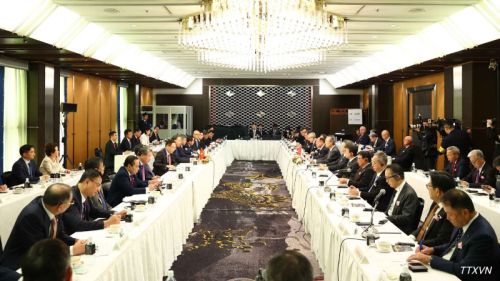
General Secretary and President To Lam made the remarks during a meeting and dialogue with leaders and senior representatives of major Japanese corporations in Tokyo on the morning of November 9, as part of his official visit to Japan from November 8-11.

Emphasizing the need to enhance the quality of cooperation in the new context, General Secretary and President To Lam stated that Vietnam and Japan should move from the traditional model of cooperation based on “acceptance and transfer” to one of “co-creation and deep integration of value chains and supply chains,” aiming for high-quality growth and stronger strategic self-reliance for both countries.

The top Vietnamese leader made the remarks during a meeting and dialogue with leaders and senior representatives of major Japanese corporations in Tokyo on the morning of November 9, as part of his official visit to Japan from November 8-11.

The event was attended by Japan Chamber of Commerce and Industry Chairman Kobayashi Ken, Japan Business Federation (Keidanren) Chairman Tsutsui Yoshinobu, and representatives from numerous major corporations. Keidanren currently brings together more than 1,500 leading Japanese companies.

General Secretary and President To Lam called on Keidanren member companies to view Vietnam not merely as a manufacturing base or a promising consumer market, but as a long-term strategic partner for jointly creating products, testing new business models, and developing strategic technologies.

Particular emphasis was placed on building ecosystems for high-tech industries, semiconductors, artificial intelligence (AI), large-scale data centers, and AI-driven solutions.

He also urged Japanese businesses to increase investment in smart infrastructure, green energy, green logistics, and environmentally friendly industries. He encouraged cooperation in research and development of emissions-reduction technologies, ensuring energy security at reasonable costs, and enhancing the overall competitiveness of the economy.

In addition, finance and banking, internationally standardized capital markets, advanced healthcare, pharmaceuticals, and biotechnology were identified as promising areas for future cooperation.

To facilitate the expansion of Japanese investment, General General and President To Lam affirmed Vietnam’s commitment to maintaining political and social stability, providing confidence for long-term investment plans.

Vietnam will continue pursuing institutional reforms, reviewing and reducing administrative procedures, removing bottlenecks, building a transparent and consistent legal framework, and protecting the legitimate rights and interests of investors.

At the same time, Vietnam is committed to ensuring a stable and adequate supply of essential conditions for production and business activities, including electricity, water, telecommunications infrastructure, ready-to-use industrial land, and human resources.

At the dialogue, representatives of Keidanren expressed their desire for Vietnam to play a greater role in the regional economic architecture, help ensure supply chain resilience, uphold free trade, continue improving the investment environment, and strengthen bilateral cooperation mechanisms.

Representatives of Japanese corporations highly valued the effectiveness of their investment and business activities in Vietnam. They reaffirmed their long-term commitment to contributing to sustainable growth through technology transfer, high-quality workforce development, innovation, and the development of transportation infrastructure, urban areas, industrial parks, energy projects, and digital transformation initiatives.


​

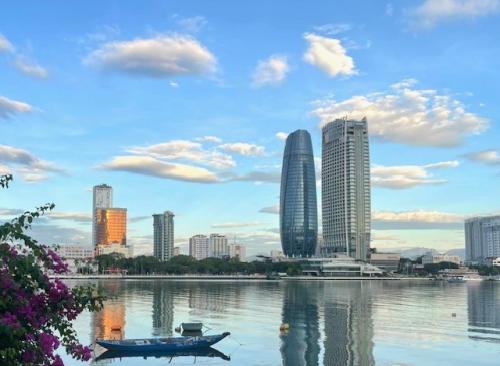
Da Nang approves $288m shipping channel project

Da Nang approves $288m shipping channel project

The channel is expected to lower logistics costs and attract further investment to central Da Nang city and the wider central region.

Central Da Nang city's authorities have approved the VND7.585 trillion ($288 million) investment project to develop the Cua Lo shipping channel.

The project will involve constructing a 6.58km navigation channel, with a width of 140 metres and a design depth of 13.2 metres.

It will also include a maritime signalling system and a pilot boarding and disembarking area capable of accommodating vessels of up to 50,000 DWT.

The development is expected to improve maritime access to the East Sea for the Central Highlands, southern Laos, northeastern Cambodia and Thailand. It will directly serve Chu Lai Open Economic Zone and surrounding areas, while supporting economic restructuring in Da Nang.

Cargo throughput along the route is projected to reach 7.5–9 million tons annually by 2030, 14 million tons by 2040 and 22 million tons by 2050.

The project will be implemented under a build-transfer (BT) contract. Construction is scheduled to run from the fourth quarter of 2026 to the fourth quarter of 2028.

Once operational, the channel is expected to lower logistics costs and attract further investment to southern Da Nang and the wider central region.


$105 mln packaging plant opens in Vietnam central

$105 mln packaging plant opens in Vietnam central

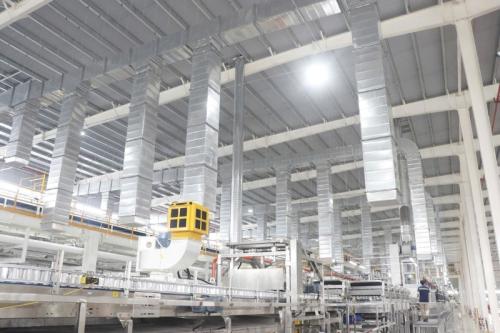
Phase 1 of the VND2.67 trillion ($105 million) A&C International Packaging Plant in the central province of Quang Tri has officially opened, featuring a capacity of 1 billion aluminum cans annually to boost local manufacturing and jobs.

A&C International Packaging Joint Stock Company on November 6 held the inauguration ceremony for Phase 1 of its plant at Quan Ngang Industrial Park in Gio Linh Commune, central Quang Tri Province.

The project spans nearly 10 hectares and is developed in two phases. Phase 1 carries an investment of nearly VND2.3 trillion ($90.5 million), while Phase 2 represents nearly VND400 billion ($15.7 million). Upon full completion, the facility will boast a total designed capacity of 1 billion aluminum cans per year, with Phase 1 delivering 700 million units and Phase 2 adding 300 million units.

As a major industrial project in Quan Ngang Industrial Park, the plant aims to establish an aluminum packaging manufacturing hub serving both domestic and export markets. The investment aligns with Camel Group's long-term strategy to complete its supply chain and secure an active source of aluminum packaging production.

According to Mr. Le Quang Thinh, Member of the Board of Directors and representative of A&C International Packaging Joint Stock Company, the enterprise invested in a fully automated, closed-loop production line imported from the United States and European countries. Alongside expanding capacity, the plant focuses on technical innovation, material conservation, and developing highly recyclable aluminum packaging to meet escalating market demands.

Notably, the project commenced operations six months ahead of schedule. According to the Q3/2026 report, the investor disbursed over VND1.78 trillion ($70 million), accounting for approximately 67 percent of the total registered capital.

Beyond boosting manufacturing capacity for the packaging industry, the facility creates job opportunities for the local workforce. Ahead of the inauguration, the company hired 100 workers, primarily local residents. As production expands, the plant plans to recruit hundreds more employees to support operations.

Speaking at the ceremony, Mr. Le Duc Tien, Vice Chairman of the Quang Tri Provincial People’s Committee, emphasized that the true value of an investment project lies not only in registered capital but also in manufacturing capacity, product off-take, job creation, and long-term societal contributions.

He urged the enterprise to complete remaining items and implement Phase 2 as planned, while prioritizing occupational safety, environmental protection, workforce training, and employee welfare.

Local government departments were tasked with resolving operational hurdles and improving industrial park infrastructure to facilitate stable production and market expansion for the business.


See all blog