Lumen Vietnam Fund

Blog

Canada opens new investment doors for Vietnamese businesses

Canada opens new investment doors for Vietnamese businesses

A Canada Investment Seminar in Hanoi not only created new opportunities for business connections but also marked the official launch of the Hanoi Branch of the Canadian Chamber of Commerce in Vietnam (CanCham)…

As Vietnamese companies increasingly look for new markets, diversify supply chains and expand globally, Canada is emerging as an attractive destination, thanks to its stable business environment, highly educated workforce, strong innovation capabilities and access to the North American market.

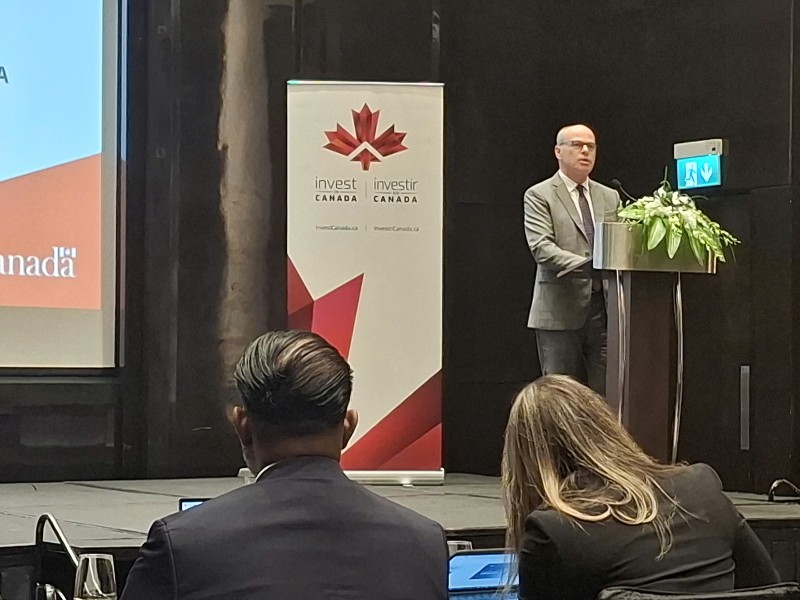
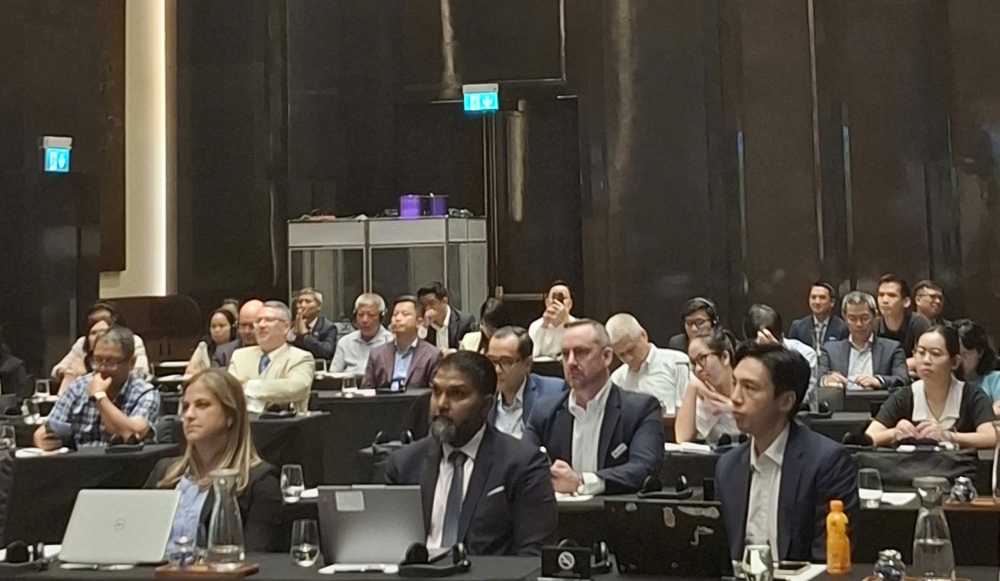
Held on September 8 in Hanoi, the Canada Investment Seminar brought together Vietnamese business leaders and investors with Canadian provincial governments and investment-promotion agencies.

The seminar was followed by the Canada Friendship Networking Reception, which officially marked the launch of CanCham's Hanoi Branch.

The event represents a new step in strengthening B2B links between the two countries, particularly as Vietnam-Canada trade and investment relations increasingly expand into technology-intensive and higher-value sectors.

Four gateways to one north American market

A central message from the seminar was that Canada should not be viewed simply as an investment destination, but also as a platform through which companies can access North America and global markets.

The Canadian province of British Columbia highlighted its position as Canada's Pacific gateway and its strong economic connections with Asia.
The province has approximately 271,000 technology workers and a well-developed ecosystem covering artificial intelligence, digital technology, software, gaming and other high-tech industries. Its Vancouver in particular is home to major international companies including Amazon, Microsoft and Electronic Arts.

Beyond technology, British Columbia offers opportunities in agri-food, seafood, value-added processing, cold storage, packaging and logistics. These sectors are particularly relevant to Vietnamese companies seeking to expand their international operations.

The province also provides support to foreign investors in areas ranging from regulations, permits, taxation and immigration to site selection and connections with universities, industry and government agencies.

Meanwhile, Canada's western province of Saskatchewan presents a different proposition, built around agriculture, energy, fertilizer and critical minerals.

The province accounts for more than 40% of Canada's cultivated farmland and generated approximately C$18 billion in agricultural exports in 2025. Saskatchewan is a major exporter of lentils, peas, canola, oats and wheat.

However, its investment strategy increasingly focuses on moving from commodity exports toward value-added food processing and ingredient manufacturing. This creates opportunities for Vietnamese companies in food processing, agricultural technology, logistics and manufacturing.

Saskatchewan is also rich in uranium, potash, oil and gas and other critical minerals. These resources are supporting new opportunities in energy, food security, clean technology and resource processing.

Ontario and Quebec: Technology and innovation at scale

If British Columbia stands out as Canada's Pacific gateway and Saskatchewan for resources and agriculture, Ontario and Quebec demonstrate another side of the Canadian economy: advanced technology, industry and innovation.

The province of Ontario has more than 26,000 high-tech businesses employing approximately 450,000 technology workers. It produces more than 94,000 STEM graduates every year from its 47 colleges and universities.

Artificial intelligence is one of Ontario's strongest sectors. Toronto, the capital city of the province, is home to the Vector Institute and a large AI ecosystem. Ontario has more than 1,600 AI companies and hosts operations by major international technology companies, including NVIDIA, Qualcomm, AMD, Microsoft, Nokia and Siemens.

Semiconductors are also becoming a strategic priority, alongside quantum technology, cybersecurity and electronics.

Ontario's automotive industry remains a major investment attraction, with Ford, Stellantis, Honda, Toyota, General Motors and a broad network of suppliers operating in the province. As the global automotive industry moves toward electrification, new opportunities are emerging in batteries, critical minerals, advanced materials and recycling.

Clean energy is another competitive advantage. Ontario phased out coal-fired electricity generation in 2013 and now relies heavily on nuclear and hydroelectric power, alongside other sources. The province is continuing to expand nuclear capacity and is advancing a small modular reactor project at Darlington.

Quebec, meanwhile, has developed strong capabilities in AI, aerospace, semiconductors, quantum technology, life sciences and advanced manufacturing.

Montreal, which is located in the southeastern portion of Canada, in the province of Quebec, has become an international AI hub, supported by the Mila research institute. Quebec is also home to IBM's major semiconductor assembly, testing and packaging facility in Bromont.

Aerospace remains one of the province's flagship industries, with companies such as Bombardier, CAE, Bell Textron and Airbus. The sector demonstrates Quebec's ability to attract not only manufacturing projects but also investment in research, advanced engineering and high-value technology.

Invest Québec offers a particularly broad range of support, including co-investment, loans, financial assistance, grants and business connections. This approach reflects the provinces' growing competition for investment projects capable of generating long-term economic value.

From business connections to cross-border value chains

One of the most important messages from the seminar was that Canada's approach to international investment goes beyond financial incentives. The focus is increasingly on long-term partnerships with investors.

From site selection and partner identification to market research, government relations, recruitment, R&D and international expansion, Canadian investment agencies offer a broad range of services.

This could be particularly relevant to Vietnamese companies considering Canada as a long-term investment destination.

Canada can serve as a two-way platform: Vietnamese companies can invest in Canada to access North America while also using Canadian research, technology, manufacturing and logistics capabilities to support their wider international operations.

For Vietnamese companies, the question resulting from the seminar is therefore no longer simply whether Canada is an attractive investment destination. It is increasingly about which province, which sector and which partnership model best fits each company's long-term strategy.

The Canada Friendship Networking Reception following the seminar officially marked the launch of the Hanoi Branch of the Canadian Chamber of Commerce in Vietnam (CanCham).

The expanded presence in northern Vietnam is expected to create an additional direct channel connecting enterprises, investors and business-support organizations from both countries.

The launch is more than an organizational milestone. It could provide a platform for turning the relationships established at the seminar into concrete investment and business projects.

The four provinces presented at the seminar demonstrate the diversity of Canada's economic landscape while sharing a common objective: enabling international businesses to participate more deeply in the Canadian economy.

British Columbia offers a Pacific gateway; Saskatchewan provides resources and agricultural strength; Ontario combines industrial scale with technology; while Quebec brings together innovation, aerospace and advanced technology.

Together, they offer Vietnamese companies multiple gateways into North America.

The most important outcome of the seminar may therefore not be a list of investment incentives, but the possibility of building long-term partnerships. As Vietnam-Canada business connections deepen, Canada could become an increasingly important link in the internationalization and global value-chain strategies of Vietnamese companies.


Source: Trong Hoang

Photo: Trong Hoang

Latest Posts

Ariston takes 83% stake in Vietnam’s Mutosi as Mekong Capital exits

Ariston takes 83% stake in Vietnam’s Mutosi as Mekong Capital exits

Italian heating and water solutions group Ariston has acquired an 83-percent stake in Vietnamese water purifier maker Mutosi as Mekong Capital exits after five years as an investor.

Mekong Capital said on Wednesday that it had completed the sale of its entire stake in Mutosi Group JSC to Ariston, a heating and water solutions group listed on Euronext Milan.

Mutosi’s management team will retain the remaining 17 percent and continue to run the company.

Founded in 2018, Mutosi is a Vietnamese home appliance and healthcare brand best known for its water purifiers.

The company says around 75 percent of the components used in its products are sourced from domestic suppliers.

Mekong Capital first invested in Mutosi in June 2021 through Mekong Enterprise Fund IV.

During the partnership, Mutosi expanded its range of water purifiers, replacement components, and after-sales services, while developing a nationwide multichannel distribution network.

Mekong Capital also supported the company in strengthening corporate governance, digital transformation, customer experience, and manufacturing efficiency.

It also helped bring Adrian Micu, former president and CEO of Haier U.S. and former global chief technology officer of Whirlpool, onto Mutosi’s board as an independent director.

Mekong Capital said the partnership with Ariston, which has operated in Vietnam for nearly 40 years and has an extensive distribution network, is expected to support Mutosi’s next stage of growth.

Founded in 2001, Mekong Capital specializes in growth equity investments in founder-led Vietnamese companies, with a portfolio spanning consumer goods, education, healthcare, biotechnology, agricultural technology, and regenerative agriculture.


Automation drives central Việt Nam's power sector transformation

Automation drives central Việt Nam's power sector transformation

The application of GIS substations, SCADA/DMS, remote control equipment, autonomous robots, the Internet of Things and artificial intelligence reflects EVN's broader shift towards automation, connectivity and intelligent monitoring.

HÀ NỘI — Automation, remote control technologies and smart monitoring systems are reshaping electricity operations in central Việt Nam, helping power companies reduce outage response times, improve labour productivity and prepare grid infrastructure for new economic growth centres.

The technological shift is part of efforts by Vietnam Electricity (EVN) and its subsidiaries to carry out Politburo Resolution 57-NQ/TW on breakthroughs in science, technology, innovation and national digital transformation.

Across Đà Nẵng, Quảng Trị and Huế, member companies of Central Power Corporation (EVNCPC) are deploying unmanned substations, supervisory control and data acquisition (SCADA), distribution management systems (DMS), remote control equipment and intelligent inspection technologies.

In Đà Nẵng, rapid urbanisation has increased pressure on land available for electricity infrastructure, while power companies are also required to streamline operations and improve labour productivity.

Danang Power Company has responded by expanding its network of unmanned 110kV substations. Its Chi Lăng facility, EVNCPC's first gas-insulated switchgear (GIS) substation in the city, occupies only about 1,700sq.m, less than half the area required for a conventional substation.

Phạm Tấn Vũ, deputy head of Da Nang High-Voltage Grid Enterprise, said the GIS facility uses SF6 gas-insulated switchgear, allowing the company to address space constraints in densely populated urban areas while reducing on-site staffing requirements.

With remote operation, each team can now safely manage between five and seven substations, helping optimise staffing.

Automation is also changing how distribution networks respond to faults.

In Quảng Trị, electricity demand increased by more than 30 per cent during this year's peak summer months, placing significant pressure on grid operations.

"Before 2016, all switching operations and fault verification had to be carried out manually and depended entirely on field staff, so travelling and handling incidents took a great deal of time," said Trang Hiếu Tân, deputy head of the dispatch room at Quang Tri Power Company.

The deployment of remote control and automation systems has significantly shortened that process.

"Thanks to the integration of SCADA and DMS, when a grid fault occurs, the system automatically issues an alert, enabling us to quickly locate and handle it within about five minutes," engineer Hồ Thanh Bình said. "This minimises outage duration and improves the reliability of electricity supply for customers."

Similar technologies are being deployed in Huế, where remotely controlled equipment allows operators to isolate faulty sections and restore electricity to unaffected customers more quickly.

Technology goes with infrastructure investment

Technology is being combined with infrastructure investment as electricity companies prepare for new sources of demand.

Danang Power Company currently serves around 900,000 customers despite 72 per cent of the city's area being mountainous.

According to Võ Văn Phương, head of the company's Technical Department, the utility is investing in key projects, including the Phong Nam, Đông Giang, Đông Nối and Tây Phước 110kV substations.

The investments are intended to support emerging economic infrastructure, including Đà Nẵng's International Financial Centre and Liên Chiểu port.

Grid inspection and maintenance are also becoming more technology-intensive. Đà Nẵng is using diagnostic technologies, thermal cameras, partial discharge measuring equipment and drones while expanding live-line maintenance teams capable of carrying out repairs without interrupting electricity supply.

In Huế, digitalisation is moving a step further, with research into autonomous robots for unmanned substations.

Hồ Đức Phương, deputy head of the dispatch room at Hue Power Company, said the robot system can conduct scheduled inspections autonomously or be controlled remotely and on-site.

Its intelligent monitoring functions are designed to identify equipment abnormalities, including overheating at joints and electrical contacts. When an abnormality is detected, the robot automatically sends an alert to the control centre, allowing dispatchers to respond quickly and maintain stable electricity supply.

The project is expected to be evaluated by EVN at the end of August before being put into practical operation at substations.

Across EVN, the technological push also includes mechanisms to encourage research and development, cooperation between the electricity group, scientists and educational institutions, and efforts to domestically develop new electrical equipment.


Vietnam's capital market enters a quality upgrade cycle

Vietnam's capital market enters a quality upgrade cycle

Vietnam's stock market status upgrade could mark the starting point of a medium- to long-term process to improve the quality of the country's capital market, according to Mirae Asset Securities.

The country's stock market is just two weeks away from officially being upgraded from frontier to secondary emerging market status by FTSE Russell.

The market reacted positively in August, with the VN-Index rising more than 5% to close at 1,832 points. However, gains remained highly differentiated and were not accompanied by a sustained reversal in foreign capital flows.

Foreign investors continued to be net sellers in August, bringing their net selling on the Ho Chi Minh Stock Exchange (HoSE) in the first eight months of the year to more than VND90 trillion ($3.47 billion).

Vietnam will also not receive its full weighting in FTSE's indexes immediately in September. The process will take place in four stages from September 2026 to September 2027, with cumulative weightings of about 10%, 30%, 65% and 100%, respectively.

As a result, the impact of the upgrade on capital flows is likely to unfold gradually rather than provide a single one-off boost.

Speaking on the Financial Street talk show, Dinh Minh Tri, director of analysis for retail clients at Mirae Asset Securities (MAS), said some expectations surrounding the upgrade had already been priced into the market, but the story would not end on September 21.

After that date, the factors driving the market's direction would gradually shift from upgrade expectations to the actual size of capital flows, corporate earnings growth, valuations and the quality of market reforms, he said.

International experience shows that market reactions before and after an upgrade are not necessarily the same.

Active funds tend to move ahead of such events to anticipate expectations, while passive funds typically rebalance their portfolios around the time the index officially takes effect.

Kuwait is a typical example. In the period before it was officially included in the emerging-market category, Kuwait's market rose sharply and attracted significant international capital inflows.

Saudi Arabia, meanwhile, offers a longer-term example. Its inclusion in FTSE and MSCI indexes was implemented in several stages, allowing foreign capital flows to build gradually alongside market opening and reforms. Foreign investors' holdings in the Saudi market rose sharply in the year of its upgrade.

For Vietnam, a “buy the expectation, sell the news” pattern around September 21 is entirely possible, particularly for stocks that have risen sharply on expectations of being included in international indexes.

That does not mean, however, that the impact of the upgrade will end immediately after the effective date.

As FTSE is implementing the upgrade in four stages over a year, Tri said the impact on capital flows would also be cumulative.

Instead of focusing solely on whether the VN-Index rises or falls in the sessions around September 21, it will be more important to watch whether foreign capital flows gradually improve, whether liquidity expands on a sustainable basis, and whether institutional investors increase their participation in the following months.

MSCI is the next milestone

Tri noted that Vietnam had reached an important milestone with FTSE, but in its June 2026 Market Classification Review, MSCI had not yet included Vietnam among markets under consideration for reclassification.

The MSCI goal should therefore be viewed as the next stage of reform rather than something that can be completed in the near term, he said.

On the positive side, MSCI has recognized several steps taken by Vietnam, including the development of a global broker model, a roadmap to establish a central counterparty clearing house (CCP), expanded disclosure in English, and several changes related to foreign investors' market access.

On settlement, the current non-prefunding mechanism has significantly improved market access.

However, several bottlenecks remain. Foreign ownership limits continue to affect investment capacity in some large companies, while the foreign exchange market does not yet have a fully developed offshore mechanism. Some corporate information and market regulations are also not yet available comprehensively in English.

Over the longer term, however, Vietnam still needs a fully fledged CCP system to bring post-trade arrangements closer to international standards. This will be one of the key tasks for 2026-2027.

Tri said Vietnam should focus on several priorities, including completing the CCP and settlement mechanism, continuing to address foreign ownership limits and increase free float, expanding English-language disclosures, and improving access to foreign exchange trading and risk-management instruments for foreign investors.

More importantly, reforms need not only to be introduced but also to operate effectively in practice. This would not only serve the goal of an MSCI upgrade but also improve the transparency, liquidity and long-term attractiveness of Vietnam's capital market.

Foreign capital flows unlikely to reverse immediately

According to the Mirae Asset expert, developments in 2026 have shown clearly that an upgrade is necessary but not sufficient to bring foreign capital flows back.

Foreign investors remained net sellers of more than VND90 trillion ($3.47 billion) on the HoSE in the first eight months of the year. Although selling pressure eased significantly in August, foreign capital flows have yet to establish a sustained net-buying trend.

Funds tracking FTSE standards will have to adjust their portfolios when Vietnam is added to the index. However, active funds in international markets account for a much larger pool of capital and are not required to buy Vietnam. They will continue to assess the country based on valuations, earnings growth, exchange rates, interest rates, and economic prospects.

The impact of FTSE will also not be fully felt in September, as the initial stage involves only about 10% of the eventual weighting, with the remainder phased in through September 2027.

Capital directly related to the upgrade is therefore likely to be deployed gradually.

Another important issue is investability. International funds may be positive about Vietnam's prospects but could still find it difficult to deploy large amounts of capital if leading stocks are close to their foreign ownership limits, free float is low, liquidity is limited or hedging instruments are lacking.

Vietnam also needs to expand the supply of quality stocks through IPOs, equitisation, state divestments, and listings of large companies. An attractive emerging market needs not only more capital flows but also enough quality companies to absorb that capital.

Ultimately, macroeconomic fundamentals and corporate earnings growth remain the most important factors. FTSE will help Vietnam widen access to international capital, but whether capital flows into the market, remain there and increase their allocations will depend on the country's ability to sustain high growth, control inflation and exchange rates, and improve the quality of listed companies.

Tri remains positive on Vietnam's medium- and long-term outlook but is more cautious in the short term.

The VN-Index rose more than 5% in August to close at 1,832 points, suggesting that some expectations for the upgrade, economic growth, and corporate earnings have already been reflected in share prices.

Sharp volatility in the first week of September also shows that market differentiation is increasing, with declining stocks outnumbering gainers.

This suggests that after a relatively rapid rise, the market could see bouts of volatility and consolidation as investors balance upgrade expectations against profit-taking needs.

For domestic capital flows, retail investors will continue to play an important supporting role.

Mirae Asset Securities' analysts expect capital to remain concentrated in sectors with clear earnings-growth prospects, including banking and financial services; public investment, construction and infrastructure; technology; energy; and industrial property.

However, differences in performance between companies within the same sector are likely to become increasingly pronounced.

In the short term, the market is unlikely to move in a straight line and could alternate between periods of gains, corrections and consolidation.

After the September 21 milestone, investors' attention will gradually shift towards third-quarter earnings, the outlook for 2027 profits, and the actual size of capital flows from international funds.

Over the medium term, Tri said the three most important factors would be actual capital flows following the upgrade, corporate earnings growth, and progress in market reforms towards MSCI standards.

If all three continue to develop favourably, the FTSE upgrade could become the starting point for a new cycle of quality improvements in Vietnam's capital market, rather than merely a short-term capital-flow story.

See all blog